The Growing Water Challenge for Data Centers in Kobe, Japan
A 100-megawatt data center can consume up to 2 million liters of water per day, with hyperscale AI facilities specifically drawing between 1.14 and 1.70 million liters daily according to IDE Tech (2026). As compute density rises and AI workloads proliferate, water demand is accelerating faster than many regional water systems were designed to accommodate, with industry analyses pointing to the mid-2020s as the turning point when water availability, treatment capacity, and regulatory scrutiny will directly influence where data centers can be built and how they operate. In Kobe, a port city on the Seto Inland Sea, facility planners face the dual pressure of constrained local water resources and evolving industrial discharge expectations from prefectural authorities.
For a Kobe operator, the economic stakes are concrete. Municipalities globally are tightening industrial discharge permits, particularly for elevated Total Dissolved Solids (TDS), phosphorus, and biocide residuals, with direct discharge fees in water-stressed regions now exceeding $5-15 per thousand gallons according to Genesis Water Technologies. Some jurisdictions have implemented TDS limits below 1,500 mg/L, effectively prohibiting discharge of concentrated blowdown without treatment. The Water Usage Effectiveness (WUE) benchmark of 1.8 L/kWh, cited by Ecologix Environmental Systems, provides a starting point for sizing makeup water reduction strategies, though actual Kobe facility values will depend on cooling architecture and local supply constraints that must be assessed site-by-site.
Understanding Data Center Cooling Blowdown: Characteristics and Contaminants
Cooling tower blowdown is the purge stream that prevents excessive accumulation of dissolved solids, corrosion byproducts, and biological growth in recirculating cooling water. At 4 cycles of concentration, blowdown typically represents 25-30% of total makeup water, a ratio that directly determines the volume a treatment system must handle. For a facility drawing 10 million gallons monthly, this translates to 2.5-3 million gallons of water that must either be reused, treated for discharge, or eliminated through high-recovery processes.
The contaminant profile of blowdown dictates which treatment technologies are viable. Elevated Total Dissolved Solids (TDS) typically range from 1,200 to 6,000 mg/L, or up to 2,000 ppm in some operational contexts, as documented by Genesis Water Technologies and Ecologix Environmental Systems. Scaling minerals, including concentrated calcium, magnesium, silica, and alkalinity, create precipitation risks that complicate both reuse and membrane-based treatment. Treatment chemicals such as biocides, corrosion inhibitors, scale inhibitors, and dispersants accumulate proportionally to cycles of concentration, and legacy systems using chromates or high-phosphate chemistries present particular challenges for either reuse or discharge. Suspended solids, including corrosion products, biofilm fragments, and airborne particulates, typically range from 10-50 mg/L, while even well-maintained systems contain planktonic bacteria, algae, and biofilm-forming organisms that must be addressed in any recovery system. Engineers assess scaling tendency using the Langelier Saturation Index (LSI), targeting an optimal range of -0.5 to 0.5 to prevent both mineral deposition and accelerated corrosion, a window Ecologix Environmental Systems identifies as both a performance target and a warranty-protection parameter for cooling system OEMs.
Strategic Objectives for Treated Water: Reuse, Discharge Compliance, or ZLD
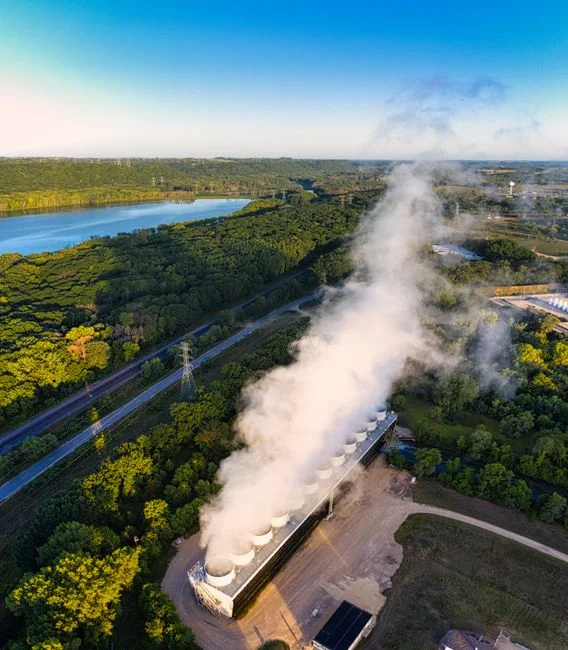
The choice of treatment objective drives both technology selection and economic justification, and the three primary strategies (reuse, discharge compliance, and zero liquid discharge) each carry distinct cost-recovery profiles. Cooling tower makeup reuse offers the highest value proposition by recovering 60-85% of blowdown for return to the cooling system, directly reducing freshwater consumption and discharge volumes. Process water applications, such as landscape irrigation or equipment washdown, provide secondary reuse pathways, though treatment requirements depend on application-specific quality standards and any local regulations governing reclaimed water use.
Discharge compliance focuses treatment on meeting municipal permit limits, with economic justification centered on avoided discharge fees rather than water savings. Zero Liquid Discharge (ZLD) eliminates liquid waste entirely, achieving 95-99% overall water recovery, but involves the highest capital and operating costs. According to Genesis Water Technologies, ZLD systems serving data center applications typically require $3-8 million in capital investment and $5-15 per thousand gallons in operating costs, figures that demand careful economic analysis against alternative water strategies. Partial ZLD approaches offer a middle ground, reducing discharge volume by 80-90% at substantially lower cost than full ZLD, and may be appropriate for Kobe facilities that face volume-based discharge constraints but cannot justify the full capital commitment to crystallization. A comprehensive ZLD plant buyer's guide provides additional detail on the staged configuration of membrane, thermal, and crystallization steps.
Core Technologies for Blowdown Treatment and Water Recovery
Side-stream filtration is the first line of defense for systems targeting high cycles of concentration or preparing blowdown for membrane treatment. These systems treat 1-5% of circulating cooling water, removing suspended solids at 10-25 micron filtration while reducing biological loading, and they directly enable improved blowdown quality for downstream processes. Capital costs for typical data center installations range from $50,000-200,000 based on flow rates, with minimal operating expenses beyond solids disposal and routine maintenance. Self-cleaning spiral filtration units have largely replaced traditional sand or multimedia filters, offering continuous operation without backwash downtime.
Membrane systems dominate blowdown recovery applications, and three technologies (UF, NF, and RO) each serve distinct roles. Ultrafiltration (UF) membranes with pore sizes of 0.01-0.1 microns effectively remove suspended solids, bacteria, viruses, and high molecular weight organics while allowing dissolved salts to pass. UF operates at low pressure (10-30 psi), tolerates challenging feed water, and achieves 90-95% recovery with chemical cleaning required every 1-3 months. For facilities integrating UF as RO pretreatment, hollow-fiber ultrafiltration systems provide the established configuration for this duty.
Reverse Osmosis (RO) provides the most comprehensive treatment, removing 95-99% of dissolved solids, hardness, silica, and most treatment chemicals, producing permeate with 10-50 mg/L TDS suitable for direct return to cooling towers. RO systems treating blowdown typically achieve 50-85% recovery, limited by scaling potential as concentrate TDS increases, and operate at 150-400 psi with antiscalant injection. A 50,000 GPD RO system can cost $250,000-500,000 installed, with operating costs of $1.50-3.00 per thousand gallons treated. Industrial RO water purification systems configured for blowdown duty require careful attention to feedwater chemistry and recovery staging. Nanofiltration (NF) operates at lower pressure (75-150 psi) and achieves higher recovery (70-85%) than RO, with permeate TDS typically 30-50% of feed concentration, making it suitable when hardness rather than total TDS drives discharge or reuse limitations. A detailed RO vs Nanofiltration comparison provides decision criteria for selecting between these technologies. Proper pretreatment is critical: feed water should be filtered to less than 10-15 microns, chemically conditioned, and pH-adjusted to optimize membrane performance, a sequencing requirement that makes automatic chemical dosing systems integral to reliable long-term operation.
Integrated approaches that manage scaling chemistry proactively can push recovery well beyond conventional RO limits. IDE Tech (2026) describes its MAXH₂O solution architecture, which uses a fluidized bed reactor to precipitate silica, calcium carbonate, and other problematic salts as compact pellets while simultaneously employing dynamic RO operation that alternates between short production periods and high-velocity flushing events. In an industrial application blending blowdown from 20 hybrid cooling towers, brine, and process wastewater, this approach achieved approximately 95% recovery with permeate silica reduced to about 1 mg/L, demonstrating that chemistry-aware design can unlock recovery targets unattainable with conventional staging.
| Technology | Function | Operating Pressure | Recovery | Typical Application |
|---|---|---|---|---|
| Side-stream Filtration | Suspended solids removal (10-25 μm) | Gravity / low pressure | Continuous side-stream | Enables higher COC, protects downstream membranes |
| Ultrafiltration (UF) | Particulate, biological, colloidal removal (0.01-0.1 μm) | 10-30 psi | 90-95% | RO/NF pretreatment or standalone polishing |
| Reverse Osmosis (RO) | Comprehensive dissolved solids removal (95-99%) | 150-400 psi | 50-85% | High-purity makeup water, discharge compliance |
| Nanofiltration (NF) | Selective hardness/sulfate removal | 75-150 psi | 70-85% | Partial softening, higher recovery than RO |
Advanced Strategies for High-Recovery and Zero Liquid Discharge (ZLD)
When membrane recovery hits scaling or osmotic limits, evaporative concentration technologies provide the next step toward higher water recovery. Mechanical Vapor Compression (MVC) systems use mechanical energy to compress water vapor, creating a thermodynamically efficient evaporation process that produces high-purity distillate. MVC systems achieve 95-98% water recovery from concentrate streams, producing distillate with TDS below 10 mg/L, with the remaining concentrated brine containing 20-30% dissolved solids. Capital costs range from $1-3 million for systems processing 10,000-30,000 GPD, and energy consumption runs 15-25 kWh per 1,000 US gallons of distillate produced.
A typical ZLD system combines three stages: RO or NF concentrating blowdown to 70-80% recovery; evaporative concentration (MVC or brine concentrator) processing membrane concentrate to 20-30% dissolved solids; and a crystallizer processing concentrated brine to solid salt cake for disposal. ZLD systems achieve 95-99% overall water recovery, with solid waste representing less than 1% of original blowdown volume. Capital costs for data center ZLD systems range from $3-8 million, with operating costs of $5-15 per thousand gallons treated, figures that place ZLD in the category of capital-intensive options requiring long-term water cost projections to justify. For facilities that cannot commit to full ZLD, partial ZLD approaches concentrating blowdown to reduce discharge volume by 80-90% capture most water recovery benefits at substantially lower cost, with the remaining concentrated brine potentially eligible for deep well injection, hauling to approved disposal facilities, or periodic discharge under special permits.
Designing a Custom Treatment Solution for a Kobe Data Center
The decision framework for a Kobe facility should begin with site-specific inputs that the design engineer must obtain directly: the local cost of freshwater, the specific municipal discharge regulations and permit limits (TDS thresholds, temperature differentials, phosphorus, biocide residuals), and the seismic and infrastructure constraints of the plant site. These variables are not available in published reference data and must be confirmed with Kobe municipal authorities and the utility serving the site. According to Ecologix Environmental Systems, mandatory onsite treatment CAPEX is typically triggered under three conditions: stricter permit limits (e.g., effluent exceeding 2,000 ppm TDS or temperature differentials above 5°C), water scarcity or reuse mandates, or local WWTP capacity shortfalls. A Kobe operator should evaluate the existing cooling system's cycles of concentration, typically 4-6 in well-managed systems, and the quality of makeup water to predict blowdown characteristics and size downstream treatment appropriately.
Growth trajectory matters. As AI workloads accelerate, water demand will intensify beyond 2026, necessitating scalable and resilient water infrastructure. IDE Tech (2026) frames this as a strategic imperative: securing long-term water resilience will require treating water as a managed resource within the facility boundary, recovering, recycling, and reusing it wherever possible to reduce dependence on external supplies and discharge pathways. Integrated solutions that manage water chemistry proactively, such as tablet-based treatment programs that minimize accumulation of legacy phosphate and chromate chemistries in blowdown, or chemistry-aware architectures like MAXH₂O that control salt precipitation at the system level, can optimize membrane performance and minimize chemical consumption. The economic analysis should compare avoided discharge fees, freshwater savings, and capital/operating costs for each treatment objective, calculating payback under the Kobe site's specific freshwater tariff and discharge fee structure. For a regional comparison of decision logic in a similarly constrained location, the regional guide to data center blowdown treatment illustrates how site-specific factors reshape technology selection.
| Treatment Objective | Typical Recovery | Capital Range | Operating Cost | Primary Value Driver |
|---|---|---|---|---|
| Discharge Compliance (RO) | 50-85% | $250,000-500,000 (50,000 GPD) | $1.50-3.00 / thousand gal | Avoided discharge fees |
| High-Recovery Reuse (RO + MVC) | 85-95% | $1-3 million+ | Higher than RO alone | Freshwater reduction, COC increase |
| Zero Liquid Discharge (ZLD) | 95-99% | $3-8 million | $5-15 / thousand gal | Elimination of liquid waste |
| Partial ZLD | 80-90% volume reduction | Substantially lower than full ZLD | Between compliance and ZLD | Reduced discharge volume, lower CAPEX than ZLD |
Frequently Asked Questions
What are the specific wastewater discharge regulations for data centers in Kobe, Japan?
Kobe municipal discharge regulations vary and must be confirmed directly with Kobe City environmental authorities and the Hyogo Prefectural Government. The buyer should request current permit limits for TDS, temperature differential, phosphorus, nitrogen, and biocide residuals applicable to the specific site. General industry references cite TDS limits below 1,500 mg/L in some jurisdictions (Genesis Water Technologies) and below 500 ppm under NPDES-like frameworks (Ecologix Environmental Systems), but these are not Japan-specific values and should not be assumed to apply in Kobe.
How do I estimate the cost of a cooling tower blowdown treatment system for my data center in Kobe?
System cost depends on desired recovery rate, technology selection, feed water quality, and daily capacity, so any meaningful estimate requires a custom engineering assessment. For reference, Genesis Water Technologies cites $250,000-500,000 CAPEX and $1.50-3.00 per thousand gallons OPEX for a 50,000 GPD RO system, and $3-8 million CAPEX with $5-15 per thousand gallons OPEX for data center ZLD systems. The buyer should request a site-specific quotation that includes seismic provisions, local installation labor, and integration with existing cooling chemistry.
Which water treatment technologies offer the highest water recovery rates for data center blowdown?
ZLD systems achieve the highest overall recovery at 95-99% by combining membrane and thermal stages with crystallization (Genesis Water Technologies). Within ZLD, MVC systems recover 95-98% from concentrate streams. High-recovery RO systems typically achieve 50-85% on blowdown, while integrated chemistry-aware architectures like IDE's MAXH₂O have demonstrated approximately 95% recovery in industrial applications by managing salt precipitation proactively.
What factors should I consider when selecting a supplier for data center wastewater treatment equipment?
Key selection criteria include proven experience with data center and mission-critical cooling applications, demonstrated ability to provide integrated solutions (pretreatment, membrane staging, chemistry management, and ZLD where required), and regional support capabilities for commissioning, membrane replacement, and emergency service in Japan. Suppliers should provide robust system automation with remote monitoring suited to 24/7 facility operations, and they should be able to supply documented case histories with recovery rates, permeate quality, and lifecycle cost data from comparable installations. Verify that proposed equipment meets Japanese electrical standards and that the supplier can support seismic design requirements relevant to the Kobe site.
Related Equipment
- hollow-fiber ultrafiltration systems — specifications, capacity range, and technical data
- RO and UF membrane elements — specifications, capacity range, and technical data
- Dissolved Air Flotation (DAF) systems — specifications, capacity range, and technical data