Why Daejeon Cooling Blowdown Is a Different Engineering Problem
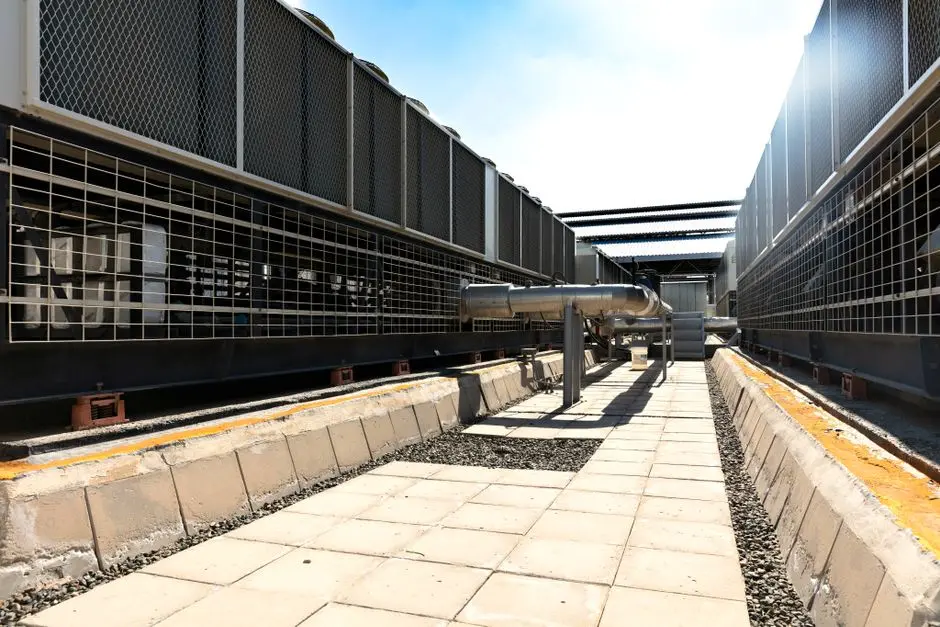
Cooling tower blowdown is the controlled purge of recirculating cooling water, and according to UGA Extension TP-121 (Saha, June 2026) it carries dissolved salts, residual biocides and corrosion inhibitors, scale-inhibitor phosphonates, and trace heavy metals stripped from condenser metallurgy. The US EPA (2026) specifically identifies data centre cooling tower blowdown as a wastewater stream that may require permits before discharge, but the permitting body, the parameter limits, and the receiving-water model are all different in Korea.
Daejeon's tap water profile sits in the moderately hard range with seasonal silica and chloride swings, so a 4 cycles-of-concentration (CoC) tower concentrates those species into a blowdown that readily exceeds NIER 'Region A' special-class industrial effluent thresholds for hardness, chloride, sulphate and several metals before any other contaminant is added. The Geum River basin adds a second axis: discharge volume and temperature matter to K-water allocation discussions and to municipal pretreatment programmes tied to Daejeon city sewer agreements, not to a US Clean Water Act NPDES permit. Korean precedent for tight-footprint treatment exists: Tomorrow Water's BKT Jungnang WWRF in Seoul replaced conventional settling tanks with BBF and Proteus biofilm reactors, halving both footprint and energy use (Data Center Dynamics, 2026). That same compact-train logic is what a Daejeon 5–15 MW colocation site should plan around, because the published US/EU blowdown guidance does not localise cleanly to Korean influent water, the Geum River basin context, or the Water Environment Conservation Act framework.
What Is Actually in the Blowdown Stream
The blowdown pollutant list below is what a KECO-designated laboratory will sample against; it is also the basis for sizing the softener, DAF or lamella, and RO stages downstream. Genesis Water Technologies (2026) describes blowdown as a stream of concentrated dissolved solids, suspended matter, and residual treatment chemicals, while UGA Extension TP-121 (Saha, June 2026) and US EPA (2026) both flag trace heavy metals (Cu, Zn, Fe) from corrosion of condensers and piping as the parameter that can push a discharge across a special-class threshold even when total mass loading is small. If the facility uses direct-liquid or immersion cooling, the blowdown may also contain refrigerant residues or PFAS compounds, which US EPA and UGA Extension (2026) flag as a gap in conventional pretreatment programmes and which Korean authorities are tightening.
| Parameter group | Typical constituents | Origin | Why it matters in Daejeon |
|---|---|---|---|
| Dissolved salts (TDS, Cl⁻, SO₄²⁻) | Concentrated by CoC | Makeup water concentration at 4–6 CoC | Drives NIER special-class comparison; sizes RO feed |
| Hardness (Ca²⁺, Mg²⁺) | Concentrated hardness | Daejeon tap baseline × CoC | Determines softener size and brine frequency |
| Silica (SiO₂) | Concentrated silica | Makeup water × CoC | Sets RO recovery ceiling without anti-scalant |
| Treatment chemicals | Phosphonates, dispersants, corrosion inhibitors, biocides, scale inhibitors | Cooling tower dosing programme | Blocks direct reuse without polishing; affects DAF chemistry |
| Trace metals | Cu, Zn, Fe | Condenser and piping corrosion | Triggers Korean special-class thresholds at low mass loading |
| Immersion-cooling residuals (where applicable) | Refrigerant traces, PFAS | Direct-liquid or immersion loops | Emerging gap flagged by EPA and UGA Extension (2026) |
Cycles of Concentration and Blowdown Volume: The Arithmetic That Drives Sizing
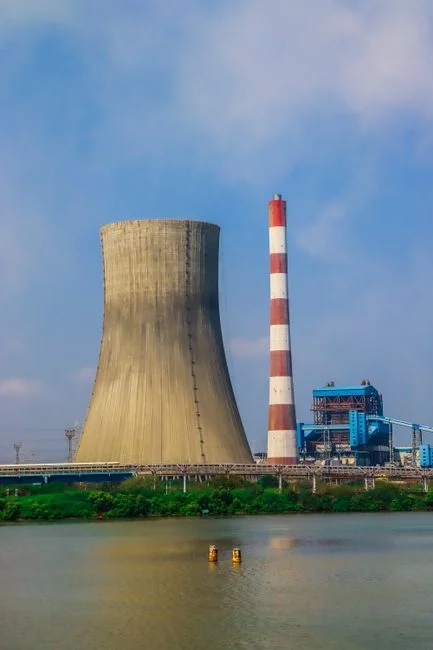
Blowdown ratio equals 1 / (CoC − 1); at 4 CoC the ratio is 0.25, so roughly 25% of makeup leaves as blowdown, and at 6 CoC it drops to about 0.20, or 20% (Genesis Water Technologies, 2026). The arithmetic matters because the perceived gain from "moving from 4 to 6 CoC" is a 5-percentage-point drop in blowdown volume, not 50%, and operating above 5–6 CoC without advanced treatment invites biological fouling, microbiologically influenced corrosion, and scaling that pull the operating CoC back down. Genesis Water Technologies (2026) also reports that field-measured blowdown is typically 15–30% higher than the theoretical number because of unmeasured leaks, side-stream losses, and emergency dumps; that margin belongs in the design flow, not in the operating budget. At 4 CoC, a 10 MW facility on evaporative cooling might intake on the order of 15 million gallons monthly and produce roughly 3.75 million gallons of recoverable blowdown per month (Genesis Water Technologies, 2026). Convert that to m³/day for the Daejeon design basis: 3.75 million US gallons per month is approximately 450 m³/day, before the 15–30% field-measurement margin is applied. The CoC ceiling should be set as a control-loop target on the treatment train, not as a budget assumption handed to the tower vendor.
Reference Treatment Train for a Daejeon Data Center
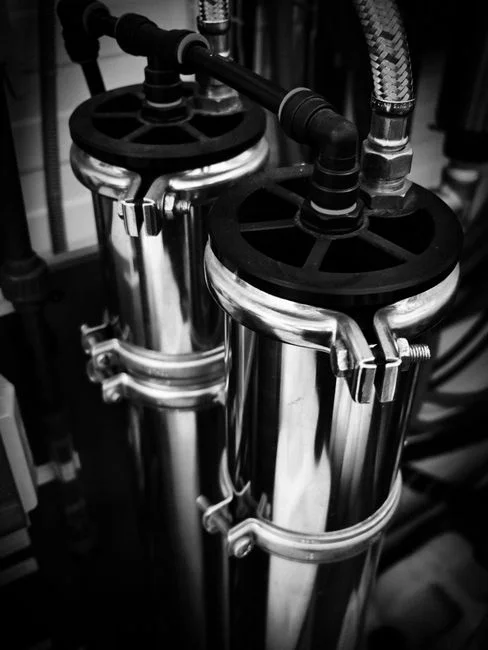
The reference train below is ordered to protect the RO membranes first and to keep the Daejeon softener regeneration load within the site's brine disposal plan. Front-end protection starts with a rotary mechanical bar screen on the cooling-tower sump, followed by a PLC-controlled anti-scalant and pH dosing skid and a DAF for suspended solids and FOG removal (or a lamella clarifier where FOG is low). Softening uses a twin-tank industrial softener for hardness reduction sized to the 4–6 CoC blowdown flow, paired with a brine tank sized per regeneration frequency. Filtration polishing uses a multi-media filter for SDI reduction ahead of RO followed by 0.03 µm PVDF ultrafiltration as RO pretreatment to strip colloids, bacteria, and any oil residue that would foul RO. The RO stage itself is a brackish-water RO skid for blowdown polishing operating at 65–75% recovery, with two-pass designs capable of up to 95% recovery where the alternative is high sewer discharge fees. RO permeate returns to the cooling tower as makeup; RO concentrate is either (a) discharged under the Daejeon sewer agreement, (b) sent to a forced-circulation crystallizer for true zero liquid discharge, or (c) blended with a non-critical reuse stream such as landscape irrigation where site layout permits.
| Stage | Function | Design parameter | Notes for Daejeon |
|---|---|---|---|
| Bar screen + dosing | Sump protection, pH trim, anti-scalant | Match peak blowdown flow | Acid and anti-scalant feed scaled to silica peak |
| DAF or lamella | Suspended solids, FOG, precipitated hardness | Hydraulic residence per vendor curve | DAF preferred where tower carries biocides and oils |
| Na-ion exchange softener | Drop hardness before RO | Regeneration frequency per Daejeon influent | Brine disposal plan required |
| Multi-media filter | SDI reduction | SDI ≤ 3 to RO feed | Backwash tied to differential pressure |
| UF (0.03 µm PVDF) | Colloids, bacteria, oil residue | Integrity tested | Protects RO from biofouling |
| Brackish RO | Dissolved salt removal | 65–75% recovery, two-pass to 95% | Permeate to cooling tower makeup |
| Concentrate handling | Discharge, reuse, or ZLD | Per path A / B / C below | Crystallizer option for true ZLD |
Discharge, Reuse, or ZLD: Choosing the Right Korean Compliance Path
Three compliance paths exist for a Daejeon data centre, and the choice is driven by the Daejeon sewer agreement, the ₩/m³ makeup tariff, and the basin's future K-water allocation pressure rather than by US NPDES framing. Path A — discharge to the Daejeon municipal sewer — has the lowest capex, requires an industrial wastewater discharge agreement, NIER effluent compliance sampling by a KECO-designated lab, and payment of sewer discharge fees; it is the right move where the local POTW is sized for the load and water stress is low. Path B — reuse as cooling tower makeup (closed-loop) — sits at medium capex because it adds RO, disinfection, and a blowdown make-up tank, near-eliminates the sewer agreement, and protects against future Korean tightening of discharge permits; Genesis Water Technologies (2026) describes a modular 100–300 GPM blowdown treatment size as the industry-standard right-size for this case. Path C — true zero liquid discharge via a forced-circulation crystallizer — has the highest capex, eliminates liquid discharge entirely, and is appropriate for sites near the upper Geum River basin where basin stewardship matters and where waste-heat reuse, co-located with a Tomorrow-Water-style resource-recovery facility as described in Data Center Dynamics (2026), can offset crystallizer energy cost. The site decision matrix should be built on four local variables: NIER permit stringency for the receiving sewer or stream, ₩/m³ makeup water tariff, ₩/m³ sewer discharge fee, and any municipal incentive for water reuse.
| Path | Capex | Permit burden | Water-stress fit | Best Daejeon application |
|---|---|---|---|---|
| A — Sewer discharge | Lowest | Daejeon sewer agreement + NIER sampling | Low stress, large POTW | Legacy sites, low tariff sites |
| B — Reuse as makeup | Medium | NIER sampling, near-eliminates sewer agreement | Moderate to high stress | Modular 100–300 GPM right-size |
| C — ZLD via crystallizer | Highest | Concentrate handling, brine plan | High stress, basin sensitivity | Upper Geum basin, waste-heat reuse available |
Capex, Opex and Payback for a Daejeon Site
The only fully quantitative case in the research is a 15 MW facility in a water-stressed US region recovering 60% of blowdown (about 3 million US gallons per year) at $200,000 capital, which gives a 6.7-year simple payback on water savings alone; once discharge fees, chemical savings, and reduced makeup are added, payback typically improves to 3–5 years (Genesis Water Technologies, 2026). The same total-cost-of-water logic transfers to Daejeon, but the dominant inputs change: Korean sewer discharge fees, the ₩/m³ industrial water tariff, and the avoided cost of NIER non-compliance penalties drive the calculation rather than the raw water price that shapes Arizona economics. A modular 100–300 GPM blowdown skid is the typical right-size for 5–15 MW colocation facilities; hyperscale-grade RO plus ion-exchange trains are reported as 3–4× more expensive per gallon treated at this scale and frequently underperform because the site lacks dedicated operators (Genesis Water Technologies, 2026). KECO-designated compliance sampling is a recurring opex line that belongs in the budget from day one, not as a post-commissioning add-on. The engineer should request vendor quotes built on the total-cost-of-water framing — discharge fees, chemical savings, and avoided penalties included — because that is the framing that gets sustainability capex approved in 2026.
Implementation Checklist Before You Order Equipment
Five pre-purchase checks prevent the most common Korean-site failures, which are wrong permit, undersized softener, and fouled RO. First, confirm the Daejeon sewer discharge agreement boundary (volume, parameter list, KECO lab frequency) before locking the treatment train, because the permit often dictates whether a DAF or a lamella clarifier is the right front-end. Second, pull 12 months of incoming water quality so the softener and RO are sized to actual seasonal silica and chloride peaks, not textbook averages. Third, specify skid-mounted, factory-tested modules with PLC controls so installation is weeks rather than months — critical for Korean colocation retrofits with tight commissioning windows. Fourth, plan the blowdown equalization tank for at least 12–24 hours of peak flow; missing this equalization step is the single most common reason treatment trains end up oversized downstream. Fifth, build the case using total cost of water — discharge fees, chemical savings, and avoided NIER penalties — not just the utility bill. The supporting product list for a Daejeon skid typically includes an automatic chemical dosing system, an industrial water softener, a high-efficiency sedimentation tank upstream of the softener, and a UV sterilizer on the reuse loop for biological control.
Frequently Asked Questions
How much does a Daejeon data center blowdown treatment system cost per m³?
The research does not supply a published ₩/m³ capex figure for a Korean site; the only fully quantitative benchmark is the 15 MW US case in Genesis Water Technologies (2026), at $200,000 capital recovering 60% of blowdown (about 3 million US gallons per year) with a 3–5 year payback once total cost of water is included. For a Daejeon budget, request a vendor quote on a modular 100–300 GPM skid built on total cost of water — ₩/m³ industrial makeup tariff, ₩/m³ sewer discharge fee, and avoided NIER non-compliance penalties — because the per-m³ number changes more with the local tariff than with the equipment price.
Which KECO-designated lab should sample our blowdown, and how often?
NIER effluent compliance sampling must be performed by a KECO-designated laboratory under the Water Environment Conservation Act; the sampling frequency and parameter list are set by the Daejeon sewer discharge agreement, not by the equipment vendor. Ask the local water authority for the current KECO-designated lab list and the parameter schedule before the RFQ goes out, because the parameter list (not the equipment) drives the operating cost of compliance.
Modular skid versus containerised system — which is right for a 5–15 MW Daejeon colocation?
For 5–15 MW colocation sites, the right-size is a modular 100–300 GPM blowdown skid rather than a hyperscale RO-plus-ion-exchange train, which Genesis Water Technologies (2026) reports as 3–4× more expensive per gallon treated at this scale and prone to underperformance when dedicated operators are absent. Specify skid-mounted, factory-tested modules with PLC controls so installation is weeks rather than months, which matters for Korean colocation retrofits with tight commissioning windows.
What lead time should we expect from an Asian factory for a blowdown treatment skid?
The research does not supply a published lead-time figure; the procurement check is to confirm factory acceptance testing scope, PLC control documentation, and shipping terms (CIF Busan or DAP Daejeon) in writing before the purchase order is released. For a 5–15 MW modular skid sized to a Daejeon 4–6 CoC blowdown stream, request a milestone schedule that ties the Korean sewer discharge agreement date to the factory ship date so commissioning and KECO sampling align.