Reverse osmosis for heavy metal removal typically achieves 99.0-99.9% rejection of lead, mercury, and chromium from industrial wastewater, with permeate concentrations below 0.05 mg/L for most regulated metals. Low-pressure RO at 10-20 bar handles diluted feeds (TDS under 2,000 mg/L), while high-pressure systems at 40-70 bar treat concentrated streams above 200 mg/L or Zero Liquid Discharge (ZLD) duty. Membrane choice - polyamide thin-film composite (TFC) or nanomaterial-enhanced - controls rejection, fouling resistance, and lifetime cost.
Consider a precision electronics plating facility: chemical precipitation leaves hexavalent chromium above the 0.05 mg/L permit limit because of complexed ions. Daily fines reach $25,000 and permit revocation is on the table. For plant engineers, reverse osmosis for heavy metal removal has shifted from a polishing step to the primary barrier between continuous operation and regulatory shutdown. High-pressure gradients across semi-permeable membranes isolate dissolved metals at the ionic level, a precision that gravity clarifiers cannot match.
How Reverse Osmosis Removes Heavy Metals: Mechanism and Key Parameters
RO rejection of heavy metals relies on two membrane mechanisms operating together: size exclusion through pores of 0.0001-0.001 micrometer and the Donnan exclusion effect, in which fixed negative charges on polyamide surfaces repel anions and force retention of the accompanying metal cations to preserve electroneutrality (HydropureWater field data, 2025). Hydration energy also matters - ions with stronger water shells occupy more space and are easier to exclude by steric hindrance.
The metal's ionic radius and electronegivity set the baseline rejection rate. Smaller ions such as nickel (Ni2+, 0.69 Angstrom) penetrate the membrane free volume more readily than larger ions like lead (Pb2+, 1.19 Angstrom), so lead rejection of 99-99.9% is routine while nickel typically lands at 92-97% (data from VTechWorks, 2023). In our sizing work for plating lines, lead is almost always the easy metal; nickel and arsenic are the ones that decide whether you need a second pass.
Feedwater pH is the most sensitive operating knob. Acidic conditions below pH 6 raise free H+ that competes with metal ions for surface sites and tends to lower rejection. Alkaline conditions above pH 8 improve divalent metal rejection by forming larger hydroxide complexes, but they also raise the scaling risk from calcium carbonate and metal hydroxides on the membrane surface (per Frontiers, 2024). The job is to hold the pH window where rejection is high and chemical cleaning frequency stays manageable.
Operating pressure must overcome the feed osmotic pressure. For diluted streams (TDS under 2,000 mg/L and metal concentrations below 50 mg/L), low-pressure RO at 10-20 bar is sufficient. For concentrated streams or ZLD duty where metals exceed 200 mg/L, high-pressure systems at 40-70 bar are required to hold flux stable against osmotic backpressure.
RO Membrane Types for Heavy Metal Removal: Performance, Cost, and Selection Criteria
Polyamide thin-film composite (TFC) membranes are the industrial workhorse, delivering 95-99% rejection of divalent metal ions with high flux and strong salt rejection. They consist of a thin polyamide selective layer cast on a porous polysulfone support. Cellulose acetate (CA) membranes still appear in niches that need high chlorine tolerance, but they reach only 90-95% lead rejection and degrade biologically over time.
Nanomaterial-enhanced membranes dominate new high-performance builds. Graphene oxide (GO) or carbon nanotube (CNT) layers create ordered water channels that reach 99.9% lead rejection and 99% nickel rejection even at lower feed pressures. Capital cost is higher, but fouling resistance and flux gains cut long-term OPEX in plants with metal loads above 100 mg/L.
| Membrane Material | Lead (Pb) Rejection | Nickel (Ni) Rejection | Fouling Resistance | Estimated Cost ($/m2) |
|---|---|---|---|---|
| Cellulose Acetate (CA) | 90-95% | 85-90% | Low (Tolerates Chlorine) | $20-$50 |
| Polyamide TFC | 95-99% | 92-97% | Moderate (Sensitive to Cl) | $50-$150 |
| Nanomaterial-Enhanced | 98-99.9% | 97-99% | High | $200-$500 |
Module configuration drives system longevity. Spiral-wound modules are used in roughly 80% of industrial Industrial Reverse Osmosis (RO) Water Treatment System installations for heavy metal removal because of high packing density and lower cost. For feeds with high suspended solids or metals prone to precipitation, hollow-fiber or flat-sheet modules are an option, but they foul irreversibly when pretreatment slips.
Pretreatment Requirements for RO Systems in Heavy Metal Wastewater
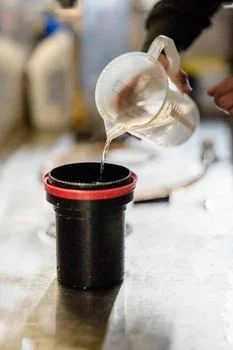
Pretreatment must bring the Silt Density Index (SDI) below 3.0 to prevent irreversible membrane fouling on metal-laden feeds. Without it, hydroxides such as Fe(OH)3 and Al(OH)3 precipitate inside the feed spacer, pressure drop climbs fast, and flux is lost for good. The train usually starts with mechanical screening at 1-5 mm, followed by pH adjustment that either keeps metals soluble for the RO stage or intentionally precipitates them for clarification upstream.
Coagulation and flocculation with ferric chloride or alum aggregate fine colloidal metals. By routing the stream through Lamella clarifiers for RO pretreatment, plants strip 80-90% of the bulk metal load before water ever reaches the membranes, so the RO focuses on the dissolved fraction and membrane life stretches significantly. A metal plating facility in Jiangsu, for example, dropped membrane cleaning from every two weeks to every three months after installing a high-efficiency sedimentation tank ahead of fluctuating chrome loads.
Chemical dosing is the final safeguard. An PLC-controlled chemical dosing for RO pretreatment injects antiscalants - phosphonates or polyacrylates - at precise ratios to block mineral scale. Activated carbon filters upstream of TFC membranes strip residual chlorine and organic surfactants that would otherwise degrade the polyamide layer or cause organic fouling. For arsenic, pH is adjusted to 5-6 so arsenic stays in the As(V) state, which RO rejects far more effectively than As(III).
Heavy Metal-Specific RO Removal Rates and Compliance Benchmarks
Reverse osmosis delivers 99-99.9% lead removal, often below 0.01 mg/L in the permeate and well inside the tightest WHO and EPA drinking water limits. Chromium rejection depends on speciation: hexavalent Cr(VI) is harder to remove than trivalent Cr(III) because of its smaller hydrated radius, but RO engineering specs for chromium removal show that 99% rejection is standard at industrial scale once pH is controlled.
Compared with alternatives, RO covers a wider spectrum. Ion exchange as an alternative to RO for heavy metals can polish specific ions such as nickel or copper to ultra-low levels, but resin sites exhaust quickly in high-TDS water. RO provides a non-selective barrier that handles mixed-metal streams in one pass. Chemical precipitation is cheaper but cannot reliably hit modern EU Directive 2010/75/EU limits on chelated or low-concentration dissolved metals.
| Metal Ion | RO Rejection % | EPA/EU Discharge Limit (mg/L) | Typical RO Permeate (mg/L) |
|---|---|---|---|
| Lead (Pb) | 99.0-99.9% | 0.05-0.1 | <0.005 |
| Mercury (Hg) | 98.0-99.5% | 0.001-0.01 | <0.001 |
| Chromium (Cr) | 95.0-99.0% | 0.05-0.5 | <0.02 |
| Nickel (Ni) | 92.0-97.0% | 0.1-1.0 | <0.05 |
| Copper (Cu) | 95.0-99.0% | 0.5-1.3 | <0.01 |
| Arsenic (As) | 90.0-95.0% | 0.01-0.05 | <0.008 |
For facilities targeting ZLD, RO serves as the primary concentrator. High rejection produces a clean permeate for factory reuse and a small concentrate stream that can be routed to chemical precipitation for heavy metal removal or evaporation. This hybrid cuts the volume of hazardous waste hauled off-site and improves ROI on the discharge compliance investment.
RO System Selection Framework: Matching Technology to Your Metal Wastewater
Industrial RO system selection balances recovery rate - typically 75-85% - against the osmotic pressure of the concentrate. Higher recovery shrinks downstream waste volume but pushes metals harder against scaling limits and raises energy draw. A reliable decision path: 1) define metal species and feed TDS; 2) set the permeate quality target from the applicable EPA or EU limit; 3) pick membrane chemistry (TFC for general duty, nanomaterial for high-value or high-risk streams); 4) size the high-pressure pumps and membrane area; and 5) integrate pretreatment to hold SDI below 3.0.
System sizing follows permeate flux, expressed in liters per square meter per hour (LMH). Heavy metal duties are usually run conservatively at 15-25 LMH to slow fouling. A 50 m3/h system therefore needs roughly 2,000-3,000 m2 of membrane area, and energy draw typically lands between 0.5 and 4 kWh/m3 depending on feed TDS and recovery target.
Cost Drivers and Selection Checklist for Industrial RO
The five cost items that swing RO economics for metal removal are: feed pretreatment (clarifier, multimedia filter, carbon), membrane replacement at 3-5 year intervals, energy at 0.5-4 kWh/m3, chemical dosing (antiscalant, acid or caustic for pH, cleaning chemicals), and concentrate disposal. Most plants we size for plating or electronics run at the lower end of the energy range and the higher end of membrane life, provided SDI stays below 3.0.
Selection checklist before you commit:
- Confirm metal species and total concentration; reject lead and copper are easy, nickel and arsenic set the membrane choice.
- Verify the discharge limit you must meet (EPA, EU Directive 2010/75/EU, or local standard).
- Measure feed TDS, hardness, and chlorine to choose TFC or CA membrane chemistry.
- Lock the pretreatment train to SDI < 3.0 and decide on pH control range.
- Set recovery target (75-85%) and check osmotic pressure of the concentrate.
- Plan concentrate handling: precipitation, evaporation, or haul-off.
Who this is for: plant engineers and EPC contractors selecting the primary barrier for lead, chromium, nickel, copper, mercury, or arsenic removal in industrial wastewater, especially where discharge limits sit below 0.1 mg/L. Who should look elsewhere: sites with very dilute metal loads under 1 mg/L where ion exchange polishing alone is sufficient, or sites handling mostly suspended metals where chemical precipitation is the bottleneck.
For a configured package sized to your feed analysis and discharge target, send your wastewater characterization to HydropureWater engineering with flow rate, metal species, TDS, and the permit limit you need to hit.
Frequently Asked Questions
What removal rate can reverse osmosis achieve for heavy metals?
Industrial RO delivers 99.0-99.9% rejection of lead, 98.0-99.5% of mercury, 95.0-99.0% of chromium, 92.0-97.0% of nickel, 95.0-99.0% of copper, and 90.0-95.0% of arsenic on standard TFC membranes, with permeate concentrations typically below 0.05 mg/L for lead, 0.001 mg/L for mercury, and 0.008 mg/L for arsenic. Nanomaterial-enhanced membranes push lead rejection toward 99.9% and nickel toward 99%.
What operating pressure does an industrial RO system need for heavy metal wastewater?
Low-pressure RO at 10-20 bar handles diluted streams with TDS under 2,000 mg/L and metals below 50 mg/L. High-pressure systems at 40-70 bar are required for concentrated feeds above 200 mg/L or for ZLD duty where osmotic backpressure on the concentrate stream would otherwise collapse flux.
How does pH affect heavy metal rejection in RO?
Feed pH below 6 raises hydrogen ion competition with metal cations at the membrane surface and tends to lower rejection. Feed pH above 8 improves rejection of most divalent metals by forming larger hydroxide complexes, but increases scaling risk from calcium carbonate and metal hydroxides on the membrane. Most plants target pH 6.5-7.5 for a balanced window.
What pretreatment does an RO system need before treating metal wastewater?
The pretreatment train must bring the Silt Density Index below 3.0 and typically includes mechanical screening at 1-5 mm, pH adjustment, coagulation and flocculation with ferric chloride or alum, sedimentation or lamella clarification to remove 80-90% of bulk metals, activated carbon filtration to strip chlorine and organics that attack TFC polyamide, and PLC-controlled antiscalant dosing.
How do you compare RO versus ion exchange or chemical precipitation for heavy metals?
RO provides a non-selective barrier that handles mixed-metal streams in one pass and keeps working at high TDS, while ion exchange polishes specific ions such as nickel or copper to ultra-low levels but exhausts quickly in high-TDS water. Chemical precipitation is the cheapest option but cannot reliably meet EU Directive 2010/75/EU limits on chelated or low-concentration dissolved metals, so it usually feeds or follows an RO stage rather than replacing it.