What an Effluent Treatment Plant in Mendoza Must Achieve
An effluent treatment plant in Mendoza should be selected from the wastewater characteristics and intended discharge or reuse route—not from a generic treatment package. Industrial streams may require oil-water separation, coagulation/flocculation, DAF, biological treatment, clarification, filtration and disinfection in different combinations. University of Twente research identifies nanofiltration as a polishing option for WWTP effluent, while S3 identifies DAF and coagulation/flocculation as relevant chemical-industry methods. For a Mendoza project, obtain representative wastewater analysis, confirm applicable local discharge and sewer requirements, then size each unit around peak flow, contaminant loading and required reuse quality.
An industrial ETP is not one machine. It is a treatment train that receives process wastewater, removes the contaminants relevant to the discharge or reuse route, controls the final water quality and manages the resulting solids and sludge. Depending on the stream and destination, it may include pretreatment, primary treatment, secondary or biological treatment, polishing, disinfection and sludge handling.
The source matters. The 2022 review S3 identifies industrial wastewater from washing, cooking, cooling, heating, extraction, reaction by-products, separation and quality-control activities involving rejected product. These activities create streams with different combinations of oil, solids, biodegradable organics, dissolved salts, nutrients, hydrocarbons, metals and toxic compounds. A treatment train appropriate for one stream may therefore be technically unsuitable for another.
Define the destination before defining the equipment. Sewer authorization, environmental discharge, irrigation and process-water reuse are different design bases. They impose different effluent limits, monitoring obligations and treatment objectives. The 2022 University of Twente research on direct nanofiltration treated nanofiltration as a polishing technology for WWTP effluent, including scenarios involving agricultural or indirect potable use. That supports treating advanced membranes as an additional stage where the required outcome demands it, rather than as the default starting point for every industrial stream.
Do not request a price or select a model until the destination and required effluent quality are documented. The ETP technology comparison and sizing guide provides a useful framework for organizing technology decisions, but the project-specific design must still be based on Mendoza wastewater data and the applicable local requirements.
Build the Project Basis from Real Wastewater Data
A defensible ETP design begins with a sampling plan that represents the wastewater the plant must actually treat. Request samples across normal production, batch dumps, clean-in-place events, rejected or off-spec discharges, and any storm-related inflow that can enter the collection system. Record flow and operating hours during each sampled period.
Use the parameter set examined by the South African Journal of Chemistry study in 2024 as a starting checklist: pH, electrical conductivity, total dissolved solids, total suspended solids, dissolved oxygen, BOD, COD, chloride, sulfate and surfactants. That study monitored these parameters bimonthly for six months at a steel dishware enameling ETP, demonstrating the value of repeated observation instead of relying on one commissioning sample.
Extend the investigation to contaminants that can pass through or inhibit the proposed process. S3 identifies nitrogen, phosphorus, hydrocarbons and heavy metals among possible industrial-effluent contaminants. Depending on the sector, request oil and grease, specific metals, nutrients, toxicity indicators and named process compounds. The online COD monitoring guide explains where online COD measurement can fit within monitoring and control, but an analyzer does not replace the initial laboratory characterization.
| Data block | Information to obtain | Procurement use |
|---|---|---|
| Flow and production | Average flow, peak flow, operating hours, batch discharges, rejected and off-spec releases | Defines hydraulic duty, equalization and turndown |
| Routine water quality | pH, EC, TDS, TSS, DO, BOD, COD, chloride, sulfate and surfactants | Establishes the baseline treatment envelope |
| Process-specific contaminants | Oil and grease, metals, nutrients, toxicity and relevant process compounds | Selects unit processes and identifies inhibition risks |
| Project basis | Discharge route, required effluent quality, future production changes and applicable local requirements | Defines the performance guarantee and tender comparison basis |
Pay particular attention to variable pH, shock loading, emulsified oils, refractory organics, high salinity and compound toxicity. Equalization may be necessary before biological treatment or membranes. Emulsified oil may require chemical conditioning rather than simple gravity separation. Toxicity can invalidate a biological assumption, while high salinity can restrict the biological and membrane process envelope.
Issue the flow history, wastewater characterization and treatment objective in writing before detailed design. Every supplier should state the wastewater envelope and required effluent parameters to which its guarantee applies. A generic statement such as “meets client requirements” is not auditable because it lacks the influent and output limits needed to test performance.
Match Each Treatment Stage to the Contaminant
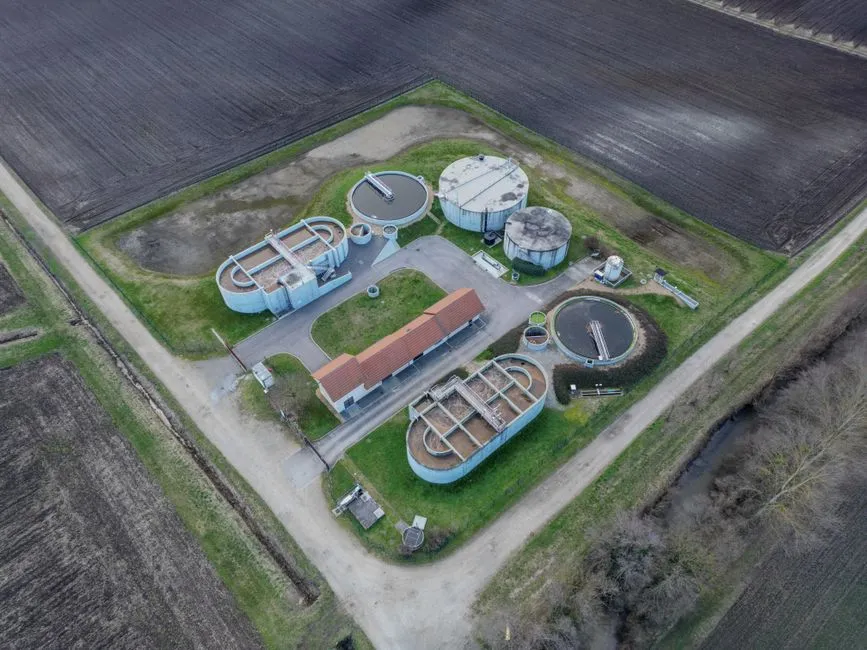
Assign each treatment stage a specific contaminant duty. The sequence should be developed from screening and equalization through oil or solids separation, chemical conditioning, clarification or flotation, biological treatment where suitable, membrane or tertiary polishing, disinfection where justified, and residual or sludge management.
For oil, grease and floatable material, evaluate oil-water separation and DAF. S3 describes petroleum-wastewater treatment systems for removing floating matter, oil, grease, organic solids, colloidal particles and refractory organics. An industrial DAF wastewater treatment system should therefore be evaluated as part of a train, not as a substitute for adequate upstream separation and conditioning.
For suspended solids and colloidal matter, compare DAF with lamella clarification. S3 identifies dissolved-air flotation, coagulation and flocculation among methods used for chemical-industry wastewater. A high-efficiency sedimentation tank may suit a solids-separation duty, but the comparison must use the same feed characterization and required solids concentration in the treated water.
For soluble biodegradable organics, evaluate biological treatment only after controlling pH, toxicity and shock loads. S3 describes BOD as a measure of biodegradable organic matter. Where biological treatment is unsuitable or the reuse objective requires tighter solids separation, an MBR wastewater treatment system combines biological treatment with membrane separation, subject to feed-water characterization, flux management and pretreatment.
For low-solids polishing, distinguish UF from RO. HydropureWater lists an ultrafiltration polishing system at 2,000–40,000 L/h with 0.03 micron PVDF membranes. HydropureWater also lists industrial RO systems with stated recovery rates up to 95%. UF acts as a solids or colloid barrier; RO addresses dissolved constituents through membrane separation. Neither should be selected solely from the required final flow.
Where high-quality reuse or sensitive discharge requires advanced membrane polishing, evaluate MBR, UF, RO or nanofiltration against the residual contaminant profile. The University of Twente study supports nanofiltration as a polishing option for WWTP effluent. Separately, Wageningen University’s 23 September 2022 thesis investigated constructed wetlands for micropollutant removal from WWTP effluent. That research does not establish constructed wetlands as a default industrial ETP in Mendoza; it identifies one investigated polishing route.
Add disinfection only when the reuse route or pathogen-control requirement justifies it. Include it in the operating and monitoring basis rather than inserting it automatically into every plant.
Compare ETP Technologies by Industrial Challenge
Compare each technology by contaminant profile, process role, upstream requirement, limitation and sizing data. A single removal percentage cannot replace a duty-by-duty comparison.
| Technology | Principal role | Upstream requirement | Stated equipment boundary or specification | Information needed to size |
|---|---|---|---|---|
| DAF | Suspended solids, FOG, oil and grease, and colloidal-matter separation | Screening, equalization, and appropriate conditioning where required | HydropureWater catalog: 4–300 m³/h across 13 models | Flow profile, oil and solids loading, chemical demand and required flotation performance |
| MBR | Biological treatment with sub-1 μm filtration | Characterized biodegradable feed, controlled toxicity and pH, and biological pretreatment | HydropureWater catalog: 10–2,000 m³/day and filtration below 1 μm | Flow, organic loading, membrane flux, solids inventory, cleaning and redundancy |
| UF | Solids or colloid barrier before reuse or sensitive discharge | Low-solids feed consistent with the stated turbidity acceptance | HydropureWater catalog: 2,000–40,000 L/h with 0.03 micron PVDF membranes | Feed turbidity and solids, flux, recovery, cleaning and downstream quality |
| RO | Dissolved-solutes removal and high-quality reuse | Appropriate pretreatment and concentrate management | HydropureWater industrial RO: stated recovery rates up to 95% | Salt profile, recovery, energy, concentrate use and disposal route |
| JY integrated purification | Source-water purification within a relevant intake application | Assessment against the stated source-water duty | HydropureWater catalog: 10–200 m³/h; treatment of surface-water turbidity up to 3,000 mg/L to below 3 mg/L | Source-water analysis, pretreatment and confirmation that the duty matches industrial effluent |
DAF is a candidate where oil, grease, suspended solids and colloidal material are central concerns, but its final duty depends on feed characteristics and chemical conditioning. MBR offers biological treatment and fine filtration in one equipment family, but membrane performance still depends on feed characterization, biological pretreatment and flux management.
UF is relevant where the required outcome is a solids or colloid barrier and its stated operating conditions match the feed. RO becomes relevant when dissolved salts and other solutes must be removed; recovery, pretreatment and concentrate handling then become design issues. The JY integrated purification system has a stated surface-water turbidity duty, so it should be compared only where that source-water application is relevant.
Use the RO and UF membrane and filter-element information to clarify equipment configuration, then return to the project wastewater data. Catalog ranges establish supplier boundaries; they are not automatic ETP sizing recommendations.
Size the Plant from Flow and Loading Duties
Separate hydraulic sizing from contaminant-loading sizing. Total flow governs piping, pumps and equalization, while contaminant mass loading may govern DAF, clarification and biological capacity. Treating both as one “plant size” creates equipment that is either hydraulically oversized or overloaded on pollutants.
- Establish average flow, peak flow, operating duration, batch-discharge volume and the need for equalization from representative records.
- Calculate daily contaminant loads from measured concentration and measured flow rather than assuming a constant discharge.
- Define the required treatment duty at both average and peak conditions, including the consequence of batch releases.
- Ask each supplier to state whether capacity is based on hydraulic flow, contaminant loading, membrane flux or another basis.
- Check turndown, redundancy, solids inventory, chemical storage, utilities, controls and installation space.
Published catalog boundaries can structure the enquiry but cannot replace calculations. HydropureWater lists DAF at 4–300 m³/h, MBR at 10–2,000 m³/day and UF at 2,000–40,000 L/h. These are equipment-specific ranges, not recommended capacities for an ETP in Mendoza.
The preliminary plant envelope should also include screens, equalization, chemical dosing and residual handling. A rotary mechanical bar screen may protect downstream equipment from discrete solids, while an automatic chemical dosing system should be sized from the confirmed coagulant, flocculant, pH-adjustment and specialty-chemical duties.
Require suppliers to state duty points at average flow and peak flow, along with turndown and redundancy. Clarify how batch discharges are handled, whether storage is provided and how the plant responds to an upset. Final sizing requires representative wastewater analysis, flow records and the applicable discharge or reuse criteria.
Plan Controls, Monitoring and Residual Handling
An ETP is not complete without controls, monitoring and a residual-handling plan. Include influent and effluent sampling at locations that support process control and permit or reuse compliance. Select parameters from the documented treatment objective: pH, flow, TSS, COD, BOD, oil and grease, conductivity, DO, chloride, sulfate and surfactants where relevant.
Do not judge performance from one commissioning sample. The South African Journal of Chemistry study used a bimonthly monitoring program over six months to assess an industrial enameling ETP. That finding supports a recurring performance review, with monitoring frequency adjusted to the process and permit rather than copied mechanically.
| System element | Supplier requirement | Buyer verification |
|---|---|---|
| Monitoring | Defined sampling points, instruments, ranges, calibration and data records | Parameter selection follows the wastewater profile and permit or reuse criteria |
| Chemical dosing | PLC-controlled dosing of coagulants, flocculants, pH adjusters and specialty chemicals | Dose limits, chemical storage, alarms and operator controls are defined |
| Sludge handling | Solids production, thickening, storage and dewatering method | Residual destination and downstream acceptance criteria are documented |
| Operations | Startup, bypass, upset response, maintenance and alarm narrative | Bypass conditions are authorized and performance data are auditable |
HydropureWater describes PLC-controlled automatic dosing of coagulants, flocculants, pH adjusters and specialty chemicals. Specify the required control logic and interlocks rather than accepting automatic dosing as a generic feature.
Connect residual generation to the equipment plan. HydropureWater’s plate and frame filter presses cover filtration areas from 1 m² to 500 m² and manual, hydraulic or fully automatic PLC-controlled operation. An industrial sludge dewatering filter press may form part of the residual train, but its selection depends on sludge characteristics, expected solids yield, filtrate quality and the disposal route.
Require an operating narrative covering startup, bypass conditions, upset response, calibration, alarm handling, maintenance and sampling frequency. It should identify who may authorize a bypass and what evidence is retained after each event.
Qualify an ETP Supplier in Mendoza
A technically credible bid should contain a process basis, equipment list, P&ID, sizing calculations, utility requirements, control narrative, commissioning plan and wastewater performance basis tied to the buyer’s disclosed data.
Issue the same information package to every bidder: wastewater characterization, flow assumptions, average and peak duty points, applicable discharge or reuse criteria, site constraints and required documentation. Without a common basis, quotations can appear comparable when they actually cover different duties.
Verify proposed capacity against both hydraulic and contaminant-loading conditions. Require the supplier to identify any influent condition outside which its guarantee does not apply. A guarantee bounded by the documented wastewater envelope is more useful than an unconditional statement that cannot be tested.
Clarify responsibility for engineering, fabrication, installation, commissioning, operator training, spare parts and warranty support. Confirm that the supplier can support local installation and service, but do not assume a Mendoza service center, parts inventory or response time that has not been demonstrated. Use the Mexico wastewater discharge compliance guide as an input to checking the applicable discharge framework, not as a substitute for project-specific regulatory confirmation.
Score technical completeness and commercial terms separately. For technical comparison, inspect process fit, sizing calculations, drawings, utilities, controls, commissioning, sludge handling and guarantees. For commercial comparison, use the same scope of supply, site-work assumptions, utility rates, tax treatment, delivery terms, installation responsibility, warranty and acceptance criteria.
Request references only for genuinely comparable streams. A reference with different contaminants, flow variability, salinity, operating hours or reuse objective is evidence of experience in a different design basis. Ask for the operating conditions behind each reference and whether the supplier’s scope covered design, fabrication, installation or only equipment supply.
Frequently Asked Questions
How much does an industrial effluent treatment plant in Mendoza cost?
The supplied research contains no Mendoza ETP price data, so a defensible price cannot be stated here. Cost depends on flow, wastewater analysis, process route, civil works, utilities, controls and the discharge or reuse target. Request a basis of design before comparing quotations, and ask each supplier to state what is included in equipment, foundations, installation, commissioning, training, chemicals, electrical work and residual handling. Use the same scope and duty points in every bid; otherwise the lowest number may describe the smallest scope.
Which treatment system should a Mendoza factory choose?
Choose by contaminant duty. DAF is a candidate for oil, grease, suspended-solids and colloidal loads; clarification supports solids separation; biological treatment addresses suitable biodegradable organics; MBR combines biological treatment with fine filtration; and UF or RO provides membrane polishing where the reuse quality requires it. The correct combination depends on the representative wastewater analysis and the confirmed destination for the treated water. An industrial reverse-osmosis system is relevant where dissolved-solutes removal is required, not merely because reuse is mentioned.
How do I size an ETP for peak and batch discharges?
Establish average flow, peak flow, operating hours, batch-discharge volume, equalization needs and contaminant loading from representative data. Then require every bidder to show how its equipment handles both average and peak duties and how batch releases pass through or are stored. Check the basis of each quoted capacity: it may refer to hydraulic flow, contaminant loading or membrane flux. The equipment range alone is not the plant size.
What evidence should I request from an ETP supplier?
Request a wastewater basis, process narrative, P&ID, duty calculations, utility requirements, controls narrative, commissioning plan, sludge-handling plan, installation requirements and performance guarantees. Each guarantee should identify the influent envelope and required effluent parameters. Also request the supplier’s responsibility matrix for engineering, fabrication, installation, commissioning, training, spare parts and warranty support. If disinfection is proposed, obtain the rationale and monitoring basis; an ozone generator and tank sterilization system should be tied to a defined pathogen-control requirement.
When is nanofiltration or RO appropriate in Mendoza?
These are advanced polishing options, not default ETP stages. Nanofiltration becomes relevant when the required water quality calls for additional separation beyond mainstream treatment; the University of Twente research examined it specifically for polishing WWTP effluent. RO becomes relevant when dissolved salts and other solutes must be removed for a defined reuse objective. In either case, obtain the residual contaminant profile, feed salinity, recovery, energy demand and concentrate-disposal route before accepting the technology.