Separate the data center's two wastewater streams
An Uberlandia data center should treat cooling-tower blowdown and sanitary wastewater as separate streams. Blowdown requires characterization for TDS, hardness, alkalinity, silica, suspended solids and cooling chemicals, followed by a site-specific train that typically progresses from equalization and filtration to UF and RO. UF removes particulates and biological material but not dissolved salts; RO is needed for cooling-tower makeup reuse. Sanitary wastewater can be handled by a separate MBR package sized from occupancy and flow data. Final equipment selection depends on measured peak flow, local makeup-water chemistry, pilot results and confirmed discharge or reuse conditions under Brazil’s CONAMA Resolution 430/2011 baseline.
Keep these streams separate because their control problems differ. Cooling blowdown is an industrial purge whose dissolved-solids concentration changes with cooling tower cycles of concentration, makeup-water chemistry, treatment programs and operating conditions. A sanitary discharge varies with occupancy, fixture use, kitchen operations and other wastewater-generation patterns. Combined equalization would mix a relatively predictable cooling purge with variable biological load, complicating membrane-feed control and making both recovery and effluent compliance harder to prove.
The sanitary train should therefore be sized from occupancy, wastewater generation, daily variation and peak flow. HydropureWater’s Natal guide, published in 2026, identifies MBR as suitable for the smaller, separate sanitary stream; its separate MBR sanitary wastewater treatment is the relevant equipment category. The industrial train should instead begin with equalization, filtration and membrane treatment.
Define the endpoint before selecting equipment. Cooling makeup reuse, lower-grade process reuse, permitted discharge, partial zero liquid discharge and full ZLD impose different water-quality and concentrate-handling requirements. A broader 2026 data center wastewater treatment guide provides useful process context, but Uberlandia’s permit conditions and measured chemistry must remain the design basis.
Build an Uberlandia design basis from measured water chemistry
Cooling-tower blowdown must be characterized across operating conditions before equipment capacity or chemical pretreatment is fixed. The minimum program starts with flow measurement, a preliminary water balance, cooling configuration, operating cycles of concentration and representative samples collected during normal, daily-peak and peak-flow operation.
Laboratory analysis should quantify TDS, calcium, magnesium, alkalinity, silica, suspended solids, temperature and chloride. Identify the cooling chemicals in service and measure their residual concentrations: biocide, corrosion inhibitor, scale inhibitor and dispersant. These species determine osmotic loading, carbonate and silica scaling, membrane compatibility, material selection and whether recovered water can return to the cooling system.
| Design input | Why Uberlandia needs it | Decision supported |
|---|---|---|
| TDS | Sets osmotic loading and concentrate concentration | RO recovery and concentrate route |
| Calcium, magnesium and alkalinity | Identifies carbonate scaling potential | Softening, antiscalant and cleaning strategy |
| Silica | Controls membrane and cooling-system scaling risk | RO versus controlled precipitation or high-recovery treatment |
| Suspended solids and temperature | Establishes filtration demand and membrane-feed condition | Side-stream filtration and UF pretreatment |
| Chloride and cooling-chemical residuals | Defines corrosion, reuse and discharge risks | Materials selection and permit compliance |
Genesis Water Tech’s screening benchmarks are 1,200–6,000 mg/L TDS and 10–50 mg/L suspended solids for cooling-tower blowdown. These are not Uberlandia acceptance limits or discharge standards. They also are not a substitute for testing makeup water for salinity, chlorides, organics and biological loading.
The preliminary water balance should include makeup flow, evaporation, blowdown, drift and demand for recovered water. Genesis Water Tech reports that approximately 25–30% of makeup water exits as blowdown at four cycles of concentration; its 10-million-gallon monthly example therefore produces 2.5–3 million gallons per month of blowdown. This is a screening relationship, not a measured Uberlandia flow.
Pilot testing must then establish antiscalant formulation, membrane compatibility, achievable recovery and chemical pretreatment. The supplied research provides no valid Uberlandia dosing rate. An automatic chemical dosing system should therefore be specified around pilot-established controls rather than a fixed local dose.
Select a treatment train that matches the final water route
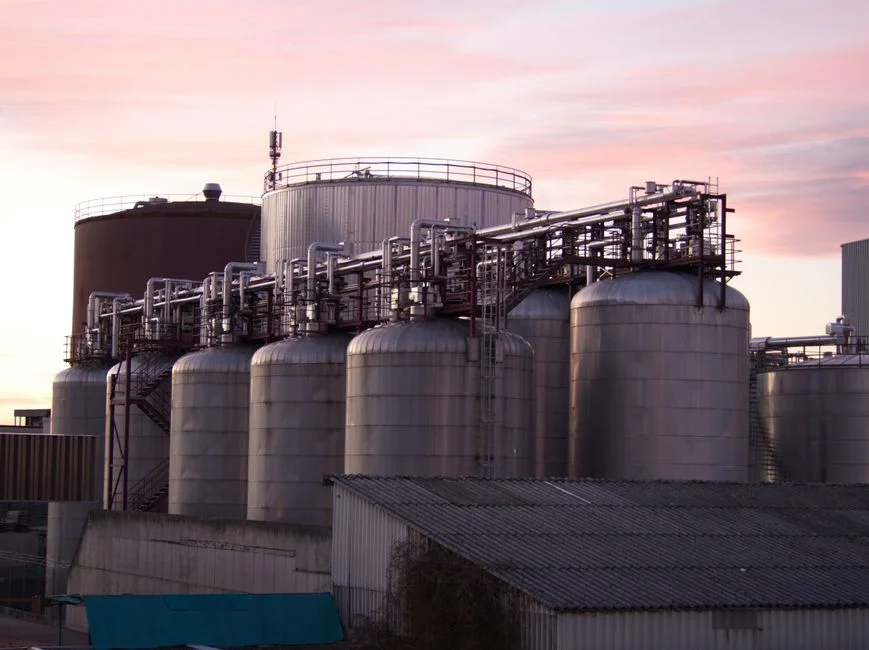
The base treatment train should be equalization and screening, side-stream filtration, UF, RO, controls, and a connection for reuse or permitted discharge. The ultrafiltration pretreatment protects the membranes from particulates and biological material; it does not remove the dissolved-salt load that controls cooling-tower makeup quality.
Genesis Water Tech reports UF recovery at 90–95% and RO recovery at 50–85%. It also reports RO permeate at 10–50 mg/L TDS with operation at 150–400 psi. UF alone is appropriate only where biological and particulate removal are the objectives and the recovered-water specification permits the remaining dissolved salts.
| Option | Applicable condition | Evidence-based basis | Main limitation |
|---|---|---|---|
| UF | Particulate and biological barrier before RO or for a limited reuse duty | 90–95% recovery; 10–30 psi operation, according to Genesis Water Tech | Dissolved salts remain |
| NF | Hardness is the binding constraint and partial softening is sufficient | 70–85% recovery; permeate at approximately 30–50% of feed TDS; 75–150 psi, according to Genesis Water Tech | Does not establish TDS, chloride or ZLD compliance |
| RO | Cooling makeup reuse or a confirmed discharge route requiring desalination | 10–50 mg/L permeate TDS; 150–400 psi; 50–85% recovery, according to Genesis Water Tech | Scaling and concentrate management |
| MVC | RO concentrate cannot be admitted within confirmed limits | 95–98% recovery from concentrate; distillate below 10 mg/L TDS; 15–25 kWh per 1,000 US gallons of distillate, according to Genesis Water Tech | Higher energy demand and capital cost |
| Crystallization | Full ZLD is required and solid disposal is authorized | 95–99% overall recovery; $3–8 million CAPEX and $5–15 per thousand gallons treated in OPEX, according to Genesis Water Tech | Highest capital and operating burden |
NF is a lower-pressure option when hardness, rather than full desalination, controls the requirement. It should not be assumed to satisfy a TDS, chloride or zero-liquid-discharge limit without pilot confirmation. For difficult scaling chemistry, IDE Tech states that conventional brackish-water RO commonly plateaus at 75–80% recovery for cooling-tower blowdown. Controlled precipitation or another high-recovery alternative should therefore be evaluated when silica or hardness prevents the base train from meeting the adopted route.
Reserve MVC and crystallization as independent, stageable options. This avoids committing to high-recovery equipment before pilot results, reuse demand and concentrate-admission conditions are known. Equipment evaluation should cover the industrial reverse osmosis system, UF pretreatment and any upstream polishing or filtration required by actual feed chemistry.
Protect the membranes and the wider cooling system
Membrane protection begins with removing suspended solids and controlling scale chemistry before RO feed enters the train. Genesis Water Tech’s side-stream filtration screening concept is capacity equivalent to 1–5% of total circulation flow, depending on operating conditions and water-quality objectives. That concept must be refined from Uberlandia’s measured solids load, filtration backwash requirements and cooling-system configuration.
Genesis Water Tech recommends RO feed filtration below 10–15 microns, chemically conditioned feed and pH adjustment. These requirements should be translated into measurable feed specifications, interlocks and acceptance tests. If source-water chemistry varies materially, a multi-media filter upstream can polish the feed and protect downstream membranes.
Screen the actual cooling program rather than relying on generic chemical assumptions. Legacy chromate and high-phosphate programs can create additional membrane-fouling, reuse and discharge challenges. The bidder should provide compatibility evidence for every biocide, corrosion inhibitor, scale inhibitor and dispersant, including residual concentrations measured from site samples.
Automatic antiscalant or specialty-chemical dosing should follow pilot work. The pilot should compare formulations, identify cleaning triggers and demonstrate stable recovery and flux without unacceptable membrane scaling. The supplied research does not establish a valid Uberlandia dose, so fixing one before testing would turn an unknown into a procurement assumption.
Material selection also matters. Chloride-resistant materials, compatible seals and suitable valves and filter media should be checked against the measured feed. The RO and UF membrane elements and treatment valves and filter media should be selected for the demonstrated chemistry, not transferred from a freshwater project.
Size sanitary wastewater separately from the industrial train
Sanitary treatment must be sized from occupancy, wastewater-generation data, daily variation and peak flow rather than from cooling-blowdown flow. The design should establish whether the sanitary stream will reach a sewer, undergo internal reuse or receive another separately approved treatment.
MBR is appropriate where compact biological treatment and membrane solids separation are required. HydropureWater’s Natal benchmark, published in 2026, identifies MBR for the smaller sanitary stream while keeping it separate from the industrial blowdown train. The discharge route, disinfection requirements and reuse constraints must remain independent from the RO-concentrate and blowdown permit route.
HydropureWater’s MBR catalog range is 10–2,000 m³/day. This is a catalog range, not the Uberlandia design flow. A site-specific selection should reconcile occupancy, fixture demand, operational peaks, required effluent quality and standby provisions. A separate integrated sewage treatment option may be considered only if its documented duty matches the sanitary design basis.
Confirm permits and disposal routes before locking the project scope
CONAMA Resolution 430/2011 is the national baseline identified in the supplied research, but it does not establish Uberlandia’s sewer-admission terms or authorize a particular reuse route. The designer must obtain current requirements from the competent municipal utility and environmental authority before finalizing the treatment train.
Request current limits for TDS, chloride, nutrients, temperature and biocide residuals, together with acceptable instantaneous and monthly discharge volumes. Confirm in writing whether the selected route is sewer discharge, surface-water discharge, hauled liquid waste or internal reuse. The supplied research contains no Uberlandia-specific limits, so none should be inserted into the procurement specification by assumption.
These decisions determine the process gate. If the confirmed route accepts the base UF/RO discharge, retain the lower-complexity train. If concentrated RO reject cannot be admitted, evaluate MVC for partial ZLD. If no liquid discharge is permitted and water recovery justifies the investment, evaluate crystallization. The comparable cooling-blowdown treatment guide provides process context but not Uberlandia authorization.
Before adding a crystallizer, confirm the solid-waste classification, licensed receiving route and handling requirements. The hydraulic capacity of a filter press does not establish a legal disposal route. HydropureWater’s Recife guide, published in 2026, cites an approximately 80% evaporation and 20% blowdown relationship; treat that only as directional context, not as an Uberlandia water-balance value.
Stage the capital plan and compare treatment alternatives
The capital plan should distinguish enabling work, the base treatment train and optional high-recovery equipment. Stage 1 covers flow measurement, laboratory characterization, site pilot, water balance and utility engagement. Stage 2 covers equalization, filtration, UF, RO, controls and the reuse or discharge connection. Stage 3 adds MVC and, only if justified, crystallization and solids handling.
| Cost element | Screening reference | Scope and procurement treatment |
|---|---|---|
| Base industrial RO | $250,000–$500,000 CAPEX and $1.50–3.00 per thousand gallons OPEX for a 50,000 GPD system | U.S.-based Genesis Water Tech reference; not an Uberlandia quotation |
| MVC | $1–3 million CAPEX for 10,000–30,000 GPD | Separate option from Genesis Water Tech; price the confirmed feed and utility arrangement |
| Full ZLD | $3–8 million CAPEX and $5–15 per thousand gallons treated in OPEX | Separate option from Genesis Water Tech; require a confirmed solid-waste route |
These values are U.S.-based screening references from Genesis Water Tech, not local quotations. Require a BRL quotation that includes electricity, demand charges, chemical logistics, labor, imported equipment, membrane replacement, commissioning, concentrate handling and disposal. The sizing remains provisional until measured peak flow, pilot recovery and reuse demand are available; solids handling can include a plate-and-frame filter press where the confirmed solids route supports it.
Energy use belongs in the economic comparison. A 2026 Open Engineering Inc preprint found that the evaluated wastewater scenario had about twice the global warming potential of the freshwater case, with treatment energy accounting for roughly 80% of the difference. Water savings must therefore be evaluated together with treatment energy and grid conditions, not treated as a standalone environmental benefit.
Move from characterization to a defensible equipment award
A defensible award follows a fixed sequence:
- Measure flows, sample the streams and reconcile the cooling water balance.
- Obtain current permit and sewer-admission conditions.
- Run a site pilot covering recovery, scaling, fouling, pretreatment compatibility and concentrate quality.
- Issue the process scope with separately priced base UF/RO, MVC and full-ZLD alternatives.
- Evaluate bids against measured-feed calculations and demonstrated acceptance criteria.
- Award, commission and verify the confirmed reuse or discharge route.
Require bidders to submit measured-feed design calculations, a site water balance, a pilot protocol, a pretreatment compatibility plan and separate pricing for the base train, MVC and ZLD. UF and RO capacity should be selected against measured peak flow, pilot recovery, reuse demand and the concentrate route—not directly from a generic gallons-per-day figure.
Supplier due diligence should include documented Brazilian installations, competence with CONAMA Resolution 430/2011, commissioning support and comparable cooling-blowdown or high-silica reuse projects. Request local references for electrical service, spare parts and chemical supply. A cooling-blowdown treatment and recovery guide can support the technical evaluation, but comparable project evidence must still relate to the site chemistry.
The final total-cost comparison should include local energy, membrane-cleaning intervals, chemical demand, membrane replacement, concentrate or solid disposal and commissioning support. The award should follow the pilot and permit decision gate, not precede it.
Frequently Asked Questions
What is the preliminary cost of cooling-blowdown treatment for the data center?
Use the cited $250,000–$500,000 CAPEX and $1.50–3.00 per thousand gallons OPEX only as a U.S.-based screening envelope for a 50,000 GPD industrial RO reference from Genesis Water Tech. Request a site-specific BRL quotation after the pilot, covering local electricity, demand charges, chemicals, labor, membrane replacement, commissioning and concentrate disposal.
How should UF and RO capacity be sized in Uberlandia?
Size from measured peak blowdown flow, cooling cycles of concentration, feed chemistry, pilot recovery, reuse demand and the confirmed concentrate route. Do not transfer capacity directly from a generic GPD figure. The pilot should demonstrate that the selected recovery remains stable under the measured silica, hardness and treatment-chemical conditions.
What should be checked before selecting a treatment supplier?
Require Brazilian references, CONAMA competence, a feed-specific pilot, membrane and antiscalant compatibility evidence, commissioning support and separate pricing for RO, MVC and ZLD. Also obtain local references for electrical service, spare parts and chemical supply. These checks test whether the supplier can support operation after award, not only whether it can quote equipment.
Which permit conditions determine the final treatment scope?
Obtain current Uberlandia limits and written confirmation of the authorized sewer, surface-water, hauled-waste or internal-reuse route. CONAMA Resolution 430/2011 is the national baseline identified in the research, but it is not a substitute for local sewer-admission terms. If no liquid-discharge route is available, evaluate MVC and crystallization only after the solid-waste route is confirmed.
When should UF, RO and MVC be included?
Use UF as membrane pretreatment and RO for dissolved-salt removal when recovered water is intended for cooling-tower makeup. Consider MVC only after testing confirms that the RO concentrate cannot be admitted within the permitted route. Add crystallization only for a justified full-ZLD case with an authorized solid-waste destination.