What treatment does a Bujumbura data center actually need?
A Bujumbura data center needs stream-specific treatment: reduce cooling-tower blowdown, treat the residual blowdown for reuse or permitted discharge, and keep domestic sewage outside the industrial cooling-water train. The practical route is side-stream filtration followed by UF and RO, with mechanical vapor compression considered only when recovery and concentrate-disposal constraints justify it. Equipment must be sized from metered makeup and blowdown—not IT megawatts—and from Bujumbura source-water chemistry. The supplied research establishes no Bujumbura-specific discharge limit, tariff or reuse standard, so the local authority, receiving route and influent analysis must be confirmed before procurement.
The scope begins with three decisions: what operating changes can reduce blowdown, what treatment the residual stream requires, and whether staff sewage can remain in a separate biological package. It then translates those decisions into equipment scope. This follows the data-center cooling-blowdown treatment methodology, while Bujumbura-specific requirements must be obtained from the relevant authority.
| Scope decision | Provisional treatment | Unresolved procurement gate |
|---|---|---|
| Reduce blowdown | Leak control, control optimization, chemistry review and side-stream filtration | Measured makeup, blowdown, evaporation, drift and losses |
| Reuse residual blowdown | Side-stream filtration, UF and RO | Feed analysis, recovery target, blend specification and power-resilience design |
| Manage residual discharge | Treatment selected against the confirmed receiving route | Applicable Bujumbura limits, receiving conditions and concentrate route |
| Treat staff sewage | Separate packaged biological treatment | Domestic wastewater flow, effluent destination and applicable acceptance criteria |
Selecting UF or RO before the treatment objective is established can produce a coherent package that does not satisfy the reuse, discharge or continuity requirement. Mechanical vapor compression and full zero liquid discharge should remain contingent options, not default additions.
Separate every wastewater source before selecting equipment
Cooling-tower blowdown, makeup-treatment reject, chiller and humidifier drains, equipment wash water, laboratory drains and domestic sewage have different contaminants, flow patterns and destinations, so they must not be combined into one generic wastewater design flow.
Create a source-and-discharge register before issuing an RFQ. For each stream, record the cooling configuration, design cooling capacity, IT load, number of towers, makeup-water source, chemical program, current cycles of concentration and intended destination. Also record hourly or daily flow, operating schedule, sampling results and abnormal discharge events. The objective is not merely to label streams; it is to establish which stream can be reduced, reused, discharged, stored or treated separately.
| Stream | Primary design issue | Procurement treatment |
|---|---|---|
| Cooling-tower blowdown | Concentrated dissolved solids, treatment chemicals, suspended matter and variable flow | Optimization first; filtration, UF and RO if the confirmed objective requires them |
| Makeup-water treatment reject | Source-dependent salts and pretreatment residues | Characterize separately; do not assign it the cooling-blowdown flow |
| Chiller and humidifier drains | Chemical content, temperature and episodic discharge | Trace the source and obtain representative chemistry |
| Equipment wash water | Detergents, oil and variable solids | Segregate from sewage unless an approved combined design is demonstrated |
| Laboratory drains | Possible acids, alkalis, solvents or metals | Assess hazardous characteristics before inclusion |
| Domestic sewage | Biological load and domestic contaminants | Keep outside the industrial membrane train |
Staff sewage should not pass through the industrial cooling-water treatment system. Biological and domestic contaminants introduce different treatment and acceptance requirements. For that separate scope, the HydropureWater WSZ series specifies a buried integrated package combining A/O biological contact oxidation, sedimentation and disinfection in an automated system, with a stated capacity range of 1–80 m³/h. Buyers can request a separate packaged sewage treatment for staff wastewater after confirming the domestic flow, soil conditions and effluent destination.
DAF should be a targeted alternative, not the default for every stream. Use it where characterization confirms a meaningful oil-and-grease or floatable-solids load. HydropureWater lists DAF capacity from 4–300 m³/h across 13 standard models, but those catalogue limits do not establish the required duty without feed analysis.
Build a measured cooling-water balance
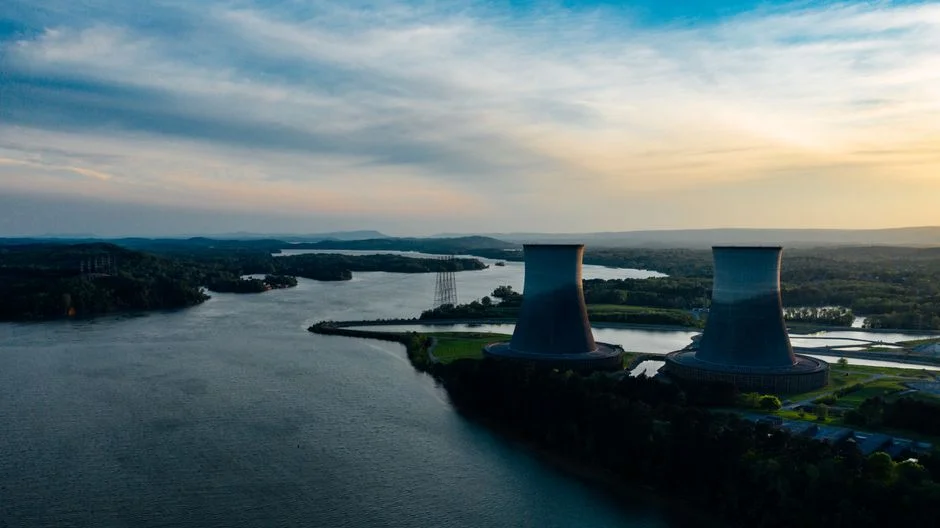
The preliminary design flow must come from a reconciled site water balance, not IT megawatts, cooling-system nameplate capacity or a generic data-center example. Meter makeup and blowdown across representative operating periods, including humid weather, commissioning, future IT-load growth, emergency dumping and unmeasured losses. Then balance makeup water against evaporation, blowdown, drift, retained water and other losses.
Genesis Water Tech uses the relationship 1/(CoC−1) for the blowdown ratio. On that basis, 4 CoC produces a 25% blowdown fraction and 6 CoC produces a 20% fraction—a 20% reduction. The same source warns that actual blowdown can exceed theoretical calculations by 15–30% because of unmeasured losses and emergency dumps. Theory therefore cannot be the sole sizing basis.
| Source and basis | Stated result | Procurement treatment |
|---|---|---|
| Genesis Water Tech, current article: 1/(CoC−1) | 25% blowdown at 4 CoC; 20% at 6 CoC | Use as a theoretical relationship, then reconcile against meters |
| Genesis Water Tech, current article | Actual blowdown can exceed theory by 15–30% because of unmeasured losses and emergency dumps | Include measured contingency and abnormal-operation cases |
| HydropureWater Bouaké article, 2026, citing U.S. DOE FEMP | Claims 50% blowdown reduction from 3 to 6 CoC | Require the bidder to disclose the underlying equation and assumptions |
| HydropureWater Bouaké article, 2026 | 25–30% of makeup purged at 4 CoC in its stated example | Do not transfer the example to Bujumbura without a site balance |
The conflict must be resolved before equipment suppliers fix their flow basis. Require bidders to disclose evaporation assumptions, drift, unmeasured losses, hold-up changes, emergency dumps, operating load and the equation used. The water-balance and treatment-scoping approach for data centers provides a useful RFQ framework, but it does not establish a Bujumbura flow.
Do not infer treatment flow from facility megawatts or a foreign IDE figure. The supplied research contains no Bujumbura site flow or reconciled balance. Define normal, peak and contingency duties from measured post-optimization operation, then state explicitly which measured condition controls each treatment module.
Characterize the source water and cooling chemistry
Membrane and recovery selection require chemistry from the actual Bujumbura supply, not a single generic specification. Require conductivity, pH, suspended solids, temperature, silica, hardness, alkalinity, chloride, iron and treatment-chemical residuals for the source water and cooling-blowdown streams.
Represent local variability and seasonal change. Sampling should cover normal operation and relevant extremes, with additional monitoring after changes in source, treatment or cooling chemistry. Identify whether the feed to each treatment stage is once-through, recirculated or mixed.
| Parameter | Design question | Evidence required before commitment |
|---|---|---|
| Hardness and alkalinity | Will carbonate scaling constrain RO recovery? | Source and blowdown analyses across operating conditions |
| Silica | What recovery is sustainable without silica deposition? | Silica results and RO recovery trial or validated calculation |
| Conductivity and chloride | What salt load enters the treatment train and concentrate? | Continuous trend plus laboratory confirmation |
| Suspended solids and iron | Will pretreatment foul UF or RO? | Filtered and unfiltered solids results, corrosion-product observations |
| Chemical residuals | Can the program support the selected CoC and membranes? | Complete chemical inventory, dosing logs and product safety data |
Higher recovery increases scaling exposure. Hardness, alkalinity and silica determine whether antiscalant, pH control and tighter operating controls are needed before RO. Genesis Water Tech warns that biological and scaling risks increase above 5–6 CoC without advanced treatment. A conductivity setpoint therefore does not replace chemistry control, inspection and membrane-feed validation.
Review the existing chemical program before increasing cycles of concentration. Genesis Water Tech states that complex dosing involving phosphonates, dispersants, corrosion inhibitors, biocides and scale inhibitors can add dissolved solids and make downstream treatment more difficult. The design team should test whether the current program can support the target CoC, then determine whether PLC-controlled chemical dosing is required for pretreatment and RO feed control.
The industrial RO system for blowdown reuse should remain preliminary until source chemistry, recovery and concentrate handling are defined. Membrane type, antiscalant dose and recovery cannot be responsibly fixed from IT load alone.
Choose between reuse, compliant discharge and zero liquid discharge
The controlling objective should follow the site constraint: reuse cooling-tower makeup when recovered water has operational value; use discharge compliance when an approved route and enforceable limits govern the residual stream; consider zero liquid discharge only where a viable liquid-discharge route is unavailable.
| Route | Genesis Water Tech benchmark | Decision condition |
|---|---|---|
| Side-stream filtration plus UF/RO | 60–85% recovery for blowdown-to-makeup treatment | Reuse quality, discharge route and feed chemistry support the selected recovery |
| RO plus MVC | 85–95% combined recovery | Stable RO operation, additional water value and an executable concentrate route |
| Full evaporation and crystallization | 95–99% overall recovery | No viable liquid-discharge route and full lifecycle economics are acceptable |
These are comparative benchmarks, not Bujumbura guarantees. Genesis Water Tech reports MVC distillate below 10 mg/L TDS, concentrate at 20–30% dissolved solids and energy demand of 15–25 kWh per 1,000 US gallons. Require bidders to substantiate assumptions, equipment sizing and guarantees against the confirmed feed and power profile.
Power resilience is part of the treatment design. High-pressure RO and MVC depend on stable electricity, while UF operates at lower pressure. Obtain the site’s outage history, generator capacity, switching arrangements and electrical requirements; document safe shutdown, membrane flushing and restart procedures. Do not assume that a nominal generator automatically supports the complete data-center and treatment load.
The use of hollow-fiber UF pretreatment for cooling blowdown can reduce membrane-fouling risk, but it does not remove dissolved solids and does not eliminate the concentrate obligation. The supplied evidence establishes no Bujumbura discharge route, local limit or brine-disposal option. Confirm those items with the authority and receiving party before purchasing advanced recovery equipment.
Define the treatment train by purpose
Each treatment module must solve a defined problem. Side-stream filtration removes suspended solids, biofilm fragments and corrosion products before they foul downstream membranes. UF provides a low-pressure barrier ahead of RO; it is not the dissolved-solids removal step. RO removes dissolved salts, including hardness, alkalinity and silica constituents that constrain recovery.
| Module | Function | Procurement specification |
|---|---|---|
| Side-stream filtration | Remove solids and corrosion products | Select media and loading rate from actual cooling-water chemistry and flow |
| Multi-media filtration | Provide pretreatment for downstream RO protection | Include pressure, media specification, controls and backwash or cleaning strategy |
| UF | Polish suspended solids before RO | 0.03-micron hollow-fiber PVDF, feed turbidity up to 300 ppm, automatic backwash and air scour; catalogue capacity 2,000–40,000 L/h |
| RO | Remove dissolved salts | Industrial catalogue recovery up to 95%; require site-specific recovery and permeate guarantees |
| Chemical dosing | Control scaling and feed chemistry | PLC-controlled injection linked to measured water quality and treatment rate |
| Residue handling | Manage filter sludge and RO concentrate | Specify collection, storage, destination and inspection access |
The HydropureWater multi-media filter is an available implementation where pretreatment is needed to produce an SDI suitable for RO protection. Require the supplier to substantiate the media arrangement and operating range against the supplied water analysis rather than accepting catalogue capacity alone.
The multi-media pretreatment filter protects the membrane train; the UF system removes remaining particulate material; the industrial RO unit performs dissolved-solids separation. Antiscalant and pH control belong in the feed train when silica, hardness or alkalinity create scaling risk at the selected recovery.
Keep sludge and concentrate visible in the drawings and RFQ. The automatic chemical dosing system should provide controlled injection tied to the measured operating condition; chemical feed is part of the process, not an accessory. Also specify membrane storage, cleaning chemicals, replacement strategy and operator access.
Phase procurement around measured operating improvement
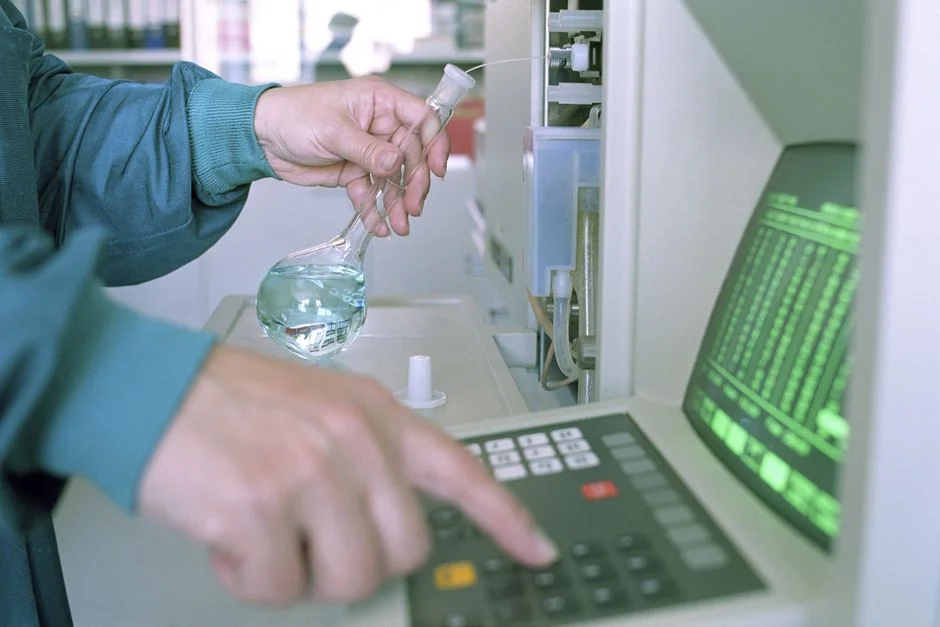
Procurement should follow demonstrated operating improvement, not an assumed membrane demand. This sequence reduces the risk of buying high-pressure equipment for a stream that leak control or better blowdown control can reduce.
- Phase 1 — Reduce and stabilize: repair leaks, eliminate once-through cooling where practical, optimize blowdown controls, review the chemical program and add side-stream filtration.
- Phase 2 — Establish reuse or residual treatment: add UF and RO only after post-optimization flow and feed chemistry are established.
- Phase 3 — Recover RO concentrate: introduce MVC only after stable RO performance, an economic comparison and a viable concentrate route are demonstrated.
- Phase 4 — Consider full ZLD: proceed only where an approved liquid-discharge route is unavailable.
| Phase | Entry evidence | Scope released |
|---|---|---|
| 1 | Metered baseline, leak survey, control review and cooling chemistry | Optimization, chemistry work and side-stream filtration |
| 2 | Post-optimization flow, source analysis and confirmed reuse or discharge objective | UF and RO |
| 3 | Stable RO performance and accepted concentrate route | MVC on RO concentrate |
| 4 | No viable liquid-discharge route and accepted lifecycle case | Full evaporation and crystallization |
Use the supplied 72-hour performance test as a procurement benchmark, then add site-defined acceptance limits based on confirmed local rules and the approved reuse specification. During the test, record permeate flow and quality, concentrate quality, normalized recovery, differential pressure, electrical demand, chemical use and treated-water availability.
Each bidder should submit the flow basis, water analysis, recovery assumptions, power profile, concentrate destination and acceptance-test criteria. The phased procurement and performance-test approach provides a useful basis, but local acceptance criteria must still be completed before issue.
Frequently Asked Questions
What flow should a Bujumbura data center use to size wastewater treatment?
Use metered post-optimization blowdown reconciled with makeup water, evaporation, drift, retained water and unmeasured losses. IT load and tower nameplate are context, not treatment-flow evidence. The supplied research provides no defensible Bujumbura design flow, so the RFQ should withhold final equipment sizing until representative site measurements and a reconciled water balance are available.
What will the wastewater treatment system cost?
The supplied sources provide generic benchmarks, not Bujumbura quotations: US$50,000–200,000 for a typical side-stream filtration block, US$250,000–500,000 for a 50,000 GPD blowdown-RO unit, US$1–3 million for a 10,000–30,000 GPD MVC system and US$3–8 million for full ZLD with a crystallizer, as reported by Genesis Water Tech and repeated in the HydropureWater Bouaké article, 2026. Request phase-by-phase quotations using the confirmed flow and chemistry. Total delivered cost should also include freight, foundations, electrical works, local installation, commissioning, training, membrane storage, power resilience and the concentrate route.
How should bidders be selected without verified Bujumbura limits?
Require a compliant base scope, a priced alternative for each confirmed receiving route, complete electrical demand, recovery guarantees, chemical consumption, cleaning strategy and a documented concentrate destination. A low equipment price is not comparable unless bidders use the same flow basis, water analysis, recovery assumptions, power profile and acceptance criteria. Confirm the authority, receiving conditions and current utility tariff before making compliance or payback claims.
Should mechanical vapor compression or zero liquid discharge be included now?
No. Mechanical vapor compression should follow stable UF/RO performance, a confirmed concentrate route and an economic comparison. Full zero liquid discharge should remain a contingency because the supplied evidence establishes neither a Bujumbura liquid-discharge route nor an enforceable local limit. Reserve these options in the RFQ without committing the project to them until local evidence and operating data are available.