Why Goiania Data Centers Need a Dedicated Blowdown Strategy in 2026
Goiania sits in a tropical-savanna (Aw) climate zone where high evaporative demand forces cooling towers to reject dissolved salts, silica and alkalinity into a small, concentrated blowdown stream for much of the year. Blowdown is the purge operators bleed from a recirculating cooling loop to keep cycles of concentration below scaling thresholds, and in Goiania the dry season (roughly May to September) compresses that stream faster than in temperate sites, raising both its salinity and its treatment cost. The same dry season stresses the municipal and watershed supplies that a new hyperscale hall would tap, which is why Brazilian permitting bodies increasingly treat water reuse as a siting gate rather than a CSR line item.
Scale sets the stakes. IDE Tech reports that a 100 MW data center can use up to 2 million liters of water per day, on the order of thousands of households' daily demand, and AI workloads are pushing the per-facility envelope higher into 2026. The Ceres finding cited by NC State University shows that 78% of electricity in heavily data-centered U.S. states came from water-using thermal plants in 2024, with 66% of that generation in medium-high to extremely high water-stress basins. Brazil's grid mixes large hydro with gas and biomass, so the indirect water footprint is smaller per kWh but not zero, and any on-site gas-fired peaking unit reintroduces thermal cooling demand. License-to-operate pressure in Goias is now a siting constraint, not an add-on, and a documented CTBD treatment train is the cheapest way to clear it.
What Cooling Tower Blowdown in Goiania Actually Contains
CTBD total dissolved solids (TDS) land between 1,200 and 6,000 mg/L on most data-center sites, scaling roughly with cycles of concentration, and Goiania's higher evaporation rate shifts the distribution toward the upper end of that range during the dry months. The dissolved load is dominated by calcium, magnesium, silica and alkalinity, the same species that limit reverse-osmosis recovery above 75–80% on a conventional brackish train. Genesis Water Tech's profile lists suspended solids at 10–50 mg/L from corrosion products, biofilm fragments and airborne dust, which forces any downstream membrane system to be preceded by 10–25 micron side-stream filtration or ultrafiltration (UF).
Treatment chemistry accumulates with every cycle. Biocides, corrosion inhibitors, scale inhibitors and dispersants concentrate in the blowdown, and legacy chromate or high-phosphate programs are particular obstacles to reuse because they bind tightly to membrane surfaces and trip discharge limits. Genesis Water Tech notes that at 4 cycles of concentration, 25–30% of makeup water exits as blowdown, so a 10 million-gallon-per-month facility pushes 2.5–3 million gallons of treatable stream per month through the blowdown header.
| Parameter | Typical CTBD Range | Design Implication |
|---|---|---|
| TDS | 1,200–6,000 mg/L | Sets RO feed osmotic pressure; recovery capped near 75–80% on conventional BWRO |
| Calcium, magnesium, alkalinity | Scale-forming; tracked as LSI / calcium sulfate proximity | Drives antiscalant selection and concentrate recycle limits |
| Silica | 20–150 mg/L typical industrial CTBD | Controls RO recovery and dictates whether high-recovery precipitation is needed |
| Suspended solids | 10–50 mg/L | Requires 10–25 µm side-stream filtration or UF before RO |
| Treatment chemicals | Biocides, inhibitors, dispersants, legacy chromate/phosphate | Membrane compatibility and discharge compliance both hinge on chemistry program |
Brazilian Compliance Frame: CONAMA 430, ANA Permits and Goias Discharge Rules
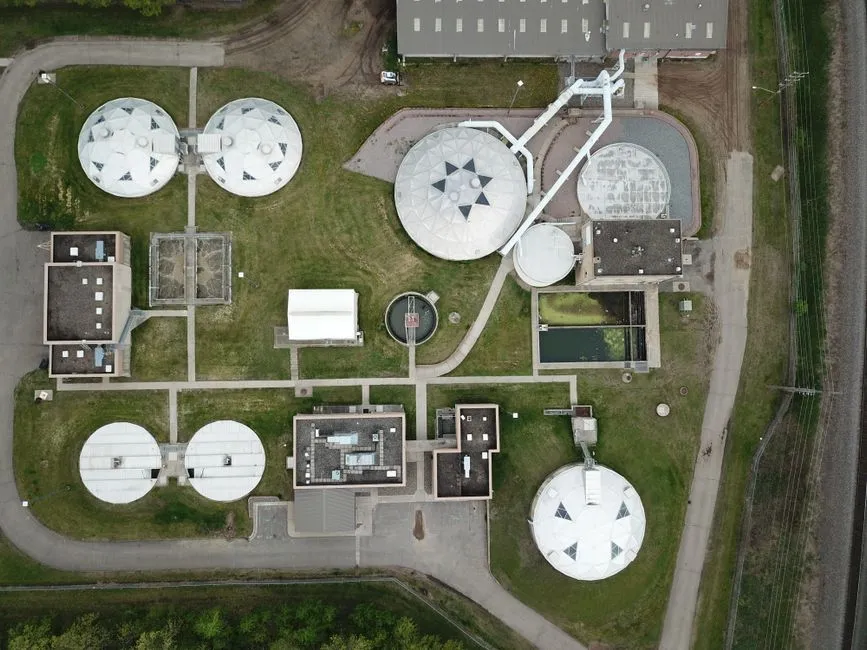
CONAMA Resolution 430/2011 is the federal baseline for effluent quality in Brazil, covering organic load, nutrients, temperature and pH, and it is the floor that any Goiania discharge permit inherits. State-level permitting through ANA and the Goias environmental authority (in the SECIMA/SEMAD lineage) layers site-specific limits on top, and those limits typically constrain TDS, chlorides, biocides and thermal discharge more tightly than the federal text. Genesis Water Tech reports that some jurisdictions have already capped discharge TDS below 1,500 mg/L, which would force treatment of CTBD before any release to surface water or sewer.
The cost lever is the discharge fee. Genesis Water Tech documents direct discharge fees in water-stressed regions reaching $5–15 per 1,000 gallons, which converts blowdown avoidance from a sustainability story into a payback line on the capex model. Thermal pollution is the second compliance axis: NC State University documents that even small temperature increases in receiving streams can push local aquatic oxygen past biological limits, and warm blowdown exacerbates that risk in a tropical climate where receiving waters are already warm.
The 2026 Treatment Train: From Side-Stream Filtration to ZLD
The first guard is side-stream filtration, a 10–25 micron self-cleaning screen that drops CTBD suspended solids to a level downstream membranes can tolerate; Genesis Water Tech budgets $50,000–200,000 in CAPEX for typical data-center flow with minimal OPEX beyond solids disposal. An ultrafiltration pretreatment skid with 0.01–0.1 micron PVDF membranes follows, removing bacteria, colloids and high-molecular-weight organics at 90–95% recovery with permeate-backwash and a quarterly clean-in-place. The multi-media side-stream filter upstream of UF extends membrane life where basin dust and corrosion-product load are high, and PLC-controlled antiscalant dosing stabilizes the RO feed against silica and calcium sulfate excursions.
Reverse osmosis (RO) is the workhorse. RO rejects 95–99% of dissolved solids, delivers permeate at 10–50 mg/L TDS and runs at 50–85% recovery on blowdown with conventional antiscalant chemistry; an industrial RO system sized at 50,000 GPD lands at $250,000–500,000 installed, with OPEX of $1.50–3.00 per 1,000 gallons treated. Nanofiltration (NF) is the lower-pressure option at 75–150 psi and 70–85% recovery when hardness, not full TDS, is the binding constraint. Where the site must push past 80% recovery, IDE Tech's MAXH₂O.Desalter architecture removes sparingly soluble salts as dense solids in a controlled fluidized bed, producing permeate silica near 1 mg/L on a real industrial CTBD stream at about 95% overall recovery, and it lets the downstream RO close the loop on a near-pure NaCl brine that is far easier to concentrate thermally. Filter press for brine solids dewatering handles the precipitated pellet stream.
For ZLD-bound sites, mechanical vapor compression (MVC) is the thermal workhorse: distillate below 10 mg/L TDS, 95–98% recovery, 15–25 kWh per 1,000 gallons of distillate, $1–3M CAPEX for 10,000–30,000 GPD according to Genesis Water Tech. A crystallizer and brine concentrator close the loop, taking full ZLD CAPEX to $3–8M and OPEX to $5–15 per 1,000 gallons, with 95–99% overall water recovery.
| Unit Operation | Function | Indicative CAPEX / OPEX |
|---|---|---|
| Side-stream filtration (10–25 µm) | Reduces TSS to membrane-tolerable level | $50,000–200,000 CAPEX (Genesis Water Tech) |
| Ultrafiltration (0.01–0.1 µm PVDF) | RO/NF pretreatment, bacteria and colloid barrier | 90–95% recovery, permeate-backwash, quarterly CIP |
| Reverse osmosis (150–400 psi) | Dissolved-solids rejection, permeate 10–50 mg/L TDS | 50,000 GPD skid: $250,000–500,000 CAPEX; OPEX $1.50–3.00 / 1,000 gal (Genesis Water Tech) |
| Nanofiltration (75–150 psi) | Partial softening, lower energy than RO | 70–85% recovery, permeate TDS 30–50% of feed |
| Controlled precipitation / MAXH₂O.Desalter | Removes silica, CaCO₃, CaSO₄ as dense solids | ~95% overall recovery, permeate silica ~1 mg/L on industrial CTBD (IDE Tech) |
| MVC evaporator | Thermal concentration of RO brine | $1–3M CAPEX (10,000–30,000 GPD); 15–25 kWh / 1,000 gal distillate (Genesis Water Tech) |
| Crystallizer + brine concentrator (ZLD) | Final solids production, no liquid waste | $3–8M total CAPEX; OPEX $5–15 / 1,000 gal; 95–99% recovery (Genesis Water Tech) |
Reuse Mapping: Where Treated Blowdown Earns Its Keep in a Hyperscale Hall
High-quality RO permeate at 10–50 mg/L TDS returns to the cooling tower as makeup, and that single move is the largest freshwater offset in the water balance: cycles of concentration climb, blowdown volume falls, and the discharge permit pressure relaxes. The same permeate is suitable for adiabatic humidification loops and chiller makeup, both of which a Goiania site runs year-round because of the year-round sensible heat load.
Lower-grade streams have homes too. NF permeate at 30–50% of feed TDS can feed landscape irrigation, equipment washdown and toilet flushing in the admin block, hitting discharge-compliance quality at a lower membrane cost than full RO. Distillate from MVC or the crystallizer stage can supply boiler makeup for on-site gas-fired peaking generation, a real indirect-water lever given the Ceres-style finding that 78% of electricity in heavily data-centered U.S. states came from water-using thermal plants in 2024. A blended 60–85% recovery scheme captures most of the water-stewardship benefit without taking the ZLD capital step.
| Reuse Destination | Source Stream | Benefit |
|---|---|---|
| Cooling tower makeup | RO permeate (10–50 mg/L TDS) | Raises cycles of concentration, cuts freshwater intake and blowdown volume |
| Adiabatic humidification, chiller makeup | RO permeate | Year-round demand in tropical-savanna sites |
| Landscape irrigation, toilet flushing, washdown | NF permeate (30–50% of feed TDS) | Meets reuse quality at lower membrane cost than RO |
| Boiler makeup for on-site gas-fired generation | MVC distillate, crystallizer distillate | Offsets indirect water use from thermal generation |
| Cooling-tower chemistry makeup (softened) | Industrial softener polisher on RO permeate | Stabilizes cycles of concentration, protects downstream chemistry |
Choosing the Right Train for Goiania: A 2026 Decision Framework
Match the train to the binding constraint, not the marketing brochure. If discharge is permitted and feed TDS stays under roughly 3,000 mg/L, a UF + RO train at 70–80% recovery is the lowest-capex path, sized to Genesis Water Tech's $250,000–500,000 RO skid range. If Goias or CONAMA-driven permit conditions cap discharge TDS below 1,500 mg/L, add a polish RO stage or a controlled-precipitation step to push recovery to 90–95% without taking on full ZLD, drawing on the MAXH₂O.Desalter result of ~95% recovery with permeate silica near 1 mg/L on a real industrial CTBD stream. Where discharge is prohibited or where the indirect water footprint is a siting blocker, escalate to RO + MVC + crystallizer ZLD, sized to the $3–8M CAPEX and $5–15 per 1,000 gal OPEX envelope.
Two cross-cutting decisions cut across every train. First, if the local grid is dominated by water-intensive thermal plants, model indirect water use explicitly, because the Ceres-style finding that 78% of electricity in heavily data-centered states came from water-using thermal plants in 2024 is the lever that turns reuse into a CFO-visible line item. Second, pair the train with a tablet-based or low-phosphate cooling-water chemistry program, since membrane pretreatment stability depends on the chemistry upstream of it. High-efficiency sedimentation upstream of the media filter and spare RO membrane elements on the shelf are the operational insurance that keeps the train inside its recovery envelope.
| Scenario | Binding Constraint | Recommended Train | Indicative Envelope |
|---|---|---|---|
| Discharge permitted, feed TDS < 3,000 mg/L | Lowest capex for reuse | UF + RO at 70–80% recovery | $250,000–500,000 RO skid CAPEX; OPEX $1.50–3.00 / 1,000 gal (Genesis Water Tech) |
| CONAMA / Goias TDS cap < 1,500 mg/L | Tight discharge ceiling | UF + RO + controlled precipitation (MAXH₂O.Desalter logic) | ~95% overall recovery, permeate silica ~1 mg/L (IDE Tech) |
| Discharge prohibited or high indirect-water grid | No liquid waste path | RO + MVC + crystallizer (ZLD) | $3–8M CAPEX; OPEX $5–15 / 1,000 gal; 95–99% recovery (Genesis Water Tech) |
| Any train | Membrane pretreatment stability | Low-phosphate or tablet chemistry program | Operational, no added CAPEX; reduces cleaning frequency |
Implementation Roadmap and 2026 Cost Envelope for a Goiania Project
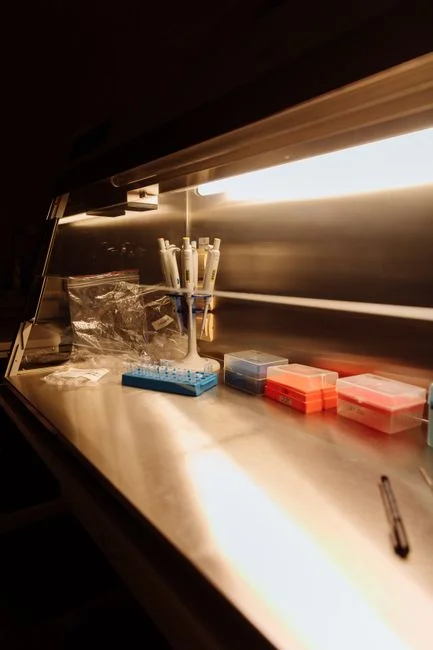
Phase 1 (months 0–3) is feed-water characterization and permit scoping. Run a side-stream filtration pilot at 1–5% of circulation flow, capture CTBD samples across the wet and dry seasons, and lock the antiscalant dose to the measured silica and calcium profile. Phase 2 (months 3–9) is UF + RO skid delivery, installation and commissioning, with the RO antiscalant program tuned to the Phase 1 data. Plan OPEX for a 50,000 GPD RO skid at $1.50–3.00 per 1,000 gallons, plus chemical cleaning every 1–3 months per Genesis Water Tech. Phase 3 (months 9–18) adds a high-recovery polish (controlled precipitation or MVC) only if Phase 1 effluent data justifies the incremental $1–3M MVC CAPEX or an equivalent controlled-precipitation module. Hold a full ZLD option in reserve, sized to the $3–8M CAPEX and $5–15 per 1,000 gal OPEX envelope, for the case where Goias tightens the TDS ceiling or where indirect-water constraints harden the license-to-operate case. Readers building a procurement-ready spec should pair this roadmap with the ZLD plant buyer's guide to align thermal equipment selection with the RO concentrate profile.
Frequently Asked Questions
What capex envelope should a Goiania hyperscale project plan for a UF + RO blowdown train in 2026?
Plan around Genesis Water Tech's $250,000–500,000 CAPEX for a 50,000 GPD RO skid plus $50,000–200,000 for side-stream filtration, with operating cost of $1.50–3.00 per 1,000 gallons of treated water. The final figure depends on feed TDS, silica level and target recovery, so request a pilot-derived water balance and an antiscalant dose projection from bidders before locking the budget.
Which suppliers or technology partners should be on the bid list for a Goiania CTBD project?
Shortlist vendors that can document CONAMA 430/2011 familiarity, hold an ANA- or SECIMA-credible reference in Brazil, and supply an integrated UF + RO skid with a documented antiscalant program. Ask each bidder for a feed-water-specific recovery guarantee, a reference list of high-silica CTBD or cooling-tower reuse projects, and a written statement of membrane chemistry compatibility with low-phosphate or tablet-based cooling programs.
When does a Goiania data center actually need to escalate from RO to ZLD?
Escalate to RO + MVC + crystallizer when discharge is prohibited, when the permit caps TDS below 1,500 mg/L and polishing RO cannot close the loop, or when the local grid is dominated by water-intensive thermal generation and indirect water use has become a siting blocker. Genesis Water Tech's full ZLD envelope is $3–8M CAPEX with $5–15 per 1,000 gallons OPEX, so the decision is a tradeoff between avoided discharge fees, freshwater cost and the regulatory risk of being denied a permit at the chosen recovery.
How does Goiania's tropical-savanna climate change the design compared with a temperate site?
Higher evaporation in the dry season concentrates CTBD faster, pushing TDS and silica toward the upper end of Genesis Water Tech's 1,200–6,000 mg/L range and shrinking blowdown volume per unit of heat rejected. The practical impact is a tighter antiscalant dose, a stronger case for controlled precipitation or MVC polishing, and a water balance that must carry the site through a multi-month dry season without falling back on high-TDS municipal supply.
Related Equipment
- industrial RO system — specifications, capacity range, and technical data