What a Digital Twin Actually Does in a Treatment Plant
A digital twin in a water or wastewater treatment facility is a live virtual replica of physical treatment assets — tanks, membranes, blowers, pumps, dosing skids — that ingests IIoT sensor data and runs simulations to predict performance. Documented 2026 gains include a 40% reduction in biogas consumption in sludge incineration (Scientific Reports, June 2026) and predictive maintenance that cuts unplanned downtime across hydraulic networks.
The terminology matters because procurement committees hear "digital twin" used loosely. Per the framework adopted in the Sci Rep 2026 sludge incineration study, three levels exist: a digital model is static geometry and parameters that do not refresh; a digital shadow receives one-way data from the physical asset and runs simulations to inform human decisions; a true digital twin is bidirectional, where control signals flow back to the asset under defined human-in-the-loop rules. The Sci Rep study itself is a digital shadow — the team simulated the incineration train (furnace, dryer, mixer, heat exchangers) in AnyLogic and validated it against historical plant data, achieving 40% biogas reduction in the best of five operating scenarios while keeping furnace temperatures inside European-standard ranges (Scientific Reports, 2026-06-18, doi:10.1038/s41598-026-57835-1).
Three data layers are required to make any of these work. First, physical asset geometry — tank volumes, pipe diameters, pump curves, membrane area. Second, real-time IIoT streams — flow, pH, dissolved oxygen, turbidity, level, temperature, typically via Modbus TCP, OPC-UA water utility profiles, or REST endpoints. Third, process models — activated sludge kinetics (ASM-type), hydraulic models, membrane fouling relationships. A digital twin does not require new capital equipment; most modern PLC-controlled skids already expose the data points a twin consumes. The HydropureWater automatic pH control system overview for 2026 is a worked example of a dosing skid that already streams the variables a compliance-monitoring twin needs. For plant engineers evaluating vendor platforms, the 2026 SCADA-integrated digital twin platform comparison maps which platforms speak which protocols out of the box.
Seven Digital Twin Opportunities in Water and Wastewater Facilities
The seven opportunities below are ordered from easiest to deploy to most ambitious, so a plant engineer can self-select where to start. Each is anchored to a specific equipment class a 2026 B2B buyer already operates.
1. Real-time compliance monitoring. A digital shadow continuously compares pH, TSS, COD, FOG, ammonia, and total nitrogen against UWWTD 91/271/EEC and EPA 40 CFR Part 133 limits and auto-generates discharge reports. Manual lab sampling at typical frequencies (daily composite, weekly grab) misses 95%+ of the operating envelope; a sensor-driven shadow sees every minute.
2. Energy monitoring and optimization. Aeration is the single largest energy line in activated-sludge plants, typically 50–60% of total kWh (per EPA energy benchmarking for medium-to-large WWTPs). A digital twin can simulate blower output against DO setpoint and ammonia load to find the lowest-kWh operating point per cubic meter treated. The Sci Rep 2026 sludge study demonstrated a 40% biogas reduction in a fluidized bed reactor by simulating furnace, dryer, mixer, and heat exchangers via AnyLogic; the same closed-loop framing applies to blower control.
3. Predictive maintenance. Vibration, motor current, and discharge pressure trends on blowers, MBR modules, and filter press plates feed anomaly-detection models that schedule service before failure. Typical payback: 6–18 months once a baseline is captured (HydropureWater field data, 2026).
4. Chemical dosing optimization. Feedback loops on coagulant, flocculant, and ClO₂ dose tied to influent turbidity and flow cut chemical OPEX 10–20%. On the HydropureWater automatic chemical dosing skids, the dosing rate is already a controllable variable — the twin only adds the optimization layer.
5. Membrane fouling forecasting. Flux-decline and TMP-rise models on MBR, UF, and RO trains trigger CIP only when the model predicts a permeability threshold breach, rather than on a fixed calendar. A HydropureWater MBR membrane bioreactor that already logs TMP, flux, and aeration intensity is a ready data source.
6. Hydraulic and capacity planning. What-if scenarios for storm events, industrial batch discharges, and seasonal loading on the biological train. This is the most mature application at network level (Stantec Wellington, Scottish Canals, SES Tasmania flood mapping) but under-deployed inside treatment-train hydraulic models.
7. Whole-plant AI process control. Closed-loop reinforcement-learning control of aeration, recirculation, and wasting. Still mostly pilot-stage in 2026; expect 24+ months to ROI on a first deployment.
| # | Opportunity | Primary equipment class | Expected gain | Implementation complexity |
|---|---|---|---|---|
| 1 | Real-time compliance monitoring | Online sensors + dosing skids | Continuous UWWTD / 40 CFR Part 133 coverage | Low |
| 2 | Energy optimization | Blowers, pumps, mixers | 10–30% aeration kWh/m³ reduction | Medium |
| 3 | Predictive maintenance | Blowers, filter presses, MBR | 6–18 month payback; fewer unplanned events | Medium |
| 4 | Chemical dosing optimization | Coagulant, flocculant, ClO₂ skids | 10–20% chemical OPEX cut | Low–Medium |
| 5 | Membrane fouling forecasting | MBR / UF / RO trains | 20–40% fewer CIP cycles per year | Medium |
| 6 | Hydraulic & capacity planning | Civil + piped network | Storm-event resilience, no measured OPEX | High |
| 7 | Whole-plant AI control | Full treatment train | Pilot-stage in 2026; uncertain ROI timeline | High |
Opportunity-to-Equipment Mapping: Where to Invest First
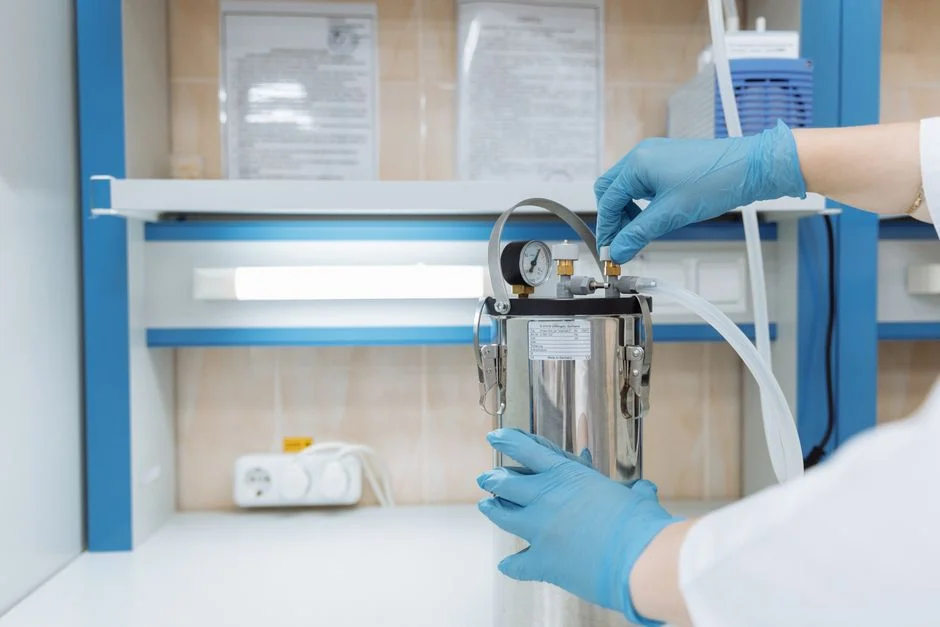
The highest-ROI early wins cluster around equipment that already has PLCs and instrumentation — DAF, MBR, dosing skids, plate filter presses — rather than passive civil assets. The matrix below is what to hand to procurement when prioritization questions arrive.
| Opportunity | Equipment class | Expected gain | Data prerequisites | Complexity |
|---|---|---|---|---|
| Chemical dosing optimization | HydropureWater DAF system + dosing skid | 10–20% coagulant/polymer OPEX | Influent turbidity, flow, pH | Low |
| Membrane fouling forecasting | HydropureWater MBR membrane bioreactor | 20–40% CIP reduction; stable flux | TMP, permeability, MLSS, aeration | Medium |
| Predictive maintenance | HydropureWater plate and frame filter press | Fewer plate changeouts, lower hydraulic shock | Cycle pressure, feed flow, current | Medium |
| Compliance + dosing | HydropureWater automatic chemical dosing skids | Continuous UWWTD 91/271/EEC evidence | pH, ORP, ClO₂ residual, flow | Low |
The pattern to defend in a business case: pilot on a single equipment class with the cleanest data — usually a dosing skid — then expand to membrane or filter-press units where the data quality is already moderate. Trying to model the biological train first almost always fails because DO, MLSS, and ammonia sensor coverage is too sparse to drive a trustworthy model.
Real-World Validation: What the 2026 Evidence Actually Shows
The strongest 2026 facility-level evidence comes from a Scientific Reports paper published 2026-06-18 (doi:10.1038/s41598-026-57835-1). The authors built a data-informed digital shadow of a full sludge incineration train — furnace, dryer, mixer, and heat exchangers — in AnyLogic, parameterized from operational plant data, and validated it against historical system behavior. Across five operating scenarios, the most effective run cut biogas consumption by 40% while keeping furnace temperature inside the European-standard operating window. That single number is the most defensible ROI anchor a 2026 business case has at the sludge-handling end of the train.
Network-level deployments are well documented by Autodesk's water-industry team. Stantec's pump-optimization work in Wellington, NZ used real-time pump telemetry to schedule maintenance and reduce energy peaks; Scottish Canals built Europe's first "smart canal" digital twin in Glasgow for flood-mitigation storage; the SES Tasmania flood-mapping project and the Türkiye national flood warning system both rely on hydraulic-model integration with live sensor feeds. These are not treatment-train cases, but they demonstrate the IIoT-to-twin integration pattern and the data-governance work it requires.
Honest note: facility-level case studies on biological treatment (the activated-sludge, BNR, and MBR stages) remain scarce in peer-reviewed 2026 literature. Most biological-process digital-twin claims still rely on municipal benchmarking rather than published, validated models. Flag this when procurement asks for biological-train references.
Where Digital Twins Underperform — Honest Caveats for 2026 Buyers
Sensor data quality is the binding constraint on any digital twin in a treatment plant. A twin built on uncalibrated pH probes, time-skewed historians, or sparsely-sampled flow meters produces confidently wrong predictions — and operators learn to ignore the model within months. A typical pre-deployment audit should check: calibration records for all online analyzers within the last 90 days, NTP time-sync across PLCs and historians, historian retention of at least 12 months at 1-minute resolution, and a documented data-quality SLA with the instrumentation vendor.
Legacy SCADA without OPC-UA or REST APIs is the #1 schedule risk. Plants running older PLCs with proprietary tag databases need middleware — and middleware projects routinely double in cost. The 2026 SCADA-integrated digital twin platform comparison is the shortlist tool for buyers evaluating which platforms require what integration work.
Cybersecurity footprint expands with every connected asset. Water utilities increasingly fall under IEC 62443 industrial-cybersecurity expectations, and a digital twin that bridges IT and OT layers adds an attack surface that has to be designed in, not bolted on. Finally, organizational change: a digital twin is only valuable if operators trust the model's recommendations. The Sci Rep 2026 closed-loop framing assumes human-in-the-loop approval of control moves; budgeting for operator training and override procedures is as important as the model itself.
2026 Procurement Checklist: Building the Business Case
- Audit existing PLC/SCADA data exposure — list every tag, its protocol (Modbus TCP, OPC-UA, Profinet), and its historian retention.
- Prioritize one equipment class for pilot — typically the dosing skid, where ROI is fastest and data is cleanest.
- Define a KPI baseline before deployment — energy kWh/m³ treated, chemical kg/m³ treated, unplanned downtime hours/year, CIP cycles/year.
- Require vendor OPC-UA or Modbus TCP data export in any new equipment specification; do not accept proprietary-only protocols.
- Budget 6–18 months for predictive-maintenance ROI, 24+ months for AI control — and be honest with the committee about which category each opportunity falls into.
For buyers comparing solution providers, the how to compare reliable industrial wastewater treatment solutions in 2026 framework is the procurement lens to layer digital-twin readiness on top of mechanical specification. And the automatic pH control system overview for 2026 shows what a digital-twin-ready dosing skid looks like in practice — the kind of equipment that needs no retrofit to feed a shadow.
Frequently Asked Questions
What is the most defensible ROI figure for a digital twin in a 2026 wastewater plant?
The strongest 2026 evidence is a 40% reduction in biogas consumption in a sludge incineration train, validated against historical plant data in a Scientific Reports study (doi:10.1038/s41598-026-57835-1, 2026-06-18). For other use cases — chemical dosing, aeration, predictive maintenance — typical defensible ranges are 10–20% OPEX cuts once a baseline is established, with payback inside 6–18 months for predictive maintenance and longer for full AI control.
Do I need new equipment to start a digital twin, or can I use my existing fleet?
You can almost always start with existing equipment. Modern PLC-controlled skids (DAF, MBR, dosing, filter presses) already expose the flow, pressure, current, and chemistry tags a digital shadow needs via Modbus TCP or OPC-UA. The 2026 SCADA-integrated digital twin platform comparison maps which protocols each platform reads natively. New equipment is only required if legacy SCADA lacks any modern data-export layer.
How does a digital twin help with UWWTD 91/271/EEC and EPA 40 CFR Part 133 compliance?
A digital shadow running on online sensors gives continuous evidence of compliance — pH, TSS, COD, FOG, ammonia, total nitrogen — between the lab-sample points required by the regulations. That continuous record is what most plants lack today, and it is the difference between proving compliance after a discharge incident and demonstrating it in real time. Auto-generated reports cut operator labor and reduce the risk of missing a parameter excursion.
Which equipment class gives the fastest digital-twin ROI in a small plant (10–500 m³/day)?
Chemical dosing skids and DAF units, because the controllable variable is well-defined (mg/L dose or recycle ratio), the data is already clean, and the OPEX line (coagulant, polymer, ClO₂) is large enough to register a measurable saving. Membrane and biological-train pilots usually require more sensor density than small plants have on day one.
What is the single biggest reason digital-twin projects fail in water utilities?
Data quality and integration friction, not modelling. Legacy SCADA without OPC-UA, sparse instrumentation on the biological train, and historians that do not retain 12 months of 1-minute data together account for the majority of stalled pilots. A pre-deployment audit that finds and fixes these gaps before any model is built is the strongest predictor of success.