Which Treatment Train Fits an Aniak Mining Site?
For mining and metals wastewater in Aniak, select MBR when treated-water reuse, limited pad space, or resilience to pH and metal shocks outweigh higher capital cost, energy demand, and membrane maintenance. Conventional activated sludge remains credible for stable, dilute flows discharged to a POTW where an existing clarifier has adequate settling and equalization. Neither process removes dissolved metals by itself; upstream precipitation is required under 40 CFR Part 440. Aniak’s freezing, remote logistics, power continuity, receiving-water limits, and actual NPDES conditions must be resolved before the train is specified.
The decision should pass through four gates: compliance, feed resilience, site delivery, and lifecycle value. Start with the wastewater characterization, then obtain the current NPDES permit and applicable receiving-water requirements. Define whether the treated stream will support mine-water reuse or proceed to discharge, and document site constraints such as freeze protection, backup power, freight access, and operator capability. Use 40 CFR Part 440 as the federal starting point, not as a complete Aniak compliance basis; Alaska permit language and site-specific conditions must also be verified. The MBR cost and sizing guide for 2026 provides comparative context, but it does not replace site-specific design inputs.
An MBR is usually the stronger candidate where clarified water has direct reuse value, pad space competes with haul roads, stormwater routing, or process infrastructure, and variable feed could compromise gravity settling. Its physical solids separation is independent of floc settleability. Conventional activated sludge can still be preferable when the feed is stable and dilute, discharge to a POTW is available, adequate clarifier capacity already exists, and avoiding membrane operation and replacement is more valuable than reuse quality.
Do not treat this as a generic MBR-versus-CAS ranking. Aniak’s operating conditions can reverse a comparison built from warm-region, low-cost logistics, or unverified discharge assumptions. A defensible selection memorandum should preserve the distinction between federal ore-mining limits, Alaska permit conditions, receiving-water criteria, and any approved mine-water reuse standard.
How MBR and Conventional Activated Sludge Separate Solids
Conventional activated sludge separates biomass by gravity, whereas MBR separates it through membrane filtration; this mechanical difference determines whether clarifier settling remains a treatment bottleneck.
Conventional activated sludge uses biological oxidation to remove biodegradable organics, followed by a secondary clarifier. Under quiescent conditions, biomass must aggregate into floc and settle. Settled solids are returned as return activated sludge, with excess solids removed from the process. Clarifier performance therefore depends on healthy floc, stable mixed-liquor suspended solids, and controlled hydraulic loading. Bulking, poor floc formation, or a short-circuiting blanket can carry biomass and precipitated solids into the discharge.
An MBR combines activated-sludge biology with a submerged membrane. The membrane retains biomass without relying on gravity settling, decoupling solids retention from floc settleability. The cited configuration uses submerged PVDF modules with a nominal pore size below 1 μm; the DF Series flat-sheet MBR module provides a 0.1 μm option. An integrated MBR wastewater treatment system therefore substitutes membrane separation for the clarifier and associated solids-handling functions.
This distinction does not turn MBR into a metals-removal process. Dissolved metals must first be converted into removable solids, generally by precipitation. The secondary process then determines how reliably those precipitated fines remain in the solids stream. MBR can retain fines that would otherwise escape over a clarifier weir, but poor upstream precipitation chemistry can still leave dissolved metals in the treated water.
For Aniak, the practical question is not whether MBR “filters better” in the abstract. It is whether the site can reliably feed a membrane with acceptable fouling risk, operate its cleaning system, maintain scour air, and protect the equipment from freezing and power interruption. For CAS, it is whether the feed and equalization can keep the clarifier within a stable settling envelope.
Mine-Water Conditions That Change the Comparison
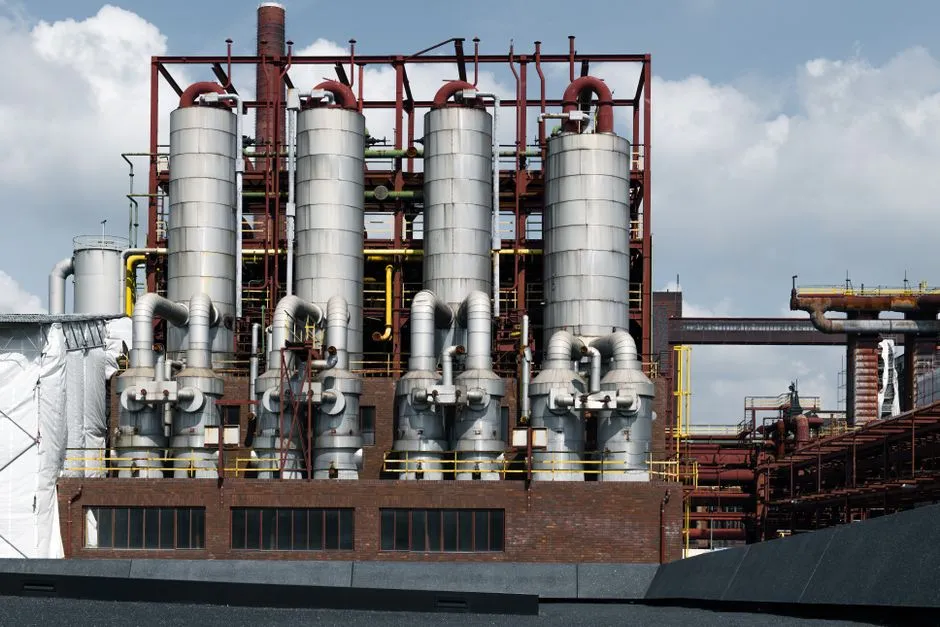
Variations in pH, sulfate, and process reagents can compromise biological activity and gravity settling before either treatment train reaches its discharge stage.
The Linn Creek source reports influent pH swings from 2.0 to 11.0 and sulfate commonly above 2,000 mg/L. It also identifies intermittent free cyanide, residual xanthate, and dithiophosphate associated with mineral processing. These are examples of conditions requiring characterization, not substitute measurements for an Aniak site. pH excursions can alter precipitation chemistry and inhibit biological activity; sulfate and dissolved solids can change process behavior; cyanide and residual flotation reagents can contribute toxicity or oxygen-demand variation.
Equalization, pH control, and toxicity assessment belong upstream of both technologies. Oil, floatables, and fibrous material also require removal because they can foul membranes, interfere with settling, or consume treatment capacity. The rotary mechanical bar screen and automatic chemical dosing system are relevant equipment categories to evaluate, but their selection must follow the actual waste stream and treatment objectives.
| Information required | Why it affects treatment selection | Application to Aniak |
|---|---|---|
| Metal species and total concentrations | Defines precipitation chemistry and residual soluble-metal risk. | Obtain site samples across operating and runoff conditions; do not substitute regional values. |
| Hardness, TDS, and sulfate | Influences precipitation, osmotic effects, biological behavior, and fouling. | Request measured data and trend it through seasonal operations. |
| Free cyanide and residual processing reagents | Determines toxicity-control and equalization requirements. | Characterize intermittent discharges before selecting a biological process. |
| BOD, COD, pH, temperature, and flow variability | Determines biological loading, equalization, and clarification behavior. | Include winter temperatures and storm-driven flow events in the monitoring program. |
| Oil, floatables, and fibrous debris | Influences membrane fouling and clarifier performance. | Assess the need for DAF, screening, and debris removal upstream. |
Aniak implementation adds conditions that regional process comparisons do not resolve. Exposed piping, valves, and equipment require an engineered freeze-protection strategy. Access conditions, freight distance, and lead time affect construction and spare-parts strategy. Backup power must support not only biological aeration but also membrane scour, controls, and treatment continuity. These constraints require site-specific design rather than generic cold-weather annotations.
Performance, Footprint, and Operating Load
MBR increases biomass concentration and solids retention while shifting the operating burden from gravity settling to membrane scour, monitoring, cleaning, and replacement.
The Eolia regional analysis reports MBR mixed-liquor suspended solids of 8,000–12,000 mg/L, potentially up to 15,000 mg/L, compared with 2,000–4,000 mg/L for CAS. It also reports MBR sludge retention time of 30–60 days, versus 5–15 days for non-nitrifying CAS service and 1–5 days for nitrifying service. The higher MBR SRT can preserve slower-growing organisms and improve recovery from feed disturbances, but the cited 30–60-day range must not be adopted as the final Aniak design SRT. Temperature, nitrification objectives, decay rates, and permit requirements must govern that determination.
| Design issue | MBR | Conventional activated sludge | Evidence scope |
|---|---|---|---|
| MLSS | 8,000–12,000 mg/L; potentially 15,000 mg/L | 2,000–4,000 mg/L | Eolia regional analysis, 2026 |
| SRT | 30–60 days | 5–15 days for non-nitrifying service; 1–5 days for nitrifying service | Eolia regional analysis, 2026 |
| Effluent turbidity | 0.01–1.31 NTU | Not used as a universal comparison value | EPA MBR Fact Sheet cited by Eolia |
| Effluent BOD | 0.10–0.72 mg/L | Not used as a universal comparison value | EPA MBR Fact Sheet cited by Eolia |
| Footprint advantage | About 60% reduction | Larger civil footprint | Regional comparison cited by Eolia and Linn Creek, 2026 |
| 200 m³/day process area | 140–200 m² | 350–500 m² | US Midwest benchmark, not an Aniak estimate |
The footprint figures are particularly easy to misuse. The 200 m³/day comparison comes from a US Midwest case, not Aniak, and excludes a site-specific pad, access, freeze protection, power, or freight allowance. Use it to compare process configurations, then build the Aniak layout around actual hydraulic grade, geology, climate, and infrastructure.
MBR also adds operating obligations: transmembrane-pressure monitoring, scour-air demand, cleaning intervals, CIP chemistry, and membrane replacement. CAS operators instead manage settling indicators, RAS, and clarifier condition. MBR’s higher SRT and retained biomass can improve upset tolerance, but that advantage disappears if fouling, inadequate scour air, or power interruption is allowed to impair the membranes. The final comparison must therefore include energy demand and operator capability, not only effluent quality and tank volume.
Pretreatment and Compliance Are Non-Negotiable
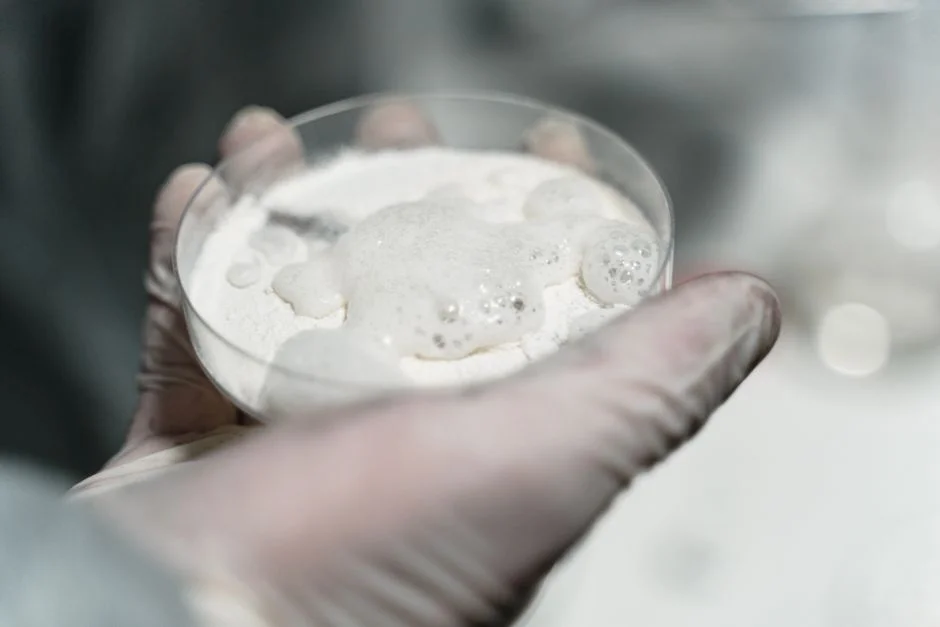
Neither MBR nor CAS substitutes for upstream metals precipitation; compliance must be demonstrated against the actual Aniak permit and receiving-water requirements.
The Eolia article cites a typical precipitation pH of 8.5–9.5 for a CAS train and 6.5–7.5 before MBR membranes. Those are screening inputs, not universal Aniak targets. The required pH and reagent dose must come from site water chemistry, metal speciation, solubility behavior, and permit objectives. MBR membrane compatibility and biological requirements must be checked against the selected precipitation chemistry rather than derived from the comparison alone.
40 CFR Part 440 covers arsenic, lead, zinc, copper, nickel, and cadmium with daily-maximum and monthly-average limits, according to the Eolia article. The procurement team must obtain the applicable federal subpart and verify the current NPDES permit, Alaska conditions, receiving-water criteria, and any approved reuse standard. If the flow discharges to a POTW, obtain the pretreatment agreement and local acceptance criteria.
| Compliance check | Required document or test | Procurement consequence |
|---|---|---|
| Federal applicability | Current 40 CFR Part 440 subpart and applicable discharge point | Establish the governing parameter list before sizing. |
| State and local conditions | Current NPDES permit and Alaska conditions | Add or tighten treatment requirements where applicable. |
| Receiving water | Applicable water-quality criteria and antidegradation requirements | Evaluate final treatment and reuse alternatives. |
| POTW discharge | Pretreatment agreement and acceptance tests | Do not assume reuse-grade treatment is required or accepted. |
| Mine-water reuse | Approved end-use quality standard | Define whether MBR permeate is sufficient or polishing is needed. |
Headworks design must match the selected module. The Eolia article gives screening screening inputs of 1–2 mm for hollow-fiber modules and 2–3 mm for flat-plate modules; final cutoffs must match the selected manufacturer. A dissolved air flotation machine may be necessary upstream for oil, floatables, or emulsified process reagents. A ultrafiltration system should be reserved for a defined polishing or reuse requirement, not added automatically as a universal pretreatment step.
What MBR Will Cost in Aniak
MBR generally carries a higher installed and operating cost than CAS; an Aniak budget must be built from local inputs rather than regional percentages.
The Eolia regional analysis reports a 20–40% MBR CAPEX premium and 15–30% higher operating cost per m³ than CAS. These are comparative benchmarks, not Aniak estimates. The Linn Creek source separately reports US Midwest installed costs for a 200 m³/day train of $1.2–1.8 million for CAS and $1.8–2.6 million for MBR, with operating costs of $0.6–0.9/m³ for CAS and $0.9–1.4/m³ for MBR. Neither dataset establishes a local price.
| Cost element | CAS tendency | MBR tendency | Aniak budgeting requirement |
|---|---|---|---|
| Installed equipment and civils | Clarifier, RAS, and aeration infrastructure | Membranes, fine screens, scour air, controls, and CIP | Develop site-specific quantities, freight, erection, and freeze-protection pricing. |
| Energy | Lower comparative burden | Additional aeration and scour demand | Apply the site tariff and confirmed backup-power requirements. |
| Chemicals | Precipitation and polymer demand | Precipitation plus membrane-cleaning chemicals | Price delivery, storage, and operator workload separately. |
| Solids handling | Sludge thickening, conditioning, dewatering, and hauling | Metal-laden sludge still requires dewatering and disposal | Characterize residual solids and obtain disposal quotations. |
| Replacement and spares | Less membrane-specific exposure | Module replacement and remote spare strategy | Model replacement timing, shipping delay, and service support. |
The Eolia article gives a screening scenario in which reuse becomes attractive when make-up water costs about $2/m³, with MBR payback in 4–6 years. That result depends on local water value, avoided disposal, electricity cost, capital cost, and mine life. It should not be transferred to Aniak without those inputs. If treated water has no defined route or value, the premium may not be justified.
Metal-laden sludge remains a major cost for either process. A plate-and-frame filter press may be required downstream, but MBR does not eliminate the characterization, classification, transport, or disposal obligation. The cost model should therefore compare equivalent final-disposal outcomes rather than treating reduced sludge generation as a proven Aniak saving.
Use a Four-Gate Decision Framework
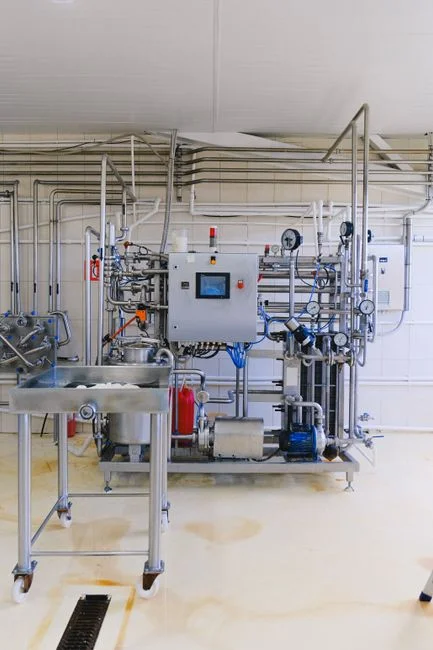
A defensible technology decision requires the selected train to pass compliance, feed resilience, site delivery, and lifecycle-value gates in sequence.
- Compliance: Demonstrate that precipitation, biological treatment, solids separation, and any final polishing can meet the current NPDES conditions, Alaska requirements, receiving-water criteria, POTW terms, or approved reuse standard.
- Feed resilience: Test the full site envelope for pH, toxicity, sulfate, TDS, temperature, and flow variability. Record the effect of disturbances on biomass recovery, membrane flux, and solids separation.
- Site delivery: Compare footprint, installation access, freeze protection, electrical redundancy, operator capability, chemical supply, and membrane-spare availability.
- Lifecycle value: Compare installed and operating cost with reuse value, avoided fresh water, disposal cost, permit exposure, and the expected remaining mine life.
| Gate | MBR favored when | CAS favored when | Decision evidence |
|---|---|---|---|
| Compliance | Solid retention and reuse quality address the governing requirement. | Stable settling and existing treatment meet the discharge or POTW basis. | Current permit documents and pilot results. |
| Feed resilience | Variable or inhibitory feed makes clarifier performance the limiting risk. | The feed is stable and equalization controls excursions. | Site characterization, toxicity testing, and pilot data. |
| Site delivery | Pad space, remote freight, and operator limitations favor a packaged membrane train. | Existing basins and clarifiers have useful remaining life. | Site layout, utility assessment, and supplier support plan. |
| Lifecycle value | Reuse or avoided disposal has defensible value. | No material reuse driver and operating simplicity dominates. | Site-specific lifecycle-cost model. |
A hybrid may be justified: CAS can remain the bulk biological train while MBR polishing serves a defined reuse stream. That option should be evaluated with flow split, hydraulic grade, power demand, chemical use, and permit basis as one integrated train. Do not approve MBR polishing solely because the final effluent looks better; its incremental benefit must correspond to a defined end use or compliance requirement.
Pilot and Procurement Scope Before Purchasing
Aniak pilot testing should challenge the selected process with actual site feed before equipment performance guarantees are issued.
Pilot the selected MBR configuration using actual Aniak wastewater rather than relying only on desktop parameters or synthetic water. The test plan should cover pH, toxicity, metals, sulfate, TDS, temperature, flow variation, screen performance, membrane flux, transmembrane pressure, cleaning frequency, and suitability for the intended reuse. The Eolia article recommends a 60–90 day cassette-rental pilot. Treat that duration as a starting point and verify whether the selected period captures representative seasonal and operating conditions.
During the pilot, record interruptions in scour air and the recovery behavior of the biological system. Identify how pH excursions, precipitation carryover, and reagent spikes affect fouling and cleaning demand. Do not rely on initial clean-water flux: the procurement team needs sustained hydraulic and contaminant performance across the proposed site envelope.
The RFP should require bidders to document membrane material, pore size, guaranteed flux, scour-air demand, CIP chemistry and intervals, replacement terms, controls integration, spare-parts availability, and remote-service support. It should also define acceptance tests tied to the actual feed, required effluent quality, expected temperature, and operating envelope. A supplier that offers headline capacity but cannot support the site’s environmental and logistics constraints has not demonstrated deliverability.
Include site-specific exclusions and responsibilities. State who provides pretreatment, equalization, freeze protection, backup power, chemical storage, membrane replacement, waste-s sludge handling, and field service. The selected integrated MBR wastewater treatment system should be evaluated as part of the complete treatment train, including upstream precipitation, headworks, downstream polishing, and solids handling.
Frequently Asked Questions
How much will MBR cost compared with CAS for an Aniak mining site?
Regional comparisons indicate that MBR costs more, but they do not provide an Aniak quotation. The Eolia regional analysis reports a 20–40% CAPEX premium and 15–30% higher operating cost per m³, while the Linn Creek US Midwest benchmark reports $1.8–2.6 million installed for MBR versus $1.2–1.8 million for CAS at 200 m³/day. Request a site-specific estimate using measured flow, chemistry, electricity tariff, freight, freeze protection, power redundancy, chemical supply, membrane replacement, labor, and metal-sludge disposal inputs.
How should the treatment train be sized across variable Aniak flows?
Do not size from peak flow and headline flux alone. Establish hydraulic and contaminant envelopes from actual flow records, process batching, runoff, and reuse demand. Final biological and membrane duty must reflect temperature, MLSS, achievable flux, fouling, cleaning intervals, and required redundancy. The cited 10–2,000 m³/day range for an integrated system is a product boundary, not an Aniak duty selection.
How should a mining-wastewater supplier be selected for remote operation?
Require demonstrated mining or industrial-matrix experience, documented performance guarantees, and a complete operating-support plan. The bid should address module material and pore size, guaranteed flux, scour-air demand, CIP procedures and intervals, replacement terms, controls integration, local spares, shipping lead times, and remote-service response. Site references should be checked for comparable feed chemistry and operating conditions.
Can MBR alone satisfy Aniak discharge and reuse requirements?
No. MBR separates solids but does not substitute for upstream metals precipitation. Compliance must be demonstrated against the current NPDES permit, applicable Alaska conditions, receiving-water criteria, and any POTW pretreatment agreement or approved reuse standard. Obtain those documents before treating 40 CFR Part 440 as the complete design basis.