What wastewater streams does a Thanh Hoa data center need to treat?
A Thanh Hoa data center needs separate treatment strategies for short-duration commissioning fill-and-flush water and continuous cooling tower blowdown. Blowdown generally requires filtration, UF and RO when cooling-tower reuse is the objective; RO provides 95–99% dissolved-solids rejection, while NF is suitable when hardness is the main constraint. Local discharge limits, reuse approvals and residual-disposal routes must be confirmed with the competent Thanh Hoa authorities. Neither stream should enter a drain without a documented sampling, acceptance and disposal plan.
The two streams differ in duration, chemistry and regulatory treatment. Commissioning fill-and-flush water can contain corrosion inhibitors, biocides, biofilm residue and metal oxides, so it needs characterization and may require carbon or oxidation polishing followed by disposal. Continuous cooling tower blowdown contains concentrated source-water salts, suspended solids and residual cooling-water treatment chemicals. It is the principal candidate for filtration, membrane treatment and reuse as cooling makeup.
During due diligence, also review equipment-cleaning wastewater, RO or softener backwash, and air-handling condensate. Sanitary sewage remains a separate domestic stream and should not be used to blur process-wastewater treatment or permitting responsibilities. The two-stream approach is also applied in comparable regional planning for data center wastewater treatment in Johor Bahru.
| Stream | Typical character | Design response |
|---|---|---|
| Commissioning fill-and-flush | Residual cooling chemicals, biofilm residue, corrosion products and metal oxides | Segregated collection, representative testing, treatment or polishing if required, independent verification, then discharge or haul-off |
| Continuous cooling tower blowdown | Concentrated salts, suspended solids and residual treatment chemicals | Filtration and validated solids removal before UF, NF or RO; managed concentrate and controlled reuse or discharge |
| Auxiliary process water | Equipment-cleaning wastewater, RO or softener backwash, air-handling condensate | Determine origin, frequency and chemistry before assigning it to the blowdown train |
| Sanitary sewage | Domestic wastewater | Handle separately from industrial process wastewater |
What must be measured before equipment is selected?
Equipment selection should begin with measured chemistry because suspended solids, scaling minerals and residual chemicals determine the pretreatment and recovery limits. Request makeup-water quality, blowdown TDS, cycles of concentration, suspended solids, pH, temperature, hardness, alkalinity, silica, chloride, metals, biocides, corrosion inhibitors, and the complete scale or dispersant chemistry.
Genesis Water Tech (2025) gives a published cooling tower blowdown envelope of 1,200–6,000 mg/L TDS, equivalent to 4–8 times makeup-water TDS, together with 10–50 mg/L suspended solids. These figures are benchmarks for developing the design basis, not substitutes for Thanh Hoa site analysis. Hardness, alkalinity and silica indicate precipitation risk; antiscalant demand influences RO feed conditioning; biological content and suspended solids determine the required solids barrier; and residual chemicals affect reuse compatibility.
Establish a baseline monitoring period covering makeup water, evaporation, blowdown, emergency dumps and seasonal operating variation. Genesis Water Tech (2025) reports that actual blowdown can exceed theoretical calculations by 15–30% because of unmeasured losses and emergency dumps. Equipment capacity should therefore be based on observed peak flow and chemistry, not only the nominal water-balance calculation.
Water Usage Effectiveness, or WUE, is calculated as annual site water usage divided by IT equipment energy. Genesis Water Tech (2025) notes that WUE does not disclose discharge quality or reuse potential, so it cannot by itself select a treatment train. The broader high-salinity wastewater treatment guide provides additional context for separating physical pretreatment from dissolved-solute removal.
| Pre-design input | Why it changes the design |
|---|---|
| Makeup-water and blowdown TDS, conductivity and cycles of concentration | Defines osmotic loading, expected blowdown volume and membrane recovery ceiling |
| Hardness, alkalinity, silica, chloride and temperature | Identifies scaling risk and supports NF-versus-RO selection |
| Suspended solids, turbidity and biological indicators | Sets filtration and UF pretreatment requirements |
| Biocides, corrosion inhibitors, antiscalants and dispersants | Determines chemical compatibility, polishing needs and reuse limitations |
| Flow records, emergency dumps and seasonal variation | Establishes actual treatment duty and peak equipment requirements |
How should fill-and-flush commissioning wastewater be managed?
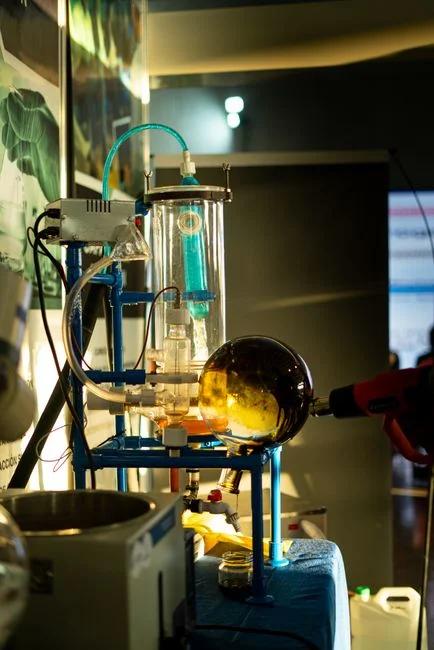
Commissioning fill-and-flush wastewater should be held, characterized and independently verified before discharge because one-time releases can create disproportionate receiving-system risk. Use a dedicated, labeled collection route and do not combine it with steady-state blowdown unless the receiving authority and EPC have approved that specific practice.
Obtain representative samples before discharge. The initial program should include pH, TDS, conductivity, suspended solids, temperature and residual cooling-water chemicals identified from the site program. Testing should also address contaminants associated with the actual construction materials, corrosion-control products and fill procedure rather than relying only on a generic water analysis.
Two U.S. precedents illustrate the compliance risk, but neither is a Vietnamese rule. Loudoun Water requires independent testing of flush-and-fill water and may direct unsuitable loads off-site. In Cheyenne, a fill-and-flush incident resulted in permit revocation and a US$10,000 fine (E&E News, 2025). These cases support a formal acceptance sequence: hold, characterize, obtain receiving-system approval, treat or polish as directed, independently verify, then discharge or haul off.
- Collect the commissioning wastewater in a segregated, labeled tank or container.
- Characterize representative samples against the receiving authority’s written acceptance criteria.
- Submit the proposed load, volume and treatment route for approval.
- Apply carbon, oxidation or other polishing only where the chemical analysis justifies it.
- Verify final quality independently and retain chain-of-custody records.
- Discharge to the approved route or haul off the unsuitable load.
The EPC and treatment supplier should state separately whether the quotation includes collection, testing, treatment, disposal and completion documentation. This scope is particularly important when comparing a membrane and polishing treatment scope with a complete commissioning-wastewater service.
Which treatment train fits the blowdown reuse target?
The appropriate blowdown train depends on the required reuse quality and the scaling chemistry: side-stream filtration removes coarse solids, UF provides a validated biological and particulate barrier, chemical conditioning protects the membranes, and RO or NF removes dissolved solids. Concentrate management must be part of the selected train rather than left as an unresolved discharge problem.
Genesis Water Tech (2025) reports a side-stream self-cleaning spiral-filter benchmark of 10–25 microns and 1–5% of total circulation flow. Its hollow-fiber UF benchmark is 0.01–0.1 micron, 10–30 psi and 90–95% recovery, with chemical cleaning every 1–3 months on cooling tower blowdown feed. RO feed should be filtered below 10–15 microns and dosed with antiscalant (Genesis Water Tech, 2025).
RO is appropriate where total dissolved solids, chloride or silica control the reuse target. It provides 95–99% rejection, 10–50 mg/L permeate TDS and 50–85% recovery on cooling tower blowdown. NF is more appropriate where hardness controls the requirement; its published recovery is 70–85%, with permeate at roughly 30–50% of feed TDS (Genesis Water Tech, 2025).
Conventional brackish RO commonly plateaus at 75–80% recovery on cooling tower blowdown because calcium carbonate, calcium sulfate and silica constrain concentration (IDE Tech, 2026). A hollow-fiber UF pretreatment system may use 0.03-micron PVDF membranes with automatic backwash and air scour, but final duty and pore size require project-water verification. An industrial RO blowdown-recovery system should be selected only after feed chemistry and recovery calculations are agreed.
A multi-media pretreatment filter can protect downstream equipment on the makeup line. Budget for a stocked spare set of RO and UF elements because they are consumables; the cited RO and UF membrane elements should be specified with traceability and project-specific compatibility.
| Decision condition | Applicable train | Key limitation |
|---|---|---|
| Particulate removal is the main objective | Side-stream filtration followed by UF | Does not remove dissolved salts; maintain space if future reuse is planned |
| Hardness controls the reuse or discharge limit | Filtration, UF, chemical conditioning and NF | Permeate remains at roughly 30–50% of feed TDS |
| Total TDS, chloride or silica controls the limit | Filtration, UF, antiscalant conditioning and RO | Recovery is constrained by concentrate scaling |
| Makeup-line solids require additional protection | Multi-media filtration upstream of the cooling system | Backwash and waste handling must be included in site planning |
When is NF, MVC or ZLD justified?
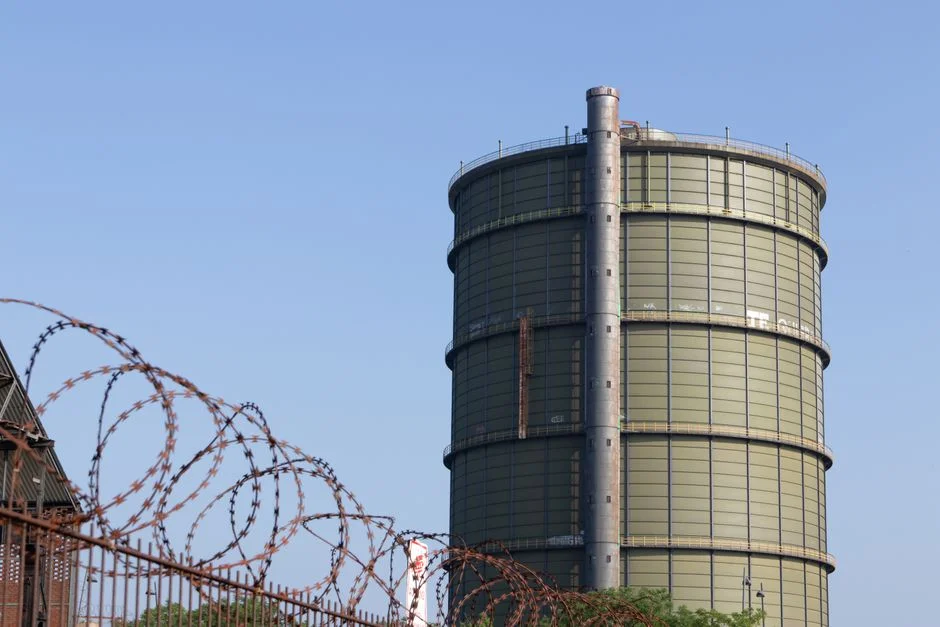
Higher-complexity treatment should follow a confirmed water-quality or volume constraint: use NF when hardness governs the limit, RO when silica, chloride or total dissolved solids govern it, and consider MVC or ZLD only when the recovered water value or residual-disposal restriction supports the added equipment and operating burden (Genesis Water Tech, 2025).
MVC can recover water from RO concentrate. Genesis Water Tech (2025) gives a benchmark of 95–98% recovery, distillate below 10 mg/L TDS and energy demand of 15–25 kWh per 1,000 US gallons of distillate. The source also reports that adding MVC roughly doubles capital cost relative to the cited core treatment train. That is a screening comparison, not a Thanh Hoa estimate.
Full zero-liquid-discharge treatment is justified only when a project-specific requirement mandates it. The cited configuration reaches 95–99% overall recovery and leaves solid waste below 1% of the original blowdown volume (Genesis Water Tech, 2025). Partial ZLD can reduce discharge volume by 80–90%, but the remaining brine still needs an approved route such as deep-well injection, haul-off or special-permit discharge (Genesis Water Tech, 2025).
Before selecting these options, obtain the residual-waste route, local acceptance criteria, utility access, waste-transport arrangements and operating responsibility. Where chemical control is needed, an automatic chemical dosing system must be integrated with feed monitoring, containment and fail-safe controls rather than treated as an accessory.
| Option | Published benchmark | Procurement condition |
|---|---|---|
| NF | 70–85% recovery; permeate at roughly 30–50% of feed TDS (Genesis Water Tech, 2025) | Hardness must be the controlling constituent |
| RO plus MVC | MVC: 95–98% recovery and distillate below 10 mg/L TDS (Genesis Water Tech, 2025) | Concentrate volume and energy demand must be evaluated |
| Full ZLD | 95–99% overall recovery; solids below 1% of original blowdown volume (Genesis Water Tech, 2025) | A confirmed residual-waste acceptance route is mandatory |
| Partial ZLD | 80–90% reduction in discharge volume (Genesis Water Tech, 2025) | Brine disposal remains a separately permitted activity |
What treatment costs should a Thanh Hoa buyer budget for?
A defensible first-stage capital screen is possible, but international treatment benchmarks are not Thanh Hoa quotations. Genesis Water Tech (2025) places a 50,000 GPD core comprising side-stream filtration, UF, antiscalant dosing and RO at US$300,000–700,000. Within that scope, it cites US$50,000–200,000 for the side-stream filter and US$250,000–500,000 for the RO skid. Adding MVC roughly doubles capital cost relative to the core train.
For a zero-liquid-discharge option, the same source gives a US$3–8 million capital benchmark and US$5–15 operating cost per thousand gallons treated (Genesis Water Tech, 2025). These are high-level screening values only. Currency, local construction costs, import duties, freight, foundation design, electrical works and disposal arrangements must be established through a site-specific quotation.
The buyer should require the offer to state whether it includes process duty, freight, foundations, electrical supply, installation, commissioning, initial chemicals, membrane spares, operator training, monitoring and residual disposal. The industrial treatment-plant selection guide provides a useful framework for separating packaged equipment from project-specific scope.
Build the operating case from actual local inputs: makeup-water cost, disposal charge, electricity, chemicals, membrane replacement, labor, laboratory monitoring and permit fees. Until those figures are obtained, no local total cost per cubic metre or payback period should be presented as fact.
| Cost item | International screening benchmark | Action for Thanh Hoa |
|---|---|---|
| 50,000 GPD side-stream filter, UF, antiscalant dosing and RO core | US$300,000–700,000 (Genesis Water Tech, 2025) | Request a local installed quotation with exclusions stated |
| Side-stream filter component | US$50,000–200,000 (Genesis Water Tech, 2025) | Confirm flow basis, materials, controls and installation boundary |
| RO skid component | US$250,000–500,000 (Genesis Water Tech, 2025) | Confirm recovery, permeate quality, energy and membrane warranty |
| MVC addition | Approximately doubles capital cost relative to the cited core train (Genesis Water Tech, 2025) | Price separately and verify concentrate duty and waste route |
| Full ZLD | US$3–8 million capital; US$5–15 per thousand gallons treated (Genesis Water Tech, 2025) | Use only for high-level evaluation pending local feasibility and residual-waste confirmation |
How should Thanh Hoa permitting and site planning be sequenced?
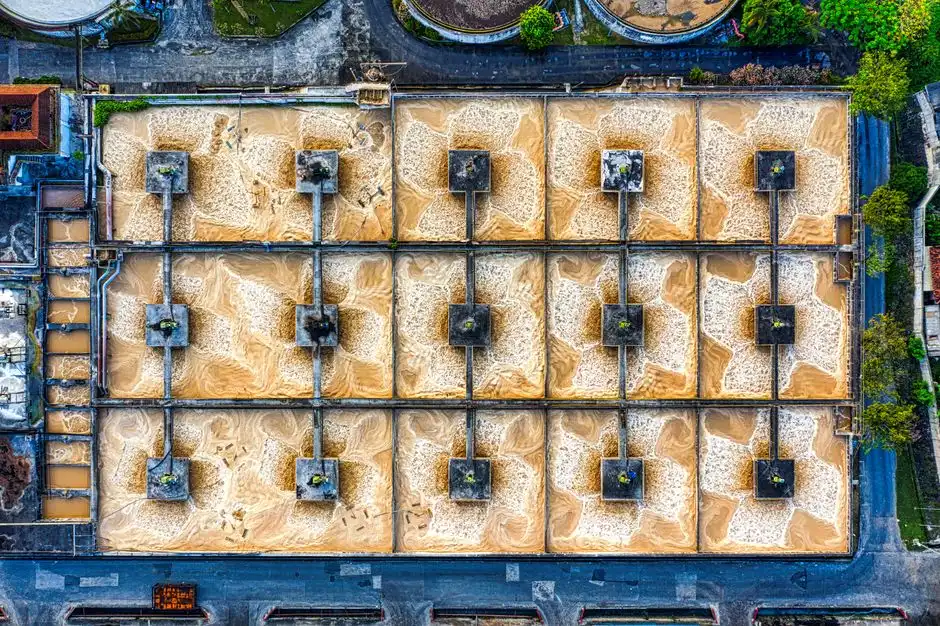
Permit engagement and treatment-plant footprint should be placed on the project critical path before detailed design and equipment award. Establish the applicable Vietnam industrial discharge framework, then obtain project-specific thresholds, permit fees, reuse-authorization procedures and residual-disposal requirements directly from the competent Thanh Hoa authorities. The supplied research does not provide verified Thanh Hoa numeric discharge limits, so no numerical threshold should be inferred from the international benchmarks in this article.
Engage the reviewing authority and receiving utility early enough for their requirements to influence the treatment train, sampling points and discharge route. Determine whether the project will seek approved reuse of treated blowdown, permitted industrial discharge, or both. The same sequence applies to any planned recovery-water application: reuse changes the water-quality objective and may require separate authorization.
Reserve space for tanks, pumps, chemical storage, dosing equipment, membranes, backwash and concentrate handling, spill containment, drainage and vehicle access. Include the maintenance route for membrane elements and chemical deliveries. Equipment layout should preserve access for sampling, isolation and residual-waste handling rather than treating the treatment package as a standalone skid.
Provide sampling ports and the required provisions for flow, pH and conductivity monitoring, while confirming the final monitoring and laboratory program with the reviewing authority. Early Vietnam industrial wastewater permit due diligence supports coordination with authorities, but each Thanh Hoa project site must be assessed independently.
What should a treatment supplier demonstrate before award?
A treatment supplier should demonstrate that its proposal is derived from the project’s chemistry and covers both wastewater streams. Require a written process basis using measured or forecast makeup-water and blowdown chemistry, rather than selecting a standard package from facility size alone.
Ask for evidence of relevant industrial discharge permitting experience, including Vietnam experience where available. A U.S. permit does not prove Vietnamese compliance. The supplier must also provide a written scope for commissioning fill-and-flush wastewater as well as steady-state blowdown; omission of the commissioning stream is a commercial red flag.
For RO and UF equipment, require documented membrane material, pore size or rejection basis, warranty status and consumable traceability. Equivalent documentation should be provided for unbranded substitutes rather than accepting untraceable generic components.
Request guaranteed flow, recovery, permeate or treated-water quality, concentrate-management method, availability target, cleaning interval, controls scope, monitoring requirements, spare parts and performance-test protocol. The hollow-fiber UF pretreatment system is a relevant equipment reference because it covers 2,000–40,000 L/h, uses 0.03-micron PVDF membranes, and includes automatic backwash, air scour and feed turbidity up to 300 ppm, subject to project-specific duty verification. A treatment-parts and valve schedule should identify the required spares.
| Award check | Required response | Risk if omitted |
|---|---|---|
| Chemistry-based design basis | Measured or forecast water-quality table and process calculation | Equipment may be unsuitable for scaling or residual chemicals |
| Two-stream scope | Separate methods for commissioning wastewater and continuous blowdown | Unplanned treatment, disposal or permit delay |
| Compliance evidence | Relevant permitting references and a proposed Vietnam approval pathway | Foreign compliance claims may be mistaken for local acceptance |
| Performance guarantees | Duty, recovery, quality, availability, cleaning and test protocol | Unclear acceptance and operating liability |
| Residual management | Documented concentrate and waste route | Treatment capacity is usable only if residuals have a lawful destination |
Frequently Asked Questions
How should a Thanh Hoa buyer size cooling-blowdown treatment equipment?
Size the equipment from monitored site inputs, not from cooling-system capacity alone. Request makeup-water and blowdown flow, TDS, conductivity, cycles of concentration, suspended solids, hardness, alkalinity, silica, chloride, temperature, residual chemicals and emergency-dump records. Then require the supplier to state the design flow, recovery, operating and peak flow, permeate quality, concentrate volume and redundancy basis. Genesis Water Tech (2025) reports that actual blowdown can exceed theoretical calculations by 15–30% because of unmeasured losses and emergency dumps, so the design duty must be reconciled against measured operation.
What budget should a buyer request for treatment in Thanh Hoa?
Use US$300,000–700,000 only as an international screening range for the cited 50,000 GPD side-stream-filter, UF, antiscalant-dosing and RO core, not as a Thanh Hoa estimate (Genesis Water Tech, 2025). Ask each bidder for an itemized local quotation covering equipment, freight, foundations, electrical works, installation, commissioning, chemicals, membrane spares, training, monitoring and residual disposal. Obtain local water, electricity, labor, disposal and permit charges separately before calculating operating cost or payback.
Which supplier delivers the lowest compliance risk for a Thanh Hoa data center?
Select the supplier that provides a chemistry-based design basis, a documented performance test and a written scope covering both commissioning fill-and-flush wastewater and continuous cooling tower blowdown. Require traceable RO and UF consumables, but do not treat a U.S. permit as evidence of Vietnamese approval. The relevant data-center blowdown treatment framework can support technical comparison, while the actual approval pathway must come from the competent Thanh Hoa authorities.
When is a high-recovery treatment system justified?
Consider NF when hardness controls the reuse or discharge limit, and RO when total dissolved solids, silica or chloride control it (Genesis Water Tech, 2025). Add MVC when recovering RO concentrate has sufficient water value or the residual discharge volume is constrained. Consider full ZLD only when zero liquid discharge is required and the solid-waste route is confirmed. Partial ZLD may reduce discharge volume by 80–90%, but the remaining brine still requires an approved disposal route (Genesis Water Tech, 2025).
Related Equipment
- industrial RO blowdown-recovery system — specifications, capacity range, and technical data