Why High Salinity Wastewater Breaks Conventional Treatment
Non-acclimated activated-sludge plants collapse once feed NaCl climbs past roughly 1% (10,000 mg/L TDS), and the failure mode is reproducible: osmotic plasmolysis of biomass, 30–60% loss in COD removal within 24–72 hours, and filamentous bulking that washes floc out of the clarifier. The peer-reviewed literature draws the biological ceiling at 0.5–1% NaCl for conventional BOD removal, while salt-tolerant genera such as Halomonas and Halobacter extend the workable band to ~3% NaCl after 2–4 weeks of gradual acclimation (Springer 2023 review; ScienceDirect ARG study, 2018-02). Engineering bands used in 2026 practice are brackish 1–3% TDS, saline 3–5% TDS, and hypersaline >5% TDS — the latter requiring thermal or hybrid trains. Industrial sources include petrochemical and refinery brine, pharmaceutical fermentation and antibiotic wastewater, textile dye-house effluent (NaCl/Na2SO4 baths), food processing and pickling lines, leather tanning, oil & gas produced water, and marine/aquaculture discharge. The compliance picture tightened in 2025–2026: China GB/T 19923-2005 caps reuse-water TDS at 1,000 mg/L, EU BAT-AEL for common wastewater treatment requires ≤1 mg/L total nitrogen and strict COD ceilings, and EPA ELG 40 CFR Part 435 sets zero-discharge expectations for oil & gas produced water. ZLD is no longer aspirational — it is a procurement requirement for any new hypersaline train. For a related emulsified-stream problem, the emulsified oil wastewater treatment guide walks through the pretreatment logic that protects downstream membranes.
The Four Treatment Families Used in 2026
Biological treatment with halophilic/halotolerant biomass in an SBR or MBR is the lowest-energy option for feeds below ~3% NaCl. Once the community is acclimated, COD removal stabilizes at 70–85% (HydropureWater field data, 2026) and the system tolerates salinity swings of ±0.5% during the day. Footprint is the smallest of the four families, but operators pay in start-up time: 2–4 weeks of step-feed ramp before the biomass can absorb a full salt shock. A purpose-built halophilic MBR system with submerged PVDF modules at 0.1 µm pore size keeps solids retention high enough to retain slow-growing halophiles.
Membrane separation, UF pretreatment followed by RO, is the workhorse for 1–5% TDS feeds. Modern industrial RO delivers 95–99% salt rejection, 60–85% recovery in single-pass and up to 90–95% in two-pass configurations, at 10–35 bar feed pressure and 0.4–1.2 kWh/m³ permeate. RO alone breaks down above ~6% TDS because osmotic pressure exceeds pump headroom and CaSO4/silica scaling becomes unmanageable; that is why a two-pass industrial RO system is almost always coupled with a thermal concentration step.
Thermal evaporation — multi-effect distillation (MED), mechanical vapor recompression (MVR), and mechanical vapor compression (MVC) — handles 5–25% TDS brine. MVR is now the 2026 default: it consumes 15–30 kWh/m³ of distillate (electrical) versus 0.2–0.4 ton steam per ton water for MED, so plants with cheap steam and limited power still choose MED. A standalone MVR can push recovery to 95–98% and produce a dry NaCl or Na2SO4 cake from a downstream crystallizer, which is the cleanest path to a true ZLD mass balance.
Advanced oxidation (Fenton, O3/H2O2, electrochemical) and selective ion exchange are polishing steps, not standalone desalination. They are specified when the feed contains refractory organics, heavy metals, nitrate, or color bodies that survive bio + RO — typically to meet a reuse or direct-discharge ceiling, not to remove salt.
Method Comparison Matrix: Which Route Wins at Each Salt Level
Engineers shortlist by matching TDS band to recovery target, energy cost, and discharge ceiling. The table below consolidates 2026 operating windows for all four families; no top-ranking page currently publishes the comparison in this format.
| Method | Effective TDS range | Salt / COD removal | Energy (kWh/m³ or steam) | Indicative 2026 OPEX ($/m³) | Best fit |
|---|---|---|---|---|---|
| Biological (halophilic MBR) | < 1–3% NaCl | 70–85% COD; negligible salt removal | 0.3–0.6 kWh/m³ (aeration-dominated) | $0.40–0.80 | Food, pharma, low-salt textile |
| Membrane (UF → RO, 1–2 pass) | 1–5% TDS feed; 7–10% concentrate | 95–99% salt rejection; 60–95% recovery | 0.4–1.2 kWh/m³ permeate | $0.30–0.60 | Textile, brackish reuse, desalination |
| Thermal (MVR or MED) | 5–25% TDS brine | >99% salt removal; dry cake | MVR 15–30 kWh/m³; MED 0.2–0.4 t steam/t water | $1.50–3.50 | Petrochemical, landfill leachate, ZLD |
| Hybrid (bio + RO + MVR) | >5% TDS or ZLD target | >99% overall; 95–98% water recovery | 1.0–2.0 kWh/m³ blended | $2.00–8.00 | Chemical, oil & gas, pharma, landfill leachate |
The matrix is a building block, not a single-choice answer. Almost every 2026 plant that handles >3% NaCl stacks at least two families — biological for organics, RO for volume reduction, MVR for the final concentrate — because no single unit operation covers the full 1–10% TDS window economically. Sizing starts with the feed TDS and the recovery target; the link to a salt-tolerant MBR module is a useful reference for the biological step in this kind of hybrid train.
A 2026 Reference Process Train for Industrial Saline Wastewater
The reference train below is sized for 1,000 m³/d of feed at 3.5% TDS, targeting >95% water recovery and a solid NaCl/Na2SO4 cake — a true ZLD mass balance that an auditor or a regulator can sign off on.
- Headworks — rotary bar screen. A rotary bar screen headworks with 3–6 mm aperture is the first guard, sized to 1.5–2.0× average flow to absorb diurnal peak factor and protect downstream pumps from rags, plastics, and large debris.
- DAF pretreatment. A dissolved air flotation unit removes free oil, FOG, and emulsified TSS that would otherwise foul RO and stress halophilic biomass. DAF typically achieves 85–95% TSS removal and 70–90% FOG removal at 4–25 m³/h hydraulic loading. A packaged DAF pretreatment for high salinity wastewater sized 4–300 m³/h is the standard 2026 selection.
- Halophilic MBR. Submerged PVDF flat-sheet or hollow-fiber modules, 0.1 µm pore, operated at 10–20 LMH and SRT of 30–60 days to retain the slow-growing halophiles. In a 10–2,000 m³/d skid, this step brings COD from ~5,000 mg/L to <200 mg/L and BOD to <20 mg/L, the bench-marks for downstream RO protection.
- Two-pass RO. First pass at 10–15 bar, second pass at 20–35 bar, sized for 90–95% overall recovery. The concentrate climbs from ~3.5% TDS to 7–10% TDS, well within RO's stable operating window. Permeate is reused as boiler feed or process rinse; concentrate feeds the thermal step.
- MVR evaporator + crystallizer. The RO concentrate is concentrated to 20–25% TDS in the MVR, then sent to a forced-circulation crystallizer that yields a dry NaCl/Na2SO4 cake and reusable distillate. This step closes the mass balance. Lifecycle O&M on the upstream MBR and RO is covered in the pharma wastewater O&M protocol for parallel industries.
2026 Cost Benchmarks: CAPEX, OPEX and Energy for Each Step
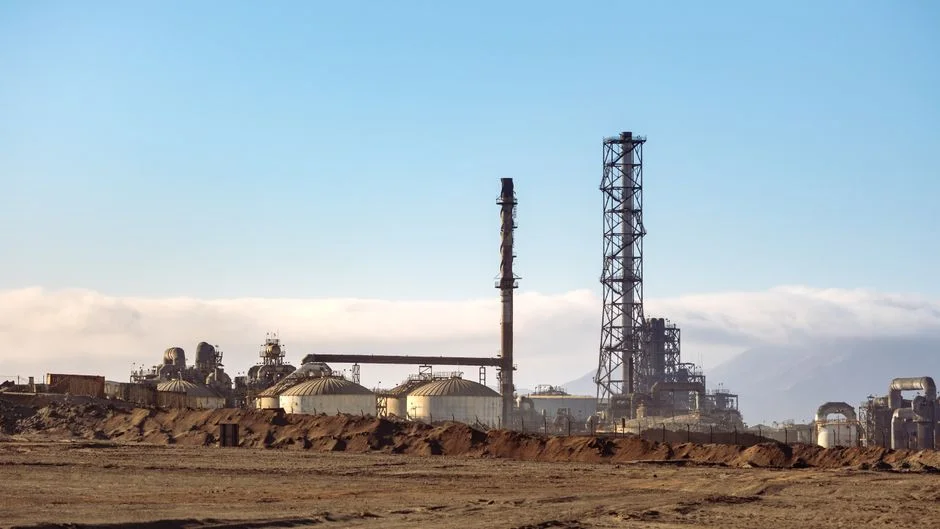
CAPEX figures are equipment-and-skid delivered; OPEX is 2026 all-in including chemicals, energy at industrial tariffs, membrane replacement, and operator hours. The ranges are indicative for a 1,000 m³/d plant and scale roughly linearly with flow within ±20%.
| Step | CAPEX per 1,000 m³·d (2026 USD) | OPEX ($/m³) | Energy driver |
|---|---|---|---|
| Pretreatment (screen + DAF + EQ) | $80,000–$250,000 | $0.15–0.30 | Pumps, saturator air |
| Halophilic MBR | $400,000–$900,000 | $0.40–0.80 | 0.3–0.6 kWh/m³; membrane replacement every 5–8 years |
| RO skid (1–2 pass) | $250,000–$700,000 | $0.30–0.60 | 0.4–1.2 kWh/m³ permeate; CIP chemicals |
| MVR + crystallizer | $800,000–$3,500,000 | $1.50–3.50 | 15–30 kWh/m³ distillate; compressor dominates |
| Full ZLD train end-to-end | $1,500,000–$6,000,000 | $2.00–8.00 | 1.0–2.0 kWh/m³ blended; tariff-sensitive |
OPEX sits at the lower end of the band when energy is below $0.06/kWh and the site has good waste-heat recovery; it climbs above $6/m³ on tariff-heavy Asian industrial estates and on landfill-leachate feeds that demand extra CIP cycles. The most expensive line item is the MVR compressor; aggressive RO recovery ahead of the MVR is the single most effective OPEX lever, because it cuts the volume of brine sent to thermal concentration. Long-term reliability on the ZLD train is dominated by RO membrane life and MBR fouling rate, both of which are covered in the EGSB troubleshooting guide for parallel biofilm systems. Plants that run close to their salt ceiling should also plan a predictive maintenance for ZLD plants program, since unplanned downtime on the MVR or the second-pass RO typically costs 8–12× the maintenance budget for the hour of lost production.
Frequently Asked Questions
What TDS level stops biological treatment from working?Conventional activated sludge fails above ~1% NaCl; acclimated halophilic biomass extends the workable band to ~3% NaCl at 70–85% COD removal, but 2–4 weeks of step-feed ramp is required before the system absorbs a salt shock (Springer 2023).
What is the lowest-energy desalination route above 5% TDS in 2026?MVR is the standard, at 15–30 kWh/m³ of distillate versus 0.2–0.4 ton steam per ton water for MED; plants with cheap waste steam still choose MED, but new builds default to MVR.
How much does a 1,000 m³/d ZLD train cost in 2026?End-to-end CAPEX runs $1.5–6.0M with OPEX of $2.00–8.00/m³, dominated by MVR electricity and RO membrane replacement; the spread reflects feed TDS, local power tariff, and target water recovery.
Which HydropureWater equipment anchors each step?A rotary bar screen protects headworks, a DAF unit strips FOG and TSS, a halophilic MBR cuts COD to <200 mg/L, a two-pass RO concentrates the brine to 7–10% TDS, and an MVR + crystallizer finishes the train to dry salt cake.
Can RO hit 95% recovery on a 3% TDS feed?Yes — a two-pass RO with inter-stage booster pumps routinely reaches 90–95% overall recovery on 1–5% TDS feeds at 0.4–1.2 kWh/m³ permeate, provided scaling indices are controlled with antiscalant and pH adjustment.