

Start with the permit boundary at the Fies sewer connection
Mining and metals plants near Fies meet sewer-pretreatment requirements by identifying the receiving POTW, obtaining its industrial-user requirements, and treating wastewater to the applicable end-of-pipe limits before connection. Under 40 CFR Part 403, local limits apply where an industrial user discharges into the POTW collection system and protect the plant’s treatment processes, sludge, and receiving waters. A defensible project therefore starts with permit identification, not equipment selection. The operator must confirm the correct categorical standard, characterize the actual wastewater, size treatment against worst-case conditions, establish a compliant sludge route, and demonstrate performance through monitoring and acceptance testing. No supplied source establishes Fies-area numeric limits, so the receiving POTW’s current permit and sewer-use ordinance must provide the binding values.
The EPA states that POTWs impose local limits at the industrial user’s end-of-pipe discharge, meaning the point of connection to the collection system. The permit file should therefore contain the receiving POTW identity; industrial-user or significant-industrial-user permit; sewer-use ordinance; numeric and narrative limits; prohibited discharges; monitoring, reporting, sampling-location, surcharge, and slug-control requirements; and permit renewal dates. NPDES coverage does not replace POTW pretreatment where wastewater enters a sewer. The mining-plant sewer pretreatment compliance playbook provides a parallel compliance workflow for another jurisdiction, but its limits must not be transferred to Fies.
The categorical citation must also be resolved from the plant’s actual process. The supplied 2026 mining guide identifies 40 CFR Part 430 for ore mining and dressing and Part 433 for metal finishing, while another supplied guide cites Part 440 for a metal-mining subcategory. Require written confirmation from the POTW or the plant’s regulatory specialist before the equipment basis is fixed.
| Permit boundary item | Evidence required before design | Why it controls |
|---|---|---|
| Receiving POTW | Name, contact, sewer-use ordinance, and current industrial-user permit | Identifies the control authority and applicable local requirements |
| Discharge point | Approved end-of-pipe sampling location and applicable method | Defines where compliance is demonstrated |
| Federal category | Written confirmation of Part 430, Part 433, Part 440, or another applicable category | Prevents selection of the wrong categorical requirements |
| Local limits | Current numeric limits, narrative conditions, prohibited discharges, BMPs, surcharges, and slug controls | Sets the site-specific treatment envelope |
| Operating dates | Permit issue, renewal, reporting, and monitoring dates | Prevents design and procurement from lagging behind compliance obligations |
| Non-local example | PFRWTA values: 2,090 mg/L TSS, 6,000 mg/L TDS, and 0.430 mg/L hexavalent chromium | Illustrates the specificity of local limits; these belong to a different authority and are not Fies limits |
The PFRWTA values illustrate why qualitative approvals are insufficient: they identify both the pollutant and the concentration that must be controlled. They are examples from another authority, not substitutes for Fies permit conditions. The project comparison in the Hughes-area pretreatment compliance guide illustrates the same evidence-first approach without establishing Fies limits.
Characterize the wastewater before selecting the treatment train
The 2026 mining pretreatment guide states that mining and metals wastewater is a superposition of pit dewatering, concentrator slurry water, contact stormwater, acid mine drainage, and metal-finishing rinsate, each with a different pollutant fingerprint. Design flows and loads can change with ore grade, mill throughput, and storms. Keep these streams segregated until their chemistry, reuse implications, and disposal routes are known; blending first hides the load that may control treatment and sludge generation.
Build the design basis from the current permit conditions, a 12-month influent characterization, recent Discharge Monitoring Report data where applicable, and worst-case composite samples. The supplied 2026 guide identifies a 24-hour composite sampler and online pH and conductivity measurement at the headworks as the minimum defensible basis. Average discharge is not an adequate proxy where campaign operation, storm flushing, or ore-body variability can produce the governing condition.
The analytical program should cover every permit parameter plus source chemistry. Depending on the process and POTW requirements, that can include pH, TSS, sulfate, TDS, iron, arsenic, manganese, copper, lead, zinc, nickel, cadmium, mercury, chromium, oil and grease, and cyanide. Also document average and peak flow, batch versus continuous operation, mill-campaign variability, anticipated precipitation-reagent demand, expected solids production, and available footprint. These are sizing inputs, not optional procurement details.
| Design input | Minimum evidence | Use in equipment sizing |
|---|---|---|
| Stream composition | Separate characterization of pit, concentrator, stormwater, drainage, and finishing streams | Defines treatment and containment boundaries |
| Temporal variability | 12-month influent record plus campaign and storm observations | Sets equalization, peak-flow, and storage duties |
| Governing wastewater | Worst-case composite results, not only an average | Controls chemical, clarification, filtration, and sludge sizing |
| Batch behavior | Batch duration, campaign schedule, and drum-empty frequency | Determines tankage, controls, and dewatering mode |
| Solids generation | Projected precipitate and coagulant solids mass | Sets thickener and filter-press basis |
| Chemical demand | Representative jar-test results | Confirms dose and pH endpoint before selecting capacity |
Jar tests should determine chemical dose and the pH endpoint for the actual blend. The supplied guidance says final sizing must be confirmed against jar tests and the measured influent envelope. A PLC-controlled chemical dosing skid can then be sized against verified demand rather than an assumed metal concentration.
Treat the stream in the order the chemistry requires
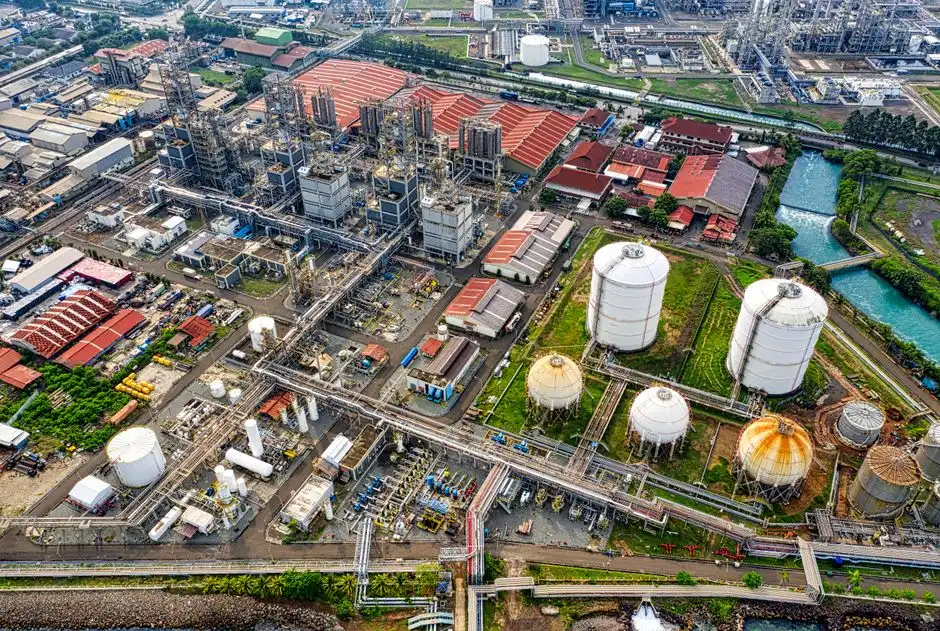
The supplied mining guide places pH correction before coagulation and filtration because pH adjustment drives dissolved metals into hydroxide precipitates; downstream coagulants and filters cannot reliably remove dissolved metals without that condition. Start with equalization where flow and load vary, then use controlled acid or alkali dosing to establish the required precipitation chemistry. The 2026 guide cites pH 9.0–10.0 for a hydroxide stage intended to capture copper, zinc, nickel, and most divalent metals. Treat that range as a preliminary design reference, not a Fies permit condition; confirm it by jar test and implement staged pH control for the actual blend.
Next, add coagulants and flocculants to aggregate suspended solids and small metal-bearing particles. Remove the resulting flocs through dissolved air flotation or clarification. The supplied guide identifies DAF as effective for low-density metal-hydroxide flocs that settle poorly; for an existing settling basin, a lamella unit can increase clarification capacity within the available footprint. Procurement teams can compare DAF and lamella clarification for mining wastewater, but the choice should follow influent solids, floc density, footprint, and operating conditions rather than equipment availability.
Specialist chemicals and polishing belong after bulk solids removal. Corrosion inhibitors protect equipment, biocide can address clarifier or filter fouling where justified, and ion exchange or specialty resin can remove residual dissolved metals. The supplied 2026 guide warns that ion-exchange polishers foul readily on oil and grease and hardness, so they should not serve as the primary treatment stage.
Finish the sewer-discharge train with filtration. The mining guide names backwash media filtration and centrifugal units rated for particles up to 2,000 microns; another supplied guide identifies anthracite, sand, and garnet as the standard polish after DAF or lamella clarification. A DAF system for metal-hydroxide floc removal addresses the solids-separation stage, while multi-media filtration for suspended-solids polishing addresses the final particulate barrier.
Add biological polishing only when the POTW conditions, discharge characteristics, or permit require it. The supplied 2026 guide includes MBR or MBBR after precipitation and solids removal and cites MBR effluent below 5 mg/L TSS and more than 95% COD removal as performance references. Where microbial sewer limits apply, the same guide cites a chlorine-dioxide residual of 0.1–0.5 mg/L and UV dosage of 30–40 mJ/cm². These are design references, not asserted Fies permit limits.
| Process block | Primary function | Evidence produced |
|---|---|---|
| Equalization | Buffers flow and load variation | Headworks flow, pH, conductivity, and composite chemistry |
| pH adjustment and hydroxide precipitation | Converts dissolved metals into removable precipitates | Dose rate, pH trend, and residual dissolved metals |
| Coagulation and flocculation | Aggregates suspended solids and metal-bearing particles | Jar-test dose and floc performance |
| DAF or lamella clarification | Separates metal-hydroxide flocs | Turbidity, TSS, solids capture, and sludge yield |
| Specialist polishing | Controls residual metals, corrosion, or fouling | Resin loading, biocide residual, or corrosion-monitor results |
| Filtration | Removes remaining suspended solids | Filter-head loss, breakthrough checks, and final TSS |
| Optional biological or disinfection stage | Meets POTW-specific organic or microbial conditions | COD, TSS, residual disinfectant, or dose records |
| UF and RO for reuse | Recovers water after solids removal | Turbidity, conductivity, recovery, and membrane differential pressure |
For reuse or zero liquid discharge, the supplied 2026 guide places 0.03-micron hollow-fiber ultrafiltration ahead of reverse osmosis to remove residual colloids that can foul RO membranes. A hollow-fiber ultrafiltration system for reuse pretreatment should therefore be evaluated after the solids-removal train, not as a substitute for it.
Treat metals-bearing sludge as part of the pretreatment system
Metals-bearing sludge must enter the initial project scope because precipitation converts dissolved contaminants into a second waste stream that requires conditioning, dewatering, storage, transport, and disposal. The supplied 2026 guide identifies a plate-and-frame filter press as the standard dewatering method for hydroxide- or sulfide-bearing metals sludge. It cites 30–45% dry-solids cake as a benchmark from that guide, not a guaranteed project result; actual performance depends on sludge chemistry, conditioning, feed solids, and press operation.
Return filter-press filtrate to the head of the treatment train because dissolved metals and treatment chemicals may remain. Require the POTW or disposal facility to provide sludge characterization and acceptance criteria before selecting polymer, plate area, plate count, or automatic versus manual operation. The supplied guide also identifies a separate liability under RCRA TCLP rules: sludge can require hazardous-waste evaluation even when the treated water complies with the sewer permit.
That sequencing prevents a common commercial error: comparing water-treatment skid prices while leaving the more consequential solids route unresolved. A plate-and-frame filter press for metals-sludge dewatering should be specified against measured sludge solids, campaign frequency, conditioning results, target cake consistency, filtrate quality, and the receiving facility’s acceptance test.
Build monitoring, acceptance testing, and operating controls into the permit
EPA identifies the industrial user’s end-of-pipe discharge as the point where POTW local limits apply, so the compliance program must follow the permit’s sampling point, method, frequency, and reporting requirements. Map every permit parameter to an online instrument, laboratory sample, control action, alarm, retained record, and named operator. The purpose is not merely to produce end-of-month data; it is to detect an approaching exceedance before the discharge becomes noncompliant.
Automatic interlocks should cover chemical dosing, pH excursion, DAF or clarification upset, filter breakthrough, high flow, and off-spec discharge. Where the permit permits composite or grab sampling, the operating procedure must preserve representative sampling and the required chain of custody. A PLC-controlled chemical dosing skid should therefore be evaluated as part of the compliance-control system, not merely as a chemical pump package.
| Permit requirement | Control and measurement | Acceptance evidence |
|---|---|---|
| Flow and pH | Online instruments, calibration procedure, high-flow and pH alarms | Site acceptance test and calibration records |
| Metals and TSS | Representative sampling and laboratory analysis at the permitted location | Chain-of-custody records and analytical results |
| Chemical dosage | Dosing rate, tank level, and makeup-water verification | Functional test under representative demand |
| Solids separation | DAF or clarifier differential, recycle, and effluent turbidity trends | Representative batch and campaign performance |
| Filtration | Head loss, backwash sequence, and breakthrough alarm | Filtrate TSS and media-loading evidence |
| Slug and spill control | Containment, diversion, stop-discharge interlock, and escalation procedure | Drill records and documented responsibilities |
Jar tests establish chemical demand and should precede final sizing. Site acceptance testing then uses design wastewater under representative batch and mill-campaign conditions, with agreed sampling procedures and acceptance criteria. Test the complete train because a high removal rate at one block can be offset by pH drift, solids carryover, filter breakthrough, or an off-spec upstream stream. A DAF system for metal-hydroxide floc removal should be tested for solids capture, recycle stability, and downstream filtrate quality rather than for startup alone.
The operating manual should also govern bypass prevention, spill containment, slug response, reporting, and escalation. Maintain a named POTW contact and a clear path for notifying the control authority when monitoring indicates an exceedance. Tie records to the permit rather than relying on informal shift notes.
Choose between sewer discharge, partial reuse, and full ZLD
The 2026 decision guide compares sewer discharge, partial reuse, and full zero liquid discharge using long-run POTW fees, incoming freshwater cost, the expected tightening of local limits, reuse value, and operating cost. No supplied source provides a defensible Fies-area cost estimate, so a purchase decision requires the local tariff, current permit, water cost, recovery target, energy prices, and disposal route. Sewer discharge is generally the lowest-complexity option when capacity is available and the precipitation-to-filtration train can reliably meet the end-of-pipe limits.
Partial reuse becomes more defensible when water has process value and the POTW alternative carries increasing volume or compliance cost. The supplied guide places UF ahead of RO to protect membranes from residual colloids. HydropureWater’s UF system uses 0.03-micron hollow-fiber membranes, handles up to 300 ppm turbidity, and provides automatic backwash and air scour. Those specifications describe the equipment envelope, not a Fies influent acceptance or reuse-quality guarantee.
Reserve full ZLD for sites where sewer capacity, permit risk, water scarcity, or recovery value justifies evaporation and crystallization. The supplied guide characterizes this as the highest-cost and highest-exposure option and notes that air permits may still apply even when liquid discharge is eliminated.
| Decision factor | Sewer discharge | Partial reuse | Full ZLD |
|---|---|---|---|
| Primary obligation | Meet POTW end-of-pipe limits | Meet discharge limits and produce reusable water | Eliminate liquid discharge while managing residuals and air permits |
| Core treatment | Precipitation, clarification, and filtration | Pre-treatment plus UF/RO recovery | Concentration by evaporation and crystallization |
| Commercial inputs required | POTW tariff, surcharge rules, permit conditions | Same inputs plus water value and recovery target | Same inputs plus energy, brine, residue, and air-permit costs |
| Principal risk | Local-limit exceedance and sewer-capacity constraints | Membrane fouling and recovery variability | Highest capital and operating exposure |
A UF system for reuse pretreatment and reverse-osmosis system for water recovery should therefore be compared as part of a site water balance, not as independent products. The regional wastewater treatment cost and equipment framework can structure the estimate, but the Fies-area inputs must supply the actual business case.
Use a pre-purchase checklist to screen treatment suppliers

A proposal should not be accepted until the supplier has reviewed the current NPDES permit where applicable, the POTW permit and local limits, the written categorical-standard determination, recent DMR data where relevant, the 12-month influent characterization, and the worst-case composite results. A quotation issued before those documents are available is a preliminary concept, not a compliant equipment offer.
Ask each bidder to document competence in metal-hydroxide precipitation, comparable mining or metal-finishing projects, on-site commissioning, operator training, spare-parts support, and a guaranteed media and resin supply chain. Require a process guarantee tied to the applicable POTW parameters, together with a performance-test protocol, sampling procedures, acceptance criteria, and responsibility for remedy or retesting. A supplier that cannot state how it will demonstrate compliance has not closed the technical risk.
The commercial schedule should also identify lead time, installation boundaries, utilities, chemical storage, sludge handling, controls integration, commissioning support, and ongoing service. Price and lead time are decision variables, but neither demonstrates compliance capability. Use the same scorecard for every bidder and require the selected supplier to accept written performance obligations rather than offering a flowsheet without evidence.
Frequently Asked Questions
What should a mining or metals plant near Fies do first to establish pretreatment compliance?
Identify the receiving POTW, obtain the industrial-user permit and current local limits, confirm the applicable categorical standard in writing, characterize each wastewater stream, size a staged treatment train, prove performance through testing, and monitor at the permitted end-of-pipe location. The supplied 2026 guide describes this sequence for mining and metal-finishing operations, but no supplied source establishes Fies-area numeric limits.
Is one treatment flow sheet suitable for every mine or metals facility near Fies?
No. The supplied sources distinguish ore-mining and dressing from metal finishing, while pit dewatering, concentrator slurry water, contact stormwater, acid mine drainage, and finishing rinsate have different pollutant fingerprints. Match the train to the Fies-area permit, actual chemistry, flow envelope, sludge route, and reuse decision.
What inputs are needed to compare the cost of sewer discharge with reuse or ZLD?
Request the current POTW tariff, surcharge rules, sewer capacity statement, current permit, incoming water cost, required recovery rate, energy price, chemical cost, and disposal route for residuals. The supplied 2026 guide supports this comparison framework but provides no defensible Fies-area cost figure; a quotation based on generic equipment prices would not answer the site’s economic question.
How should procurement teams screen treatment suppliers for compliance capability?
Ask for guarantees tied to the final permit limits, acceptance-test results on representative wastewater, relevant mining or metals references, chemical and media consumption data, controls documentation, commissioning support, and a consumables supply commitment. Require written responsibility for remedy or retesting. A low price or short delivery schedule does not replace technical evidence.
Which treatment values can be used as preliminary benchmarks rather than Fies limits?
The supplied 2026 guide cites pH 9.0–10.0 for a hydroxide stage capturing several divalent metals, sulfide residuals of 0.01–0.05 mg/L, DAF for metal-hydroxide flocs, and 30–45% dry-solids plate-press cake. These are preliminary references only. Validate the actual design with jar tests, composite data, sludge acceptance criteria, and the governing Fies-area permit.