Determine which Davella discharge requirements control
Mining and metals plants near Davella meet sewer pretreatment obligations through the receiving publicly owned treatment works’ (POTW) industrial-user permit or equivalent control mechanism, rather than a universal Davella limit or generic treatment recipe. EPA’s Local Limits Development Guidance states that indirect dischargers’ obligations are determined by POTW industrial-user permits or equivalent control mechanisms, and that permits or regulations control if the guidance differs. The engineering sequence is therefore: identify the controlling authorization, characterize the wastewater, match unit operations to pollutants, verify the complete train, and maintain defensible operating records. No Davella-specific numerical limit or permit was supplied, so equipment sizing must remain provisional until the sewer authority provides the applicable requirements.
National pretreatment standards, categorical standards, prohibited-discharge provisions, and POTW local limits all impact an industrial user. The plant should not assume that a direct discharge permit or a vendor treatment claim establishes authorization to send water to the sewer. Obtain the industrial-user permit or equivalent instrument and identify whether any separate NPDES, state, or facility-specific environmental permit governs the relevant discharge pathway.
| Document or decision | What the engineering team must establish | Effect on equipment selection |
|---|---|---|
| Industrial-user permit or equivalent control mechanism | Applicable pollutant limits, monitoring requirements, sampling point, analytical methods, reporting, and discharge restrictions | Defines the required outlet quality and proof-of-compliance plan |
| National and categorical pretreatment requirements | Any standards applicable to the plant’s industrial category | Sets minimum treatment or discharge obligations that cannot be displaced by a catalog specification |
| Prohibited-discharge provisions | Restrictions on discharges that may interfere with the POTW, damage the collection system, or affect worker safety | May rule out untreated bypasses and impose specific handling or monitoring controls |
| POTW submittal and approval process | Required drawings, analyses, vendor calculations, operating plan, and written acceptance conditions | Creates the approval milestones that should precede procurement and discharge |
EPA’s guidance dated 2021-06-25 identifies permits or equivalent control mechanisms as controlling for industrial-user obligations. A Davella plant should request the complete authorization package, identify the POTW’s designated contact, and document all assumptions used in preliminary design. The regional guide to mining wastewater pretreatment near Pevely provides a useful adjacent workflow, but it does not replace the Davella receiving authority’s own requirements.
Characterize the wastewater before choosing equipment
EPA’s local-limits methodology requires distinct data collection and analysis because treatment decisions depend on the pollutant load and flow variability entering the sewer. Mining wastewater characterization should cover normal production, cleanup, storm, and upset conditions rather than a single composite average. EPA’s Local Limits Development Guidance, 2021-06-25, identifies sampling locations, sampling frequency, analytical methods, flow data, and review of results as separate data-development functions.
Build a sampling brief that pairs flow and continuous pH records with laboratory results. Genesis Water Technologies identifies suspended solids, acidity, metals, heavy metals, organics, and metalloids including iron, arsenic, and manganese as common mining-wastewater concerns; some mining wastewater can be highly brackish. These are screening categories, not proof that each parameter exists at the site. The sampling plan should determine which are present and how their concentrations and loads change through operating states.
| Characterization input | Engineering question | Decision supported |
|---|---|---|
| Flow and pH by operating condition | What flows and acidity excursions must the train handle, and when do they occur? | Equalization, pH-control capacity, hydraulic loading, and chemical demand |
| Suspended solids and settleable solids | Are solids predominantly fine, colloidal, mineral, or floatable? | Coagulation, flocculation, clarification or flotation, filtration, and sludge handling |
| Metals and metalloids | Which dissolved species require precipitation, and what residual concentration remains? | pH target, chemical precipitation, solids separation, and polishing requirements |
| Organics, oil and grease, salinity, and brackish conditions | Do these create toxicity, interference, membrane, or reuse constraints? | Supplemental treatment, membrane compatibility, and discharge objective |
| Intended outcome | Is the objective sewer compliance, process-water reuse, or both? | Target water quality, redundancy, controls, and acceptance test |
Do not set the treatment objective based on an equipment catalogue. Genesis Water Technologies describes successful treatment as supporting safe reuse when technically and financially feasible, while LiqTech’s mining-wastewater page connects treatment and recycling with reduced freshwater demand and environmental compliance. These commercial sources identify desired outcomes, not site guarantees. For Davella, define whether the sewer permit, reuse specification, or both control final performance, then apply the EPA concepts of effluent quality, treatment-plant interference, collection-system protection, and worker safety.
Following wastewater characterization, the chemical program should begin with a measured mass balance rather than a fixed dose. Use the engineering criteria for coagulant dosing to structure testing, but establish actual demand through the characterized stream. Include clean-water and spent-chemical dilution, chemical storage, delivery, and operator controls in the permit submittal because these details affect whether the proposed treatment can operate reliably.
Build a treatment train that follows the pollutant
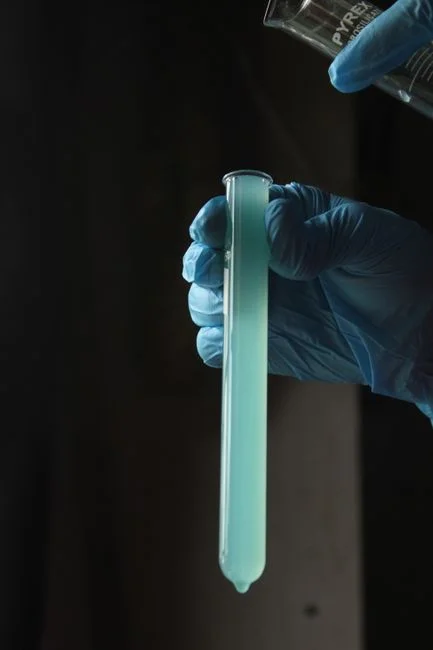
Genesis Water Technologies states that properly selected pH adjusters can bring mining wastewater toward a more balanced neutral condition and help dissolved metals precipitate. This establishes pH adjustment as the first step in its treatment sequence, but not as proof that a single pH target will meet a Davella permit. Chemical precipitation of metals must be developed through jar and pilot testing because the required condition depends on the metals present, alkalinity, competing species, and the resulting solids.
Use coagulation and flocculation to combine suspended solids and small metal particles into larger clumps that are easier to remove by clarification and post-filtration. A PLC-controlled chemical dosing system for pH adjustment and coagulation should be specified around the measured demand, chemical inventory, mixing, flow-paced or trim-control logic, and fail-safe requirements.
Select the solids-removal stage according to the stream. The HydropureWater DAF catalog covers 4–300 m³/h across 13 models for suspended solids, fat, oil and grease, and colloidal matter; this is published equipment scope, not Davella treatment performance. A DAF system for mining and metals wastewater pretreatment can be considered when suspended solids, colloidal matter, or floatable contaminants are central and a skimmable solids stream is operationally useful.
For a compact chemical-and-solids train, the HydropureWater JY catalog combines coagulation, flocculation, sedimentation, filtration, and automatic backwash at published capacities of 10–200 m³/h. Its integrated configuration may reduce the number of separately operated process steps, but it does not remove the need to verify chemical demand, hydraulic loading, sludge removal, backwash waste handling, and final effluent quality.
Use post-filtration or membrane polishing when the identified permit target requires a tighter separation barrier. Genesis cites backwash filtration and centrifugal systems for larger particles up to 2,000 microns. LiqTech identifies membrane filtration for suspended solids, organic compounds, and inorganic contaminants, including heavy metals, in mining wastewater. Membrane selection should reflect the complete water matrix, including suspended solids, oil, hardness, metals, salinity, pH, temperature, and cleaning chemistry.
| Process stage | Primary purpose | Evidence required before the next stage is fixed |
|---|---|---|
| pH adjustment | Create conditions for metal precipitation and downstream chemical treatment | Batch and pilot response by metal and alkalinity condition |
| Coagulation and flocculation | Destabilize particles and form removable floc | Chemical type and dose, mixing, pH, settleability, and residual metals |
| DAF or clarification | Separate suspended solids and precipitated material | Hydraulic loading, solids capture, float or sludge withdrawal, and upset response |
| Post-filtration or membrane polishing | Provide a tighter particle, colloid, or contaminant barrier | Whole-water compatibility, fouling, cleaning, and required outlet quality |
| Supplemental chemistry | Address corrosion, residual ions, or biological control where justified | Specific stream evidence and equipment-compatibility review |
For the HydropureWater UF system, the catalog specifies 2,000–40,000 L/h, 0.03 micron PVDF membranes, turbidity acceptance up to 300 ppm, and automatic backwash with air scour. Verify those specifications against actual flow, turbidity, chemistry, membrane configuration, and required treatment result before selecting it. Corrosion inhibitors, ion exchangers, and biocides should be added only when the stream and equipment assessment supports them; Genesis treats them as possible supplemental chemicals, not universal steps.
Choose between clarification, integrated treatment, and membrane polishing
The correct procurement choice depends on the pollutant, required separation, flow, solids-handling objective, and site constraints rather than nominal throughput alone. Published capacities are screening boundaries; they do not establish treatment performance or compliance.
| Option | Prefer it when | Published capability to verify | Key engineering checks |
|---|---|---|---|
| DAF | Suspended solids, colloidal matter, or floatable contaminants are central and a skimmable solids stream is useful | 4–300 m³/h across 13 standard models | Chemical conditioning, hydraulic loading, flotation performance, sludge or float removal, bypass control |
| JY integrated clarification | Coagulation, flocculation, sedimentation, filtration, and backwash should operate as one compact train | 10–200 m³/h | Actual water analysis, target outlet quality, footprint, backwash waste, sludge removal, controls, redundancy |
| UF polishing | A fine particle or colloid barrier is required after upstream solids removal | 2,000–40,000 L/h; 0.03 micron PVDF; turbidity acceptance up to 300 ppm; automatic backwash with air scour | Whole-matrix compatibility, pretreatment, fouling, cleaning recovery, membrane replacement, final compliance target |
Use the comparison of DAF and clarifiers for mining wastewater to structure the engineering tradeoffs, then validate them with site data. Compare required pretreatment, chemical demand, sludge volume, disposal route, cleaning strategy, automatic controls, redundancy, and total operating effort. Sludge dewatering should be evaluated alongside liquid treatment because the solids removed from a mining stream determine downstream handling requirements.
Before final acceptance, require vendor engineering to state the assumed water analysis, design flow, target outlet quality, unit sizing basis, chemical consumption, residuals, sludge-generation estimate, control narrative, redundancy, commissioning procedure, and performance-test protocol. A published equipment capability answers what a unit is designed to do; it does not guarantee that a Davella discharge will satisfy the controlling sewer authorization.
Verify compliance before and during sewer discharge
Confirmation sampling must represent the complete treatment train under representative operating conditions, not isolated unit outlets. EPA’s Local Limits Development Guidance, 2021-06-25, treats sampling, analytical methods, flow data, and review of analytical results as separate elements of a defensible program.
- Define the compliance point. Identify the permitted discharge location, monitoring frequency, sample type, analytical methods, and responsible sampler in the industrial-user authorization.
- Confirm the whole train. Sample after pH adjustment, chemical treatment, solids separation, and polishing as applicable, using operating conditions representative of the required flow and pollutant range.
- Track operating variables. Record pH, flow, chemical dosage, treatment-stage operating data, alarms, sludge removal, bypass status, and results for each permit-listed pollutant.
- Test controls before discharge. Establish alarms, chemical inventory controls, bypass prevention, sludge handling, and corrective-action procedures during commissioning.
- Retain the evidence. Keep laboratory reports, flow records, calibration or verification information, operating logs, deviation records, and corrective actions in the compliance file.
The operating plan should specify what happens when a limit is exceeded, a treatment stage is unavailable, or waste cannot be removed. A treatment system does not create authorization to discharge, and a POTW may require design approval before installation, startup, or discharge. Coordinate the acceptance plan with the authority early so the test conditions, sampling point, analytical methods, and reporting format match what will be required in operation.
Frequently Asked Questions
What pretreatment limits apply to a mining
Frequently Asked Questions
What pretreatment limits apply to a mining or metals plant near Davella?
Mining and metals facilities discharging into Davella municipal sewers must comply with local limits established by the Davella Wastewater Department, which typically align with EPA Categorical Pretreatment Standards (40 CFR Part 434 and 436). Common limits include a pH range of 5.5 to 10.5 standard units and strict mass-based limits for heavy metals, such as Total Copper below 2.07 mg/L, Total Zinc below 1.48 mg/L, and Total Suspended Solids (TSS) capped at 250 mg/L.
Because Davella has implemented stricter nutrient and heavy metal secondary treatment goals for 2026, many plants are now required to meet site-specific local limits for Total Dissolved Solids (TDS) under 1,500 mg/L and specific nickel or lead concentrations often restricted to less than 0.5 mg/L depending on the receiving basin.
Should my plant choose DAF, a clarifier, or UF for mining wastewater?
The selection depends on the density and particle size of your specific mineral waste. Dissolved Air Flotation (DAF) is generally preferred for mining operations where oil, grease, or low-density suspended solids are present, typically achieving 90-95% solids removal efficiency. Conventional circular clarifiers are best suited for high-volume, high-density mineral slurries where heavy settling is required to reach TSS levels below 100 mg/L.
Ultrafiltration (UF) is the superior choice if your plant must meet the 2026 Davella requirements for sub-micron particulate removal or if the water is destined for onsite recycling. While UF has a higher capital cost and potential for membrane fouling, it reliably produces permeate with near-zero turbidity, far exceeding the performance of standard clarifiers.
How much does mining wastewater pretreatment equipment cost near Davella?
Small-scale modular pretreatment systems for low-flow mining applications in the Davella region typically range from $85,000 to $150,000 for standard coagulation, flocculation, and clarification skids. For larger, automated systems incorporating UF or chemical precipitation for heavy metal removal, total project costs—including installation and integration with local telemetry—often range from $350,000 to $800,000.
Operating expenditures should also be factored into your budget, with chemical dosing, sludge disposal, and membrane maintenance typically adding $0.05 to $0.15 per gallon treated, depending on the influent contaminant load and the specific mineralogy of your wastewater.
What wastewater tests do I need before asking a supplier for a treatment proposal?
To receive an accurate proposal, you must provide a comprehensive analytical report from a NELAP-accredited laboratory covering the past three months of discharge data. Essential tests include total and dissolved heavy metals (specifically copper, zinc, lead, nickel, and arsenic), pH, TSS, Total Dissolved Solids (TDS), and Oil and Grease (HEM).
Additionally, perform a bench-scale jar test to determine the optimal coagulant and flocculant dosages, as mining wastewater chemistry fluctuates significantly with ore grade. Providing a 24-hour flow-proportional composite sample result is mandatory to ensure the proposed equipment is sized correctly for your facility’s peak hydraulic loading.
How do I get the sewer authority to approve my pretreatment system before installation?
You must submit a formal Pretreatment Permit Application to the Davella Sewer Authority, which includes a detailed engineering report stamped by a Professional Engineer (PE). This report must contain the process flow diagram (PFD), mass balance calculations showing influent vs. effluent concentrations, and a contingency plan for system bypass or upset conditions.
Once the technical submittal is reviewed, the Authority will typically require an onsite inspection or a witness of a pilot-scale trial to verify that the proposed technology can consistently meet the 2026 local discharge limits. Approval is finalized through the issuance of an Industrial Wastewater Discharge Permit, which often requires monthly reporting and mandatory sampling at the designated compliance manhole.