Determine Which Discharge Rules Control the Plant
Mining and metals plants near La Porte meet sewer pretreatment limits by identifying the correct permit authority and wastewater stream, then treating the water to the most stringent applicable requirement before discharge to a POTW. EPA states that point-source discharges from mining operations, including discharges from associated impoundments, require NPDES authorization. Sewer discharges remain subject to the receiving POTW’s pretreatment requirements under 40 CFR Part 403, while 40 CFR Part 440 may apply to metal-mining facilities. Equipment sizing must use current permits, La Porte POTW limits, and representative wastewater data rather than a generic treatment recipe.
The first engineering decision is whether the project actually includes a sewer discharge. A direct surface-water discharge, a discharge to a POTW, a process-water reuse line, and a zero-liquid-discharge objective are different compliance scopes. EPA’s Industrial Wastewater guidance explains that NPDES limits protect receiving-water quality and prevent interference with POTWs; it does not replace local industrial-user requirements. For a sewer-only project, the receiving POTW’s current sewer-use ordinance, pretreatment limits, permit conditions, monitoring requirements, and discharge authorization should be treated as the controlling procurement inputs.
For metal mining, the applicable 40 CFR Part 440 subcategory must also be verified. HydropureWater’s mining pretreatment guidance, published for 2026, identifies TSS and total recoverable metals among the pollutants addressed by the metal-mining categorical standards. That federal requirement does not establish the La Porte site’s complete envelope: the local POTW limits, state requirements, and permit conditions must be checked together. Limits documented for another municipality should not be transferred to La Porte.
| Regulatory pathway | Primary authority | What it controls | Procurement evidence |
|---|---|---|---|
| Direct point-source discharge | EPA NPDES framework | Permitted discharge limits and conditions | Current NPDES permit and applicable monitoring records |
| Discharge to a POTW | 40 CFR Part 403 and the receiving POTW program | Local pretreatment, monitoring, and treatment requirements | La Porte sewer-use ordinance, local limits, and industrial sewer discharge permit |
| Metal-mining categorical requirements | Applicable 40 CFR Part 440 subcategory | Federal categorical pollutants relevant to the mining operation | Subcategory determination and permit language |
| Reuse or zero-liquid-discharge objective | Project-specific treatment and reuse criteria | Water-quality targets beyond sewer compliance | Reuse quality specification, recovery objective, and disposal route |
A defensible sequence is to identify the controlling regime, compile the documents, characterize each stream, match unit operations to the chemistry, size from measured data, and verify the installed system. The regional comparison in this mining and metals pretreatment framework for nearby communities illustrates the same document-led approach, but its limits must not be imported into the La Porte permit set.
Build a Complete Compliance Document Set
A procurement-ready compliance file should contain the current NPDES permit, the receiving POTW’s local discharge limits, the applicable metal-mining categorical standard, recent Discharge Monitoring Report data, and a representative influent characterization. The file must also resolve whether the objective is sewer discharge only or includes process-water reuse or zero-liquid-discharge treatment. Reuse equipment changes the basis of design because it introduces water-quality targets, recovery requirements, and additional solids-handling questions that a sewer-compliance train may not require.
Recent operating data is more useful than a single laboratory result because mining wastewater can vary with ore, mill campaigns, and rainfall. The supplier should state which permit, local limit, and sampling period supports every equipment-sizing assumption. That disclosure allows the buyer to identify gaps before comparing prices.
The mining pretreatment compliance guide for Brookside and the 2026 pretreatment limits guide for Texarkana provide comparable document checklists, but only documents issued by the applicable authorities can establish La Porte requirements. A purchase order should not be released against a generic permit summary or another city’s limits.
Characterize Each Wastewater Stream Separately
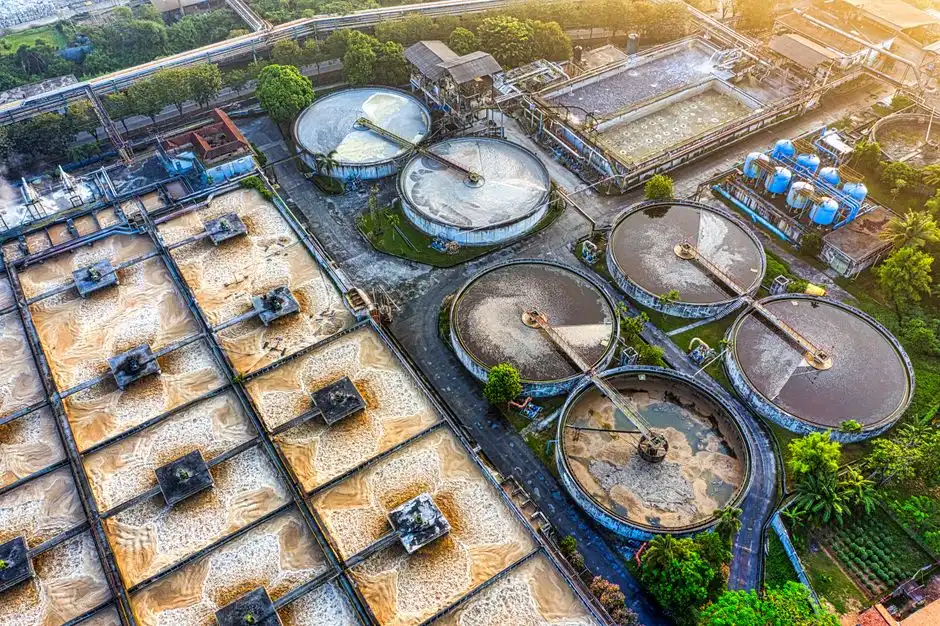
Each discharge stream should be sampled separately before combining flows for design because a blended outfall sample can conceal acidic slugs, reagent residues, and high-solids episodes. HydropureWater’s 2026 mining guidance identifies mine drainage, ore-processing water, tailings-area water, and dewatering discharge as distinct profiles. Acid mine drainage can carry metals from exposed sulfide material, while process water may contain flotation or leaching reagents. Tailings-area water can add fine solids, and dewatering discharge can shift sharply with geology and pumping conditions.
The analytical program should cover pH, suspended solids, dissolved and total metals, acidity, and contaminants specific to the mining process. Sampling should describe average and peak flow and identify the highest anticipated daily discharge. A 12-month influent envelope is the appropriate planning basis in the supplied research, with representative sampling or jar tests used to confirm the selected treatment sequence.
| Stream | Characteristic contaminants or conditions | Design implication |
|---|---|---|
| Mine drainage | Acidity; dissolved metals such as iron, arsenic, and manganese | Confirm pH correction and metal-hydroxide precipitation performance |
| Ore-processing water | Process reagents, fine solids, and variable pH | Establish coagulation, flocculation, and solids-separation demand |
| Tailings-area water | Fine solids, leached metals, and process chemicals | Check clarification loading and filtration requirements |
| Dewatering discharge | Variable acidity and metal loading | Size for peak rather than averaged discharge |
For equipment selection, the sampling record should connect each parameter to its source and operating condition. The DAF versus clarifier comparison for mining wastewater illustrates why floc behavior must be observed rather than inferred from a generic solids concentration.
Treat Metals and Suspended Solids in the Correct Sequence
The process sequence must remove dissolved metals before filtration attempts to polish the remaining solids. Genesis Water Technologies’ mining guide identifies pH restoration as the first block because it helps dissolved iron, arsenic, manganese, and other metals precipitate. Coagulant and flocculant dosing follows, converting suspended solids and small metal particles into larger flocs suitable for clarification and filtration.
A PLC-controlled chemical dosing system should coordinate pH adjustment with the downstream treatment train. The equipment basis should define control actions, chemical storage and handling requirements, and how the operator responds to an upset. Ancillary chemistry may include corrosion inhibitors, ion exchange or specialty resins for residual metals, and biocides for fouling control, but each addition should be tied to a documented contaminant or equipment-protection need.
Clarification then removes the precipitated metal hydroxides and aggregated solids. Filtration completes the core train by removing residual particulate material. Genesis Water Technologies identifies backwash media filtration and centrifugal systems for larger particles up to 2,000 microns; the appropriate filter must be selected from the characterized residual-solids load and downstream requirements.
Filtering before adequate pH correction is a design error because dissolved metals remain untreated while the filter carries more chemical-bearing solids and precipitates. It can increase chemical consumption and media loading without delivering the required metals removal. The chemical wastewater sludge treatment process should therefore be reviewed together with the water-treatment train because pH adjustment and coagulation create the sludge that downstream handling must accept.
Choose DAF or Lamella Clarification by Floc Behavior
DAF is the appropriate clarifier when floc is buoyant, floatable fines dominate, or oils are present because micro-bubbles lift the separated material for skimming. A lamella clarifier is generally more suitable when dense metal-hydroxide sludge, available footprint, and chemical consumption are the principal constraints. The choice therefore depends on tested floc behavior, not simply on a preference for one equipment format.
| Selection factor | DAF | Lamella clarifier |
|---|---|---|
| Preferred floc condition | Buoyant floc or floatable fines | Dense metal-hydroxide floc |
| Oil-bearing influent | Suitable consideration because skimming removes floatables | Not the preferred selection for significant oil loading |
| Footprint driver | Clarifier, recycle, and skimmer arrangement must fit | Plate modules are suited to constrained-footprint clarification |
| Chemical use | Depends on recycle, bubble generation, and floc properties | HydropureWater states up to 30% lower consumption than conventional basins |
| Supplier specification | 13 DAF models spanning 4–300 m³/h | Surface loading rates stated as 20–40 m/h |
The numerical entries are HydropureWater equipment specifications, not guarantees for every mine-water stream. The supplier’s stated DAF range and lamella surface-loading figures should therefore be checked against the site envelope, and selection should be confirmed by jar or pilot testing against representative wastewater. A DAF system for mining wastewater should be quoted with tested air-to-solids and polymer conditions, while the relevant mining wastewater DAF and clarifier comparison provides a useful frame for documenting the decision.
Add Filtration, Sludge Handling, and Reuse Equipment
The mechanical finishing scope must match the confirmed project objective. A multi-media filter should follow clarification when residual suspended solids, turbidity, or colloids must be removed. HydropureWater’s multi-media-filter specification states that the equipment achieves SDI values suitable for downstream RO protection. If reuse or membrane protection is part of the scope, hollow-fiber UF can precede RO; HydropureWater specifies a range of 2,000–40,000 L/h, 0.03-micron PVDF membranes, automatic backwash, air scour, and acceptance of up to 300 ppm turbidity.
| Scope item | Supplier specification | Decision condition |
|---|---|---|
| Multi-media filter | SDI suitable for downstream RO protection | Include when clarified water requires polishing |
| Hollow-fiber UF | 2,000–40,000 L/h; 0.03-micron PVDF; automatic backwash and air scour; up to 300 ppm turbidity | Include for reuse or membrane protection |
| Plate-and-frame filter press | 1–500 m² filtration area; manual, hydraulic, or automatic PLC operation | Include for metal-bearing sludge dewatering |
| RO or zero-liquid-discharge equipment | Project-specific | Exclude when the verified objective is sewer compliance only |
The supplied scope for a multi-media filtration package, hollow-fiber UF system, and plate-and-frame sludge dewatering press should be treated as equipment options, not automatic additions to a sewer-compliance quotation. Mining sludge dewatering remains part of the train even when reuse membranes are excluded, because the precipitated solids still require a controlled handling route.
Define the Basis of Design Before Requesting a Quotation
A comparable quotation requires peak and average flow, representative chemistry for every stream, the current La Porte POTW limits, the applicable categorical standard, and the required monitoring frequency. The buyer must also define the commercial scope: equipment only, an integrated skid, installation, commissioning, controls, media and resin supply, sludge handling, or a reuse-ready train. Omitting one of these boundaries makes proposals difficult to compare.
| Bid package item | Required written response from the supplier |
|---|---|
| Process design | Treatment train in process order with the sizing basis stated |
| Controls | Control philosophy, monitored parameters, alarms, and operator interface |
| Compliance | Permit and local limit used for each sizing assumption |
| Verification | Sampling plan and acceptance-test method aligned with the permit |
| Operations | Operating narrative for pH and metals, chemical handling, and maintenance |
| Supply chain | Schedule and compatibility commitments for media, resin, and chemicals |
| Support | Commissioning plan and after-sales assistance |
Buyers should request evidence of comparable mining or metals installations at flows in the same order of magnitude, together with written confirmation of commissioning support. The 2026 coagulant dosing system design guide can be used to test whether chemical dosing assumptions are explained rather than left as a catalog selection.
Verify Compliance with Continuous Monitoring and Sampling
The installed train must be verified against the same requirements used to size it. Flow, pH, and relevant water-quality monitoring should be integrated with the PLC-controlled chemical dosing skid so treatment changes follow actual influent conditions. The supplied research repeatedly identifies pH, metals, and TSS as central mining pretreatment parameters, but the final parameter list must come from the applicable permit and local limits.
Operating records and representative samples should be retained and compared with the latest Discharge Monitoring Report data. An excursion should trigger an investigation into influent change, dosing response, solids carryover, hydraulic loading, or analytical method—not an automatic increase in chemical feed. The final acceptance test should use the sampling points and analytical methods required by the La Porte POTW permit.
Monitoring hardware and replacement media should be included in the operating budget, and the treatment valves, media, and replacement parts scope should be tied to the confirmed equipment selection.
Frequently Asked Questions
What is the minimum information needed to size a mining wastewater treatment system for sewer discharge near La Porte?
Provide peak and average flow, representative chemistry for each wastewater stream, the highest anticipated daily discharge, current La Porte POTW limits, the applicable categorical standard, permit monitoring requirements, and the required discharge point. For a mixed mine-drainage and process-water site, include stream-by-stream sampling rather than one blended outfall result. Jar or pilot testing is needed to confirm clarification and filtration performance.
How much does a complete mining pretreatment system cost, and why should a supplier quote only after receiving the permit and influent data?
The supplied research provides no standard price range for a complete mining pretreatment train. Request a quotation against a documented basis of design covering flow, stream chemistry, applicable limits, controls, installation scope, sludge handling, and monitoring. Comparing prices before those inputs are fixed creates a false like-for-like comparison and can leave treatment, controls, or compliance testing outside the supplier’s scope.
Should a La Porte mining plant buy DAF or a lamella clarifier?
Choose DAF when representative testing shows buoyant floc, floatable fines, or oily material that can be skimmed. Choose lamella clarification when dense metal-hydroxide sludge and footprint constraints dominate. Confirm the choice by jar or pilot testing. Use the DAF versus clarifier comparison for mining wastewater to document the decision rather than relying on an equipment name alone.
Which supplier qualifications reduce the risk of a noncompliant equipment package?
Ask for documented chemistry competence in metal-hydroxide precipitation, comparable mining or metals installations at flows in the same order of magnitude, a written permit-based sizing basis, and an after-sales commissioning plan. Also require the supplier to identify its control philosophy, sampling plan, operating narrative, and chemical, media, and resin resupply arrangements in the proposal.
When are UF or RO systems justified for a mining operation that only needs to meet sewer limits?
UF and RO are justified when the verified project objective includes reuse, membrane protection, or another specified water-quality target. If the objective is only compliance with the applicable sewer limits, do not add membrane equipment without a defined performance requirement. Filtration and sludge dewatering may still be required, but the reuse scope should remain separate from the sewer-compliance basis of design.