Determine Which Texarkana Discharge Rules Apply
Mining and metals plants near Texarkana meet sewer pretreatment requirements by determining whether they are categorical industrial users or permit-required noncategorical users, segregating wastewater streams, and characterizing metals, pH, suspended solids, and other pollutants. Treatment is then designed around the limiting discharge parameter, with sludge management and monitoring built into the operating plan. Texarkana requires permits for categorical users, users averaging at least 25,000 GPD, and users contributing at least 5% of plant capacity; the issued permit and applicable local limits determine the final requirements.
Texarkana Water Utilities administers local, state, and federal pretreatment requirements for discharges to the collection system and the South Regional and Waggoner Creek wastewater treatment plants. Its program currently regulates seven categorical users, three noncategorical significant users, and three nonsignificant users, while its three treatment plants have a combined design capacity of 20.95 MGD, according to the Texarkana Water Utilities Industrial Pretreatment Program.
Use the industrial discharge permit application to identify the facility’s regulatory category. A categorical industrial user is subject to applicable national categorical pretreatment standards. A noncategorical facility requires a permit when it discharges an average of at least 25,000 GPD of process flow, contributes at least 5% of average dry-weather hydraulic or organic capacity, or presents a reasonable potential to adversely affect the sewer system or treatment plant. Other non-domestic users may also require permits because of their processes, wastewater characteristics, or discharge volume.
The 25,000 GPD figure is a permit-applicability threshold, not an effluent limit. Likewise, the 20.95 MGD combined plant capacity is not capacity reserved for a mining operation. The final discharge limits must come from the facility’s issued permit, the applicable Texas or Arkansas local limits, and any categorical standards.
The permitting path should be treated as a document review:
- Submit the wastewater discharge permit application and authorized representative designation.
- Provide process, flow, pollutant, and discharge-point information for applicability review.
- Review the draft permit with the Industrial Pretreatment Coordinator.
- If categorical, submit the baseline monitoring report required by Texarkana Water Utilities at least 90 days before initial discharge.
- After the final permit is issued, meet its monitoring, reporting, recordkeeping, and operating conditions.
Do not confuse a sewer pretreatment permit with a direct NPDES permit. The EPA distinguishes NPDES regulation of pollutant discharges to waters of the United States from pretreatment controls for industrial discharges into a POTW collection system. A discharge to the Texarkana sanitary sewer is governed through the local pretreatment program unless a separate direct discharge to surface waters is involved.
| Permit trigger | What the plant must establish | Controlling documents |
|---|---|---|
| Categorical industrial user | Applicability of the applicable national categorical pretreatment standards | Issued wastewater discharge permit, categorical standards, baseline monitoring report |
| Average process flow of at least 25,000 GPD | Significant-user status and resulting permit conditions | Issued wastewater discharge permit and Texarkana local limits |
| At least 5% of average dry-weather hydraulic or organic capacity | Facility contribution relative to the receiving treatment plant | Issued wastewater discharge permit and supporting flow information |
| Reasonable potential to adversely affect the sewer or treatment plant | Pollutant and process risks that may justify a permit or restrictions | Industrial survey information, permit conditions, local limits |
Segregate Wastewater Before Designing the Treatment Train
Wastewater segregation prevents contaminated process water from being diluted by reusable or relatively clean flows and prevents one treatment train from being sized around a blended discharge that does not represent actual process conditions. Begin with a process-by-process map rather than a plant-wide average.
Identify washdown, mineral separation, dust suppression, equipment cleaning, cooling, laboratory and washwater, stormwater, and sanitary flows. For each stream, record its source, destination, flow pattern, seasonal variability, chemical additions, and whether it is continuously discharged, intermittently discharged, batch discharged, or reused. A metals-plant wastewater due diligence review provides a useful acquisition or expansion context, but the controlling documents remain the site’s process inventory and permit application.
Representative sampling should characterize pH, suspended solids, metals and heavy metals, iron, arsenic, manganese, organic compounds, and salinity or brackish conditions. Genesis Water Technologies identifies these as common mining-wastewater concerns in “Mining Water Treatment: How to Meet Stricter Standards”; the same source notes that mining wastewater can be acidic and contain high suspended-solids levels. Sampling should cover normal operation and relevant production, cleanup, storm, and upset conditions rather than relying on a single grab sample.
Separate clean cooling or reuse streams from water containing process chemicals, suspended solids, oil and grease, or metals. Do not size equipment on diluted mixed flow. If a stream can be reused after treatment or managed outside the sewer system, document the technical and regulatory basis for that decision rather than assuming it is available disposal capacity.
The due-diligence package should include:
- A wastewater flow diagram with all proposed sewer discharge points;
- A process inventory describing mineral separation, washing, cleaning, reagent use, and reuse;
- Chemical-use records and product safety data;
- Representative analytical results, sampling dates, and flow records;
- Anticipated production changes, expansion plans, and operating schedules; and
- Data on storm drainage, sludge generation, and existing treatment assets.
Investigate the origin and process chemistry of each metal before selecting chemical dosing. A measured metal concentration does not reveal whether the controlling condition is acidity, oxidation-reduction behavior, mineral dissolution, or another source. The mass balance must connect each pollutant to its process source, discharge frequency, and proposed treatment step. The same approach applies to suspended solids: distinguish mineral fines, organic material, oil-bearing material, and colloidal material because each responds differently to precipitation, coagulation, flotation, clarification, and filtration.
Build the Treatment Process Around the Limiting Pollutant
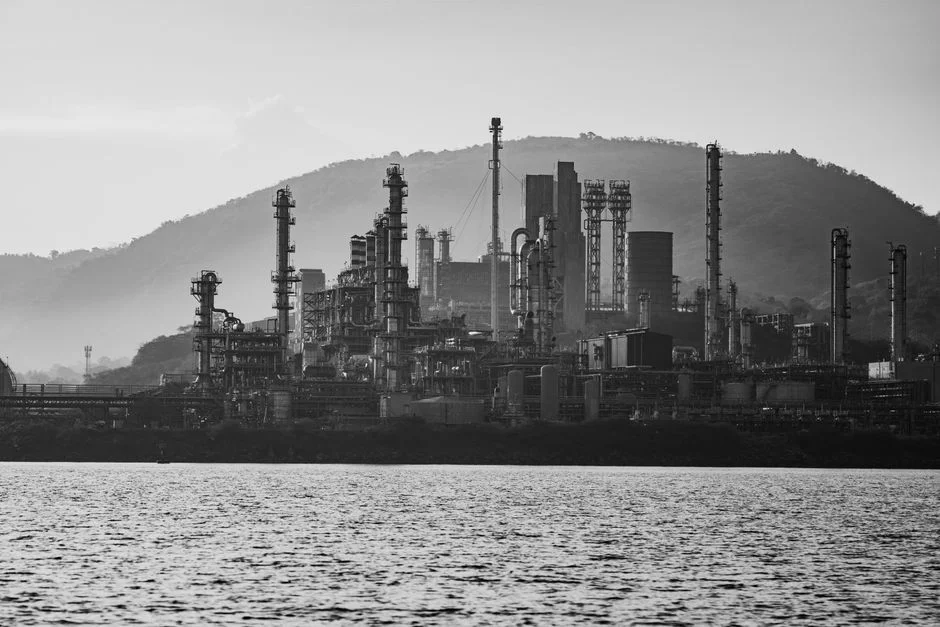
The defensible mining-wastewater design sequence begins with the permit limit and the wastewater mass balance, not with a generic package of treatment equipment. For metal-bearing process water, the sequence commonly starts with pH adjustment, followed by coagulation and flocculation, clarification, and filtration where the required final quality or downstream protection justifies it. Genesis Water Technologies describes pH restoration as supporting dissolved-metal precipitation and coagulant/flocculant use as aggregating suspended solids and fine metal particles before clarification and post-filtration.
That sequence is a design starting point, not proof of compliance. Each operation must be tied to a stated objective: removing a specific metal, meeting a solids limit, protecting the sewer and treatment plant, controlling sludge, or producing reusable water.
For acidic mine drainage or metal-bearing process water, automatic pH adjustment should be evaluated with verified mixing, reaction contact, and controllable chemical feed. An automatic chemical dosing system is relevant where continuous dosing is needed, but equipment selection still requires the actual chemical, dose-control range, operating schedule, containment requirements, and operator interface. Confirm metal removal with jar or bench testing before committing to a full-scale chemical program.
For water dominated by suspended solids, oil and grease, or floatable material, compare DAF, clarification, and filtration rather than treating them as interchangeable:
| Process condition | Treatment decision | Design checks |
|---|---|---|
| Floatable oil, grease, or solids requiring continuous removal | Evaluate a DAF system for mining wastewater pretreatment | Separated-material characteristics, solids loading, flotation stability, sludge withdrawal, downstream filtration |
| Non-floatable suspended solids and precipitated metal solids | Evaluate clarification, including lamella clarification where a compact footprint is justified | Hydraulic loading, settleability, solids inventory, sludge removal, mixing, downstream filter loading |
| Fine particles remaining after solids removal | Add filtration where required by the discharge permit, reuse objective, or downstream protection | Particle-size distribution, filter run time, backwash or solids recovery, final quality |
| Metal-bearing acidic water | Establish pH control and precipitation before solids separation | Reaction chemistry, dose range, residual pH, mixed-metal behavior, sludge metals content |
When flows require solids removal before an advanced separation step, compare lamella clarification with flotation using wastewater chemistry, footprint, sludge characteristics, and downstream filtration needs. A comparison with MBR versus conventional activated sludge for mining wastewater can also clarify whether biological treatment is technically relevant, but reuse-oriented biological systems should not displace required metal removal or solids separation without a process demonstration.
Solids management belongs in the treatment decision. Clarifiers and flotation systems generate sludge that must be conditioned, dewatered, characterized, and assigned a lawful disposal or reuse route. Metal-bearing sludge can have different handling and disposal requirements from predominantly mineral sludge. The equipment supplier should identify expected sludge yield, solids properties, conditioning requirements, dewatering approach, and final disposition basis.
Do not infer that pH control, coagulation, clarification, and filtration alone constitute a compliant train. The issued local or categorical limits determine the required performance, and the mass balance must show that the proposed units have enough capacity and chemical capability for the actual limiting pollutant.
Prove Compliance with Monitoring and Operating Controls
Compliance is demonstrated through representative discharge monitoring, instrument records, operating procedures, and documented response actions. Texarkana Water Utilities requires categorical users to submit a baseline monitoring report at least 90 days before initial discharge and a 90-day compliance report within 90 days after discharge begins, according to the Texarkana Water Utilities Industrial Pretreatment Program.
Place monitoring points after treatment stages that support process control and at the permitted sewer discharge point. Final compliance samples must represent the mixed discharge, not an individual process line. Parameters and frequencies must follow the issued permit. For operating control, trend pH, suspended solids, and flow, together with the metals or other listed parameters, and retain chemical-use, calibration, maintenance, and operating records.
Automatic pH adjustment can provide continuous control, but it should be paired with defined operator checks. Establish written responses for high or low pH, excessive solids, dosing failure, clarifier upset, and permit exceedance. Each response should identify immediate process actions, confirmation sampling, notification requirements, return-to-service criteria, and the person authorized to approve discharge continuation.
The Texarkana Water Utilities enforcement response guide and the final permit should define the graduated response. Equipment alarms are not a substitute for an enforcement program because an alarm can identify a process deviation without establishing whether a prohibited or noncompliant discharge occurred.
Use the compliance documentation structure described in a metals-plant pretreatment compliance strategy, while adapting it to the issued Texarkana permit. A defensible operating file should connect:
- Each permit limit to a monitoring point, analytical method, and frequency;
- Each treatment stage to an operating parameter and alarm;
- Each chemical to its inventory, application rate, and consumption record;
- Each deviation to sampling, corrective action, and closeout documentation; and
- Each report to the responsible operator and submission date.
The permit application, baseline report, compliance report, monitoring records, and enforcement correspondence should be reviewed together during commissioning. A sewer pretreatment compliance workflow can support the document review, but it does not replace Texarkana’s jurisdiction-specific conditions.
Verify Capacity, Equipment Selection, and Implementation Risk
Equipment sizing must follow the selected wastewater flow and pollutant loads, not the Texarkana treatment system’s aggregate capacity. Texarkana Water Utilities reports that its three wastewater plants have a combined design capacity of 20.95 MGD; that figure describes the public system, not available industrial treatment capacity and not a basis for sizing a mine’s treatment train.
Prepare a design basis for every unit: selected process flow, average and peak loading, operating schedule, redundancy, water chemistry, target removal, downstream requirements, and future production assumptions. Where the project needs biological treatment or reuse polishing, use the broader comparison of MBR versus conventional activated sludge for mining wastewater only after the required physical and chemical treatment steps have been defined.
For a DAF package, request the proposed design flow and loading basis, then compare it with the actual treatment objective. A cited equipment range of 4–300 m³/h identifies a supplier’s available configuration; it does not establish the required size or prove performance for the mine’s wastewater. The evaluation should address oil, grease, suspended solids, and colloidal matter, as well as flotation and solids-removal performance.
| Procurement area | Information to request before ordering | Risk if omitted |
|---|---|---|
| Flow and load basis | Selected process flow, average and peak loads, operating schedule, redundancy, and future expansion basis | Undersized tanks, pumps, aeration, chemical systems, or sludge handling |
| DAF or clarification | Influent characteristics, target separation, hydraulic loading, solids yield, sludge withdrawal, and downstream filtration needs | Poor separation, unstable operation, or excessive downstream solids loading |
| Automatic chemical dosing | Required chemicals, dose-control range, duty cycle, containment, interlocks, data output, and operator interface | Incorrect dose, unsafe handling, or inability to maintain permit conditions |
| Sludge and dewatering | Expected solids volume, settleability, conditioning, filter-press area, cake characteristics, handling, and disposal route | Solids accumulation, equipment failure, or an unresolved disposal path |
| Performance and commissioning | Guaranteed objectives, test conditions, limitations, acceptance testing, training, and compliance-support documentation | Unverifiable promises and commissioning disputes |
Ask suppliers to state guaranteed treatment objectives and the conditions under which they apply. Require identification of performance limits, chemical assumptions, sludge yield, control philosophy, commissioning responsibilities, operator training, and monitoring support. A wastewater requirements review for a plant acquisition is a useful reminder that permits, liabilities, and treatment obligations must be transferred and verified during ownership or expansion changes.
Before commissioning, perform an end-to-end readiness review: approved permit, final design basis, equipment FAT, installation checks, chemical delivery controls, sludge route, calibration, training, dry-run procedures, wet commissioning, and permit sampling. Do not release treated water for sewer discharge until the applicable acceptance tests and documentation are complete.
Frequently Asked Questions
Does the 25,000 GPD threshold determine whether a mining plant meets Texarkana pretreatment limits?
No. Texarkana Water Utilities identifies an average discharge of 25,000 GPD or more as a permit-applicability trigger. Compliance is determined by the facility’s issued wastewater discharge permit, applicable local pretreatment limits, prohibited-discharge rules, and any categorical standards—not by the flow threshold itself.
How should a plant choose treatment equipment for Texarkana sewer discharge?
Start with representative flow, pH, suspended-solids, and metals data; identify the limiting permit parameter; then connect each treatment step to a removal objective. A DAF system, clarification, filtration, pH control, chemical dosing, and sludge dewatering are process choices, not a universal package. Existing reuse needs and production changes also belong in the design basis.
What should a buyer request from a wastewater equipment supplier?
Request the guaranteed treatment objective, applicable flow and influent basis, test conditions, performance limitations, chemical requirements, expected sludge yield, controls, commissioning scope, training, and compliance-support documentation. These inputs support a technical comparison; the supplied research does not provide a universal capital cost for a Texarkana mining installation, so pricing requires a site-specific flow, wastewater analysis, treatment objectives, solids-handling plan, and scope of supply.
Can Texarkana’s 20.95 MGD combined treatment capacity be used to size an industrial pretreatment system?
No. The combined 20.95 MGD figure reported by Texarkana Water Utilities describes three public wastewater treatment plants; it is not an allocation available to an individual industrial user. Size each unit from the selected process flow, peak and average pollutant loads, operating schedule, redundancy, and required treatment performance.
Related Equipment
- DAF system for mining wastewater pretreatment — specifications, capacity range, and technical data