What Treatment Does a Salem Data Center Actually Need?
A Salem data center needs a segregated, water-balanced treatment train for cooling-tower blowdown, process bleed and sanitary wastewater, but the supplied research gives no Salem flow, so no capacity should be assumed. The design should start with 12 months of makeup-water and blowdown data, then use filtration, softening and industrial RO where permeate can return as cooling or humidification makeup. Published blowdown RO recovery is generally 50–85%, while UF-plus-RO reuse can use more than five times the freshwater-scenario energy but reduce blowdown and chemical consumption. Escalate to MVC or ZLD only if verified salinity, discharge or reuse limits cannot be met.
The first engineering decision is not the membrane model. It is where each stream originates, where it must go, and which contaminants can reach the intended reuse point. The 2026 Surat semiconductor and data-hall guide describes a data hall as a polishing-led, low-chemistry application dominated by TDS, silica, hardness and regeneration salts rather than the metals and organics associated with a semiconductor fabrication line.
Keep cooling-tower blowdown, chiller or humidification bleed, DI/EDI regeneration reject, sanitary wastewater and process wastewater separate until compatibility and reuse destinations are established. For cooling reuse, a defensible starting sequence is equalization and chemical control, side-stream filtration, softening, cartridge polishing where required, RO and controlled permeate return. Add UF where particulate or biological control is required. MVC or ZLD is an escalation, not the default specification.
The 2026 objective is not the highest theoretical recovery. It is the lowest-complexity train that reliably meets Salem’s applicable reuse, discharge, water and operating constraints. A packaged plant quoted before the source-to-endpoint balance and worst-case chemistry are known leaves too many design assumptions uncontrolled.
Build the Salem Water Balance Before Choosing Equipment
A treatment train must be sized against peak and worst-case blowdown because annual averages conceal the conditions that drive membrane recovery, concentrate volume and disposal demand.
Request at least 12 months of representative makeup and CTBD wastewater data, including flow, pH, TDS or conductivity, hardness, silica, chloride, alkalinity, suspended solids, residual treatment chemicals and biocide or inhibitor carryover. The supplied 2026 Surat semiconductor and data-hall guide says hardness, silica, chloride and TDS should be logged monthly during the first 12 months of operation, with the treatment design re-baselined against that record. The same logic applies to Salem: the water source, seasonal variability and cooling chemistry determine whether the published benchmark configuration is viable.
Use the operating example from Genesis Water Tech’s 2026 blowdown-treatment article carefully. At 4 cycles of concentration, approximately 25–30% of makeup water is lost to blowdown, corresponding to 2.5–3 million gallons monthly for a facility using 10 million gallons monthly. This is an example, not a Salem flow estimate. It demonstrates why cycles of concentration and makeup rate must be reconciled before equipment sizing.
Model peak blowdown, summer operating conditions, minimum makeup flow, drift, evaporation, outages and simultaneous reuse demand. The Hubballi data-center blowdown treatment guide and Enugu data-center wastewater treatment guide provide useful design-frame comparisons, but neither establishes a Salem flow.
Size membranes and concentrate management around the worst-case feed and resulting concentrate, not around average permeate production. The supplied Surat guide explicitly warns against sizing against average conditions. Also confirm whether direct-to-chip or closed-loop cooling reduces evaporative and blowdown demand; no reduction should be assigned without the facility’s cooling design.
| Design input | Evidence required before quotation | What it controls |
|---|---|---|
| Makeup and CTBD flow history | At least 12 representative months, including peak and outage periods | Equalization, filtration and membrane capacity |
| Cooling concentration | Measured cycles of concentration and seasonal operation | Blowdown volume and concentrate loading |
| Water chemistry | TDS or conductivity, hardness, silica, chloride, alkalinity, TSS, pH and treatment-chemical carryover | Softening, antiscalant, RO recovery and pretreatment |
| Destination and quality limit | Cooling makeup, humidification makeup, other reuse, authorized discharge or waste treatment | Permeate quality and concentrate route |
Characterize Each Waste Stream and Keep Contaminants Separate
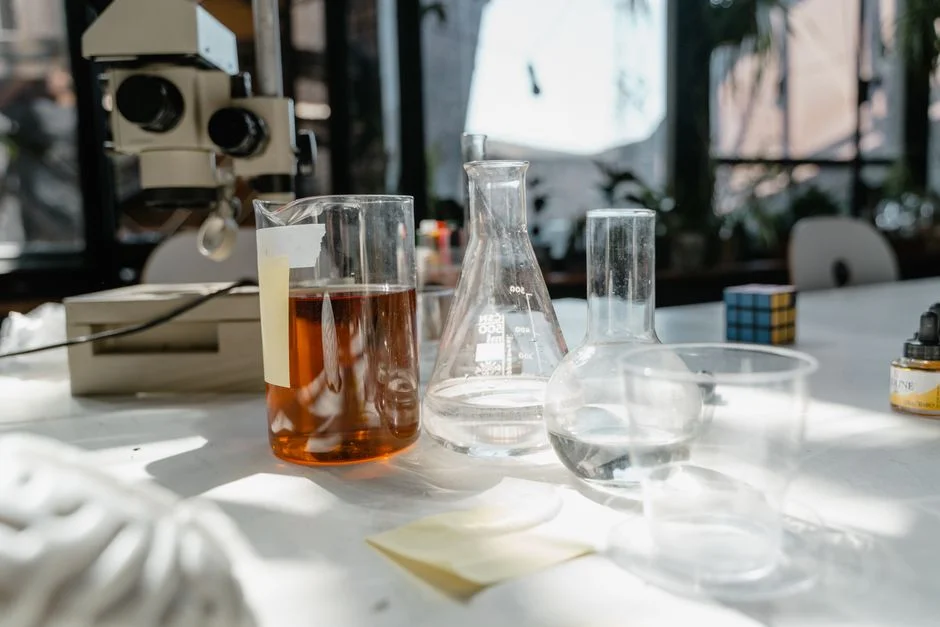
Cooling-tower blowdown should be treated as a concentrated, oxidant-bearing inorganic stream whose dominant risks are scaling, suspended solids and treatment-chemical carryover, not as generic wastewater.
Genesis Water Tech’s 2026 article reports typical CTBD wastewater TDS of 1,200–6,000 mg/L and suspended solids of 10–50 mg/L. It also identifies concentrated calcium, magnesium, silica and alkalinity, accumulated biocides, corrosion inhibitors, scale inhibitors, dispersants, corrosion products and biofilm fragments as characteristic concerns. These parameters determine whether filtration alone is adequate, whether softening is required and what recovery can be sustained without scaling.
Do not combine incompatible streams. DI/EDI regeneration reject, RO reject, humidification or chiller bleed, cooling-tower blowdown and sanitary sewage should remain distinct design streams until their destinations and water chemistry are established. The supplied Surat data-hall guide recommends softening plus RO for cooling-blowdown reuse, EDI/RO polishing for regeneration recovery, and dedicated neutralization for a small acid or caustic regeneration stream.
Cooling blowdown must also remain separate from fluoride-, copper-, TMAH- or solvent-bearing process wastewater. The 2026 Surat guide warns that these contaminants can impair membranes and disrupt antiscalant chemistry. That warning is a segregation principle, not a Salem site finding: confirm whether any such streams actually exist at the proposed facility.
The Kallakurichi data-center blowdown treatment guide provides a useful contamination-matrix structure, but the Salem matrix must be populated with measured data and a named destination for every stream.
| Stream | Parameters to verify | Contaminant concern | Potential destination |
|---|---|---|---|
| Cooling-tower blowdown | TDS, silica, hardness, alkalinity, chloride, TSS, pH, chemicals | Scaling, fouling, corrosion products, biocide carryover | Cooling or humidification makeup, permitted discharge or ZLD |
| DI/EDI regeneration reject | TDS, conductivity, pH, regeneration salts, hardness and silica | High dissolved salts | Regeneration recovery or separate RO train |
| Chiller or humidification bleed | Flow, pH, conductivity, treatment chemicals and scaling ions | Concentration of cooling constituents | Verified non-potable reuse or discharge |
| Sanitary wastewater | Flow, COD, BOD, TSS, pH and nutrients | Organic and solids load | Sanitary treatment system |
| Process wastewater, if present | Metals, fluoride, TMAH, solvents, COD and pH | Membrane and biological incompatibility | Dedicated treatment train |
Select the Unit Operations That Control Scaling and Fouling
The unit train should remove the contaminants that limit reuse, and the selected recovery should remain sustainable when the feedwater changes.
Side-stream filtration is commonly installed at 1–5% of total circulation flow to remove corrosion products and particulates, reduce biological loading and improve downstream membrane feasibility. Genesis Water Tech’s 2026 article reports spiral filtration at 10–25 micron. If suspended-solids and SDI control are the requirements, use multi-media filtration as the depth-filtration step. Use automatic chemical dosing for pH, antiscalant and biocide control, with the chemical program selected from jar or pilot results rather than a default dose.
For hardness-limited feed, apply a twin-tank industrial water softener before RO. Hardness removal does not eliminate every scale-forming species: silica, alkalinity and saturation in the concentrate must still be checked. A softener that controls calcium and magnesium cannot by itself demonstrate that the RO feed is safe at the selected recovery.
Consider UF pretreatment for RO when bacteria, colloids or suspended solids must be reduced. Genesis Water Tech reports UF at 10–30 psi, 90–95% recovery and chemical cleaning every 1–3 months under blowdown-treatment conditions. Those are published operating conditions, not guarantees for a Salem installation; feed quality and operating strategy determine actual performance.
Use industrial RO treatment for Salem blowdown reuse where dissolved-solids removal is required. The same 2026 source reports 95–99% dissolved-solids removal, 10–50 mg/L permeate TDS and 50–85% recovery for blowdown RO. Recovery must be validated against silica, hardness, alkalinity, antiscalant performance and concentrate-management constraints.
Prioritize antiscalant dosing, pH control, cartridge filtration and conductivity or flow instrumentation over a headline recovery that the feedwater cannot sustain. Genesis Water Tech states that feedwater for RO should be filtered to less than 10–15 microns, chemically conditioned and pH-adjusted. Instrument the reject as well as the permeate because the concentrate establishes the real constraint.
| Risk | Required evidence | Control option | Design caution |
|---|---|---|---|
| Particulates and biofilm fragments | TSS, SDI, filtration observations and side-stream performance | Side-stream filter, multi-media filtration and cartridge polish | Do not assign filtration duty from blowdown flow alone |
| Calcium and magnesium scaling | Hardness, alkalinity, pH and saturation calculations | Twin-tank softener plus controlled chemical dosing | Softening does not remove silica |
| Silica concentration | Measured silica and worst-case concentrate saturation | Recovery limit, antiscalant and possibly segregate streams | Validate at the highest credible loading |
| Colloids and biological contamination | Turbidity, SDI, bacterial monitoring and existing chemistry | UF before RO where justified | Confirm cleaning frequency and recovery effects |
| Dissolved salts and permeate quality | Feed TDS or conductivity and target reuse quality | Industrial RO with reject monitoring | Validate recovery against scaling, not just permeate TDS |
Choose Reuse, Discharge Compliance, Partial ZLD or Full ZLD
Cooling-tower makeup reuse is usually the first commercial option to evaluate because it addresses freshwater demand and concentrate volume together, but it remains conditional on verified end-use quality.
Genesis Water Tech’s 2026 article states that cooling-tower makeup reuse generally provides the strongest water-conservation value and typically uses a 60–85% recovery treatment approach. That published range is a comparison benchmark, not a Salem design recovery. The selected value must reflect measured feed chemistry, the existing cooling program, silica behavior and the available reuse destination.
For discharge compliance, obtain the applicable Salem consent parameters and design to those conditions. TDS, residual treatment chemicals and any metals present require particular attention. The CPCB values quoted in the supplied 2026 Surat guide are comparative context, not verified Salem limits and should not be transplanted into the consent basis.
Use MVC when additional recovery is justified by the verified discharge or reuse constraint. Genesis Water Tech reports 95–98% recovery from concentrate and distillate below 10 mg/L TDS. A combined RO and MVC train can reach 85–95% overall recovery, but the thermal duty, available waste heat, concentrate chemistry and scale-management strategy still require confirmation.
Reserve full ZLD for a verified inability to discharge concentrate, a customer mandate or an approved salt-disposal route. The same 2026 source reports 95–99% overall recovery and solid waste below 1% of original blowdown volume, while warning that ZLD carries the highest capital and energy burden. Partial ZLD can reduce liquid discharge where the remaining brine has a lawful destination.
Open Engineering Inc’s 2026 life-cycle study found that the wastewater-reuse scenario had about twice the global warming potential of the freshwater case, with treatment energy accounting for roughly 80% of the difference. Its UF-plus-RO scenario used more than five times the freshwater energy but reduced blowdown and chemical consumption through improved cycles of concentration. Compare water savings, energy and permit risk together rather than selecting on recovery alone.
| Endpoint option | Main equipment concept | Decision trigger | Key commercial risk |
|---|---|---|---|
| Reuse with RO | Filtration, softening, RO and controlled permeate return | Permeate can meet a verified cooling or humidification endpoint | Freshwater value, membrane life and concentrate disposal |
| Discharge compliance | RO with a defined reject route and treatment-specific polishing | Applicable consent is met without relying on another site’s limit | Consent renewal and residual-chemical control |
| Partial ZLD | RO plus MVC or brine concentration | Concentrate volume or salinity blocks the selected route | Thermal energy and residual brine disposal |
| Full ZLD | RO, thermal concentration and crystallization | No lawful concentrate discharge, mandate or approved salt route | Highest energy demand and solid-waste responsibility |
Compare Capital Cost, Operating Cost and Supply Risk
A defensible Salem commercial comparison requires identical design inputs and separate capital, operating and disposal assumptions; published benchmarks are not quotations.
The supplied research gives a benchmark of $250,000–$500,000 installed for a 50,000 GPD blowdown RO system and $1.50–$3.00 per thousand gallons treated for energy, chemicals, membrane replacement and maintenance, according to Genesis Water Tech’s 2026 article. These are comparative figures, not Salem vendor prices.
Genesis Water Tech also places typical data-center ZLD capital cost at $3–8 million and operating cost at $5–15 per thousand gallons treated, with the final cost driven by capacity and feedwater characteristics. The associated 2025 Isfahan treatment-plant cost breakdown provides a structure for comparing cost categories, but its location-specific values should not be represented as Salem benchmarks.
Require every bidder to quote the same design flow, feedwater envelope, recovery target, permeate quality, concentrate destination, reuse endpoint, utilities, boundary conditions and membrane-warranty basis. Specify whether sludge, salt, cartridge waste and spent membrane are included in the commercial boundary.
Separate CAPEX from OPEX drivers: energy, chemicals, membrane replacement, sludge or salt disposal, operator labor and instrumentation maintenance. A high-recovery quote must show the antiscalant, cleaning, power and concentrate-disposal assumptions behind that recovery.
A defensible Salem ROI cannot be calculated from the supplied evidence because local tariffs, permit conditions and site flows are absent. Collect those inputs instead of applying a Surat or US benchmark. Include the value of freshwater displaced, discharge and disposal costs, energy, chemicals, maintenance, disposal and permit risk over the same evaluation period.
| Cost element | Evidence to request from each bidder | Comparison rule |
|---|---|---|
| Installed CAPEX | Equipment, civil work, installation, controls, commissioning and exclusions | Same flow, recovery and quality basis |
| Energy | Design consumption, tariff basis and expected operating profile | Do not compare only connected power |
| Chemicals | Dose assumptions, antiscalant, pH control and biocide compatibility | Price per unit and annual usage separately |
| Membranes and cartridges | Replacement interval, inventory scope and warranty conditions | Include in life-cycle OPEX |
| Concentrate and solids | Residual volume, handling, transport and disposal route | Use a site-specific disposal basis |
| Freshwater and discharge value | Local tariff, permitted discharge cost and verified reuse benefit | Do not apply a non-local tariff |
Approve Treatment Only After These Site Checks
Design approval should follow verification of the Salem water source, discharge route, reuse destinations and worst-case water chemistry rather than precede them.
- Verify the Salem freshwater source, seasonal variability, ambient temperature, available reuse destinations and current discharge route. A Kochi effluent-treatment buyer’s guide provides a broader pretreatment and commissioning context, but it does not establish Salem conditions.
- Obtain the applicable local consent and discharge requirements. Do not copy CPCB or GPCB values quoted for other locations as though they were Salem’s consent conditions.
- Complete at least 12 months of representative makeup and blowdown characterization, then use site-specific testing, pilot or jar testing to validate antiscalant dose, silica behavior, recovery and pretreatment selection.
- Confirm the concentrate and salt-disposal route before freezing the design. A permeate-only specification does not prove that the train has a viable end-of-pipe solution.
- Require automatic control and monitoring for flow, pH, conductivity, differential pressure and recovery, with defined trip or diversion logic for off-spec permeate and concentrate.
The final hold point should be a signed design basis: measured flow envelope, worst-case chemistry, applicable consent, confirmed reuse endpoint, recovery basis, concentrate route, utility assumptions and equipment guarantees. If any element remains unsupported, keep it as a design hold point rather than converting it into a vendor performance guarantee.
Frequently Asked Questions
What is the cheapest reliable treatment train for a Salem data center?
The lowest-complexity candidate is usually equalization and chemical control followed by side-stream filtration, softening, cartridge polishing where required, and RO for a verified cooling-tower reuse endpoint. The cost comparison must be based on a like-for-like Salem flow, feedwater envelope, recovery target, utility tariff and concentrate route. Do not select a train from the published $250,000–$500,000 benchmark for a 50,000 GPD blowdown RO system in Genesis Water Tech’s 2026 article; ask each bidder to itemize the same scope and exclusions.
When is industrial RO alone enough, and when is MVC or ZLD necessary?
RO alone may be sufficient when measured silica, hardness, alkalinity and chemical carryover support the selected recovery and the resulting concentrate has a verified lawful destination. Escalate to MVC or ZLD when the verified reuse or discharge constraint cannot be met by RO. Genesis Water Tech’s 2026 benchmark reports 50–85% recovery for blowdown RO, 95–98% recovery from concentrate by MVC, and 85–95% overall recovery for a combined RO-MVC train; those values are comparison benchmarks, not a Salem guarantee.
How should a Salem data center compare supplier quotations without overstating recovery?
Require every quotation to state design flow, feedwater envelope, recovery, permeate quality, concentrate volume and chemistry, reuse endpoint, utilities, membrane warranty and included disposal scope. Then ask each supplier to demonstrate how its recovery target changes with silica concentration, hardness, antiscalant dose and feed variability. Reject bids that provide only a headline recovery or an equipment price without a concentrate solution.
What sampling and permit information is required before equipment sizing?
Obtain at least 12 months of representative makeup and CTBD wastewater data covering flow, pH, TDS or conductivity, hardness, silica, chloride, alkalinity, suspended solids and treatment-chemical carryover. Also obtain the applicable Salem consent, authorized discharge route, reuse quality requirements and concentrate-disposal conditions. Use site-specific jar or pilot testing before fixing antiscalant, recovery and pretreatment selection.
Can cooling-tower blowdown and other wastewater streams share one treatment plant?
Only after compatibility and destinations are demonstrated. The supplied 2026 semiconductor and data-hall guide identifies separate treatment needs for cooling blowdown, regeneration reject, sanitary wastewater and potentially contaminated process streams. A shared plant is a valid option only if each stream’s chemistry, treatment requirement and permitted endpoint remain compatible through every operating mode. Otherwise, segregate the streams and manage their residuals separately.