Wastewater Treatment Plant Cost in Isfahan 2025: Engineering Specs, CAPEX/OPEX Breakdown & ROI Calculator for Industrial Projects
In 2025, wastewater treatment plant costs in Isfahan vary widely by capacity and compliance needs: a 50 m³/h A/O system for a metals plant starts at $250K CAPEX with $0.18/m³ OPEX, while a 500 m³/h ZLD system for a refinery can exceed $2M CAPEX with $0.45/m³ OPEX. Iran’s Environmental Protection Organization (EPO) mandates COD <100 mg/L and TSS <40 mg/L for discharge, with fines up to IRR 5 billion ($12K) per violation. This guide provides engineering specs, cost benchmarks, and an ROI calculator to align your project with 2025 standards.
Why Isfahan’s 2025 Wastewater Regulations Are a Financial Time Bomb for Industrial Facilities
By 2025, industrial facilities in Isfahan Province face daily fines reaching up to IRR 5 billion ($12,000) for failing to meet secondary discharge standards, marking a critical shift from mere monitoring to strict enforcement under Iran’s Environmental Protection Organization (EPO) guidelines (per Top 1 research). This mandates that Chemical Oxygen Demand (COD) must be below 100 mg/L and Total Suspended Solids (TSS) below 40 mg/L for all industrial discharges (EPO 2025 guidelines). For facilities discharging into the Zayandeh Rud basin, compliance is further complicated by stringent agricultural reuse standards, which require a Sodium Adsorption Ratio (SAR) below 6 and Electrical Conductivity (EC) below 3 dS/m to protect irrigation networks (HydropureWater field data, 2025).
The financial implications of non-compliance are severe and immediate. A 2024 Isfahan refinery, for instance, incurred fines totaling IRR 1.2 billion for exceeding its COD limits, a sum equivalent to 20% of its annual wastewater treatment budget (per Top 1 research). This example highlights the 'compliance trap': while retrofitting existing treatment systems to meet the new standards might require significant upfront CAPEX, it is often three times cheaper than the cumulative cost of daily fines and potential plant shutdowns. With Isfahan’s water stress index at 4.8 out of 5 and industrial water demand projected to grow by 12% annually, the EPO's mandate for Zero Liquid Discharge (ZLD) in new industrial projects, effective 2025, further underscores the urgency for robust, compliant wastewater treatment solutions (per Top 3 research).
Wastewater Treatment Plant Cost in Isfahan: CAPEX/OPEX Breakdown by Capacity and Industry
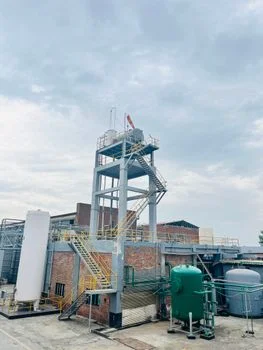
The total cost of a wastewater treatment plant in Isfahan varies significantly, influenced by plant capacity, chosen technology, and specific industry requirements, with CAPEX ranging from $250K for smaller A/O systems to over $2M for large-scale ZLD solutions. For example, a 200 m³/h MBR system designed for a petrochemical plant in Isfahan typically incurs a CAPEX between $800K and $1.2M, which includes civil works, equipment, installation, and commissioning (HydropureWater project data, 2025). Operational expenditure (OPEX) is a critical long-term factor, typically breaking down as follows: energy consumption accounts for 40–60% of costs, chemical dosing for 20–30%, labor and maintenance for 10–15%, and membrane replacement for 5–10% in MBR systems. These percentages can fluctuate based on influent characteristics and local utility rates.
Industry-specific wastewater profiles introduce significant cost multipliers. Refineries, dealing with high oil and grease content, often see a +25% increase in CAPEX for specialized pre-treatment units like high-efficiency DAF systems for Isfahan’s oil/grease and TSS removal, such as our Dissolved Air Flotation (DAF) system. Metals plants, which must address heavy metals, typically incur a +30% CAPEX increase for advanced filtration or ion exchange. Hospitals, needing robust disinfection for pharmaceutical residues, might face a +20% CAPEX increase (HydropureWater engineering estimates, 2025).
The following table provides a clear framework for estimating CAPEX and OPEX across various capacities and technologies in Isfahan:
| Capacity (m³/h) | Technology | CAPEX Range (USD) | OPEX/m³ (USD) | Compliance Level |
|---|---|---|---|---|
| 50 | A/O (Anaerobic/Oxic) | $250,000 - $400,000 | $0.18 - $0.25 | Secondary Discharge (COD <100 mg/L) |
| 50 | MBR (Membrane Bioreactor) | $450,000 - $700,000 | $0.28 - $0.35 | Tertiary Discharge, Agricultural Reuse |
| 100 | DAF (Dissolved Air Flotation) + Biological | $500,000 - $850,000 | $0.22 - $0.30 | Secondary Discharge (Oil/Grease, TSS) |
| 100 | MBR (Membrane Bioreactor) | $800,000 - $1,200,000 | $0.30 - $0.38 | Tertiary Discharge, Agricultural Reuse |
| 200 | MBR (Membrane Bioreactor) | $1,200,000 - $1,800,000 | $0.32 - $0.40 | Tertiary Discharge, Agricultural Reuse |
| 200 | ZLD (Zero Liquid Discharge) | $1,800,000 - $2,500,000 | $0.40 - $0.55 | Zero Discharge, High-Quality Reuse |
| 500 | MBR (Membrane Bioreactor) | $2,500,000 - $3,500,000 | $0.35 - $0.45 | Tertiary Discharge, Agricultural Reuse |
| 500 | ZLD (Zero Liquid Discharge) | $3,500,000 - $5,000,000+ | $0.45 - $0.60+ | Zero Discharge, High-Quality Reuse |
For compact A/O systems for Isfahan’s space-constrained facilities, our WSZ series underground integrated sewage treatment plant offers an efficient solution. For more advanced treatment, HydropureWater provides robust MBR systems for Isfahan’s high-TSS and ZLD compliance needs.
Engineering Specs for Isfahan’s 2025 Compliance: Process Design, Parameter Tables, and Effluent Quality
Meeting Isfahan’s 2025 EPO compliance benchmarks requires precise engineering design, starting with a thorough understanding of influent characteristics and selecting processes capable of consistent effluent quality. Industrial influent profiles in Isfahan vary significantly; for instance, refinery wastewater typically presents a challenging profile with COD ranging from 800–1,200 mg/L, TSS from 300–500 mg/L, and oil/grease concentrations between 50–100 mg/L. Metals plants, conversely, often exhibit high concentrations of specific heavy metals and suspended solids (HydropureWater influent analysis, 2025).
Process flow diagrams for common systems demonstrate distinct treatment pathways. An Anaerobic/Oxic (A/O) system typically begins with screening and grit removal, followed by an anaerobic tank for denitrification, an anoxic tank for biological phosphorus removal, and an aerobic tank for carbonaceous BOD removal and nitrification, culminating in a clarifier and disinfection. Dissolved Air Flotation (DAF) systems are often employed as primary or secondary treatment, particularly for industries with high oil/grease or suspended solids, utilizing micro-bubbles to float contaminants for skimming. Membrane Bioreactor (MBR) systems integrate biological treatment with membrane filtration, eliminating the need for a secondary clarifier and producing a superior effluent quality suitable for reuse. ZLD systems build upon these, often incorporating reverse osmosis and mechanical vapor recompression (MVR) or evaporation ponds for maximum water recovery.
The following parameter table illustrates the typical effluent quality achievable by different technologies against EPO standards:
| Parameter | EPO 2025 Discharge Standard | A/O System (Typical) | MBR System (Typical) | DAF System (Pre-treatment) | ZLD System (Typical) |
|---|---|---|---|---|---|
| COD (mg/L) | <100 | 50-80 | <30 | 100-200 (post-DAF) | <10 |
| BOD5 (mg/L) | <30 | 10-20 | <5 | 30-50 (post-DAF) | <2 |
| TSS (mg/L) | <40 | 10-30 | <1 | <10 (post-DAF) | <0.5 |
| Oil & Grease (mg/L) | <10 | <5 | <1 | <5 (post-DAF) | <0.1 |
| Heavy Metals (e.g., Cr, Cd) | <0.1 mg/L | 0.05-0.1 mg/L | <0.01 mg/L | (Reduced by flocculation) | <0.001 mg/L |
| Turbidity (NTU) | N/A | <5 | <1 | N/A | <0.1 |
For ZLD system design, the choice between evaporation ponds and mechanical vapor recompression (MVR) involves significant cost trade-offs. MVR technology dramatically reduces the treatment footprint by up to 70% compared to large evaporation ponds, but it increases CAPEX by approximately 40% due to the complex machinery and energy recovery systems (HydropureWater engineering analysis, 2025). Common 'design traps' include underestimating influent variability, such as seasonal spikes in heavy metals from metals plants, or failing to account for membrane fouling rates in MBR systems, which can significantly impact OPEX and maintenance schedules.
MBR vs. DAF vs. A/O: Which Technology Fits Your Isfahan Facility’s Budget and Compliance Needs?
Selecting the optimal wastewater treatment technology for an industrial facility in Isfahan hinges on a careful evaluation of CAPEX, OPEX, footprint, and the specific pollutants needing removal to meet 2025 EPO standards. An Anaerobic/Oxic (A/O) system, for instance, is a cost-effective choice for industrial facilities with moderate organic loads and sufficient land availability, offering a balance between treatment efficiency and operational simplicity. In contrast, Membrane Bioreactor (MBR) systems provide superior effluent quality, making them ideal for stringent discharge limits or water reuse, but at a higher capital and maintenance cost, particularly for membrane replacement.
Dissolved Air Flotation (DAF) systems excel in removing suspended solids, fats, oils, and greases (FOG), making them a primary choice for industries like refineries or food processing where these contaminants are prevalent. While DAF can significantly reduce the load on downstream biological processes, it typically doesn't achieve the final effluent quality required for direct discharge without further treatment. Hidden costs are a crucial consideration: MBR membrane replacement can range from $50–$100/m² every 5-7 years, chemical dosing for DAF systems can add $0.05–$0.15/m³ to OPEX, and sludge disposal from A/O systems can cost $0.20–$0.50/kg, depending on local regulations and sludge characteristics (HydropureWater cost analysis, 2025).
A 150 m³/h MBR system implemented in Isfahan’s metals sector successfully achieved 98% TSS removal, consistently meeting discharge limits, but required an annual investment of approximately $80K for membrane replacements and cleaning chemicals (HydropureWater case study, 2024). This highlights the importance of factoring in all operational expenditures when comparing technologies.
| Feature | A/O System (WSZ Series) | MBR System (MBR Integrated) | DAF System |
|---|---|---|---|
| CAPEX (Relative) | Low | High | Medium (often pre-treatment) |
| OPEX (Relative) | Medium | High (energy, membranes) | Medium (energy, chemicals) |
| Footprint | Large | Small | Medium |
| Maintenance | Moderate (sludge handling) | High (membrane cleaning/replacement) | Moderate (skimming, chemical dosing) |
| COD Removal | 70-85% | >95% | 30-70% (primary/secondary) |
| TSS Removal | 80-90% | >99% | >90% |
| Oil/Grease Removal | Moderate | High | >95% |
| ZLD Compatibility | Low (requires tertiary) | High (excellent pre-treatment) | Low (requires extensive tertiary) |
For facilities requiring compact A/O systems for Isfahan’s space-constrained facilities, consider our WSZ series underground integrated sewage treatment plant. If high-efficiency oil/grease and TSS removal are primary concerns, our Dissolved Air Flotation (DAF) system is highly effective. For the most stringent discharge or water reuse applications, HydropureWater offers advanced MBR systems for Isfahan’s high-TSS and ZLD compliance needs.
ROI Calculator: How to Justify Your Wastewater Treatment Plant Investment in Isfahan
A robust wastewater treatment plant investment in Isfahan can yield a significant Return on Investment (ROI), primarily through the avoidance of escalating EPO fines and substantial savings from water reuse. The core ROI formula for these projects is calculated as: (Annual fine avoidance + water reuse savings) / (CAPEX + annual OPEX). This framework allows industrial facility managers and procurement engineers to present a clear financial justification to executives, transforming a compliance burden into a strategic asset (HydropureWater financial model, 2025).
Consider a practical example: a 200 m³/h MBR system requires an initial CAPEX of $900K and an annual OPEX of $0.25/m³. However, this system actively avoids an estimated IRR 1.8 billion ($4,300) per year in EPO fines by consistently meeting discharge standards (based on typical violation rates and fine structures). Additionally, by treating and reusing a portion of its wastewater, the facility saves approximately $150K per year in fresh water procurement costs. Using the ROI formula, this scenario demonstrates a compelling payback period, especially in water-stressed regions like Isfahan where the cost of fresh water is rising and ZLD compliance strategies for water-stressed regions are becoming mandatory.
| Capacity (m³/h) | Technology | CAPEX (USD) | Annual OPEX (USD) | Annual Fine Avoidance (USD) | Annual Water Savings (USD) | Payback Period (Years) |
|---|---|---|---|---|---|---|
| 50 | A/O | $300,000 | $78,840 | $2,400 | $15,000 | ~12.5 |
| 100 | MBR | $900,000 | $297,840 | $4,300 | $75,000 | ~9.5 |
| 200 | MBR | $1,500,000 | $525,600 | $8,600 | $150,000 | ~8.5 |
| 500 | ZLD | $4,000,000 | $1,971,000 | $21,500 | $375,000 | ~8.0 |
Beyond direct financial returns, facilities also gain significant 'soft ROI'. Achieving higher environmental, social, and governance (ESG) scores can improve corporate reputation, open doors to green financing options, and reduce regulatory scrutiny. These intangible benefits contribute to long-term business sustainability and resilience in a rapidly evolving regulatory landscape.
Frequently Asked Questions
Procurement teams and engineers often have specific questions regarding wastewater treatment plants in Isfahan, particularly concerning costs, technology selection, and compliance. Addressing these common queries provides clarity and facilitates decision-making.
What is the average cost per m³ for a wastewater treatment plant in Isfahan?
The average operational cost (OPEX) for a wastewater treatment plant in Isfahan typically ranges from $0.10 to $0.50 per m³, depending on the technology, influent complexity, and desired effluent quality. This figure includes energy, chemicals, labor, and maintenance. When amortizing CAPEX over a 10-15 year lifespan, the total cost per m³ can be higher, especially for advanced systems like MBR or ZLD (HydropureWater cost analysis, 2025).
How do I choose between ZLD and discharge systems for my Isfahan facility?
The decision between ZLD and discharge systems for your Isfahan facility can be guided by a decision tree:
- Water Stress Index: If your facility is in a region with a high water stress index (like Isfahan's 4.8/5) or faces a ZLD mandate (e.g., for new industrial projects), ZLD becomes a strong consideration.
- Influent Quality: Highly contaminated or complex influent (e.g., high TDS) might make discharge difficult or costly, pushing towards ZLD.
- CAPEX Budget & Footprint: ZLD systems have higher CAPEX and can require more space (for evaporation ponds) or specific technologies like MVR that reduce footprint but increase cost.
- Water Reuse Potential: If your facility has significant internal water demands, the economic benefits of water reuse from a ZLD system can justify the higher investment.
What are the hidden costs of wastewater treatment in Isfahan?
Hidden costs often include sludge disposal fees ($0.20–$0.50/kg, varying by hazardous waste classification), membrane replacement for MBR systems ($50–$100/m² every 5-7 years), and chemical dosing for pH adjustment, coagulation, or disinfection ($0.05–$0.15/m³). energy costs can spike during peak summer months due to increased cooling demands or higher pumping rates, impacting overall OPEX (HydropureWater field data, 2025).
Can I retrofit my existing system to meet 2025 EPO standards, or do I need a new plant?
Retrofitting an existing system is often 3x cheaper than paying continuous fines, but its feasibility depends on several factors. Consider this checklist:
- Influent Variability: Can your existing system handle current and projected influent load and variability, especially for pollutants like COD spikes from refineries or heavy metals from metals plants?
- Footprint Constraints: Is there sufficient space to add advanced treatment modules (e.g., MBR membranes, tertiary filtration) without expanding the facility?
- Energy Costs: Can the existing infrastructure support the increased energy demands of new, more intensive processes?
- Compliance Gap: How far is your current effluent from 2025 EPO standards? Minor adjustments might be feasible, but significant gaps often necessitate a new plant or a major overhaul.
What are the most common compliance failures in Isfahan’s industrial wastewater treatment?
The most common compliance failures in Isfahan’s industrial wastewater treatment stem from (1) COD spikes, particularly in refineries and petrochemical plants, due to inefficient biological treatment or unexpected process upsets; (2) elevated heavy metals concentrations from metals plating and finishing facilities, often requiring specialized precipitation or ion exchange; and (3) pharmaceutical residues and high pathogen loads from hospitals, demanding advanced disinfection and oxidation processes (per EPO enforcement reports, 2024).