Why Surat Data Centers Hit a Water Wall in 2026
A Surat hyperscale or edge data hall sits inside the Tapi–Ukai sub-basin, which is already over-allocated to municipal, textile, and diamond-processing users; intake permits now pass through a multi-agency review covering GPCB, GWSSB, and the State Water Resources Department, mirroring the 2025 TNFD posture already documented for the Sabarmati basin (HydropureWater 2026-09). India added 387 MW of data center capacity in 2025 inside an investment pipeline that now touches roughly $90 billion, and MeitY has signalled that upcoming hyperscale capacity will run on treated sewage effluent, industrial wastewater, or dedicated desalination (Gujarat Samachar, 2026-09). That national posture translates directly into intake-permit risk for a Surat site that still draws raw from the Tapi main canal. A 100 MW facility can use up to 2 million litres per day, putting a Surat hyperscale in direct competition with municipal and industrial users in the same sub-basin (IDE Tech, 2026). GPCB's 2026 renewal posture is data-driven: two years of compliant 24-hour composite sampling on file beats the largest intake number, paralleling the Bangladesh DoE S.R.O. 229/Law/2023 model (HydropureWater 2026-09). The Surat-specific micro-constraints decide whether a design survives: 30–45 °C ambient driving silica scaling at 5–8 cycles of concentration, and high PM episodes that tighten the air-permitting envelope around any on-site cooling-tower drift eliminator. The same physics and the same regulator behave identically in the companion Ahmedabad CTBD engineering guide, but the water source, ambient profile, and consent overlays are Surat-specific and have to be sized against Surat numbers, not copy-pasted from a Sabarmati table.
Surat Site Characterisation: What the Water and Blowdown Actually Look Like
A Surat data hall's cooling tower operating at 4 cycles of concentration loses roughly 25–30% of makeup water to blowdown, which translates to 2.5–3 million gallons wasted per month for a 10 million gallon-per-month facility (Genesis Water Tech, 2026). At higher cycles the volume drops but the chemistry tightens, and the design must be sized against the worst-case concentrate stream, not the average. The table below gives the Surat-specific characterisation an engineer should validate with on-site testing during the first year of operation; the ranges below are starting points, not commitments.
| Parameter | CTBD (4–8 COC) | Process / sanitary (fab support line) | Surat tap makeup (typical) |
|---|---|---|---|
| TDS (mg/L) | 1,200–6,000 | 500–2,000 | 200–600 |
| Silica as SiO₂ (mg/L) | 10–80 | — | 5–25 (seasonal) |
| Hardness as CaCO₃ (mg/L) | 400–1,800 | — | 120–300 |
| Residual ClO₂ / Cl₂ (mg/L) | 0.1–1.0 | — | 0.2–0.8 |
| Suspended solids (mg/L) | 10–50 | 50–300 | <10 |
| COD (mg/L) | — | 200–1,500 | — |
| Fluoride (mg/L) | — | 50–800 | 0.5–1.5 |
| Copper (mg/L) | — | 0.5–10 | <0.1 |
| TMAH (mg/L, if fab support) | — | 5–50 | — |
Sanitary and process wastewater differ sharply from CTBD: COD 200–1,500 mg/L, fluoride 50–800 mg/L, copper 0.5–10 mg/L, and TMAH 5–50 mg/L where a fab support line is present, and these organic, fluorinated, metallised streams will blind an MBR or strip an RO membrane if they share a CTBD train (HydropureWater 2026-09). Surat tap-water makeup carries moderate hardness and seasonal silica; hardness, silica, chloride, and TDS should be logged monthly for the first 12 months of operation, and the design should be re-baselined against that record. Common CTBD contaminants in a Surat cooling loop include scaling minerals (Ca, Mg, silica, alkalinity), treatment-chemical carryover (biocides, inhibitors, dispersants), corrosion products, and biofilm fragments (Genesis Water Tech, 2026). After side-stream spiral filtration at 1–5% of circulation flow, suspended solids in blowdown drop to <50 mg/L as CaCO₃ and <20 mg/L as SiO₂ ahead of the RO membranes, which is the envelope downstream unit operations can defend.
Surat Compliance Envelope: CPCB, GPCB, and the New TDS Ceiling
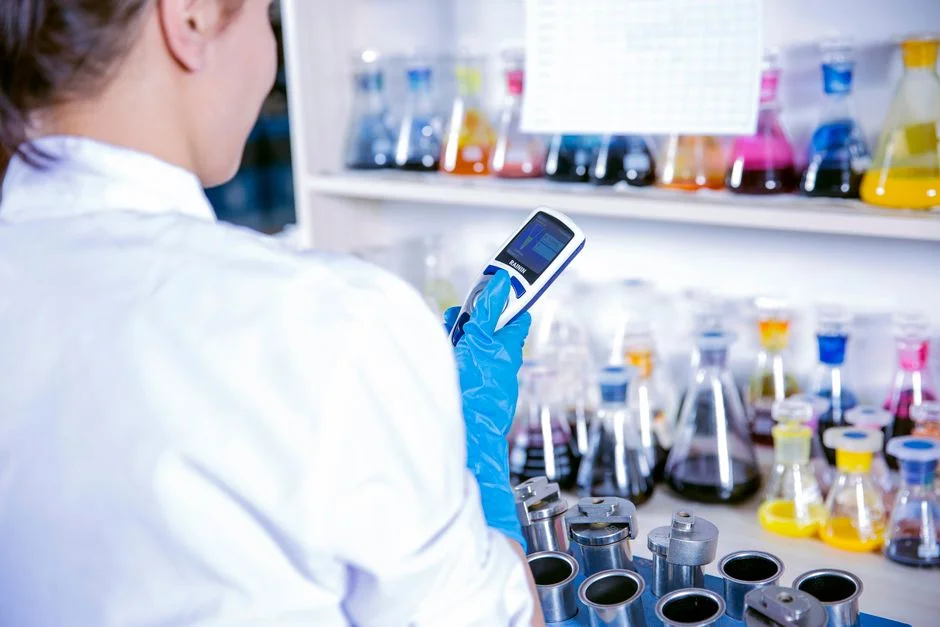
CPCB GSR 53(E) sets the 2026 public minimum for inland surface water at BOD ≤30 mg/L, COD ≤250 mg/L, TSS ≤100 mg/L, TDS ≤2,100 mg/L, total Cr ≤2 mg/L, F⁻ ≤2 mg/L, residual Cl₂ ≤1 mg/L, and pH 6.0–9.0 (HydropureWater 2026-09). GPCB Surat industrial-estate consent typically layers NH3-N ≤50 mg/L and Cu ≤3 mg/L on top of the CPCB line, and the consent ceiling is site-specific, so the design target must sit 20–30% below the load-bearing line, not on it. TDS is the new binding limit in practice: some jurisdictions now prohibit discharge above 1,500 mg/L TDS, which forces the train to be sized around the concentrate stream rather than the permeate line (Genesis Water Tech, 2026; HydropureWater 2026-09). For any fab support line, the chromium-specific defensible envelope must follow the 2026 CPCB chromium discharge-limit guide. The CETP shortcut is increasingly unavailable above 200 m³/day — shared CETPs in comparable jurisdictions reported >90% hydraulic utilisation in 2025, and a single upstream non-compliance triggers regulator action against all members (HydropureWater 2026-09).
| Parameter | CPCB GSR 53(E) 2026 (inland surface water) | Typical GPCB Surat industrial-estate overlay | Recommended design target |
|---|---|---|---|
| BOD (mg/L) | ≤30 | ≤30 | ≤20 |
| COD (mg/L) | ≤250 | ≤250 | ≤175 |
| TSS (mg/L) | ≤100 | ≤100 | ≤70 |
| TDS (mg/L) | ≤2,100 | ≤1,500 trend | ≤1,200 |
| Total Cr (mg/L) | ≤2 | ≤2 | ≤1.5 |
| Fluoride (mg/L) | ≤2 | ≤2 | ≤1.5 |
| Residual Cl₂ (mg/L) | ≤1 | ≤1 | ≤0.5 |
| NH3-N (mg/L) | — | ≤50 | ≤35 |
| Cu (mg/L) | — | ≤3 | ≤2 |
| pH | 6.0–9.0 | 6.0–9.0 | 6.5–8.5 |
The Five-Module CTBD Train for a Surat Hyperscale Hall
CTBD and process-side wastewater cannot share a train: silica and residual chlorine dioxide in CTBD blind MBR biomass, while fluoride, copper, and TMAH in process wastewater strip RO membranes and disrupt antiscalant chemistry, so the design below is segregated and the organic line gets its own biological-plus-adsorption train (HydropureWater 2026-09). A pure data hall without a fab support line keeps the train tighter, lower-CAPEX, and biology-free. The CTBD stream is inorganic and oxidant-bearing, and a five-module physicochemical sequence is the Surat default.
| Module | Unit operation | Surat design target / equipment choice | Outlet guarantee |
|---|---|---|---|
| 1. Equalisation | EQ + pH dampening | 8–12 h HRT at pH 9–10, +25% freeboard, FRP or SS316L (carbon-steel tanks fail inside 18 months in 2024–2025 Ahmedabad field service because residual chlorides pit the welds) | Smoothed flow, pH 9–10 |
| 2. Particulate removal | MMF + cartridge + side-stream | multi-media filter with automated backwash, 5–10 µm cartridge polisher, side-stream spiral filtration at 1–5% of circulation flow; optional DAF (15–25 m³/h per 100 m³/d) only if open basin carries corrosion-inhibitor carryover or microbiological floc | TSS <50 mg/L as CaCO₃, <20 mg/L as SiO₂ |
| 3. Softening | Industrial softener | Twin-tank industrial water softener sized for 90–95% hardness removal; non-optional in 30–45 °C Surat because silica is the cycle-limiting species and scales the chiller condenser at 5–8 COC | LSI negative, SiO₂ within RO envelope |
| 4. Two-pass RO | Brackish RO + polishing pass | Industrial RO system with up to 95% recovery; first pass 70–75% recovery, second pass 85–90%, permeate TDS <50 mg/L, concentrate 25–40% of feed; conductivity probe on reject at 4,000 µS/cm trips dump-to-ZLD. State-of-the-art high-recovery designs (e.g. IDE MAXH₂O, 2026) push conventional brackish RO past the 75–80% plateau to 85–95% via controlled silica precipitation plus dynamic RO operation. | Permeate TDS <50 mg/L; concentrate 25–40% of feed |
| 5. Sludge + ZLD on concentrate | Filter press + MVC + crystalliser | plate-and-frame filter press at 25–35% dry solids; MVC + crystalliser above 30 m³/d to clear the 95% total Cr / TMAH removal bar when consent demands it. Antiscalant and pH control delivered by a PLC-controlled antiscalant and pH dosing skid. | 25–35% DS cake (transportable); solid salts from brine |
Closed-loop with air-side economisation drops freshwater draw to negligible levels and is the Indian policy default for new hyperscale builds, with upcoming Indian facilities mandated to adopt direct-to-chip liquid cooling and recirculating systems (Gujarat Samachar, 2026-09). For a Surat site that still has to reject high ambient heat, a hybrid evaporative-plus-adiabatic arrangement is the pragmatic compromise — high cycles of concentration with RO reuse and a Tapi–Ukai allocation as freshwater top-up. Full ZLD (RO + MVC + crystalliser) only triggers when concentrate volume exceeds 30 m³/d or when total Cr / TMAH removal must clear 95%, and the broader 2026 engineering specs for that envelope are detailed in the data center water treatment engineering specs for 2026.
Matching the Train to Site Class: Edge, Mid-Hyperscale, Full Campus
The Surat decision matrix below is a starting configuration, not a procurement list — site-specific influent testing, consent conditions, and tariff data should re-baseline every line before a vendor is selected.
| Site class | Water load | Recommended train | ZLD trigger | Indicative CAPEX (all-in) | Simple payback |
|---|---|---|---|---|---|
| Edge hall / AI inference rack <2 MW | ≤50 m³/d | Closed-loop with air-side economisation, no biological stage, RO reuse optional | Not by default | INR 1–3 crore | 3.5–5 years |
| Mid-size hyperscale (Tapi–Ukai basin) | 50–200 m³/d | Hybrid evaporative + adiabatic + RO reuse, softening non-optional | Locked in by consent conditions rather than by default | INR 5–10 crore | 2.5–4 years (60% recovery) |
| Full hyperscale campus (with fab support) | 200–500+ m³/d | Full segregated train: CTBD five-module + biological-plus-adsorption for process line | Full ZLD (RO + MVC + crystalliser) above 30 m³/d or Cr/TMAH >95% removal | INR 12–25 crore | 3–5 years |
State-of-the-art high-recovery designs reach 85–90% via dynamic RO plus controlled silica precipitation (IDE MAXH₂O, 2026), so a Surat site should target the upper end of the CAPEX band and the lower end of the payback range. CAPEX for a Surat mid-size train sits in the INR 5–10 crore all-in band (civil, equipment, installation, instrumentation, commissioning), and OPEX runs ₹2,200–4,800 per m³ across energy, chemicals, sludge handling, labour, and a membrane replacement reserve. At 60% recovery on a 200 m³/d train running 365 days/yr, the site saves roughly 43,800 m³/yr against the Gujarat industrial water tariff, yielding a 2.5–4 year simple payback that beats the CETP shortcut on both compliance and finance. For an African basin with a different tariff and consent envelope, the same physics is laid out in the Accra hyperscale CTBD 2026 guide, which makes the Surat-specific numbers easier to read against a contrast case.
Frequently Asked Questions
What TDS limit applies to a Surat data center discharging in 2026?
CPCB GSR 53(E) caps inland surface-water TDS at 2,100 mg/L, but GPCB Surat industrial-estate overlays are trending toward 1,500 mg/L, so the design target should sit at ≤1,200 mg/L TDS to leave 20–30% headroom for the load-bearing line (HydropureWater 2026-09; Genesis Water Tech 2026). Action: size the RO around the concentrate, not the permeate, and trip dump-to-ZLD on a 4,000 µS/cm reject probe.
When is ZLD mandatory for a Surat data hall?
ZLD is not blanket-mandated, but it is added once concentrate volume exceeds 30 m³/d or when total Cr / TMAH removal must clear 95% (HydropureWater 2026-09). Action: for any Surat train above 200 m³/d, lock ZLD into the consent-readiness file from day one rather than retrofitting it at renewal.
Can CTBD and process wastewater share a single treatment train in Surat?
No — silica and residual chlorine dioxide in CTBD blind MBR biomass, while fluoride, copper, and TMAH in process wastewater strip RO membranes and disrupt antiscalant chemistry (HydropureWater 2026-09). Action: keep the CTBD train physicochemical (EQ, MMF, softener, two-pass RO) and run the process line on MBR plus activated alumina plus chelating resin, with a pH/recovery split between the two.
How much does a Surat data center wastewater plant cost in 2026?
All-in CAPEX for a 50–200 m³/d Surat mid-size train sits in the INR 5–10 crore band, with OPEX of ₹2,200–4,800 per m³ (HydropureWater 2026-09). Action: request a site-specific design that re-baselines hardness, silica, chloride, and TDS from at least 12 months of Surat tap and CTBD sampling before committing the figure.
What is the payback on a 60% recovery RO system at a Surat hyperscale site?
At 60% recovery on a 200 m³/d train running 365 days/yr, a Surat site saves roughly 43,800 m³/yr against the Gujarat industrial water tariff, giving a 2.5–4 year simple payback (HydropureWater 2026-09; IDE Tech 2026). Action: target the upper end of the CAPEX band with a high-recovery RO (85–90%) to land at the lower end of the payback range and survive a finance-committee review.