
Start With the Effluent Destination and Permit Path
An effluent treatment plant in Saint Louis should be selected around the wastewater’s contaminants, flow variation, discharge route and reuse objective—not a generic flow number alone. The Metropolitan St. Louis Sewer District serves St. Louis City and 87% of St. Louis County and operates seven wastewater treatment facilities, but industrial users may still need on-site pretreatment under MSD rules. For oil, grease, suspended solids or colloids, a DAF system is a strong pretreatment option; for biological treatment with membrane separation, an MBR may fit; for low-turbidity polishing before RO, UF can be considered. Final equipment selection requires a representative wastewater analysis and written discharge or sewer-use requirements.
The first procurement decision is the destination. Map whether the proposed route is an MSD sewer connection, a permitted surface-water discharge, zero or reduced liquid discharge, or internal reuse. Each route creates a different treatment objective, monitoring burden and equipment scope. A discharge to a municipal sewer does not automatically mean that industrial pretreatment is unnecessary, and a reuse project does not become compliant merely because the water is reused on site.
MSD reports that it serves St. Louis City and 87% of St. Louis County, but the exact service address must be checked because some areas use separate sewer districts. The district’s seven municipal treatment facilities do not establish the treatment performance or industrial acceptance of a specific discharge. Ask the authority having jurisdiction for the current sewer-use or industrial discharge permit, discharge limits, prohibited materials, monitoring requirements, designated sampling point and surcharge rules.
For an acquisition or redevelopment, treat the permit and sewer obligations as due-diligence items. Industrial wastewater requirements during plant acquisition provides a useful acquisition-stage checklist, but the applicable local requirements still must be confirmed directly. The supplied research does not provide Saint Louis-specific industrial discharge limits, so no generic numerical limit should be inserted into a bid specification.
Understand the St. Louis Wastewater and Watershed Context
MSD owns and operates seven wastewater treatment facilities that treat an average flow of more than 350 million gallons of wastewater per day, according to the Metropolitan St. Louis Sewer District’s wastewater-treatment information. That regional scale does not determine whether a specific industrial discharge will comply; the applicable permit and the receiving sewer’s written requirements remain the controlling procurement inputs.
The watershed role is useful context, not a discharge guarantee. MSD identifies Bissell Point and Lemay as its two largest facilities and states that both serve the Mississippi River watershed. It also states that the Coldwater Creek and Missouri River plants service the Missouri River watershed. The remaining facilities serve the Meramec River watershed. These assignments help identify the receiving environment and the agency responsible for the public system, but they do not substitute for a site-specific industrial pretreatment approval.
Collection-system design also matters. MSD states that much of its jurisdiction uses separate sanitary and storm sewers, while St. Louis City and adjacent suburbs use combined sewers in which wastewater and stormwater share pipes. A buyer should therefore determine whether stormwater enters the industrial collection system, whether equalization is required, and how wet-weather flow affects the treatment design. The sewer-limit planning guidance for industrial facilities can support that diligence, but it is not evidence of Saint Louis permit terms.
Keep two questions separate: whether the authority will accept the proposed discharge, and what pretreatment is needed to meet that authority’s written criteria. Only the second question can be answered by a technology comparison after the wastewater and destination are defined.
Characterize the Wastewater Before Choosing an ETP

Representative wastewater data determines the treatment train more reliably than a headline flow rate. The engineering data request should establish average and peak flow, batch-discharge behavior, production schedule, stormwater ingress, future expansion and the treatment endpoint.
| Design input | Information to obtain | Why it affects equipment selection |
|---|---|---|
| Flow and variability | Average flow, peak flow, batch releases, production schedule and stormwater ingress | Sets hydraulic capacity, equalization, controls and membrane or DAF duty |
| Conventional pollutants | pH, TSS, oil and grease, FOG, COD and BOD | Identifies physical separation, biological treatment and pretreatment needs |
| Reuse-relevant constituents | Conductivity, hardness and temperature | Influences RO feed suitability, scaling risk and recovery assessment |
| Site-specific contaminants | Metals, cleaning chemicals, antibiotics or regulated residues | May require dedicated removal, tighter monitoring or a specialized process |
| Analytical quality | Sampling frequency, preservation, analytical methods and variability | Determines whether the data can support design and acceptance criteria |
Samples should represent normal production, cleanup, batch dumps and the range of seasonal conditions. Request laboratory methods and detection limits so that bidders are comparing like-for-like results. A single grab sample is a screening tool, not a durable design basis when flow or composition changes materially.
The 2023 pharmaceutical-effluent study in Journal of Pharmaceutical Policy and Practice provides a contamination-screening lesson rather than a Saint Louis design rule. Its authors found varied treatment and disposal practices, under-utilized ETPs at some small and medium-sized facilities, and a need for maximum antibiotic-residue standards, implementation and monitoring. The applicable lesson is to ask whether regulated residues can enter the wastewater, whether the selected process addresses them, and who will verify performance.
Define the required endpoint before selecting equipment. For an MSD route, ask what discharge characteristics the industrial permit controls. For surface-water discharge, obtain the applicable permit and numerical criteria. For reuse, identify whether the water is returned to process, used for irrigation, or enters a more tightly controlled water-reclamation pathway. The wastewater requirements reviewed during industrial acquisition can help structure that diligence, but the buyer must request Saint Louis-specific information.
Compare DAF, MBR, UF and RO by Treatment Objective
DAF, MBR, UF and RO perform different jobs; the correct comparison is the contaminant and reuse objective, not a single ranking of equipment. DAF is a physical pretreatment option, MBR combines biological treatment with membrane solids separation, UF is a solids-removal and membrane-protection step, and RO is an advanced separation process for demanding water-reuse or process-water objectives.
| Technology | Primary role | Best-fit question | Supplier information requiring project validation |
|---|---|---|---|
| DAF | Removal of oil, grease, FOG, suspended solids and colloids | Does the wastewater contain recoverable oil or solids that must be removed before biological treatment? | Catalog range: 4–300 m³/h across 13 standard models |
| MBR | Activated-sludge treatment combined with submerged membrane filtration | Is biological removal and high-quality solids separation needed in an integrated package? | Catalog range: 10–2,000 m³/day; near-reuse-quality claim requires feed-specific validation |
| UF | Removal of bacteria, colloids and suspended solids; pretreatment ahead of RO | Is a low-turbidity, solids-free feed required before high-pressure membrane treatment? | Catalog range: 2,000–40,000 L/h; 0.03-micron PVDF membrane; inlet turbidity limit up to 300 ppm |
| RO | Advanced separation for high-quality reuse or process water | Does the required water quality justify dissolved-solids separation after upstream treatment? | Project-specific feed chemistry, recovery, concentrate handling and pretreatment are required |
For oil and grease removal or suspended-solids pretreatment, evaluate a DAF system for industrial wastewater pretreatment. The 4–300 m³/h range and 13 standard models are supplier catalog data, not a Saint Louis sizing recommendation. For integrated biological treatment and solids separation, evaluate an MBR wastewater treatment system. Its 10–2,000 m³/day range and near-reuse-quality claim must be tested against the actual wastewater, flow variation and endpoint.
An ultrafiltration system for solids removal and RO pretreatment can protect downstream membranes without chemical coagulation, but the published 2,000–40,000 L/h range, 0.03-micron PVDF membrane and turbidity limit of up to 300 ppm remain catalog inputs. RO should not be treated as a substitute for upstream oil, grease or suspended-solids removal.
The University of Twente thesis Direct nanofiltration of wastewater treatment plant effluent describes nanofiltration as a polishing method for treatment-plant effluent under European Water Framework Directive goals, with the study centered on effluent reclamation. It does not establish that UF or nanofiltration alone meets Saint Louis discharge requirements. If advanced oxidation is relevant, ACS Omega reported at least 98% degradation of the initial dye sample in a pilot-scale mixed-dye textile stream; that result applies to that study, not to every industrial effluent.
Design a Pretreatment and Polishing Process Train
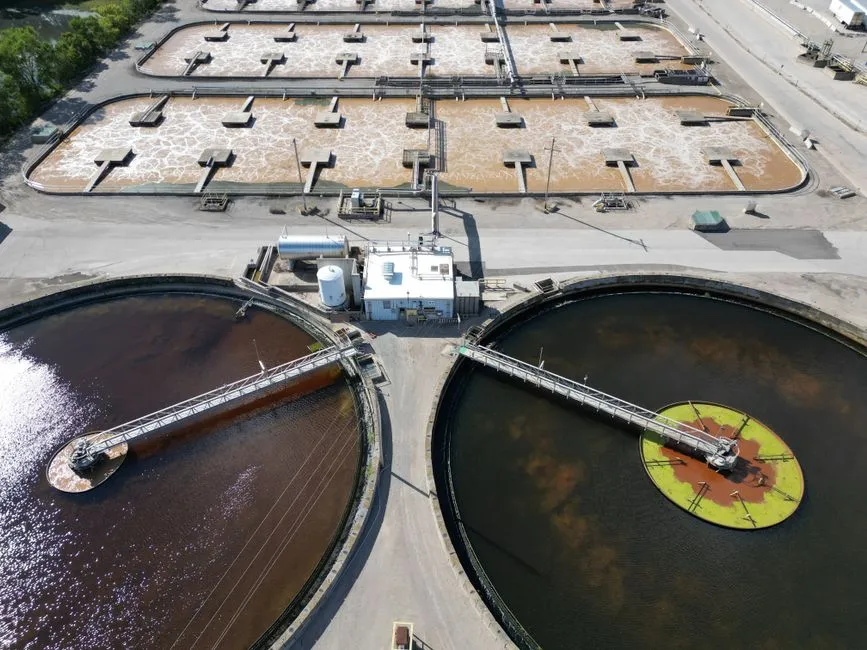
A defensible process train gives every stage a defined contaminant-removal job and protects pumps, biological systems and downstream membranes. The sequence should follow the wastewater characterization rather than a default equipment package.
- Characterization: confirm average and peak flow, pollutant loads, variability, future expansion and the required discharge or reuse endpoint.
- Equalization and screening: remove rags, plastics, fibers and suspended debris, and buffer variable flow or concentration before treatment.
- Contaminant removal: route recoverable oil and solids through DAF where the analysis supports it.
- Biological treatment: apply biological treatment to biodegradable load. Use MBR when biological treatment and solids separation can be combined in one package.
- Polishing: use UF ahead of RO where membrane protection and solids removal are required.
- Disinfection or reuse treatment: apply only the barriers required by the approved endpoint and reuse rules.
- Monitoring: provide the sampling, instrumentation, alarms and records needed to demonstrate performance.
Screening protects downstream equipment. A rotary mechanical bar screen can be evaluated for debris removal, subject to the actual waste characteristics and installation constraints. Equalization should be evaluated where batch releases or stormwater cause hydraulic and concentration peaks.
DAF belongs upstream of biological or membrane treatment when oil, grease, FOG or settleable solids are present. RO requires a controlled feed; UF can provide solids removal and membrane protection, but the proposed feed turbidity must be checked against the published catalog limit of up to 300 ppm. Where pH adjustment, coagulation, flocculation or another chemical is required, specify an automatic chemical dosing system sized from the actual chemistry rather than installed by default.
For reuse with a microbial-disinfection barrier, evaluate an ozone generator for water-tank sterilization only after the upstream process and ozone application conditions are defined. Equipment should be skid-mounted and PLC-controlled where those requirements match the project scope. Treat the complete train—characterization to monitoring—as one design, not a collection of independent product selections.
Build a Supplier Comparison and Acceptance Checklist
A comparable bid must state the same flow basis, treatment endpoint, operating assumptions and performance tests. Otherwise, the apparent differences may reflect different scopes rather than different equipment performance.
| Procurement item | Required supplier response | Buyer check |
|---|---|---|
| Guaranteed duty | Average flow, peak flow, duty cycle and peak-flow response | Matches the characterized wastewater and future expansion |
| Performance | Treated-water targets, test method and proposed feed basis | Every target is tied to the permitted endpoint or reuse specification |
| Site requirements | Footprint, utilities, controls and installation requirements | Compatible with available space, power, drainage and access |
| Scope boundaries | Civil work, installation, commissioning, training, warranty and spares | Exclusions and responsibilities are written explicitly |
| Membranes | Material, nominal pore size, cleaning and replacement assumptions | Data are tied to the proposed feed rather than clean-water conditions |
| DAF | Recycle rate, saturation approach, skimming, solids handling and performance criteria | Design reflects the actual oil and solids load |
Require a project-specific design statement with every bid. The quote should identify pretreatment assumptions, peak-flow response, treated-water targets, footprint, utilities, control philosophy and documented test methods. For membrane systems, request membrane materials, nominal pore size, cleaning requirements, replacement assumptions and evidence from the proposed feed condition. For DAF, request the proposed recycle rate, saturation approach, skimming arrangement, solids handling and performance criteria for the actual contaminant load.
Keep equipment capacity separate from site demand. The supplier ranges in the research are published catalog limits; none establishes the correct size for a Saint Louis project. Require each bidder to reconcile its offered capacity with the characterized average and peak flows and with the written discharge or reuse criteria.
Use the MSD or other permit requirements as mandatory design inputs. Ask bidders to identify conflicts between catalog operating limits and project criteria in writing rather than silently excluding the condition. A treatment parts and filter-media schedule should distinguish included items, recommended spares and consumables so that bidders can be compared on lifecycle scope.
Plan Verification, Commissioning and Long-Term Operation
Acceptance criteria must be agreed before the equipment is ordered, because “treated-water quality” is not a testable requirement without numerical limits and methods. Where wastewater varies materially or contains difficult contaminants, require pilot testing or a performance test using representative feed. The supplier should document the test protocol, sample points, analytical methods and treatment of failed results.
The commissioning plan should define sampling locations, test methods, acceptance values, bypass procedures, alarm response and corrective-action limits. Identify who authorizes startup, how deviations are handled, and what operating evidence demonstrates compliance. These documents become the basis for operator training and the maintenance schedule.
Maintenance tasks should follow the process train: screen cleaning, DAF skimming and recycle-system service, biological-system checks, membrane cleaning, chemical-system inspection and instrument calibration. The published DAF range of 4–300 m³/h, MBR range of 10–2,000 m³/day and UF range of 2,000–40,000 L/h are equipment references only; verify the final selection against the site’s average and peak flows. A plate-and-frame filter press may be relevant to solids handling, but the required dewatering method and waste-disposal route must be established separately.
After commissioning, maintain records for the permitting authority and track operating cost, chemical consumption, energy, sludge volume and membrane replacement. A supplier’s headline recovery rate or flow capacity does not show what the installed system will cost to operate under the actual Saint Louis wastewater profile.
Frequently Asked Questions
What is the best treatment system for an industrial effluent treatment plant in Saint Louis?
The best system depends on the required endpoint and the contaminants. DAF is appropriate where oil, grease, FOG or solids require physical removal; MBR combines biological treatment with membrane solids separation; UF provides solids removal and can protect RO; and RO addresses dissolved contaminants for demanding reuse objectives. Select the train only after obtaining representative wastewater data and written permit or reuse criteria.
How much does an industrial effluent treatment plant cost in the St. Louis area in 2026?
The supplied research contains no Saint Louis project quotation, so a defensible 2026 price cannot be stated. Require bidders to price the characterized flow, treatment endpoint, civil work, installation, controls, utilities, commissioning, training, warranty and annual operating costs separately. Also request chemical use, energy, sludge handling and membrane-replacement assumptions so capital and operating budget decisions are based on the same scope.
Should I install an ETP if my facility discharges to MSD?
Do not assume the sewer discharge removes the pretreatment decision. Ask MSD and the applicable authority for the current sewer-use or industrial discharge permit, prohibited materials, limits, monitoring point, surcharges and pretreatment obligations. Install on-site treatment when the written requirements or reuse objective demand a barrier that the sewer route does not provide; the permit must establish the specific need.
How do I size a DAF or MBR system for a plant in Saint Louis?
Size from average and peak flow, batch behavior, contaminant loading, operating hours, future expansion and the required endpoint—not from the supplier’s catalog range. For DAF, document the oil and solids load, recycle approach and skimming requirements. For MBR, document biodegradable load, solids separation, membrane fouling risk and feed variability. A supplier should show the reconciliation between site data and offered capacity, and pilot testing may be needed where the wastewater is variable or difficult.
What wastewater analysis should I provide before requesting an equipment proposal?
Provide representative results for pH, TSS, oil and grease, FOG, COD, BOD, conductivity, hardness, temperature, metals and any process-specific contaminants, including regulated residues where relevant. Include average and peak flow, production and batch-discharge schedules, stormwater ingress, sampling frequency, preservation and analytical methods. Also state the discharge route and required endpoint so bidders compare the same treatment objective. For a broader decision sequence, see the industrial ETP versus DAF decision guide and the DAF versus clarifier wastewater comparison.