
Start with the water balance, not a treatment skid
A data center in Sale, Morocco, should treat cooling-tower blowdown and sanitary wastewater as separate streams. Blowdown is the main reuse opportunity because evaporation concentrates salts, hardness, silica and residual cooling chemicals; a conventional brackish-water reverse-osmosis train commonly reaches 75–80% recovery before scaling becomes limiting, while domestic sewage requires a separate biological package. Smaller humidification, chiller-flush and fire-test streams may be combined with sanitary wastewater after chemistry and temperature checks. Sale-specific recovery, reuse and discharge decisions require current source-water analysis, flow data, ambient wet-bulb conditions, sewer acceptance and confirmation under Morocco’s Loi 10-95 and Décret 2-14-499.
Define cooling-tower blowdown, evaporation, drift, makeup and discharge as separate measured quantities. Use dedicated meters, cooling-tower operating logs and chemical-treatment records rather than an IT-load proxy alone. Genesis Water Technologies (2026) reports that 20–40% of intake may leave as blowdown and explains why an acceptable 1.8 L/kWh WUE does not establish discharge quality or reuse performance.
For scale context only, the HydropureWater Rabat guide estimates approximately 3.75 million gallons per month of recoverable blowdown for a 10 MW evaporatively cooled site operating at four cycles of concentration. That figure is not a Sale design value. The Sale model must use the actual IT load, cooling configuration, climate data, makeup chemistry and measured operating range.
| Design-basis input | Required record | Decision affected |
|---|---|---|
| Makeup, evaporation, drift and blowdown | Metered flows and operating logs | Recoverable CTBD volume |
| Source and circulating water | TDS, hardness, alkalinity, silica, chloride, free chlorine, iron, manganese, TSS and temperature | RO recovery, pretreatment and materials |
| Residual treatment chemicals | Biocide, corrosion inhibitor, scale inhibitor and dispersant records | Feed compatibility and disposal route |
| Operating conditions | Cycles of concentration, downtime dumps and future AI-load growth | Day-1 capacity and expansion reserve |
Specify the automatic chemical-dosing system as a controlled part of the water balance, not an uncontrolled addition of dissolved solids. The treatment parts and media package should be specified after supplier review of the measured chemistry and operating envelope.
Separate every stream by destination and risk
Cooling-tower blowdown and sanitary wastewater should not enter a common treatment train because their contaminants, hydraulic profiles and compliance routes differ. The HydropureWater Fes guide describes CTBD as typically containing 1,200–6,000 mg/L TDS, with hardness and silica concentrated four to eight times above makeup water and suspended solids of 10–50 mg/L. These are screening values, not Sale results; current site analysis is required.
Route staff sewage from restrooms, canteens and kitchens to a separate biological package. The Fes guide identifies anoxic/aerobic treatment with clarification and disinfection, commonly packaged as MBR or A/O, as the normal approach. An MBR system for the data-center sanitary wastewater train should be sized from staff population, verified sanitary flow and load, not from CTBD flow.
Humidification bleed-off, chiller-side flush water and periodic fire-test water can normally be routed to the sanitary train where volume is small and contaminants are biodegradable. Verify temperature, residual oxidants, cleaning chemicals and episodic flow before assigning that route. A fire-test discharge may create a short hydraulic surge; it should not be allowed to destabilize the biological reactor or overload the equalization volume.
Where sanitary effluent needs reuse polishing, evaluate the ultrafiltration system for specified reuse applications separately from the blowdown RO train. Confirm the intended end use and current ONEE/RADEEMA guidance before assigning a reuse quality specification.
| Stream | Default treatment boundary | Required check before routing |
|---|---|---|
| Cooling-tower blowdown | Equalization, filtration, RO and concentrate management | Complete chemistry, scaling tendency and discharge route |
| Domestic sewage | Equalization, biological treatment, clarification and disinfection | Verified flow and load; treatment compatibility for auxiliary streams |
| Humidification bleed-off | Potentially sanitary train | Temperature and chemical residues |
| Chiller-flush water | Potentially sanitary train | Residual chemicals, oil and flush frequency |
| Fire-test water | Potentially sanitary train with hydraulic assessment | Peak flow, temperature and fire-water additives |
Provide a sampled discharge route with calibrated flow measurement and continuous logging. This lets the operator distinguish CTBD, sanitary effluent and auxiliary wastewater in the compliance record.
Build the cooling-blowdown train in four stages
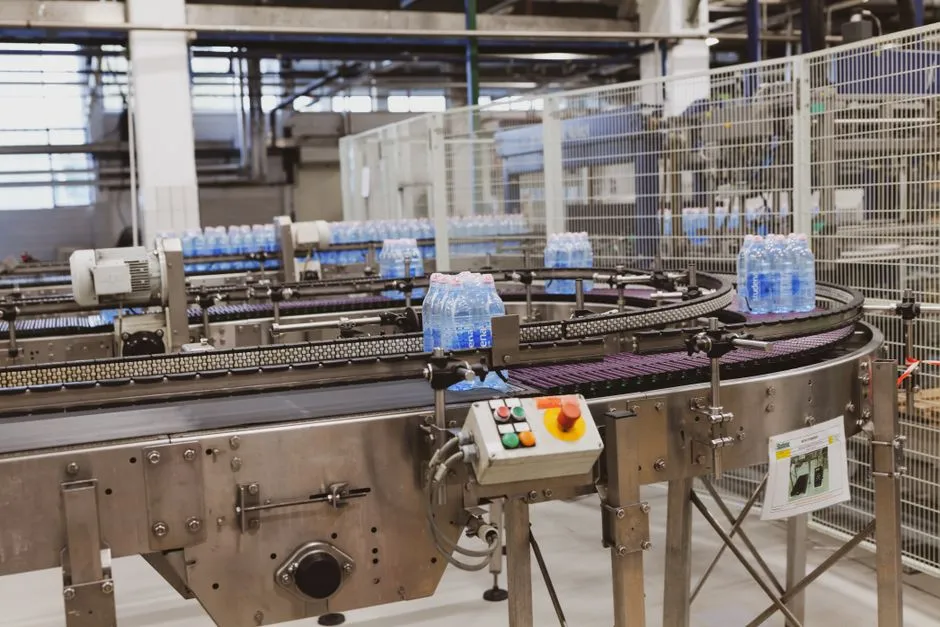
The defensible blowdown process is equalization and solids removal, pretreatment polish, membrane recovery, then a separately justified high-recovery or brine-concentration stage. The fourth stage should not be included automatically in Day-1 scope.
- Equalize and filter. Use an equalization basin and self-cleaning or side-stream filtration to control suspended solids and short-term quality variation. The Fes guide describes filters rated at 10–25 µm and sized at 1–5% of circulation flow, with typical installation benchmarks of US$50,000–200,000.
- Protect the membranes. Add multi-media filtration, antiscalant dosing and pH conditioning. The Fes guide identifies feed trimming to less than 10–15 µm as the pretreatment objective. The multi-media filtration package for RO protection should be selected against measured turbidity, suspended solids and membrane-feed criteria.
- Recover water by RO. The Fes guide records 95–99% salt rejection and permeate TDS of 10–50 mg/L for brackish-water RO, while also recording a conventional 75–80% recovery ceiling because silica and calcium sulfate scaling dominate. The industrial reverse osmosis system for cooling-tower blowdown reuse must therefore be guaranteed on site-water chemistry, not a generic recovery percentage.
- Add advanced recovery only when justified. Route RO concentrate to controlled salt precipitation or an optional mechanical-vapor-compression/crystallizer stage where discharge constraints, freshwater limitations or future growth support the additional complexity.
IDE Tech’s 2026 MAXH₂O case reports approximately 95% recovery and permeate silica of about 1 mg/L after controlled precipitation. That is an application benchmark, not a guaranteed result for Sale. The system’s chemistry, scale-control method, solids handling and operating mode must be verified through a project-specific feed review. Membrane and filter replacements should be covered by the RO and UF replacement-element package, with compatibility and storage conditions clearly specified.
Choose a Day-1 recovery strategy that can expand later
Day-1 recovery should be the lowest-complexity configuration that meets Sale’s verified water, permit and growth constraints while preserving a credible expansion route. A reasonable baseline is higher sustainable cycles of concentration, side-stream filtration, conservative BWRO and return of qualified permeate as cooling-tower makeup.
Do not equate an increase in cycles of concentration with a proportional reduction in blowdown. The HydropureWater Rabat guide states that moving from four to six cycles reduces blowdown from 25% to 20% of makeup water—a five-percentage-point reduction, not 50%. This operating adjustment should precede added membrane capacity.
Use a staged decision:
| Option | Evidence-supported configuration | Selection condition |
|---|---|---|
| Day-1 baseline | Filtration, controlled chemistry, conservative BWRO and permeate reuse | Current analysis supports the guaranteed recovery and discharge route |
| High-recovery expansion | Controlled precipitation followed by dynamic or closed-loop RO | Freshwater, discharge or growth constraints justify added complexity |
| MVC reserve | Concentrate treatment with distillate TDS below 10 mg/L | Fes guide benchmarks 10,000–30,000 GPD at US$1–3 million and 15–25 kWh per 1,000 US gallons |
| Full ZLD reserve | ZLD with crystallizer and salt-cake handling | Fes guide benchmarks US$3–8 million capital and US$5–15 per 1,000 gallons operating cost; use only when discharge is prohibited or freshwater is unavailable |
IDE Tech reports an industrial MAXH₂O application at around 95% recovery with permeate silica of about 1 mg/L. A controlled-precipitation system may also require solids separation; the plate-and-frame filter press for precipitated solids is one candidate that should be evaluated against generated sludge volume, moisture content and disposal acceptance.
Energy and carbon belong in the comparison. Open Engineering Inc (2026) found that the wastewater-reuse scenario had about twice the global warming potential of the freshwater scenario, with treatment energy responsible for roughly 80% of the difference. The same study found that UF+RO treatment energy exceeded five times the freshwater case, although improved cycles of concentration reduced blowdown and chemical consumption. Full ZLD should therefore remain a permit-driven option, not an automatic choice for a Sale data center.
Verify Sale's discharge route and regulatory basis
The compliance route for Sale must be fixed from current law, the applicable discharge specification and written sewer acceptance—not from a threshold copied from another Moroccan city. The HydropureWater Rabat guide identifies Loi 10-95 on water, Décret 2-14-499 on liquid discharges, and applicable ONEE/RADEEMA industrial-effluent technical specifications as the governing framework.
Confirm current limits with the competent authority for temperature, TDS and every other parameter relevant to the proposed discharge. The Rabat guide’s screening triggers—effluent TDS above 2,000 ppm, a temperature rise above 5 °C to the receiving sewer, or inadequate receiving-WWTP capacity—are early-warning indicators only. They are not confirmed Sale permit limits.
The buyer should obtain the identity and ownership of the receiving sewer, permitted hydraulic capacity, chemical surcharge terms, acceptable discharge point, monitoring requirements and written confirmation that CTBD concentrate may enter the network. Confirm separately whether the municipal system can accept the sanitary and auxiliary flows concurrently with cooling-blowdown concentrate. A discharge route that works hydraulically may still fail on temperature, TDS or composition.
Prepare an enforceable compliance basis containing representative feed and permeate analyses, the treatment mass balance, calibration certificates, flow logs and operating records. Include a contingency for construction-period or dry-weather restrictions on discharge. Where disinfection is required for the sanitary route, evaluate a chlorine-dioxide generation package or the UV sterilization package against residual requirements, downstream compatibility and operator capability.
Sale’s climate, tariffs, sewer conditions and permit status must be verified independently. The Morocco cooling-blowdown treatment framework for Rabat is a methodological reference, not evidence of Sale conditions.
Turn the design basis into a comparable supplier brief
A fixed-price, performance-guaranteed bid requires the same measured inputs from every supplier. Issue one design basis covering current and future flows, source-water and CTBD analyses, operating cycles of concentration, recovery target, permeate use, discharge route, utility availability, operator skill and acceptance-test requirements. If an input is unknown, label it as a bidder clarification item rather than inserting an assumed design value.
Require guaranteed values for treatment flow, recovery, permeate TDS, silica, filtration performance, power consumption, chemical consumption, availability and commissioning acceptance. Ask each bidder to state the recovery ceiling imposed by the supplied chemistry and identify any chemical or equipment limitation that could invalidate its guarantee.
Request separate pricing for equipment, membranes, filter media, pretreatment, dosing, controls, installation, commissioning, training, spares and long-lead import support. The treatment parts, valves and media schedule should identify quantities, compatibility, replacement intervals and included spares. The RO and UF membrane-element schedule should define membrane type, area, operating limits, storage requirements and replacement responsibility.
| Bid comparison | Evidence required from bidder | Buyer decision |
|---|---|---|
| Technical compliance | Item-by-item response and guaranteed acceptance values | Comparable scope without silent exclusions |
| Total cost of water | Energy, chemicals, membrane replacement, labor, waste handling and carbon estimate | Lifecycle value, not membrane price alone |
| Local inputs | Makeup cost, discharge charge, sewer terms and freshwater availability | Valid Sale business case |
| Delivery | Committed dates for vessels, membranes, pumps, electrical equipment and dosing consumables | Commissioning and import-risk control |
| Acceptance | Water balance, performance test, calibration and deficiency protocol | Enforceable handover |
Compare total cost of water, including avoided ONEE makeup and any discharge charges, against energy, chemicals, membrane replacement, operator labor, concentrate or salt disposal and carbon impact. Confirm critical-spares bundling and import support. For a comparable planning method, see the data-center treatment planning for a water-stressed location, while keeping Sale’s own water chemistry and permit evidence separate.
Frequently Asked Questions
What treatment equipment does a data center in Sale, Morocco, need for cooling-tower blowdown?
Start with equalization, side-stream solids removal, multi-media pretreatment, antiscalant and pH conditioning, and brackish-water RO for cooling-tower makeup reuse. Add controlled precipitation, MVC or crystallisation only after current Sale chemistry, discharge constraints and growth requirements justify it. The supplier should demonstrate that the proposed recovery is compatible with the measured silica, hardness, alkalinity and sulfate profile.
How should cooling blowdown and domestic sewage treatment packages be sized and separated?
Size the CTBD package from measured blowdown flow, operating cycles of concentration and future cooling load. Size the sanitary package from verified sewage flow and load derived from occupancy and operating hours. Route humidification bleed-off, chiller flush and fire-test water to the sanitary train only after checking peak hydraulics, temperature and residual chemicals.
Is zero liquid discharge required for a Sale data center, or is high-recovery RO more practical?
Do not assume ZLD is required. The Fes guide treats full ZLD as permit-driven and benchmarks it at US$3–8 million capital with US$5–15 per 1,000 gallons operating cost. Request the applicable Sale discharge limit and sewer acceptance before selecting ZLD; otherwise compare conservative BWRO with a reserved high-recovery expansion.
What should a buyer request from a cooling-blowdown treatment supplier before comparing bids?
Provide every bidder with the same flow records, source and blowdown analyses, operating envelope, recovery objective and discharge route. Require guaranteed flow, recovery, permeate quality, energy, chemical use, availability and acceptance-test results, plus separate prices for membranes, media, dosing, installation, commissioning and spares. Check delivery commitments for long-lead vessels, membranes and pumps.
What site data and Moroccan approvals are needed before fixing the treatment recovery rate or discharge route?
Request makeup and blowdown flow data, complete water analyses, ambient wet-bulb data, chemical-treatment records, future workload assumptions, sewer ownership and capacity, discharge charges, monitoring requirements, and confirmation of the current rules applied under Loi 10-95, Décret 2-14-499 and ONEE/RADEEMA. A recovery rate should remain a performance guarantee only after the competent authority and sewer operator confirm the project’s route.