What Aqaba’s Sewage Treatment Upgrade Changes for Buyers
Domestic sewage treatment in Aqaba should combine robust headworks, saline-environment materials, temperature-controlled biological treatment and a reuse-compatible treatment train. Aqaba’s upgraded conventional activated-sludge plant increased capacity from 21,000 to 40,000 m³/day and reported average removals of 99.1% for BOD₅, 96.6% for COD, 98.7% for TSS and 95.1% for total nitrogen. For decentralized projects, the WSZ package combines A/O contact oxidation, sedimentation and disinfection at 1–80 m³/h. Larger municipal or reuse projects may warrant MBR, subject to site testing and permit verification.
The North Aqaba upgrade demonstrates the scale of Aqaba’s centralized water-security infrastructure: the 2025 MDPI study reports expansion from 21,000 to 40,000 m³/day, serving approximately 150,000 people, while reclaimed wastewater now contributes about 30% of Aqaba Governorate’s annual water budget. These are municipal-scale results. They are evidence that activated-sludge wastewater treatment can support a major reuse program, but they do not establish the performance of a smaller package plant, a hotel application or a remote development.
For buyers, the implication is narrower: use Aqaba’s plant as a performance and planning benchmark, not as a universal equipment template. The 2025 Alexandria Engineering Journal study assessed four Aqaba upgrade alternatives through engineering, environmental and economic criteria. That same structure should guide procurement: confirm the process basis, test the site-specific wastewater, establish the reuse target, and then compare capital and operating costs.
| Verified Aqaba evidence | Reported value | Procurement significance |
|---|---|---|
| North Aqaba WWTP capacity | 21,000 to 40,000 m³/day | Centralized municipal scale; not directly transferable to a package plant |
| Average removals at the upgraded CAS-AWWTP | BOD₅ 99.1%; COD 96.6%; TSS 98.7%; total nitrogen 95.1% | Evidence for an activated-sludge reuse program, subject to its operating and influent basis |
| Reclaimed-water contribution | Approximately 30% of Aqaba Governorate’s annual water budget | Reuse quality belongs in the procurement scope and permit basis |
| Upgrade-assessment method | Four alternatives assessed using engineering, environmental and economic criteria | Use a comparable multi-criteria tender evaluation |
For an adjacent Jordanian market comparison, review domestic sewage treatment options in Irbid and the Irbid effluent-treatment buyer’s guide, while keeping Aqaba’s salinity, reuse and permit conditions separate.
The Four Site Conditions That Should Shape the Equipment Specification
Salinity, sand loading, temperature and flow variability are the four site conditions that should be converted into enforceable equipment requirements. A supplier’s generic package specification does not establish suitability for Aqaba.
Salinity. The supplied 2026 HydropureWater Aqaba guide reports total dissolved solids of 3,000–3,500 mg/L and identifies SS 316L or duplex 2205 as corrosion-resistant options for wetted parts. These grades should be selected only after a site-specific corrosion assessment that considers wastewater chemistry, buried conditions, chloride concentration and the relevant MEWA material requirements.
Sand loading. The same 2026 guide reports influent TSS of 200–500 mg/L and requires grit-removal efficiency of at least 95%. That requirement should be tied to mechanical screening, grit washing, grit classification, abrasion-resistant internals and defined test methods. The GX Series rotary mechanical bar screen may form part of the headworks, but its aperture, material, drive arrangement and duty must be confirmed against the influent characterization rather than selected from catalogue dimensions.
Temperature. The 2026 guide reports a 10–45°C range and states that biological processes should operate at 25–30°C for nitrification-sensitive treatment. Heating or cooling duty cannot be calculated from the environmental range alone; the designer needs seasonal wastewater-temperature data, selected biological reaction rates and the heat balance.
Flow variability. The tender should identify design flow, peak factor, diurnal profile, equalization strategy and minimum turndown. Average flow is insufficient because it may conceal hydraulic peaks, low-strength night flows or an unsuitable biological loading rate.
| Condition | Evidence or input | Enforceable requirement |
|---|---|---|
| Salinity | 3,000–3,500 mg/L TDS, as reported in the 2026 HydropureWater guide | Corrosion assessment and justified selection of wetted materials, including SS 316L or duplex 2205 where appropriate |
| Sand | 200–500 mg/L TSS, with at least 95% grit-removal efficiency specified in the same guide | Screening, grit removal, washing, abrasion protection and an acceptance test |
| Temperature | 10–45°C reported range; 25–30°C biological operating range stated for nitrification-sensitive processes | Seasonal temperature survey and documented heat balance |
| Flow | Site measurements and design criteria | Average and peak flow, peak factor, diurnal profile, equalization and minimum turndown |
WSZ or MBR: Which Domestic Treatment Fits the Project?
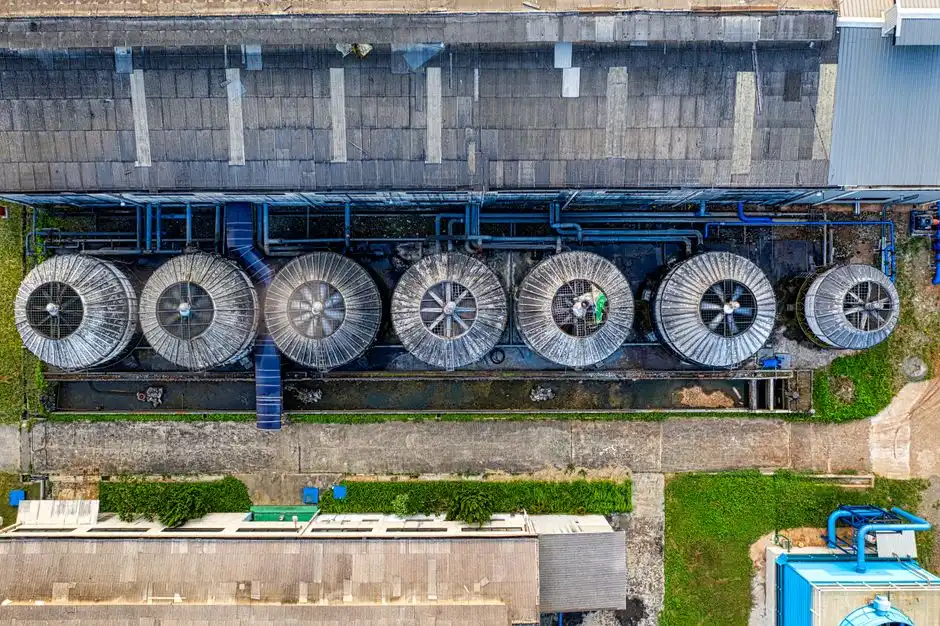
WSZ is the stronger starting point for a compact, decentralized application with a permitted duty within 1–80 m³/h; MBR deserves engineering review when higher-quality separation, reuse preparation or a larger treatment train is required. Neither product category removes the need for site-specific process design.
The WSZ underground package sewage treatment plant combines anoxic/aerobic contact oxidation, sedimentation and disinfection in one buried package. The verified product catalog rates it at 1–80 m³/h and identifies residential communities, hotels, hospitals, factories, rural sites and trailer-mounted deployment among its applications. That makes WSZ a discrete treatment option for a hotel, residential compound, industrial facility or remote development—not a smaller version of Aqaba’s 40,000 m³/day municipal plant.
The integrated MBR wastewater treatment system combines activated sludge with submerged PVDF membrane filtration. Its catalog describes filtration below 1 μm, a footprint 60% smaller than conventional systems and application capacities from 10 to 2,000 m³/day. Those attributes make MBR relevant where the required separation is more demanding or where reuse preparation justifies the added mechanical and membrane requirements. The separate DF membrane bioreactor module should be evaluated as a component, not assumed to constitute a complete treatment plant.
Use this sequence: first confirm the permitted discharge or reuse application; second establish average and peak flow; third test COD, BOD₅, TSS, salinity, temperature, nutrients and grit; fourth select WSZ where its rated hydraulic range and treatment objectives fit, or evaluate MBR where reuse quality, separation and scale justify further evaluation; fifth confirm pretreatment, disinfection, solids handling and controls in the complete train.
| Decision point | Prefer WSZ for evaluation | Evaluate MBR for evaluation |
|---|---|---|
| Deployment | Compact, decentralized, buried or trailer-mounted package | Broader treatment train with membrane separation |
| Catalog capacity | 1–80 m³/h | 10–2,000 m³/day |
| Core process | A/O contact oxidation, sedimentation and disinfection | Activated sludge and submerged PVDF membranes |
| Selection trigger | Permitted duty and wastewater characteristics fit the package | Higher-quality separation, reuse preparation or scale warrants detailed evaluation |
| Common exclusions | Neither option eliminates grit control, corrosion assessment, temperature analysis, disinfection, commissioning or permit obligations | |
Do not treat membrane filtration as automatic reuse approval. The supplied 2026 guide states MEWA targets of COD at or below 125 mg/L, BOD at or below 25 mg/L, TSS at or below 30 mg/L and pathogen removal of at least 99%. The final reuse application, sampling regime and permit must be confirmed with the relevant authority.
Build a Treatment Train That Can Survive Aqaba
A treatment plant is a sequence of interdependent process units, not a membrane or biological tank purchased in isolation. The defensible sequence is screening and grit removal, equalization and flow control, biological treatment, solids separation, disinfection, reuse storage or discharge, and sludge handling.
- Headworks: remove screenings and grit before pumps or downstream biological equipment.
- Equalization: damp hydraulic and quality variation where the process basis requires it.
- Biological treatment: apply the process supported by the influent characterization and temperature assessment.
- Solids separation: match the required effluent quality and downstream sludge route.
- Disinfection: provide the validated performance required by the permit and reuse application.
- Storage and sludge handling: confirm reuse demand, residuals, maintenance access and disposal arrangements.
The 2026 guide reports DAF removal of 90–95% FOG and 85–90% TSS, with flocculation performance requiring pH adjustment to 6.5–7.5. The dissolved air flotation unit should therefore be treated as a pretreatment candidate where the wastewater warrants it, not as the default domestic-sewage process.
For sludge, the 2026 guide reports 40–50% volume reduction through mesophilic digestion at approximately 35°C. It also identifies sand pre-treatment as necessary to prevent pump blockages and operating disruption. A plate-and-frame filter press may be considered for compatible sludge dewatering, but its duty must follow the solids characteristics and selected residuals route.
The ultrafiltration water-treatment system may provide a polishing or pretreatment barrier. Its published specification includes 0.03 μm PVDF membranes, capacity from 2,000 to 40,000 L/h, automatic backwash and air scour. Those functions do not replace biological treatment or disinfection, and the selected configuration must match the upstream solids load and reuse criteria.
| Process stage | Design input required | Decision evidence |
|---|---|---|
| Screening and grit removal | Screenings inventory, grit characteristics and peak flow | Headworks layout, selected screen and grit-removal test |
| Biological treatment | COD, BOD₅, nutrients, salinity, temperature and hydraulic load | Process calculations, model basis and performance guarantees |
| Separation and disinfection | Effluent limits and reuse application | Specified test methods, sampling points and compliance remedy |
| Sludge and residuals | Sludge mass, sand content, dewatering method and disposal route | Mass balance, maintenance plan and residual destination |
Indicative 2026 Costs and Reuse Economics
The supplied 2026 guide gives an MBR capital-cost estimate of JOD 1.2–1.8 million for 5,000 m³/day and JOD 1.5–2 million for 10,000 m³/day, including the stated Aqaba adaptations and compliance testing. These are 2026 planning estimates, not quotations or bankable project costs.
The same guide gives MBR operating cost of JOD 0.8–1.2/m³. It estimates JOD 1.1–1.5/m³ for DAF combined with activated sludge, with chemical use and sludge management contributing to the higher operating estimate. A comparison should therefore evaluate more than acquisition price: membrane or media replacement, energy, chemicals, biological sludge, residuals disposal, operator time and local service all affect lifecycle cost.
The reuse scenario in the 2026 guide assumes sale of treated effluent at JOD 0.5/m³ and indicates capital recovery within 5–7 years, attributed to USAID’s 2023 Aqaba project analysis. Use that result only as a scenario. Revenue is the usable treated volume multiplied by the agreed sale price; the net position then deducts operating costs, sludge handling, replacement reserves, financing and any volume or water-quality restrictions.
| Cost item | Indicative 2026 estimate | Basis and qualification |
|---|---|---|
| MBR CAPEX, 5,000 m³/day | JOD 1.2–1.8 million | Includes stated Aqaba adaptations and compliance testing; site validation and quotation required |
| MBR CAPEX, 10,000 m³/day | JOD 1.5–2 million | Includes stated Aqaba adaptations and compliance testing; excludes unconfirmed site-specific work |
| MBR OPEX | JOD 0.8–1.2/m³ | Includes energy and membrane replacement in the supplied guide |
| DAF plus activated-sludge OPEX | JOD 1.1–1.5/m³ | Includes chemical and sludge-management costs in the supplied guide |
| Treated-effluent sales assumption | JOD 0.5/m³ | Scenario only; 5–7 year recovery is attributed to USAID’s 2023 analysis |
Request the budget in three parts: equipment and installation; site-specific civil, pretreatment and adaptation work; and commissioning, monitoring, training, spares and contingency. For a further Jordanian cost reference, see the Zarqa effluent-treatment buyer’s guide, but do not transfer its site assumptions to Aqaba without validation.
Procurement Checklist for Compliance and Supplier Selection
The tender should require verifiable performance evidence, current permit correspondence and an Aqaba-specific process basis rather than accepting a catalogue claim as proof of suitability.
- Request current site-specific influent and effluent tests covering flow, COD, BOD₅, TSS, salinity, temperature, nutrients, FOG, pH and sand or grit characteristics.
- Require each supplier to identify the applicable current Aqaba permit and reuse conditions, proposed process basis, guarantees, test methods, sampling points and remedy for non-compliance.
- Ask for documented corrosion and abrasion protection. SS 316L or duplex 2205 wetted parts may be justified under the supplied 2026 guide’s salinity assumptions, but coating systems, exposed components and compatibility should be reviewed separately.
- Request verifiable Aqaba or comparable arid-climate references, factory acceptance tests, site acceptance tests, membrane or media guarantees, spare-parts availability and local service-response commitments.
- Ask the supplier to state exactly which tests demonstrate the at-least-95% grit-removal target, including test media, particle classification and acceptance criteria.
The supplied 2026 guide states that non-compliance may incur fines of up to JOD 50,000 per year under the cited MEWA Decree 2024/87. Confirm the current legal and permit position with MEWA and the Aqaba Water Company before including the figure in a contract risk allocation.
Use the coarse bar screen sizing and selection guide to develop the headworks specification, then tie screen selection to screening analysis, peak flow, materials and downstream grit handling.
Frequently Asked Questions
How much does domestic sewage treatment in Aqaba cost?
The supplied 2026 guide estimates JOD 1.2–1.8 million for a 5,000 m³/day MBR with the stated Aqaba adaptations and compliance testing. Ask suppliers for separate pricing for equipment, installation, civil works, headworks, temperature control, membrane or media guarantees, commissioning, monitoring, training, spares and contingency. Site testing and the current permit basis must be fixed before the estimate becomes a quotation.
Should I choose WSZ or MBR for an Aqaba development?
Use WSZ as the starting point for a compact or decentralized project whose permitted flow fits 1–80 m³/h and whose treatment objectives can be demonstrated through the proposed process. Evaluate MBR when the application ranges from 10 to 2,000 m³/day and requires more demanding separation or reuse preparation. The decision still depends on peak flow, wastewater characteristics, temperature, pretreatment, permit requirements and the supplier’s performance evidence; package capacity alone is not a selection criterion.
What should I check when selecting a sewage-treatment supplier in Aqaba?
Request verified performance data, the proposed process calculations, corrosion and abrasion protections, factory and site acceptance tests, warranty terms, membrane or media guarantees, spare-parts availability and local service arrangements. Do not accept a project reference or compliance statement without checking the operating conditions, test method and contractual remedy. For a separate housing-package perspective, review packaged sewage treatment plant selection for housing.
Does meeting MEWA treatment targets guarantee permission to reuse treated wastewater?
No. Treatment objectives describe expected process performance; they do not constitute a reuse permit. Confirm the current effluent and reuse requirements directly with MEWA and the Aqaba Water Company, including sampling, monitoring, intended use and operating conditions. A supplier may demonstrate relevant capabilities, but the authority determines the permitted application. For a comparison of packaged MBR selection issues, see the packaged MBR selection guide.