
Choosing Domestic Sewage Treatment for an Irbid Site
Domestic sewage treatment in Irbid should be selected around the wastewater source, design flow, available footprint, groundwater conditions, and required discharge or reuse arrangement. The three main routes are decentralized conventional treatment, a buried WSZ package plant, and an MBR system. WSZ combines A/O biological contact oxidation, sedimentation, and disinfection in one automated unit rated from 1–80 m³/h. MBR provides filtration below 1 μm, occupies 60% less space than conventional systems, and is available from 10–2,000 m³/day. Selection must also address wet-weather peak flow, infiltration and inflow, and Jordan effluent discharge requirements.
Start the project brief by defining the wastewater source, average and peak flow, land available, groundwater level, soil conditions, receiving point, reuse objective, operating responsibility, and permits required. The comparison here concerns domestic sewage; it does not replace an industrial wastewater process design. Separate clean domestic flows from industrial or food-service inflows, and identify whether either is expected to enter the same treatment train.
Local planning context matters, but it should not be treated as a packaged-plant performance guarantee. The 2020 Impact of Climate Change on the Performance of Wastewater Treatment Plant: Case study Central Irbid WWTP (Jordan), published by Procedia Manufacturing, used A2 and B2 climate scenarios covering 2050–2065 and 2080–2099 with a wastewater simulation model. It supports consideration of long-term hydrologic variability, not a guaranteed treatment efficiency for a decentralized unit.
Use this process sequence for every quotation:
- Collect and screen the wastewater.
- Provide equalization where the flow or influent requires it.
- Apply biological treatment.
- Separate solids.
- Disinfect the treated flow.
- Send it to an authorized discharge point or approved reuse arrangement.
For a housing-development concept, use the same structure as the packaged sewage treatment plant sizing for housing developments, while replacing assumptions with verified Irbid-site inputs.
Why Infiltration, Peak Flow, and Climate Affect Irbid Projects
The US EPA states that infiltration and inflow can introduce large volumes of diluted wastewater into sanitary sewers during wet weather, causing sanitary sewer overflows and operational problems at treatment facilities. It also states that significant wet-weather flow increases can adversely affect treatment efficiency, reliability, and control of unit process operations. These are engineering warnings, not Irbid-specific performance figures.
A buyer must therefore distinguish legitimate wastewater from stormwater entering through roof drains, faulty joints, unsealed manholes, or inappropriate connections. Ask the designer to document the design peak rather than selecting equipment from average daily flow alone. The calculation should separate normal diurnal and seasonal demand from the wet-weather peak and should state whether each component represents wastewater generation or unwanted water ingress.
Then test the proposal against five concrete questions:
- Is flow equalization provided before biological treatment?
- How much spare treatment capacity is proposed, and under which operating scenario?
- Are critical components protected against flooding?
- Which flow, level, and equipment alarms initiate an operator response?
- What happens during power loss, high inflow, or an upstream blockage?
Do not infer that equalization, standby capacity, flood protection, or remote alarms are included merely because a package plant is described as automated. Require them as explicit drawings, control narratives, exclusions, and performance tests. Where a mechanical screening component is proposed, evaluate the required rotary mechanical bar screen specification against the incoming flow and debris profile rather than treating screen selection as a standard inclusion.
The Central Irbid study assessed climate scenarios and wastewater performance using a simulation model. It does not establish a packaged-plant treatment-efficiency value, a guaranteed infiltration allowance, or a universal Irbid peak-flow factor. Its engineering implication is to test the project under credible future hydrologic conditions while keeping the basis traceable to the study’s actual scenario periods.
Decentralized, WSZ Package, and MBR Treatment Compared
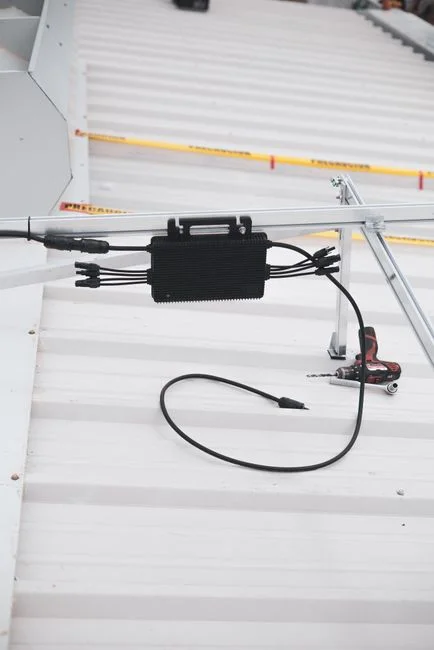
Decentralized conventional treatment, WSZ package plants, and MBR systems are three procurement routes with different process, equipment, footprint, and operating requirements; the supplied research does not establish one universal conventional process specification for Irbid.
For a decentralized conventional arrangement, request a defined process covering screening, biological treatment, solids separation, disinfection, sludge handling, odor control, and remote monitoring. Ask the supplier to identify which functions remain onsite, which require external services, and who will inspect the plant, handle laboratory checks, respond to alarms, and remove sludge.
The buried WSZ package sewage treatment plant combines anoxic/aerobic A/O biological contact oxidation, sedimentation, and disinfection in one buried unit. The HydropureWater verified product catalog describes it as fully automated, requiring no operator, with a treatment capacity of 1–80 m³/h. It can be installed below grade with landscaping above. These are product-level specifications, not guaranteed outcomes for an Irbid project.
The integrated MBR wastewater treatment system combines activated sludge treatment with submerged PVDF membrane filtration. The same catalog specifies filtration below 1 μm, a footprint 60% smaller than conventional systems, and capacities from 10–2,000 m³/day. MBR therefore merits evaluation where suspended-solid separation, reuse quality, or footprint is important, subject to a site-specific process and membrane-maintenance design.
| Procurement route | Process and equipment | Documented capacity or footprint | Buyer focus |
|---|---|---|---|
| Decentralized conventional treatment | Project-specific biological, separation, disinfection, solids, odor, and monitoring arrangement | No universal capacity or footprint specification in the supplied research | Define the complete process, civil works, expansion path, and operating responsibility |
| WSZ package plant | Anoxic/aerobic A/O biological contact oxidation, sedimentation, and disinfection in a buried unit | 1–80 m³/h; fully automated; no operator required, according to the HydropureWater verified product catalog | Confirm design peak, installation depth, access, equalization, flood protection, and commissioning scope |
| MBR system | Activated sludge with submerged PVDF membrane filtration | 10–2,000 m³/day; filtration below 1 μm; 60% less footprint than conventional systems, according to the HydropureWater verified product catalog | Confirm effluent and reuse targets, membrane access, cleaning, replacement, controls, and utilities |
The IntechOpen study Application of Vermifiltration for Domestic Sewage Treatment describes vermifiltration as potentially decentralized and less expertise-intensive. However, the supplied extract contains no verified efficiency values suitable for a quantitative Irbid comparison, so it should not enter a product shortlist without a separate technical review.
Size the System from Verified Project Inputs
System sizing begins with defensible wastewater contributions from each use, not with a supplier’s nominal capacity range. Break the design basis into average flow, peak-hour flow, and peak wet-weather flow, then state the calculation method and every allowance.
For a housing development, identify residential units and their associated wastewater contributions. For a hotel, include rooms, occupancy patterns, laundry, kitchen wastewater, and staff. For a hospital, include beds, clinical functions, kitchens, laundry, and visitor flows. Other sites may require contributions for employees, visitors, food service, cooling water, or industrial processes.
- Compile measured data or defensible contributions for each wastewater source.
- Separate average, peak-hour, and wet-weather peak flows.
- Document peak factors, infiltration allowances, storage, equalization, and future expansion.
- Convert supplier capacity units consistently and compare them with the agreed design basis.
- Match each proposed unit to normal, peak, and selected future operating scenarios.
The WSZ range is 1–80 m³/h, while the MBR range is 10–2,000 m³/day. These figures use different time bases, so the designer must convert them consistently before comparing alternatives. A quoted nameplate capacity is not enough: the proposal should identify the wastewater flow at which the supplier guarantees the required effluent quality.
Specify the required effluent quality, reuse target, discharge point, and operating scenarios as separate inputs. If the receiving point is a municipal sewer, confirm applicable pretreatment and sewer-entry requirements in Jordan before selecting equipment. Do not assume that a nominal discharge standard shown in a product description is sufficient for the receiving authority.
Also record seasonal demand, intermittent operation, holiday loading, future expansion, and any material change in occupancy. Each condition can affect biological loading, equalization volume, membrane operation, or control logic. Request supporting calculations and the treatment-equipment schedule, valves, and filter-media requirements so that missing components and operating consumables remain visible.
| Sizing input | Evidence required | Why it affects selection |
|---|---|---|
| Average and peak flows | Measured data or a documented wastewater-contribution calculation | Determines biological loading, hydraulic capacity, storage, and unit configuration |
| Infiltration and inflow | Separate wet-weather assessment and any confirmed site-connection defects | Prevents diluted flow from being mistaken for genuine treatment demand |
| Effluent and reuse target | Applicable Jordanian requirement, receiving-point condition, and intended reuse | Sets the required treatment and disinfection performance |
| Season and operating pattern | Occupancy, staffing, holiday, downtime, and expansion assumptions | Changes biological loading, equalization, controls, and redundancy requirements |
| Site and utilities | Area, soil, groundwater, access, power, drainage, and installation constraints | Determines civil feasibility, construction method, footprint, and operating scope |
Compare Site, Installation, and Operating Requirements
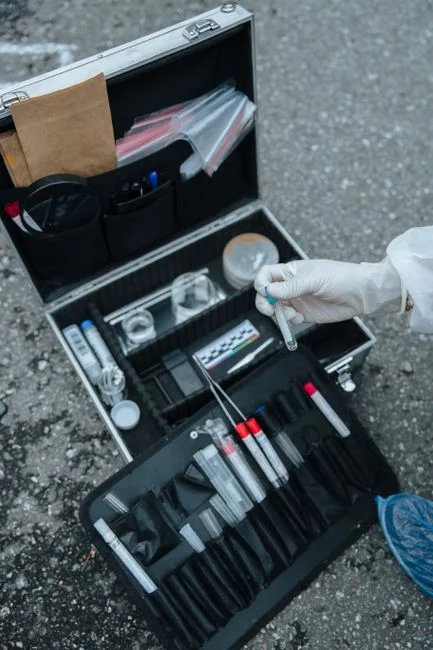
A treatment route is not installable until its civil footprint, maintenance access, utilities, and operating responsibility are demonstrated on the specific site. The comparison of decentralized, WSZ package, and MBR options can be adapted from the comparison of decentralized, WSZ package, and MBR options, but the Irbid site survey must determine the outcome.
For a WSZ installation, assess burial depth, excavation, structural requirements, access for maintenance, landscaping above the unit, groundwater, buoyancy, and wet-season construction. Confirm how individual chambers are entered and lifted, where electrical equipment is located, and whether overflow or uncontrolled discharge can occur under an exceptional hydraulic event.
For MBR, assess the larger mechanical scope associated with membrane equipment. Require details for module access, aeration, controls, membrane cleaning or replacement, electrical supply, and safe sampling. The product specification does not remove the need to allocate membrane lifecycle, spare-part availability, and specialist support.
Request a site utilities and hazardous-area review covering incoming power, control signals, drainage, vents, odor control, access for tankers or maintenance vehicles, and effluent sampling. Where chemical dosing is proposed, define the storage, containment, duty, and service arrangement rather than assuming that the automatic chemical dosing system is included. If solids dewatering is part of the project, define sludge handling and disposal, including the role of a plate-frame filter press and the frequency of use.
The WSZ product is described as fully automated and requiring no operator. That does not eliminate site management. Decentralized and MBR projects also need named responsibility for inspections, housekeeping, laboratory checks, alarm response, consumables, maintenance, and sludge removal.
Do not approve a layout from a brochure alone. Request a process flow diagram, general arrangement, civil and mechanical drawings, utilities list, control philosophy, commissioning plan, commissioning criteria, maintenance schedule, and spare-parts list.
Build a Supplier RFQ and Compliance Checklist
A comparable RFQ requires the same verified design basis, effluent requirement, site information, and commercial boundary from every supplier. Product brochures should supply input data, not replace a project-specific offer.
State the design average flow, peak flow, wastewater characteristics, required effluent specification, reuse objective, site area, soil and groundwater information, delivery point, installation method, and commissioning boundary. Require the bidder to show how each value was used. If a value remains unknown, identify it as an exclusion or a stated design assumption rather than allowing it to disappear into the quotation.
Require each supplier to identify exclusions explicitly, including civil works, inlet and outlet pumps, electrical supply, laboratory equipment, chemicals, sludge removal, permits, operator training, commissioning, and first-year spares. A complete schedule should distinguish supplied equipment, customer-provided works, regulatory submissions, and ongoing services.
Ask for a performance guarantee tied to the agreed design flow, influent characteristics, and effluent requirements. Treat headline product specifications as design inputs rather than substitutes for a guarantee. If reuse is proposed, define sampling frequency, analytical parameters, acceptance tests, and who authorizes the reuse arrangement.
The US EPA provides a useful international distinction: sanitary sewers collect wastewater, while combined sewers also convey stormwater runoff. This is not a statement about the Irbid network; it is a reference requiring confirmation of the actual connection at each site. A combined connection can change the inflow, treatment, overflow, and approval strategy substantially.
| RFQ area | Required information | Acceptance check |
|---|---|---|
| Design basis | Average flow, peak flow, wet-weather peak, influent characteristics, and future scenarios | Capacity and guarantee use the same stated flow basis |
| Treatment performance | Effluent specification, reuse objective, sampling plan, and acceptance test | Parameter-level compliance and responsible party are defined |
| Scope boundary | Equipment, civil works, utilities, chemicals, sludge, permits, training, commissioning, and spares | Every excluded item has a named responsibility and price impact |
| Site and installation | Drawings, soil, groundwater, access, flood protection, utilities, and construction method | Layout and installation assumptions match the Irbid site |
| Risk and service | Failure response, alarms, power loss, flooding, fouling, maintenance, and spare-part support | Each risk has a prevention, detection, and response measure |
| Local compliance | Receiving point, sewer-entry requirements, discharge conditions, and responsible authority | Approvals and discharge route are confirmed before equipment order |
Maintain a project risk register covering inflow and infiltration, equipment failure, power interruption, odor, flooding, membrane or media fouling, spare-part availability, and sludge disposal. The MBR versus conventional activated-sludge decision guide can support internal discussions, but food-wastewater pretreatment conclusions should not be transferred to a domestic-sewage project without checking the actual influent.
Make the Final Treatment Decision
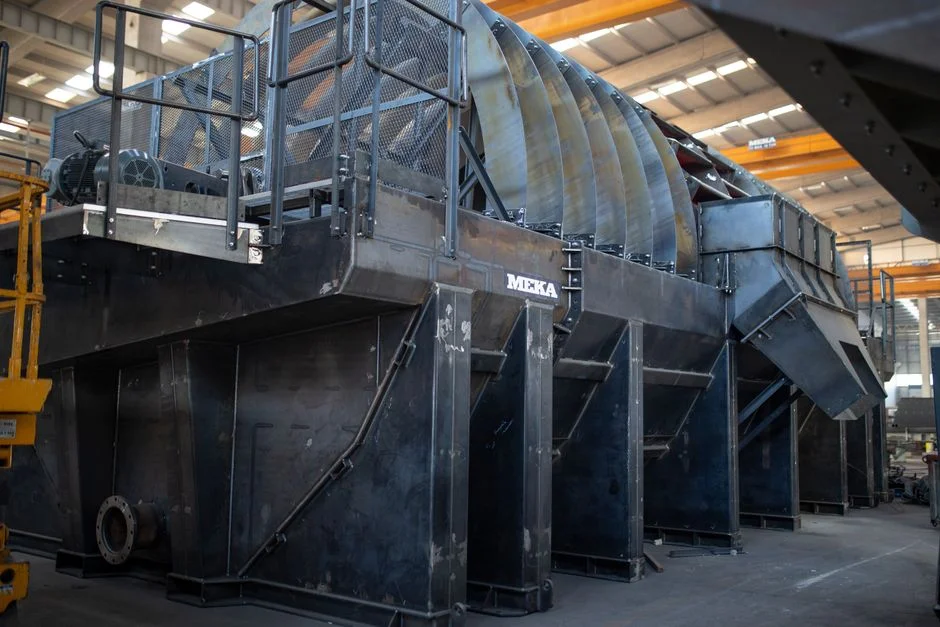
The final selection should follow four screens: verified capacity, physical and civil feasibility, Jordanian discharge or reuse compliance, and a complete lifecycle operating plan. A technology is not short-listed because it fits a general process description; it must pass all four for the specific site.
| Project condition | Route to evaluate first | Required evidence before approval |
|---|---|---|
| Design flow is within 1–80 m³/h and an integrated, buried, automated A/O, sedimentation, and disinfection system suits the site | WSZ package plant | Verified design-flow performance, excavation and access plan, equalization, flood protection, commissioning, and operating responsibility |
| Very low suspended solids, reuse-grade separation, or a constrained footprint is important | MBR system | Effluent and reuse targets, membrane maintenance plan, electrical and aeration requirements, and module access |
| Project-specific process needs, future expansion, operator capability, or local civil works favor a conventional arrangement | Decentralized conventional treatment | Complete process design, civil interfaces, solids and odor provisions, operating staffing, and expansion path |
Request a pilot or performance demonstration when the flow estimate is uncertain, influent variability is high, or the project is the first deployment of the selected technology. For food-service or industrial inflows, use a separate pretreatment limit decision process before comparing domestic-sewage systems.
Advance a supplier only when its offer states the same design basis, drawings, performance criteria, exclusions, commissioning boundary, and local compliance route as the competing offers. This keeps the decision technical and auditable rather than reducing it to equipment nameplate capacity.
Frequently Asked Questions
How much does a domestic sewage treatment plant cost in Irbid?
The supplied research contains no Irbid cost data, so a defensible price cannot be assigned. Request itemized quotations based on verified design flow, treatment objectives, civil works, utilities, installation, commissioning, and O&M scope. Require each bidder to price the same exclusions and delivery point.
Should I choose a WSZ package plant or an MBR system in Irbid?
Choose using actual flow, footprint, reuse target, operating responsibility, and site constraints. The HydropureWater verified product catalog lists WSZ at 1–80 m³/h and MBR at 10–2,000 m³/day, with MBR filtration below 1 μm. Do not compare those ranges without converting the flow time bases and defining the required effluent quality.
What information does a sewage treatment supplier need for an accurate quotation?
Provide average and peak flow, wastewater source and characteristics, effluent and reuse requirements, soil and groundwater data, available footprint, utilities, access, installation method, and required Jordanian approvals. Also state seasonal demand, future expansion, sludge-disposal expectations, and the commissioning boundary so suppliers quote comparable configurations.
What is the main design risk for a decentralized sewage plant in Irbid?
Uncontrolled infiltration and inflow is a major hydraulic risk because it can create wet-weather peak loads that affect efficiency, reliability, and process control, according to the US EPA’s Municipal Wastewater guidance. Require hydraulic monitoring, a documented peak-flow basis, and a defined response to abnormal inflow before approving the design.
Can treated sewage from a private site be discharged directly in Irbid?
Do not assume permission. Confirm the receiving point, sewer-entry rules, effluent requirements, and responsible authority in Jordan before ordering equipment or preparing a discharge design. For municipal treatment context beyond Irbid, the municipal wastewater treatment compliance considerations provide a useful separate reference, not a substitute for Jordanian approval.