How to identify the right packaged STP for a Delhi housing project
No single packaged sewage treatment plant model fits every Delhi housing development. Selection begins with documented domestic wastewater flow and peak-loading conditions, then proceeds through treatment objectives, site constraints, reuse needs, supplier guarantees, installed cost, commissioning, and long-term O&M responsibility. TradeIndia’s 2026 Delhi listings show products from 10–500 KLD, plus another domestic-sewage option at 500–5,000 LPD, but these are market-screening references rather than an engineering basis. Its listed INR 200,000–250,000 per-piece range is also an indicative directory price—not a complete installed quotation or proof of Delhi-specific compliance. For project design, use the residential wastewater treatment engineering guide for India as supporting technical context.
Before requesting quotations, collect the following project inputs:
- Domestic wastewater generation, occupancy assumptions, daily flow, peak-flow basis, and collection or infiltration assumptions.
- Available footprint, excavation depth, soil and groundwater conditions, access for maintenance and sludge removal, and flood exposure.
- Discharge route and reuse objective, including whether treated sewage water is intended for toilet flushing, landscaping, irrigation, or another approved application.
- Power availability, control-system expectations, operating responsibility, and the owner’s maintenance capability.
The decision sequence is straightforward: establish flow and load; define treatment and reuse objectives; test site compatibility; compare technical and performance guarantees; then price equipment, civil work, installation, commissioning, and O&M. Capacity alone cannot close any of these decisions.
Design flow, loading and treatment objectives
STP capacity calculation begins with a transparent design-flow calculation, not a catalogue capacity. The designer should reconcile the development’s occupancy and wastewater-generation assumptions with the daily flow, peak factor, collection method, infiltration or ingress, and selected design horizon. The supplier must then confirm whether its stated capacity is daily average or continuous design flow and show how every biological and hydraulic component handles the agreed peak condition.
Ask each bidder to identify the process train, design influent basis, expected treated-effluent basis, disinfection stage, expansion provisions, and the conditions under which the plant may be re-rated as occupancy changes. A larger KLD label does not demonstrate that the aeration, biological volume, solids separation, pumping, or equalization provisions are adequate for the actual duty.
| Bid parameter | Information required | Reason for review |
|---|---|---|
| Design-flow basis | Daily flow, peak condition, occupancy basis, collection and infiltration assumptions | Establishes the actual duty on every treatment stage |
| Capacity definition | Daily average or continuous design flow, plus applicable design horizon | Prevents comparison of non-equivalent capacity claims |
| Process design | Influent basis, biological sizing, solids separation, disinfection, and re-rating method | Tests whether the package is engineered for the project |
| Treated-water use | Intended reuse route and required effluent basis | Links process selection to the intended application |
| Guarantee | Guaranteed duty, performance parameters, test protocol, and acceptance conditions | Creates a measurable procurement commitment |
Reuse must be specified separately from treatment. The Ecology Economy and Society–INSEE Journal study, published in 2020, examined decentralized wastewater treatment plants supplying residential-complex water for toilet flushing—a non-potable application. It supports evaluating decentralized treatment for that use, not treating all reuse water as potable. Each bidder should state the process needed for the agreed use and identify who will determine the applicable quality and approval requirements.
Choose treatment architecture and installation method
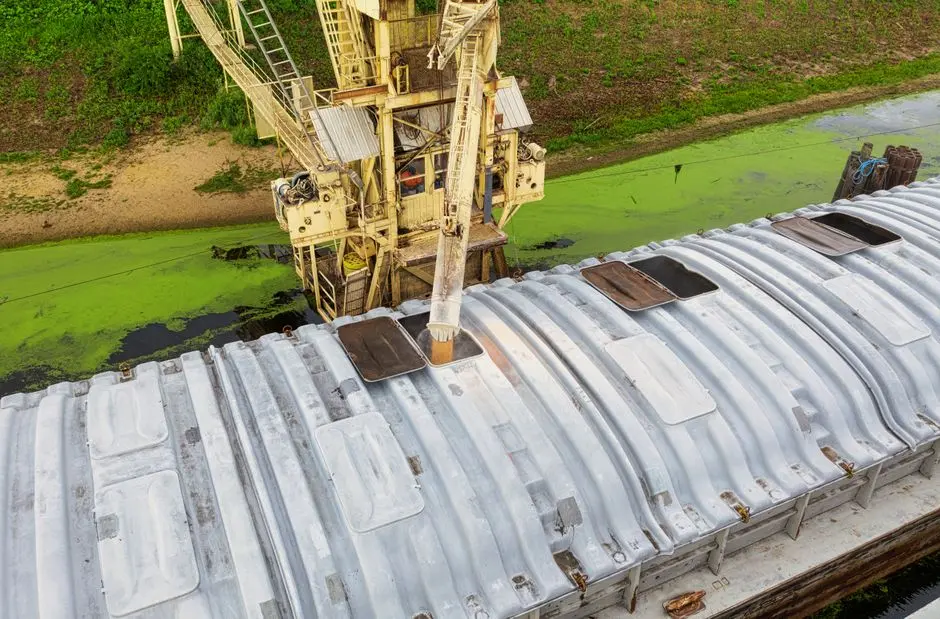
A packaged domestic sewage treatment system typically follows a defined process train: inlet conditioning or screening, biological treatment, solids separation, disinfection, and controlled discharge or reuse. The exact process may differ, and a membrane or secondary clarification arrangement should not be treated as interchangeable with every biological package. Ask the supplier to explain what each unit removes and how the stages work together under peak and low-flow conditions.
SUSBIO’s commercial material states that its packaged units combine physical and biological treatment and that prefabricated construction requires less land than conventional plants (SUSBIO, 2024). This is a supplier claim about construction and footprint; it does not replace project-specific excavation, access, utilities, or structural review.
The underground integrated sewage treatment plant described for the WSZ Series combines A/O biological contact oxidation, sedimentation, and disinfection in a below-grade unit, with landscaping above or trailer mounting for mobile deployment. Its published handling range is 1–80 m³/h, and the supplier identifies residential communities among its applications. A buyer should therefore request a project-specific hydraulic and process check before treating that range as suitable.
| Decision point | Buried installation | Surface or trailer-mounted installation |
|---|---|---|
| Site use | Landscaping can cover the unit, subject to access requirements | Requires allocated surface space and visible service access |
| Civil risk | Excavation, cover depth, groundwater, soil and uplift require review | Reduces excavation risk but shifts constraints to foundations and layout |
| Operations | Requires safe entry, lifting, ventilation, odour control, and sludge removal arrangements | Easier visual inspection; access and security must be defined |
| Construction | Must be coordinated with landscaping and underground utilities | Can simplify installation, subject to delivery and lifting access |
Every proposal should identify the civil interfaces: inlet invert, screen or grinder, bypass provisions, sludge withdrawal, odour control, access covers, lifting arrangement, effluent connection, and electrical supply. These interfaces frequently determine whether a technically sound package can be installed and maintained on the site.
Match the plant to Delhi site and reuse constraints
Physical and operational constraints can make an otherwise adequate packaged STP unsuitable. Check the footprint, maintenance access, cover depth, excavation and groundwater risk, flood exposure, ventilation, odour, noise, and power reliability. For a buried unit, confirm that personnel can safely inspect and clean the relevant components, remove sludge, operate valves, and recover the plant without dismantling landscaping.
Define the reuse route before finalising the process. For toilet flushing, landscaping, or irrigation, the designer and approving authority should state the required effluent quality and any application-specific controls. The 2020 Ecology Economy and Society–INSEE Journal finding supports decentralized treatment for residential-complex water used for toilet flushing; it does not establish suitability for drinking or every irrigation application.
Require each bidder to document its proposed installation method, material selection, access arrangement, effects on landscaping, and interface with the development’s construction sequence. A surface package may simplify excavation but consume scarce landscaped space; a buried package may require more civil work than the equipment quotation indicates.
Automation does not remove operating responsibility. The WSZ source describes fully automated operation with no operator required, but trained O&M personnel must still inspect equipment, respond to alarms, manage sludge and disinfection, calibrate instruments, and record operating data. The agreement should name the responsible party, response arrangements, maintenance schedule, and annual budget.
Compare Delhi supplier proposals on performance and lifecycle risk
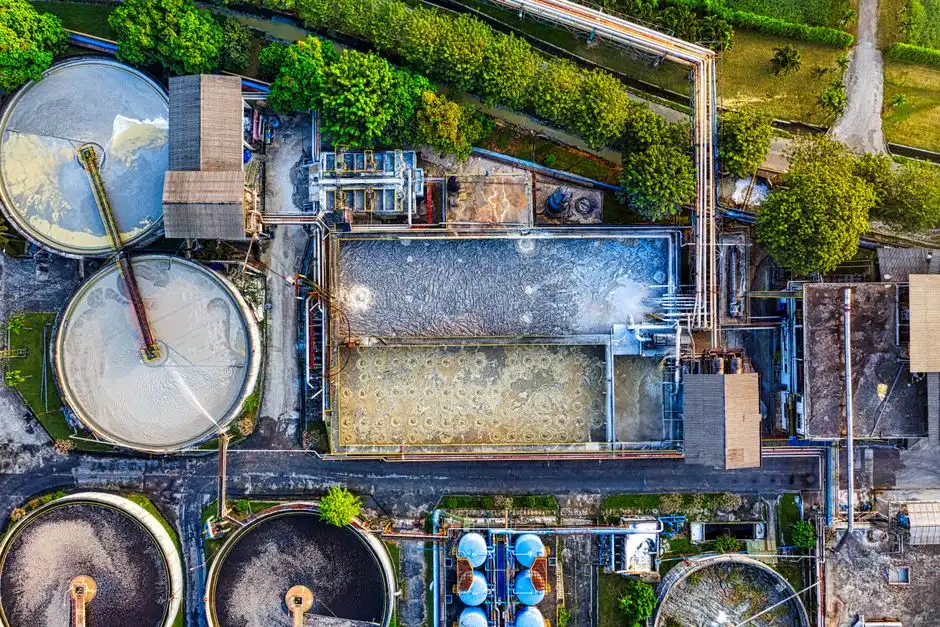
A comparable bid must define the duty and acceptance conditions before comparing price. Request a duty curve, process description, inlet and outlet criteria, performance guarantee, test protocol, instrumentation, alarm list, backup strategy, recommended spares, and O&M price schedule from every bidder. Also require the warranty boundary and define whether responsibility for civil interfaces, power supply, controls, chemicals, media, membranes, labour, and breakdown response lies with the supplier, EPC contractor, or owner.
TradeIndia’s 2026 listings mention FRP, HDPE, PP, and MS with suitable epoxy coating, along with automatic, semi-automatic, and fully automatic options. These are possible construction and control selections, not automatic acceptance. Material selection should follow the design environment, corrosion exposure, handling, structural requirements, and engineer review.
For membrane-based alternatives, the directory lists a 0.1–0.3 micron membrane size and variable membrane quantity by design. Require the bidder to define membrane area, flux basis, cleaning method, replacement assumptions, and life-cycle cost. A pore-size statement alone does not establish whole-plant performance or operating burden.
Use the published INR 200,000–250,000 per-piece range only as a market signal from TradeIndia’s 2026 Delhi directory. Request an itemized quotation for equipment, civil work, installation, commissioning, power, O&M, consumables, sludge handling, spares, and taxes as applicable.
| Commercial item | Required clarification | Risk if omitted |
|---|---|---|
| Equipment scope | Inlet, process stages, pumping, controls, instrumentation, panels, covers, and outlet works | Hidden exclusions and interface disputes |
| Performance | Guaranteed flow basis, effluent criteria, test method, sampling responsibility, and acceptance period | No measurable acceptance test |
| Installation | Civil works, delivery, unloading, erection, electrical connection, and site utilities | Capital-cost underestimation |
| Operating costs | Power, chemicals, media, membranes, sludge removal, labour, spares, and breakdown response | Lifecycle comparison becomes unreliable |
| Escalation | Price basis, validity, indexed items, and major-replacement treatment | Budget exposure after award |
Current market context in the decentralized wastewater treatment trends should support procurement review, but it should not replace project-specific quotations or independently verified guarantees.
Approvals, commissioning and operational handover
Approval risk cannot be closed by a supplier statement that a plant is “regulation compliant.” Before ordering, obtain confirmation from the project’s environmental consultant or relevant consenting authority on the discharge route, treated-effluent use, consent conditions, submission documents, and authority interface. The required route and documents must be tied to the specific site and intended reuse, rather than inferred from a catalogue listing.
Issue a supplier document schedule before commercial close. It should require design drawings, process calculations, material certificates, electrical schematics, operating manual, test results, training, warranty terms, and recommended spares. A document schedule converts vague technical promises into deliverables that can be reviewed before shipment and acceptance.
| Stage | Verification required | Owner before acceptance |
|---|---|---|
| Pre-order | Discharge route, reuse basis, consent conditions, drawings, calculations and guarantees | Environmental and engineering approval |
| Pre-shipment | Factory test scope, material certificates, controls review, delivery plan and site readiness | Witness or documentary approval |
| Site commissioning | Installation, power, controls, sampling, biological stabilization, disinfection and access installation | Functional and process verification |
| Handover | Training, manuals, test records, spares, warranty, calibration and O&M ownership | Acceptance and assigned O&M budget |
Verify factory testing, site commissioning, influent and effluent sampling, stabilization of the biological process, control validation, access installation, and transfer of operating records before final acceptance. Assign O&M ownership and budget for inspections, aeration or media checks where applicable, sludge removal, disinfection, calibration, breakdown response, and energy consumption. Use the wastewater treatment commissioning timeline as the next engineering step after equipment selection, rather than treating commissioning as an installation-stage afterthought.
Frequently Asked Questions
How do I calculate STP capacity for a housing development in Delhi?
Do not apply a universal KLD rule. Obtain a calculation based on occupancy and domestic wastewater generation, daily flow, peak factor, collection and infiltration assumptions, design horizon, reuse objectives, and the guaranteed process duty. Ask the supplier whether its offered capacity is daily average or continuous design flow and require component-level justification for the agreed peak condition.
What will an installed packaged sewage treatment plant cost in Delhi?
No research-supported Delhi project price is available. TradeIndia’s 2026 directory shows an indicative INR 200,000–250,000 per-piece range, but this excludes an unverified set of project costs and does not establish compliance. Request itemized prices for equipment, civil work, delivery, installation, commissioning, power, controls, O&M, consumables, sludge handling, spares, and escalation terms.
How should I verify a packaged STP supplier before awarding the contract?
Check the bidder against the project’s actual design inputs. Request duty calculations