Where Decentralized Wastewater Treatment Stands in 2026
Decentralized wastewater treatment in 2026 is being reshaped by three converging forces: containerized MBR adoption, EU and U.S. PFAS-driven discharge tightening, and SCADA-linked remote O&M that cuts site labor 30–60%. Packaged membrane bioreactors now hit <1 μm effluent quality at 60% smaller footprint than conventional activated sludge, making them the default for off-grid industrial and community sites. Decentralized systems serve 25–30% of the U.S. population outside centralized sewers, and 2026 procurement is shifting toward modular, remotely monitored units with 10-year OPEX models rather than lowest-first-cost bids.
The global decentralized wastewater treatment market sits in the $40–45B range in 2026, expanding at a 6–7% CAGR — roughly 2× the rate of centralized municipal capex in mature economies. Three structural drivers explain the gap. First, urbanization in South and Southeast Asia is outrunning centralized sewer build-out; ASEAN capitals routinely green-light satellite packaged plants for new districts rather than waiting on trunk infrastructure. Second, water-reuse mandates in water-stressed regions (California, the Mediterranean, the Gulf, northern China) now require near-reuse effluent quality from any new discharge, which forces decentralized designers toward MBR or MBR+RO trains. Third, PFAS and micropollutant rules — finalized in the U.S. in 2024 and tightening through 2026 — are pulling small industrial and landfill sites into advanced treatment for the first time.
Decentralized already serves roughly 25% of U.S. households and a growing share of EU rural and industrial sites; the channel itself is mature, with U.S. distributors like SCG Enterprises operating since 1996 across Colorado, Utah, New Mexico, and Wyoming. The terminology, however, is used inconsistently in marketing. For this article, decentralized means collection, treatment, and reuse or recharge occur at or near the point of generation — distinct from centralized sewer conveyance to a regional plant. The distinction matters for permitting, for cost benchmarks, and for which suppliers can legally deliver a compliant system.
2026 Technology Stack: MBR, MBBR, SBR, Package, and Wetland Compared
Choosing a decentralized process in 2026 is a fit-for-effluent problem, not a search for the "best" technology. The five trains that dominate procurement are MBR, MBBR/IFAS, SBR, packaged/containerized plants (often built around an A/O biological contact oxidation core), and constructed wetlands. Each occupies a different cell in the cost-versus-effluent-versus-footprint matrix, and a serious supplier will justify the choice with effluent targets, peak load factor, and reuse intent rather than brochure claims.
| Process | Effluent TSS / COD (typical) | Footprint vs. CAS | Energy (kWh/m³) | Best-fit use case |
|---|---|---|---|---|
| MBR (flat-sheet or hollow-fiber) | TSS <5 mg/L; COD <50 mg/L; turbidity <1 NTU | ~60% smaller | 0.4–0.8 | Reuse, industrial discharge, sites <500 m³/day near sensitive receptors |
| MBBR / IFAS | TSS 10–30 mg/L; COD 40–80 mg/L | 30–50% smaller | 0.2–0.5 | Municipal cluster sites, variable load, budget-constrained tenders |
| SBR (batch) | TSS 10–20 mg/L; COD 40–60 mg/L | 40–50% smaller | 0.25–0.5 | 5–500 m³/day, intermittent flow, no separate clarifier footprint |
| Packaged A/O contact oxidation (containerized) | TSS 10–30 mg/L; COD <60 mg/L (with tertiary) | 50–70% smaller (skidized) | 0.3–0.6 | Fast-deploy, no on-site operator, 1–80 m³/h per WSZ spec |
| Constructed wetland / nature-based | TSS 10–30 mg/L; COD 30–80 mg/L (climate-dependent) | Land-intensive (5–20 m² per PE) | <0.05 (gravity-driven) | Rural community, eco-tourism, low-O&M budget, moderate discharge targets |
MBR remains the only train that routinely produces reuse-grade effluent without tertiary filtration, which is why packaged skid MBRs are displacing conventional activated sludge in 2026 tenders for resorts, land developments, and industrial sites with closed-loop intent. Where reuse is not required, an integrated MBR membrane bioreactor system can still beat MBBR on footprint and sludge yield, even with higher membrane cost. For high-variability influent (food processing, slaughterhouse, seasonal resort load), MBBR/IFAS is forgiving and cheaper to install. SBR remains competitive for 5–500 m³/day sites where one operator can supervise several batch reactors centrally. The DF-series flat-sheet MBR module is now widely specified because it tolerates higher TSS spikes than hollow-fiber and is easier to clean in place — a material advantage in unattended packaged plants.
Containerized and Modular Plants: The 2026 Build Model
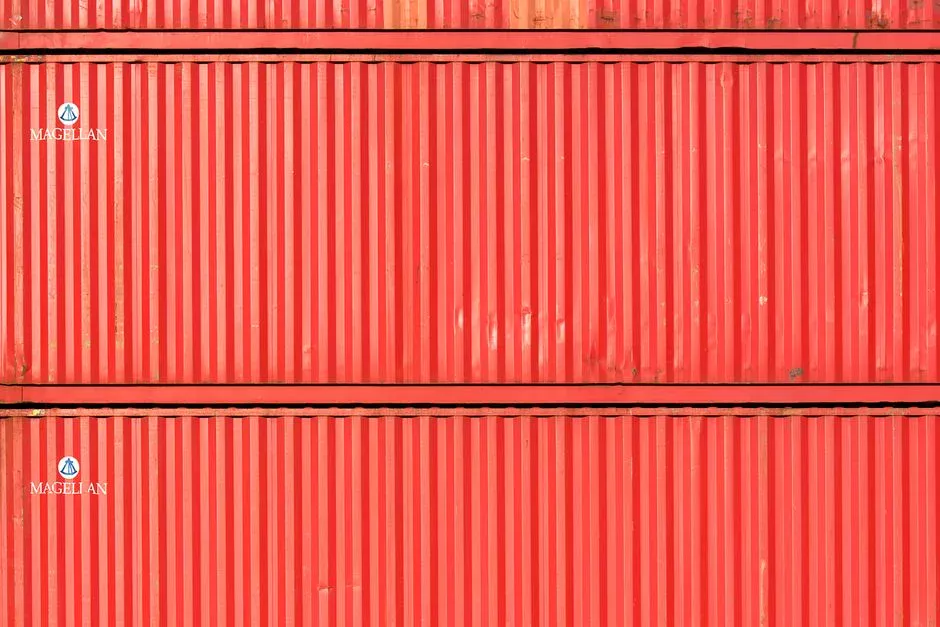
Containerization is the dominant 2026 deployment format for flows between 10 and 2,000 m³/day, and the reason is schedule risk. A skidized plant ships as one or more ISO-forklift-ready modules; site work reduces to a concrete pad, interconnecting piping, and a power feed. Field-built concrete basins typically need 8–14 weeks of civil work; containerized plants cut install time 50–70% and let the factory acceptance test happen before the foundation is poured. For EPC contractors working on a fixed-price turnkey, that schedule compression is worth more than the modest premium on factory-built equipment.
Modular scale-out is the second structural advantage. Adding capacity means paralleling an identical skid rather than breaking out an expansion joint in a concrete tank, which simplifies permitting, keeps the process train consistent, and preserves spare-parts commonality. The WSZ underground package sewage treatment plant format pairs a buried biological reactor with a surface-mounted control and disinfection skid — useful where visual impact is a concern, common at hotels, hospitals, and residential clusters. Above-ground containerized MBRs sized 50–2,000 m³/day handle industrial and larger community flows; trailer-mounted units address short-term camps, mining sites, and disaster response — a growing 2026 niche driven by climate-event frequency. The DF-series flat-sheet MBR module in 80–225 m² units (32–135 m³/day each) allows bolt-on capacity expansion inside the same skid envelope, so a 200 m³/day plant commissioned in 2026 can grow to 400 m³/day in 2029 by adding modules, not by replacing the tank.
2026 CAPEX and OPEX Benchmarks for Decentralized Plants
Budget approvals fail when the first number is the only number. For 2026, the defensible CAPEX range for containerized or packaged decentralized plants sits at $220–$1,100 per m³/day installed, while field-built concrete decentralized plants run $400–$1,800 per m³/day. MBR-based units sit at the upper end because membrane modules and replacement intervals are baked into the quote; MBBR and SBR trains come in 20–40% lower on first cost but rarely meet reuse-grade effluent without a polishing step.
| Cost line | 2026 benchmark | Notes |
|---|---|---|
| CAPEX — containerized/package | $220–$1,100 per m³/day installed | Includes equipment, controls, install; excludes building and large civil |
| CAPEX — concrete-built decentralized | $400–$1,800 per m³/day | Civil-heavy; longer schedule |
| Energy — MBR | 0.4–0.8 kWh/m³ | Aeration + membrane scouring + recirculation |
| Energy — MBBR / SBR | 0.2–0.5 kWh/m³ | Aeration dominant; no membrane scour |
| Chemicals (nutrient removal) | $0.02–$0.08 per m³ | Carbon source, precipitant, coagulant |
| Sludge handling | 15–30% of total OPEX | Degradable with on-site dewatering; plate and frame filter press cuts hauling 60–75% |
| Smart-monitoring subscription / comms | $0.005–$0.02 per m³ | Cellular telemetry + cloud SCADA |
| Remote-O&M labor reduction | 30–60% of baseline | Per HydropureWater 2026 OPEX field data |
| Chemical dosing system | Modular skid add-on | automatic chemical dosing system typically <5% of CAPEX |
10-year total cost of ownership is now the procurement metric most plant managers and EPC leads are forced to defend. The line items that swing TCO most are membrane replacement (typically every 5–8 years for flat-sheet, every 7–10 years for hollow-fiber under proper maintenance), energy at site-specific tariff, and sludge disposal — the last of which responds sharply to on-site dewatering. A well-sized filter press can cut wet-sludge hauling mass by 60–75%, which is often the single largest year-3-to-year-10 saving on a packaged MBR. Regional cost spreads remain wide: Asia-Pacific delivers the lowest containerized CAPEX (China and India manufacturing base), while North America and Western Europe carry the highest labor and compliance cost. Small-community plants (under 200 m³/day) consistently show higher per-m³ cost than mid-scale plants because fixed engineering, controls, and permitting do not scale linearly with flow — a number worth flagging in any board-level cost defense.
Smart Monitoring, Remote O&M, and AI in Decentralized Plants

The single largest OPEX lever in a 2026 decentralized plant is digital. A cloud SCADA stack with cellular telemetry on a packaged skid enables remote diagnostics, alarm forwarding, and trend logging without a full-time site operator. The minimum sensor stack for an unattended site is now well-defined: turbidity, pH, dissolved oxygen, ORP, conductivity, and flow, plus level switches on equalization and sludge storage. Pressure transducers on the membrane loop enable trans-membrane pressure (TMP) trending, which is the leading indicator of fouling and the basis for predictive cleaning cycles. A practical 2026 remote monitoring supplier guide walks through hardware specs, cellular vs. LoRaWAN tradeoffs, and how to evaluate vendors on data-ownership and API access.
AI-based fault detection — membrane fouling, aeration upsets, sensor drift, abnormal diurnal patterns — is moving from pilot to commercial in 2026. Typical payback is 12–24 months through avoided emergency callouts and tighter aeration control. For influent variability, ML-based airflow setpoint optimization on MBBR/IFAS plants has shown 10–20% energy reduction in published field trials. As decentralized plants go online, cybersecurity is no longer optional: IEC 62443-style network segmentation and VPN-only remote access are appearing as line items in 2026 U.S. municipal tenders, particularly for sites handling industrial pretreatment. The combined labor impact — 30–60% reduction versus an attended baseline, per the 2026 industrial wastewater OPEX breakdown — is what flips a small decentralized plant from a chronic cost center to a defensible 10-year asset. Inline sensors like the turbidity probe described in the 2026 turbidity sensor supplier guide are now standard rather than optional.
Regulatory Drivers: PFAS, Water Reuse, and Decentralized Compliance
Three regulatory threads are reshaping decentralized plant design in 2026. In the U.S., EPA's first national PFAS drinking water limits (PFOA 4 ppt, PFOS 4 ppt, finalized 2024) and the multi-year industrial pretreatment guideline rollout are forcing decentralized industrial sites — landfill leachate, metal finishing, semiconductor washwater — toward advanced trains, typically MBR followed by GAC or RO. Compliance deadlines through 2026 mean new tenders in regulated watersheds now require PFAS destruct or removal documentation, not just BOD/TSS effluent. The 2026 PFAS removal technology analysis breaks down which regions are tightening fastest and which treatment trains actually meet the new thresholds.
In the EU, the Urban Waste Water Directive 91/271/EEC revision (adopted 2024, transposition deadline 2027) tightens nutrient and micropollutant removal at agglomerations above 1,000 PE and introduces a quaternary treatment obligation for plants above 150,000 PE. Decentralized plants in sensitive receiving waters — groundwater recharge zones, bathing waters — face stricter effluent BOD/TSS limits, often 10/10 mg/L or lower, which pushes designers toward MBR over MBBR or SBR. Water-reuse standards (California Title 22, EU Regulation 2020/741, China's GB/T 18920-2020) require near-reuse effluent from any decentralized plant discharging to non-potable reuse, and MBR plus disinfection is the default compliant train. In the U.S. Mountain West, decentralized installers serving Colorado, Utah, New Mexico, and Wyoming must now document remote O&M capability as part of permit renewals — a small but telling change that ties digitalization directly to compliance.
Supplier Selection Framework for 2026 Decentralized Projects

A shortlist built on brochure quality fails in year three. Seven criteria, applied in order, will sort 2026-viable suppliers from the rest.
| # | Criterion | What to demand |
|---|---|---|
| 1 | Reference projects in similar flow and influent class within 36 months | Name, contact, influent characterization, effluent data |
| 2 | Containerization quality and FAT scope | ISO-frame or FRP build standards, documented factory acceptance test, membrane element regional availability |
| 3 | Remote-monitoring stack and data rights | Included or sold separately; API access; data-ownership clause in contract |
| 4 | Compliance documentation | Effluent test reports; applicable standards (EU 91/271/EEC, EPA, GB); ISO 9001, CE, NSF/ANSI 40 or 245 for U.S. onsite |
| 5 | Spare-parts lead time and local service | 2026 procurement teams are penalizing vendors with >14-day membrane lead times |
| 6 | 10-year TCO model, not first-cost | Vendor must state membrane replacement, chemical, and energy assumptions explicitly |
| 7 | Warranty structure and exclusions | Membrane element life, skid corrosion, control-panel warranty; what voids each |
The two non-negotiables are TCO modeling and membrane lead time. A first-cost bid that hides a 90-day membrane replacement window will quietly destroy the OPEX case by year five. Ask every shortlisted vendor for the same TCO spreadsheet template and compare line-by-line — energy, chemicals, membranes, labor, sludge. Vendors who cannot produce this in 2026 are not yet operating at the procurement maturity their buyers require.
Frequently Asked Questions
What is driving the 2026 shift toward decentralized wastewater treatment?
Three forces: containerized MBR adoption that delivers reuse-grade effluent at 60% smaller footprint than conventional activated sludge, PFAS-driven discharge tightening in both the U.S. and EU, and SCADA-linked remote O&M that cuts site labor 30–60%. Procurement is now organized around 10-year OPEX models rather than first-cost, which favors modular, remotely monitored plants over field-built concrete. A packaged integrated MBR membrane bioreactor system is the most common 2026 default for off-grid sites.
How much does a decentralized wastewater plant cost per m³/day in 2026?
Containerized or packaged decentralized plants run $220–$1,100 per m³/day installed in 2026, while concrete-built decentralized plants sit at $400–$1,800 per m³/day. MBR units land at the upper end due to membrane cost. OPEX is dominated by energy (0.4–0.8 kWh/m³ for MBR), chemicals ($0.02–$0.08 per m³ for nutrient removal), and sludge handling, which is 15–30% of total OPEX and is sharply reducible with a plate and frame filter press on site.
Which decentralized process is best for water reuse in 2026?
MBR is the only mainstream decentralized process that routinely produces reuse-grade effluent without a separate tertiary filtration step — TSS <5 mg/L, COD <50 mg/L, turbidity <1 NTU. MBBR/IFAS and SBR typically discharge at 10–30 mg/L TSS and require a polishing step to meet California Title 22, EU 2020/741, or GB/T 18920-2020 reuse limits. For industrial reuse, MBR+RO is the default compliant train. More detail is in the 2026 membrane replacement cost guide.
Do decentralized plants in 2026 need remote monitoring?
Practically, yes. U.S. municipal tenders in regulated states are starting to require documented remote O&M capability as part of permit renewal, and the OPEX case is unambiguous: remote monitoring cuts site labor 30–60% with typical 12–24 month payback on the monitoring hardware. The minimum sensor stack for an unattended site in 2026 is turbidity, pH, dissolved oxygen, ORP, conductivity, flow, and membrane-loop pressure for MBR plants.