Municipal Sewage Treatment in Wales: Core Requirements
Municipal sewage treatment in Wales requires secondary treatment above 2,000 population equivalent (PE) under the Urban Waste Water Treatment (England and Wales) Regulations 1994. NRW-designated sensitive areas also need tertiary nutrient removal. For 10,000–100,000 PE works, Schedule 1 sets 15 mg/L total nitrogen and 2 mg/L total phosphorus, or the matching percentage reductions.
Dŵr Cymru Welsh Water operates over 800 wastewater treatment works and sets sewer connection conditions for public catchments. Natural Resources Wales (NRW) designates sensitive areas and grants Environmental Permitting Regulations (EPR) authorisations for discharges to rivers, lakes, estuaries and coastal waters. Permit limits, sampling and reporting always outrank generic design charts.
Key Regulations and Compliance Standards
Surface-water discharges in Wales need an EPR authorisation from NRW. Each permit sets effluent quality, consented flow and monitoring frequency against the sensitivity of the receiving water. Sensitive areas—eutrophic lakes, vulnerable estuaries and protected bathing waters—trigger nutrient removal beyond secondary treatment. Package plants above 50 PE, common in rural catchments, are assessed against BS EN 12566-3:2021 for BOD, TSS and ammoniacal nitrogen removal.
Most plants we size for Welsh private or estate catchments sit near the lower PE end. Consent wording and receiving-water class therefore drive technology choice. Welsh Water’s public network remains the default for urban growth. Private or developer-led works still need their own NRW discharge route unless a sewer connection agreement applies.
Earlier project descriptions cite the Cardiff Tremorfa works at about 65 million litres per day (MLD). A 2024 industry case study reports Cardiff WwTW flow to full treatment of 6,060 L/s (about 524 MLD) serving a population equivalent of 974,869 (Water Projects Online, 2024).
What EU Wastewater Discharge Standards Apply in Wales?
Wales continues to apply the Urban Waste Water Treatment (England and Wales) Regulations 1994 as assimilated law. It does not follow the EU’s later UWWTD revision timetable for design basis. Secondary treatment remains mandatory above 2,000 PE. Sensitive-area nutrient limits follow Schedule 1 of those Regulations. Industrial trade effluent entering a sewer must meet Welsh Water acceptance conditions. Direct industrial discharges still need their own EPR permit. Buyers comparing overseas “2026 industrial limits” with a Welsh site should read the NRW permit and any sewerage undertaker consent first.
Which Treatment Technology Meets NRW Permit Limits?
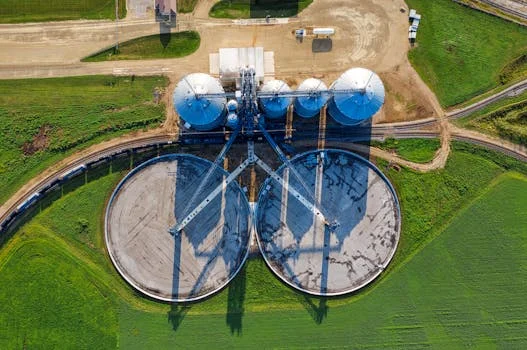
Technology selection for municipal sewage treatment in Wales follows influent strength, consent stringency, footprint and operator staffing. A/O (anoxic/aerobic) trains suit standard secondary duties. They typically achieve about 90% BOD and 85% TSS removal under design loading. Membrane bioreactor (MBR) plants integrate biology with membrane filtration. Maintained MBR trains routinely deliver effluent below 5 mg/L BOD and 10 mg/L TSS, while occupying roughly 60% less footprint than conventional activated sludge. Dissolved air flotation (DAF) is used upstream where industrial FOG loads spike. DAF units remove about 92–97% of suspended solids and oils at hydraulic capacities from 4 to 300 m³/h. Compact options include the underground sewage treatment solution for rural Welsh communities, the high-efficiency MBR system for stringent Welsh effluent standards, and the DAF unit for municipal pre-treatment of high-FOG wastewater.
| Technology | Typical BOD Removal (%) | Typical TSS Removal (%) | Footprint Relative to Conventional | Primary Application |
|---|---|---|---|---|
| A/O (Anoxic/Aerobic) | 90 | 85 | Standard | Secondary treatment for rural communities and standard municipal needs |
| MBR (Membrane Bioreactor) | >95 | >99 | 60% Smaller | High-quality effluent for sensitive areas, water reuse |
| DAF (Dissolved Air Flotation) | Variable (Pre-treatment) | 92-97 | Compact | Removal of FOG, oils, and high-density solids |
Effective wastewater treatment solutions must balance regulatory compliance with operational efficiency.
How Modern Systems Meet Welsh Water and NRW Requirements
Modern package and modular works align with Welsh Water remote-operation practice when SCADA logs flow, dissolved oxygen, turbidity and alarms. They also support NRW reporting duties with continuous records. Fully automated WSZ-type plants reduce the need for constant on-site attendance on small rural sites. Disinfection with onsite chlorine dioxide (ClO₂) generators avoids bulk chlorine storage and supports HSE handling controls. Those controls follow risk principles also reflected in EU Drinking Water Directive 98/83/EC for treated water safety. Lamella clarifiers raise effective settling area. They can cut sedimentation footprint by up to 50% versus conventional tanks while holding surface loading rates of 20–40 m/h. HydropureWater's chlorine dioxide generator and high-efficiency sedimentation tank address these compliance and space constraints on constrained Welsh plots.
Technology Comparison: Performance and Application
Municipal works in Wales should score options against consent, energy and staffing, not brand labels. MBR trains deliver the tightest BOD and TSS for sensitive discharges and reuse schemes, at higher CAPEX and membrane replacement cost. A/O remains the lower-CAPEX path to standard secondary quality where the receiving water is not nutrient-limited. DAF belongs in mixed municipal-industrial catchments with FOG peaks. Buried package plants (WSZ class) suit decentralised villages and sites that must keep visual impact low. For a side-by-side biological comparison, readers can compare MBR and extended aeration for municipal applications.
| Parameter | A/O System | MBR System | DAF System | Underground Package Plant (WSZ) |
|---|---|---|---|---|
| Typical BOD Removal | ~90% | >95% | N/A (Pre-treatment) | ~90-95% |
| Typical TSS Removal | ~85% | >99% | 92-97% | ~90-95% |
| Effluent Quality (TSS) | < 30 mg/L | < 10 mg/L | N/A (Pre-treatment) | < 30 mg/L |
| Footprint | Standard | ~60% smaller than conventional | Compact | Minimal surface footprint (buried) |
| CAPEX | Moderate | High | Moderate | Moderate to High (depending on size) |
| OPEX | Moderate | Moderate to High (energy, membrane replacement) | Moderate | Low to Moderate (automation) |
| Key Application | Standard secondary treatment | High-quality effluent, sensitive areas | FOG and solids removal | Decentralized, rural, aesthetic requirements |
Selection Checklist and Next Step
Who this is for: EPC contractors, developers and plant engineers specifying municipal or package works that discharge to Welsh waters under NRW permits. Who should look elsewhere: households seeking only a septic-tank empty, or projects already locked into a Welsh Water sewer requisition with no private treatment scope.
Before freezing a process train, confirm seven items. Check PE and dry-weather flow. Confirm whether the receiving water sits in an NRW UWWTR sensitive area. Record consent values for BOD, TSS, NH4-N, TN and TP. Note FOG or trade-effluent peaks, available footprint and power, staffing model, plus sludge handling and tanker access. Share those constraints on the request-quote form for a Wales municipal works sizing review so duty/standby equipment and hydraulic retention time can be checked against the draft permit.
Frequently Asked Questions
What is the Urban Waste Water Treatment Directive and how does it apply in Wales?
The Urban Waste Water Treatment Directive (91/271/EEC) is implemented in Wales through the Urban Waste Water Treatment (England and Wales) Regulations 1994. Those Regulations require secondary treatment for agglomerations above 2,000 PE and nutrient removal in designated sensitive areas. NRW uses the sensitive-area maps and EPR permits to set site-specific effluent limits, sampling and reporting for each discharge.
Do I need a permit for a package sewage treatment plant in Wales?
Yes. Package plants serving more than about 50 PE normally need an Environmental Permit from Natural Resources Wales before discharging treated effluent to a watercourse. Smaller domestic units may fall under registration or exemption routes, but the PE threshold, receiving-water class and soakaway versus watercourse discharge still decide the path. Always confirm with NRW before ordering plant.
Can I replace a septic tank with a sewage treatment plant in North Wales?
Yes. Replacing a failing septic tank with a packaged sewage treatment plant is common where soakaways fail or older discharges no longer meet environmental expectations. The upgrade typically cuts BOD and ammoniacal nitrogen versus untreated septic effluent, subject to correct sizing and maintenance. For modular compliance patterns in other decentralised markets, see how modular plants meet regulatory standards in decentralized regions.
Does Welsh Water accept treated effluent from private systems?
Welsh Water runs the public sewerage network. Private treated effluent usually discharges to a watercourse under an NRW permit, not into a public sewer by default. Sewer discharge is possible only under a formal trade or connection agreement with agreed pre-treatment limits. Designers should not assume the public sewer will take private plant effluent without that agreement.
What effluent standards must small municipal plants meet in sensitive areas?
In NRW-designated sensitive areas, plants must meet secondary treatment plus nutrient controls. For works between 10,000 and 100,000 PE, Schedule 1 of the 1994 Regulations sets 15 mg/L total nitrogen and 2 mg/L total phosphorus, or the stated percentage reductions. Local EPR permits may tighten those figures for specific rivers, lakes or bathing waters.