Why Miami Hotels Need a Different STP Than a Standard Hotel Plant
Miami hotel wastewater behaves nothing like a suburban domestic profile, and a packaged MBR sized for "average hotel flows" will fail during the December-April tourism peak or after a hurricane. Hospitality load in Miami-Dade is highly seasonal: winter occupancy routinely runs 80-90% on Miami Beach and Brickell inventory, summer dips to 55-65% but is propped up by convention and cruise traffic at the convention center and PortMiami hotels. The net effect is a peak factor of 1.5-2.0× average daily flow on any given weekend — the design must absorb that swing, not just the mean.
Climate adds a second pressure. Ambient temperatures of 30-35°C for 6-8 months a year accelerate biological activity in the aeration tank (good for BOD removal, but it raises oxygen demand) and emulsify FOG faster, so grease that would float in a cooler plant stays suspended and reaches the membrane. Hurricane season (Jun-Nov) means any packaged unit on a Miami-Dade site must be buried, anchored, or built into a sealed container with NEMA 4 electrical cabinets, and the lift-station inlet must handle a 100-year storm surcharge without flooding the bioreactor.
Wastewater character is heavier and more variable than a residential profile: deep-fryer kitchens, high-turnover restaurants, on-site laundry, pool backwash, and condensate all stack into the same sewer. MBR is the right default for this profile because it tolerates hydraulic and organic shocks, produces near-reuse effluent in a single tank, and sits in a footprint small enough to bury under a service yard or slot into a 40' container. For the underground configuration used in resort and beachfront settings, an underground packaged sewage treatment plant removes the equipment from guest sightlines entirely.
How MBR Works and Why It Beats MBBR/SBR for Miami Hotels
An MBR combines an activated-sludge bioreactor with a submerged ultrafiltration membrane (typically PVDF, 0.1 μm nominal pore) that physically retains suspended solids, biomass, and most pathogens in the tank — there is no separate clarifier. The membrane acts as a hard barrier on top of the biological stage, so effluent TSS is effectively driven to near zero and BOD5 removal reaches about 98% (per the Pure Aqua MBR datasheet, 2020 reference). Imemflo's hotel plant data reports 90-95% removal of harmful substances across BOD, COD, and TSS for a 200-bed 5-star reference installation at 250 m³/d (source: imemflo.com hotel MBR solution page).
For a Miami hotel, three MBR attributes are decisive: footprint, reuse-grade effluent, and odor suppression. The lack of a secondary clarifier cuts tankage by 30-50% versus conventional activated sludge, which is what makes the buried or containerized configuration physically possible on tight Miami Beach, Brickell, and Coconut Grove sites. The near-zero TSS and low turbidity (typically <1 NTU) meet Florida DEP Chapter 62-610 reclaimed water criteria without a polishing stage. And because the membrane tank is enclosed, off-gassing is contained — critical when the plant sits 10-15 m from a rooftop bar or guestroom window.
Compared with MBBR (cheaper carriers, but effluent needs a separate clarifier and rarely meets reuse turbidity without sand filtration) and SBR (batch cycles demand deeper tanks and larger equalization volume, harder to bury), MBR is the higher-spec but more defensible choice for a hotel pursuing reuse credits. A packaged MBR sewage treatment plant from a tier-one supplier ships pre-commissioned, which matters in Miami where installation windows between FDEP permitting and soft opening are short.
| Technology | Footprint | Effluent TSS | Reuse-ready | Buriable | Best fit for Miami hotel |
|---|---|---|---|---|---|
| MBR (submerged PVDF, 0.1 μm) | Smallest | <1 mg/L (near zero) | Yes — irrigation, cooling, laundry | Yes | Default choice for 100-500 key urban/resort sites |
| MBBR | Small | 20-50 mg/L (post-clarifier) | Limited without polishing | Partial | Budget projects where reuse is irrigation-only |
| SBR | Medium | 10-30 mg/L | Limited | Difficult (deep tanks) | Larger sites with available footprint |
| Conventional ASP | Large | 20-40 mg/L | No | No | Rarely justified for new hotel builds |
Sizing a Packaged MBR for a Miami Hotel: The 200-Key Worked Example
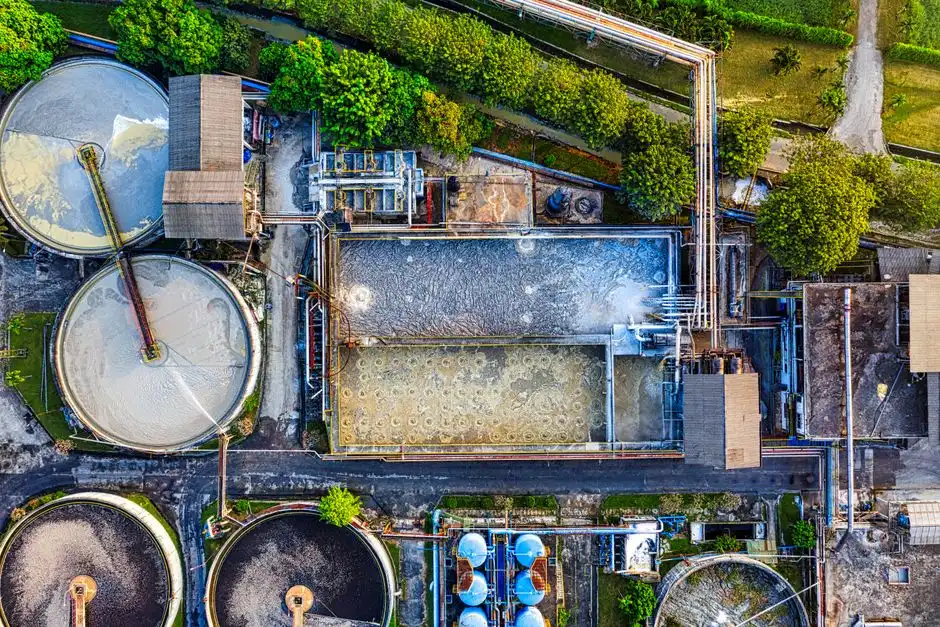
Start with per-guest-night water use. Miami full-service hotels typically consume 250-350 L/guest-night once you include laundry, restaurants, pool backwash, and staff — assume 300 L as a working number. Sewage generation is generally 0.25-0.35 m³ per guest-night (90-95% of consumption reaches the drain). Apply 75% average annual occupancy, then a 1.5-2.0× peak factor for high-occupancy weekends and event surges.
For a 200-key reference property:
- Average flow: 200 keys × 75% × 0.30 m³ = 45 m³/d
- Peak design flow: 45 × 1.75 = ~79 m³/d, round to a packaged unit in the 70-90 m³/d class
- With FOG and laundry contingencies, select a unit rated for 95-100 m³/d to leave hydraulic margin
Cross-check: Imemflo's published 200-bed 5-star hotel installation is rated 250 m³/d (source: imemflo.com hotel MBR page), which works out to ~1.25 m³/key/day — consistent with the per-guest-night method above once you account for restaurants, banquet, and back-of-house at a luxury property. For a 200-key select-service or mid-scale property, the lower end of that range is more realistic.
For supplier matching, the Pure Aqua MBR series maps cleanly onto hotel size classes (source: Pure Aqua packaged MBR datasheet, 2020-04): the MBR-12.5K at 47 m³/d covers a small 50-100 key property, the MBR-25.0K at 95 m³/d covers the 200-key reference case, and the MBR-50.0K at 189 m³/d covers a 300-500 key full-service or resort property. Container count scales from one 20' skid to three 40' skids, which is useful when the laydown area is constrained. Underground WSZ-style packaged units cover 1-80 m³/h, so they handle the same 200-key range with a buried footprint instead of a container.
| Hotel size (keys) | Average flow (m³/d) | Peak design flow (m³/d) | Recommended MBR class | Packaging |
|---|---|---|---|---|
| 50 | 10-15 | 20-25 | MBR-6.25K (24 m³/d) | 1 × 20' container |
| 100 | 20-30 | 40-55 | MBR-12.5K (47 m³/d) | 1 × 40' container |
| 200 (reference) | 40-50 | 70-90 | MBR-25.0K (95 m³/d) | 2 × 40' containers |
| 300 | 60-80 | 110-145 | MBR-50.0K (189 m³/d) | 2 × 40' containers |
| 500 | 100-130 | 180-235 | MBR-75.0K (284 m³/d) | 3 × 40' containers |
Miami and Florida Compliance: FDEP, Miami-Dade WASD, FOG and Reuse Rules
Four compliance layers govern a packaged MBR at a Miami hotel, and missing any one of them stops the project at permit review. Florida DEP Chapter 62-600 sets domestic wastewater treatment plant permitting and effluent quality requirements; Chapter 62-610 governs reclaimed water production and use, including for irrigation, cooling tower make-up, and toilet flushing. Miami-Dade Water and Sewer Department (WASD) industrial pretreatment rules apply to FOG and high-strength discharges from commercial kitchens, and local building and floodplain codes layer on top.
FOG pretreatment is the first spec to lock down. A hotel kitchen discharging into an MBR must pass through a properly sized grease interceptor (typically rated in pounds of FOG retention, sized to GPM kitchen flow) and, for high-volume banquet operations, a DAF system for FOG removal to keep oil and grease below ~100 mg/L entering the bioreactor. WASD's FOG program requires signed manifests, interceptor sizing documentation, and periodic sampling — the DAF or grease trap must appear on the site plan at the back-of-house, not tucked into a later addendum.
Reclaimed water rules under Chapter 62-610 set tight limits on TSS, turbidity, BOD5, fecal coliform, and disinfection residual. MBR's near-zero TSS effluent (<1 mg/L) and <1 NTU turbidity make the biological side straightforward; UV disinfection is then added to meet the fecal coliform target. Hurricane and stormwater design is the layer engineers most often under-spec: in Miami-Dade the 100-year flood elevation is the design floor for any below-grade structure, and packaged units need sealed controls, a high-water alarm, and either a buried vault or a flood-anchored container. Specify NEMA 4X panels, a flood switch in the lift station, and an SMS/email alarm path to the operator on duty — these are cheap at procurement and expensive to retrofit.
| Authority | Rule | What it controls | Design implication for the MBR |
|---|---|---|---|
| FDEP | Ch. 62-600 | Domestic WWTP permitting and effluent limits | Engineer's design report; BOD5/TSS/NH3-N targets |
| FDEP | Ch. 62-610 | Reclaimed water production and use | UV or chlorination; cross-connection control; signage |
| Miami-Dade WASD | Pretreatment / FOG program | Discharge limits, interceptor sizing, manifests | Grease trap and/or DAF upstream of MBR |
| Miami-Dade / SFWMD | Floodplain, 100-yr storm | Finished floor, equipment elevation | Buried vault, flood switch, sealed controls |
Membrane and Skid Selection: PVDF, Flat Sheet vs Hollow Fiber, Containerized vs Underground
Membrane geometry is the first sub-decision inside the MBR spec. Flat-sheet modules (Toray, HydropureWater DF series) tolerate higher mixed-liquor suspended solids (MLSS, typically 8,000-15,000 mg/L) and are easier to clean in place because each element is individually replaceable and the air-scour pattern is uniform. Hollow-fiber modules (Mitsubishi, Suez, Dow, DuPont) deliver higher packing density per cassette and lower air-scour demand, which trims blower sizing but requires stricter pre-screening. For a Miami hotel with high FOG variability, flat sheet is the more forgiving geometry; for a tight urban containerized skid, hollow fiber can shrink the cassette count.
For a PVDF flat-sheet spec, the HydropureWater DF series offers 0.1 μm pore, individual element replacement, 10-20× lower energy than external cross-flow designs, and cassette configurations from 80 m² up to 225 m² per cassette, yielding 32-135 m³/d per cassette depending on flux rate. That flux range matters for the 200-key example: a single DF-225 cassette at conservative flux handles ~80 m³/d, which matches the 70-90 m³/d peak design flow with one operational and one standby cassette.
Skid format is the second sub-decision. Containerized 20' or 40' skids ship factory-commissioned with blowers, pumps, control panel, and membrane cassettes pre-installed — install time on site drops to 3-5 days once the pad and lift station are ready. Underground packaged units (HydropureWater WSZ series) hide the entire plant below grade with only access covers visible, which is the right call for resort, golf-course, or beachfront sites where the plant must be invisible from guest areas. For Miami infill, choose a containerized packaged MBR wastewater treatment system with a flood-anchored base; for resort, choose a buried underground packaged sewage treatment plant.
| Attribute | Flat sheet (PVDF, 0.1 μm) | Hollow fiber (PVDF, 0.1-0.4 μm) |
|---|---|---|
| MLSS tolerance | High (8,000-15,000 mg/L) | Moderate (6,000-12,000 mg/L) |
| Air-scour demand | Higher per m² | Lower per cassette |
| Element replacement | Individual element, on-site | Module-level, more involved |
| Packing density | Lower | Higher |
| FOG tolerance | Better (rigid, easier to clean) | Good (more sensitive to fouling) |
| Typical suppliers | Toray, HydropureWater DF | Mitsubishi, Suez, Dow, DuPont |
Disinfection, Sludge Handling and Reuse Loop Design for Hotels
MBR effluent is already low in TSS, turbidity, and most pathogens — the membrane retains Cryptosporidium and Giardia cysts (per Pure Aqua MBR datasheet, 2020-04), which is why MBR-fed reuse systems do not need microfiltration or ultrafiltration downstream. The remaining job is a polish-disinfection step and a sludge handling path that does not bottleneck the plant.
For hotel reuse, specify a UV sterilizer as the primary disinfection. UV adds no chemicals, no disinfection by-products, and no residual to interfere with cooling-tower chemistry or irrigation. Where the reuse loop feeds a cooling tower that demands a residual, add a side-stream chlorine dioxide generator rather than free chlorination — DBP formation in hot, alkaline cooling water is a real corrosion and air-handling concern.
Sludge from an MBR is concentrated waste-activated sludge at 1-2% solids (much thicker than conventional ASP), which dewaters well on a small plate-and-frame filter press. A plate-and-frame filter press sized to one batch per week handles a 200-key plant's waste volume and produces a cake at 18-22% dry solids that can be hauled as ordinary Class B biosolids. On the reuse side, size the reclaimed water buffer tank to at least 24 hours of average flow (~45 m³ for the 200-key example) so irrigation and cooling-tower pumps can run during peak hotel hours without re-treating on demand.
Cost, ROI and Reuse Economics for a Miami Hotel Packaged MBR
Packaged MBR capital cost scales roughly linearly with capacity, modulated by membrane area and pretreatment scope. A 50 m³/d system typically lands in the lower six-figure USD range; a 250 m³/d system falls in the low-to-mid seven-figure range once the FOG pretreatment, UV skid, and controls are included. These are indicative ranges, not quotes — get a sized proposal from two suppliers and verify the scope split between the membrane skid, the civil works, and the lift station.
The financial case for a Miami hotel is on the reuse side, not the discharge side. Miami-Dade water and sewer rates are among the highest in the continental US, and a hotel reusing 50-70% of its treated effluent for irrigation, cooling-tower make-up, and laundry can offset 30-50% of monthly water OPEX once the system is running. For a 200-key property reusing ~60 m³/d, that translates into a payback window in the 3-6 year range, driven by water savings plus avoided sewer discharge fees — clearly indicative and dependent on the actual reuse split and rate schedule.
Non-financial drivers carry weight with hotel ownership groups: LEED v4.1 Water Efficiency points, brand sustainability commitments (Marriott's Serve 360, Hilton's Travel with Purpose), and the marketing value of a visible water-reuse story at a Miami property where water is a public-facing concern. For comparison context, a similar packaged MBR selection exercise is documented in the Dubai and Abu Dhabi hospitality markets, and the engineering record for a 500 m³/d food-plant DAF+MBR system is published separately.
Procurement Checklist: Specifying the Right Packaged MBR Supplier
- Design flow and peak flow: specify average m³/d, peak m³/d, and peak factor; require the supplier to confirm both numbers on their selection curve.
- Influent and effluent targets: BOD5, COD, TSS, NH3-N, total nitrogen, fecal coliform, and oil & grease entering the membrane — all stated as numeric limits, not "as required".
- Membrane specification: material (PVDF), pore size (0.1 μm nominal), geometry (flat sheet or hollow fiber), MLSS operating range, and a 2-year membrane warranty minimum.
- Mechanical redundancy: standby blower, duty/standby feed pumps, and duty/standby permeate pumps sized for peak flow with one unit out.
- Controls and remote monitoring: PLC with HMI, cellular or Ethernet remote access, SMS/email alarm routing, and a data-logging retention period of at least 12 months.
- Packaging and site constraints: container or skid dimensions, total weight (empty and operating), anchor points for the 100-year flood event, and NEMA 4X panel rating.
- FDEP and WASD documentation: engineer's design report template, FOG interceptor sizing calc, and confirmation that the supplier will support the FDEP permitting process in Florida.
- Factory acceptance test (FAT): require a witnessed FAT with performance curves at average and peak flow, plus a 72-hour soak test on the membrane cassettes before shipment.
- Reference installations: at least two operating hotel MBR plants in tropical or sub-tropical climates, with reference contacts the owner can call directly.
- AMC scope: membrane cleaning chemicals, critical spare parts list, remote alarm response time target, and operator training plan — describe what each item covers, not just the line item.
Frequently Asked Questions
How do I size a packaged MBR for a 200-room hotel?
Start at 0.25-0.35 m³ per guest-night for sewage generation (90-95% of metered water use). For a 200-key property at 75% average occupancy, average flow is roughly 45 m³/d. Apply a 1.5-2.0× peak factor to land on 70-90 m³/d peak design flow, then select a packaged MBR rated at 95-100 m³/d to leave hydraulic margin. The Pure Aqua MBR-25.0K class unit (95 m³/d) and similar skid models are the natural fit for this size.
Can a packaged MBR meet Miami-Dade WASD FOG discharge limits?
Yes, with proper upstream FOG control. A correctly sized grease interceptor is required by WASD for any commercial kitchen discharging to sewer; for high-volume banquet or buffet operations, add a DAF system ahead of the MBR to keep oil and grease below ~100 mg/L entering the bioreactor. The MBR's biological stage then breaks down the residual FOG to WASD's discharge limits.
Is MBR or MBBR better for a Miami hotel?
MBR is the better fit for a Miami hotel pursuing reuse, a tight footprint, or a buried installation. MBBR is a defensible alternative only if the reuse target is landscape irrigation, the budget is constrained, and the site has room for a separate clarifier. For cooling-tower make-up or laundry reuse, MBR's near-zero TSS and <1 NTU turbidity save a downstream filtration stage and earn the LEED Water Efficiency points more cleanly.
How long does a packaged MBR take to install at a Miami hotel site?
Plan for 8-14 weeks total: 2-3 weeks for factory build and FAT, 1-2 weeks for site prep and lift station installation, 1 week for skid delivery, setting, and on-site commissioning, and 4-8 weeks for FDEP permitting and any required pilot testing. The FDEP clock usually drives the critical path; an early engineering report and a pre-application meeting with the FDEP district office can shave 2-3 weeks off the permit review.
What is the membrane life and replacement cost?
PVDF ultrafiltration membranes in a well-operated MBR typically last 5-8 years before replacement, driven by irreversible fouling rather than membrane failure. The replacement procedure is element-level for flat-sheet modules (replace individual elements as flux declines) or module-level for hollow-fiber cassettes. Specify a 2-year warranty on membranes and a documented cleaning protocol (typically weekly CIP with sodium hypochlorite and quarterly acid wash) to maximize membrane life.
Related Equipment
- PVDF flat-sheet MBR membrane module — specifications, capacity range, and technical data