Start with the Blair-area permit and receiving sewer authority
Food and beverage plants near Blair meet sewer pretreatment limits through a permit-driven treatment train tailored to each waste stream, not one universal machine. The plant should segregate process, clean-in-place, floor-washing and cooling wastewater; equalize flow and strength; remove solids and fats, oils and grease; control pH; and add biological treatment when soluble BOD₅ and COD remain excessive. The receiving sewer authority’s current written limits and industrial discharge permit govern, while 40 CFR Part 403 supplies the federal pretreatment framework. Equipment sizing requires representative sampling of production peaks, washdown, sanitation and CIP events.
The enforceable site requirements come from the current pretreatment or industrial discharge permit, sewer-use agreement, and written limits issued by the receiving sewer authority. Equipment selection should wait until the engineering team has those documents, because Crystal Clean states that permit specifics depend entirely on the local authority; an identical operation in another jurisdiction can face different limits.
For an indirect discharger, federal pretreatment standards under 40 CFR Part 403 protect the receiving POTW from industrial pollutants that could interfere with its operation or pass through untreated. Hixson identifies commonly cited screening thresholds of 250 mg/L for BOD and 250 mg/L for suspended solids. These are federal screening values, not a universal Blair-area limit set. The current local written permit and sewer-use agreement determine the enforceable site conditions.
Before selecting equipment, collect the following permit inputs:
- Local limits for BOD, COD, TSS, FOG and pH.
- Daily, monthly and peak-flow restrictions.
- Monitoring frequency, sampling method and reporting requirements.
- Surcharge terms and prohibited discharges.
- Requirements for hauled liquid waste and solids.
- Conditions for permit changes after production or product changes.
The relevant permit-first review is also illustrated in this permit-limit workflow for industrial facilities near Marlette. Do not convert federal screening values, generic treatment claims or another plant’s permit into local requirements.
Map each waste stream before designing the treatment train
Food-processing effluent must be characterized by stream and operating condition because production water, CIP chemistry, floor washing, equipment sanitization and cooling-system blowdown do not share the same contaminant profile or discharge schedule. A daily average can conceal the washdown surge or caustic CIP batch that determines equalization volume, chemical demand and downstream treatment capacity.
Segregate at least these streams where practical:
- Process water, raw-material washing, cooking and cooling water.
- CIP chemical recovery, acid and caustic cleaning waste.
- Floor washing and equipment sanitization.
- Cooling-system blowdown, including any lubricant contribution.
- High-solids food waste, by-products and packaging debris.
For each stream, sample flow, BOD₅, COD, TSS, FOG, pH and temperature over representative production, washdown and sanitation cycles. Include batch peaks and low-flow conditions, not only composite production averages. Sector examples show why one sizing basis is unsafe. Hixson reports dairy wastewater around 170 mg/L BOD₅, approximately 1,007 mg/L COD and approximately 300 mg/L TSS; brewery wastewater around 338 mg/L BOD₅ and approximately 1,118 mg/L COD; and slaughterhouse wastewater around 4,067 mg/L BOD₅, 10,906 mg/L COD and 10,793 mg/L TSS.
| Illustrative sector stream | BOD₅ | COD | TSS |
|---|---|---|---|
| Dairy operation | Around 170 mg/L | Approximately 1,007 mg/L | Approximately 300 mg/L |
| Brewery operation | Around 338 mg/L | Approximately 1,118 mg/L | Not supplied |
| Slaughterhouse operation | Around 4,067 mg/L | Approximately 10,906 mg/L | Approximately 10,793 mg/L |
| Distillery stillage | Can reach 25,045 mg/L | Approximately 26,907 mg/L | Not supplied |
Sector examples reported by Hixson; they are not guaranteed Blair-area effluent values or equipment-performance claims.
Extreme streams are candidates for segregation and controlled removal. Hixson reports that distillery stillage can reach the concentrations shown above, which can overwhelm a shared treatment train even if the plant average appears manageable. JWC also notes that processors often need solids broken down so waste can be pumped, processed or transported, and that recovery of valuable processing by-products can be part of the treatment strategy. Separate material recovery from liquid treatment, but include recovered solids and by-product handling in the site’s compliance plan. The brewery wastewater treatment and compliance guide and soft drink wastewater process design and cost guide provide sector-specific design context, not substitute site data.
Build a pretreatment train that matches the contaminant
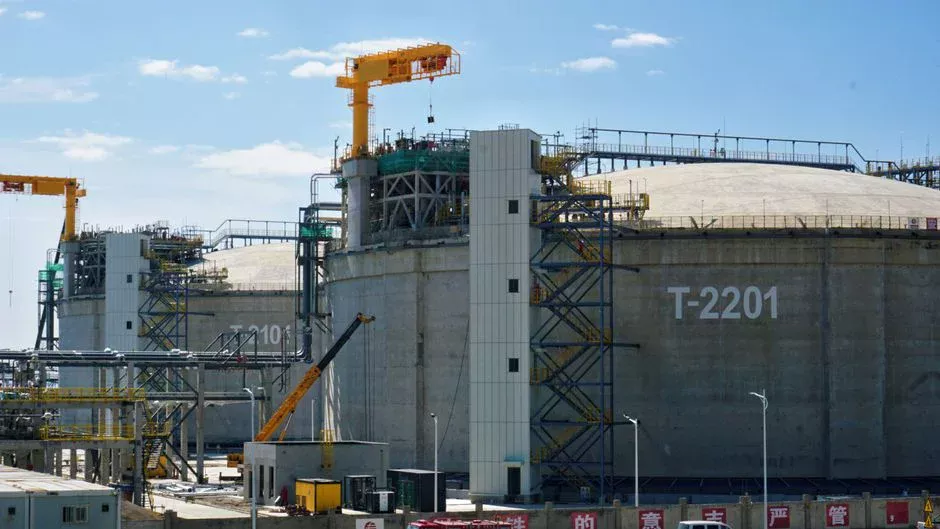
A defensible food-processing treatment train sequences unit processes according to what each stage removes and what failure it prevents. Screening protects pumps and downstream biological equipment; equalization controls hydraulic and strength shocks; solids removal addresses TSS and FOG; pH adjustment protects the sewer and treatment biology; biological treatment reduces soluble organic load; and final polishing follows the permit.
- Screen first. Remove product pieces, packaging debris, fats, feathers, seeds, spent hops and fibrous material before they obstruct pumps or interfere with biological treatment. JWC identifies rotary drum screening as effective for food and beverage organic waste and specifies screens according to debris composition and flow rate. A mechanical bar screen for pretreatment should be selected only after confirming the expected debris and headworks flow.
- Equalize flow and strength. A properly operated equalization tank buffers production surges, washdown releases and CIP shocks. Crystal Clean specifically identifies washdown and shift-change surges as a reason systems designed around averages can fail.
- Match primary separation to the load. Select DAF when TSS, FOG, oil, grease or colloidal material is the priority. Hixson reports optimized poultry-study results of 74% suspended-solids removal and 99% oil-and-grease removal, plus more recent poultry-operation data of up to 99% TSS removal, 85% BOD₅ reduction and 98% phosphate removal. Those figures are study results, not guarantees for a Blair plant. A DAF pretreatment system for food-processing wastewater should be tested against measured site loads.
- Use clarification where settling is adequate. A lamella or sedimentation unit is a solids-separation option when settleable solids dominate and footprint, chemical consumption or operating simplicity drives selection. It does not perform the broader floatation role of DAF. Evaluate a high-efficiency sedimentation tank against the actual settleability and FOG characteristics.
- Control pH where required. Add controlled neutralization only to the extent required by the current local permit. Crystal Clean identifies acidic fruit-processing streams and caustic CIP cleaners as sources of pH swings. A PLC-controlled chemical dosing and pH adjustment system requires verified chemical demand, target range, interlocks and an alarm response plan; the supplied research does not establish a universal pH range.
- Add biological treatment for soluble load. Physical separation does not remove dissolved BOD₅ and COD. Hixson reports anaerobic food-processing COD removal of 89.8% to 96.5%. If a compact, polished or reuse-oriented biological stage is required, MBR may be appropriate. Hixson cites beverage-pilot effluent of 16.9 mg/L COD and 3.8 mg/L TSS, but pilot results do not establish full-scale performance at every plant.
| Primary issue | First unit process to evaluate | Decision evidence required |
|---|---|---|
| Coarse solids, product debris, fibrous material | Screening | Debris composition and peak headworks flow |
| Washdown, production and CIP surges | Equalization | Representative flow, strength and batch data |
| TSS, FOG, oils and colloidal material | DAF or clarification | Settleability, emulsification, chemical demand and solids handling |
| Permit-controlled pH | Dosing and equalization | Current written limit and measured acid/alkali demand |
| Soluble BOD₅ and COD | Biological treatment | Influent biodegradability, load variability and treatment objective |
Keep soluble polishing and disinfection separate from the core pretreatment decision. They should be justified by the current permit, receiving POTW requirements and any reuse objectives—not assumed to be part of a generic package.
Choose between on-site treatment and external waste removal
On-site treatment and external removal solve different operating problems. An on-site train is appropriate when flow and load are sufficiently predictable, capital expenditure is justified, and the plant can provide continuous monitoring, automation, maintenance and trained operators. It offers direct control over final discharge quality, but an undersized tank or biological system can still create a permit exceedance during a sanitation or production peak.
External removal is more defensible for concentrated batches that cannot be safely neutralized on site or high-strength liquid waste whose treatment would overload the sewer system. Crystal Clean describes a vacuum-truck program that removes high-strength liquid streams for off-site treatment at permitted facilities and removes accumulated sludge from settling tanks and clarifiers. That source documents an available service model; it is not a universal compliance guarantee, and its treatment destination must be independently verified.
For any external option, request:
- Waste characterization and acceptance criteria.
- Manifests and generator and facility responsibilities.
- Service records showing collection frequency and volume.
- Destination permits and treatment verification.
- Emergency response time and spill-containment provisions.
Compare the alternatives against permit risk, production interruption, floor space, secondary containment, emergency response and recurring operating cost—not equipment purchase price alone. For solids dewatering, evaluate a plate-and-frame filter press as a sludge-volume and handling decision, not as a substitute for the upstream treatment train.
Size, verify and operate against the permit
Treatment capacity should be established from measured peak flows and loads, not domestic-sewage assumptions or a sector average. Hixson reports food-processing effluents at 10 to 100 times domestic wastewater strength in BOD₅ and COD terms. Equalization, biological capacity and chemical systems must therefore be checked against the plant’s actual production, washdown and sanitation profile.
| Procurement or operating item | Evidence the supplier or plant must provide |
|---|---|
| Guaranteed treatment objective | Performance tied to the measured site influent and the current written local limits |
| Design flow | Measured peak flow, equalization duty and selected bypass or contingency arrangement |
| Required pretreatment | Screening, solids removal, pH control and biological pretreatment requirements |
| Controls | Control philosophy, alarms, interlocks, data outputs and fail-safe response |
| Sludge handling | Expected solids volume, storage, dewatering and authorized destination |
| Redundancy and service | Critical-component redundancy, response time, maintenance scope and spare-parts plan |
| Compliance support | Submittals, operating procedures, calibration records, training and sampling documentation |
Verify the proposed train through pilot testing, appropriately scaled performance review or manufacturer guarantees linked to the site’s measured influent and local written limits. The sector examples in this article are not guaranteed plant performance. For biological polishing, compare the MBR integrated wastewater treatment system against the alternative biological configuration described in this MBR and conventional activated-sludge comparison.
The operating plan should define pH, flow and other required monitoring, representative sampling, calibration frequency, operator training, alarm response and a documented contingency for overload or a failed unit. Budget for monitoring consumables and verify the automatic wastewater sampler buying guide against the permit’s sampling method rather than sampler price alone.
Surcharge exposure also belongs in the economic case. Hixson cites a San Antonio example charging $1.32 per mg/L of BOD above 250 mg/L and $3.05 per mg/L of TSS above 250 mg/L, multiplied by monthly discharge volume. Those figures are specific to that example, not Blair tariffs. Crystal Clean notes that repeated violations can lead to enhanced monitoring, mandatory pretreatment installation or permit revocation.
Frequently Asked Questions
What will pretreatment cost near Blair?
No generic Blair-area equipment cost is supplied. Request a site-specific budget separating equipment, installation, controls, equalization, chemical storage, sludge handling, energy, maintenance, monitoring, sampling, external waste removal and potential sewer surcharges. Ask the bidder to show which recurring costs change under peak-flow and CIP conditions.
What capacity should the treatment system be sized for?
Size from measured flow, BOD₅, COD, TSS, FOG and pH, including production peaks, washdown releases and CIP events. Equalization must buffer the measured batch load, while downstream equipment must handle the controlled flow and strength released from it.
How should a wastewater treatment supplier be selected?
Require the proposal to connect guaranteed process performance to the plant’s current permit and measured influent. Also require design flow, upstream pretreatment, control philosophy, sludge handling, redundancy, operator training, calibration support and compliance-document deliverables. A generic package specification is not enough.
Can federal screening thresholds replace the local permit?
No. The 250 mg/L BOD and suspended-solids values cited by Hixson are common federal screening thresholds under 40 CFR Part 403, not universal local limits. The current receiving sewer authority’s written limits, permit and sewer-use agreement control site compliance.
Related Equipment
- DAF pretreatment system for food-processing wastewater — specifications, capacity range, and technical data