What Does an Automatic Sampler Cost in 2026?
An automatic water sampler costs $2,600–$4,500 for entry-level portable composite units, $4,000–$8,500 for refrigerated or multi-bottle programmable samplers, and $9,000–$18,000+ for refrigerated stationary systems with NEMA 4X/IP67 enclosures and flow-paced sampling modules in 2026. Total 5-year cost of ownership typically runs 1.8–2.4× the purchase price once bottles, tubing, calibration, and data-logging subscriptions are included.
An automatic sampler is a programmable field device that draws wastewater, stormwater, or process-liquid aliquots on time-, flow-, or event-paced triggers and dispenses them into composite or discrete bottles for laboratory analysis. The term "automatic sampler" in this article refers exclusively to environmental monitoring hardware — not the unrelated academic NLP concept of automated English-proficiency scoring that also surfaces on the same search query (Springer, 2016). That NLP paper is about speech-classifier machine learning, not instrumentation; buyers who land on the wrong page waste hours.
Published 2026 list prices confirm the band: the Global Water WS-Series portable composite sampler lists at $2,889.90, the wider WS Series range runs $2,609–$4,310, the YSI ProSample P portable programmable sampler lists at $4,123.00, and the YSI ProSample PM Mini lists at $4,218.00. Within the same product class, price varies 6–7× because of five drivers: enclosure rating, refrigeration, bottle configuration, flow-paced triggering capability, and data interface. A $2,700 IP54 portable composite is a different instrument from a $15,000 NEMA 4X refrigerated multi-bottle station, even though both show up under the same search.
| Sampler class (2026) | CAPEX band (USD) | Reference list price | Typical duty |
|---|---|---|---|
| Portable composite, non-refrigerated | $2,600–$4,500 | Global Water WS $2,889.90; WS Series $2,609–$4,310 | Short-term stormwater, NPDES 24-hr composite |
| Portable programmable, refrigerated | $4,000–$8,500 | YSI ProSample P $4,123; PM Mini $4,218; Isco 6712-class | Permit compliance, BOD/CBOD/metals |
| Stationary refrigerated multi-bottle | $9,000–$18,000+ | Isco 6712 / Glacier / Avalanche equivalents | Municipal headworks, industrial outfalls |
| Inline / skid-integrated process sampler | $12,000–$25,000+ | Factory-fitted on DAF/MBR skids | In-process QA/QC on treatment trains |
Buyers building a 2026 budget should anchor on $5,000–$8,000 as a working midpoint for a single NPDES-style compliance sampler and add 20–30% for flow-paced modules and SCADA integration. For broader treatment-train telemetry, see the remote monitoring system supplier for wastewater buyer's guide.
Automatic Sampler Types and How They Drive Price
Portable composite samplers in the $2,600–$4,500 range handle short-term stormwater monitoring and the standard 24-hour composite required by most NPDES permits. They run on 12 VDC or mains, use a single 10 L bottle, and are typically IP54–IP65 rated — adequate for a sheltered outdoor station but not for manhole submersion. The WS Series at $2,609–$4,310 and the YSI ProSample PM Mini at $4,218 sit in this band.
Refrigerated portable samplers, $4,500–$8,500 in 2026, are the workhorse for permit-driven BOD, CBOD, metals, and VOC sampling. ISO 5667-3 and US EPA 40 CFR 136 require sample temperature to stay at ≤4 °C (tolerable to 6 °C) from collection through lab receipt, which means compressor cooling rather than ice. The Isco/Teledyne 6712-class units (IJINUS, Teledyne ISCO, and Global Water equivalents) define this segment. The 6712's tapered 20-inch (50.8 cm) diameter body and NEMA 4X, 6 (IP67) enclosure are specifically engineered for manhole retrieval (per DirectIndustry product data, 2026).
Stationary refrigerated multi-bottle samplers run $9,000–$18,000+ and serve municipal headworks and industrial outfalls where 24 or more discrete 1 L bottles are filled sequentially under time- or flow-paced programs. The premium reflects heavier compressors, larger insulated cabinets, and programmable bottle-sequencing controllers.
Stormwater event-paced samplers are usually portable composite units retrofitted with rain-gauge or level-trigger modules. Plug-in 700-Series modules with SDI-12 interfaces add $900–$2,400 to the base price, per the Isco 6712 specification sheet. These modules convert a sampler from "fill every 15 minutes" to "fill when the level rises above X" — a critical distinction for first-flush compliance.
Inline / process samplers integrated into a treatment skid run $12,000–$25,000+ when factory-fitted into a HydropureWater DAF system or an MBR membrane bioreactor system for in-process QA/QC. Integration pricing includes the sample tap, isolation valve, and signal cable back to the skid PLC.
| Type | 2026 CAPEX | Refrigeration | Trigger modes | Best fit |
|---|---|---|---|---|
| Portable composite | $2,600–$4,500 | None / ice | Time-paced | Stormwater, short-term surveys |
| Refrigerated portable | $4,500–$8,500 | Compressor 2–6 °C | Time / flow / event | NPDES compliance, BOD, metals |
| Stationary multi-bottle | $9,000–$18,000+ | Compressor 2–6 °C | Time / flow / event + Modbus | Headworks, industrial outfalls |
| Skid-integrated inline | $12,000–$25,000+ | Optional | PLC-driven, 4–20 mA | Post-DAF, post-MBR QA/QC |
For plants adding a sampler upstream of primary screening, the rotary mechanical bar screen is the typical mounting point for the sample tap.
Key Specifications That Justify the Price Difference
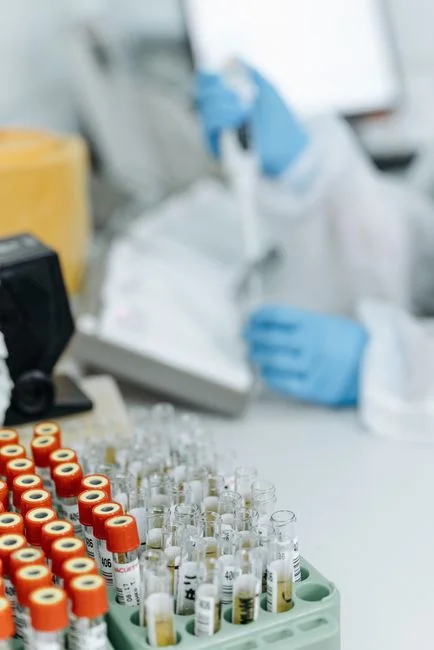
Enclosure rating is the first decoder key. Portable units for manhole and outdoor service should be IP67 / NEMA 4X, 6 — the Isco 6712's vacuum-formed ABS shell is rated for submersion to 1 m and dust ingress (per DirectIndustry). Cheaper IP54 units tolerate splashes but not prolonged rain or burial.
Refrigeration separates compliance from non-compliance. Compressor-cooled 2–6 °C holds are mandatory for BOD, CBOD, metals (except mercury), and VOC fractions per 40 CFR 136 Table II. Ice-packed coolers drift above 6 °C within 4–6 hours in summer and disqualify the sample — a fact that turns a $2,700 "savings" into a $4,000 resampling event.
Sampling modes drive trigger-module cost. Time-paced is standard. Flow-paced requires a 4–20 mA or SDI-12 input from an electromagnetic flow meter or similar, and event-paced adds rain/level/permitted-exceedance triggers. Plug-in 700-Series modules for the Isco 6712 sit in the $900–$2,400 range and convert any trigger source into a sample command.
Bottle configuration changes both CAPEX and recurring bottle cost. Common layouts: 1 × 10 L composite, 24 × 1 L discrete, 12 × 2 L, or 4 × 10 L. A 24-bottle discrete station lets the operator pull one bottle per hour for a 24-hour profile, which is the format most US EPA methods assume.
Sample volume accuracy should be ±5% or better; the Isco 6712 uses a liquid-detection sensor to eliminate dry-run false starts and add $300–$700 to the build. Data interface — SDI-12, Modbus RTU/TCP, and 4–20 mA outputs for SCADA — and cellular/remote telemetry ($400–$1,200 in 2026) round out the spec sheet. If the data interface is wrong, the sampler becomes a stranded asset that produces bottles nobody can read.
| Spec | Entry baseline | Industrial baseline | Premium tier |
|---|---|---|---|
| Enclosure | IP54 | IP65 / NEMA 4 | IP67 / NEMA 4X, 6 (submersible) |
| Refrigeration | Ice-packed | Compressor 2–6 °C | Compressor + redundant thermostat |
| Trigger modes | Time only | Time + flow (4–20 mA) | Time + flow + event (SDI-12 / rain / level) |
| Bottle layout | 1 × 10 L | 12 × 1 L or 12 × 2 L | 24 × 1 L discrete |
| Volume accuracy | ±10% | ±5% | ±3% with liquid-detection sensor |
| Data interface | USB / SD card | Modbus RTU + 4–20 mA | Modbus TCP + cellular telemetry + SCADA tag |
Total Cost of Ownership: OPEX Most Buyers Underestimate
A $5,000 sampler realistically costs $9,000–$12,000 over its first five years — OPEX equals 80–140% of CAPEX, well above what most budget memos assume. Consumables are the silent line item: silicone pump tubing replaced every 12–18 months at $80–$220, sample bottles replaced every 6–12 months at $15–$45 each, and desiccant plus inlet filters at $40–$90 per year.
Refrigerated units add compressor service and refrigerant top-up at $180–$400 per year, plus electricity of roughly 80–200 kWh/year — about $25–$60 at typical industrial tariffs in 2026. Annual calibration against a reference volume and flow-meter cross-check, per EPA Method 1664 and ISO 5667 protocols, costs $350–$900 if contracted or $80–$150 in in-house labor.
Data logging and SCADA integration are the line item most often omitted. Cellular telemetry subscriptions run $15–$60 per month; a SCADA tag license and one-time integration run $400–$1,500. The industrial wastewater plant operating cost breakdown puts sampler consumables and calibration in the 6–9% slice of total plant OPEX for a 50–200 m³/day operation.
| OPEX line item | Annual cost (USD) | 5-year cumulative |
|---|---|---|
| Pump tubing replacement | $80–$220 | $400–$1,100 |
| Sample bottles | $90–$540 | $450–$2,700 |
| Desiccant + inlet filters | $40–$90 | $200–$450 |
| Refrigerator service + power | $205–$460 | $1,025–$2,300 |
| Calibration (contracted) | $350–$900 | $1,750–$4,500 |
| Cellular telemetry subscription | $180–$720 | $900–$3,600 |
| SCADA integration (one-time) | — | $400–$1,500 |
| 5-year OPEX total | — | $5,125–$16,150 |
The 1.8–2.4× TCO multiplier holds across the $2,600–$18,000+ CAPEX band when consumables, calibration, and data telemetry are priced in. This is the number to defend in front of a procurement committee that only sees the sticker.
How to Choose the Right Automatic Sampler: A 5-Step Selection Framework
- Identify the regulatory driver. NPDES, EU UWWTD, or a local industrial consent will mandate 24-hour composite, discrete, or grab sampling. Lock the format before pricing anything — a permit that requires 24 × 1 L discrete eliminates every sub-$5,000 unit.
- Define preservation requirements. BOD, CBOD, metals, and VOCs each have different hold-time and temperature rules per 40 CFR 136. If the analyte list includes any VOC or BOD fraction, specify compressor cooling to 2–6 °C, not ice.
- Match the sampler to the upstream flow source. Headworks, post-DAF, post-MBR, post-RO, and stormwater outfall each have different access constraints. Headworks usually demands NEMA 4X, 6 submersible; outfalls tolerate IP65 wall-mount.
- Confirm flow-paced or event-paced triggering. If the permit requires flow-weighted composite, budget $900–$2,400 for plug-in flow/level modules plus the signal cable run to a flowmeter. This line is where most RFQs underestimate the system cost.
- Verify the data interface and SCADA fit. Modbus, SDI-12, or 4–20 mA must map to an existing tag or HMI screen. Pair the sampler with an automatic chemical dosing system or SCADA node at quote stage so the sampler is not a stranded data island.
Run this five-step checklist before talking to any vendor. It will eliminate 70% of mis-spec'd quotes.
Where Automatic Samplers Fit in a Treatment Train
Automatic samplers typically sit at four points in a treatment train: immediately downstream of the rotary mechanical bar screen at the headworks (influent compliance), after the HydropureWater DAF system (post-physical separation QA/QC), after the MBR membrane bioreactor system (pre-discharge compliance), and at the final outfall (regulatory reporting). An integrated package plant such as the WSZ underground package sewage treatment plant is normally delivered with a factory-fitted sampling tap and a recommended third-party sampler — Isco, YSI, Teledyne, or Global Water.
Buyers should request the sampling port, flowmeter signal tap, and 24 VDC power from the skid OEM at quote stage. Retrofitting those three items after delivery typically costs $1,800–$4,500 in field labor and four to eight weeks of downtime, versus $300–$600 if specified upfront.
Frequently Asked Questions
How much does an automatic water sampler cost in 2026? Entry-level portable composite units list at $2,600–$4,500; refrigerated or multi-bottle programmable samplers run $4,000–$8,500; stationary refrigerated systems with NEMA 4X enclosures and flow-paced modules run $9,000–$18,000+, with skid-integrated process samplers reaching $12,000–$25,000+ (2026 list prices, Global Water and YSI).
What is the 5-year total cost of ownership for an automatic sampler? OPEX equals 80–140% of CAPEX, so a $5,000 sampler costs $9,000–$12,000 over five years once tubing ($80–$220/yr), bottles ($15–$45 each), calibration ($350–$900/yr), and cellular telemetry ($15–$60/month) are included.
What is the difference between composite and discrete sampling? Composite sampling pools multiple aliquots into one bottle for an averaged 24-hour result; discrete sampling fills 12–24 sequential bottles to preserve the time-profile, required by most US EPA methods for BOD and metals.
Why does my search for "automatic sampler" return linguistics papers about English proficiency? "Automatic" in NLP literature refers to machine-learning scoring of spoken English proficiency (Springer, 2016), unrelated to environmental monitoring hardware. The 2026 instrumentation price band starts at $2,600 and scales with enclosure, refrigeration, and triggering capability.
Do I need a refrigerated sampler for stormwater monitoring? Only if the analyte list includes BOD, CBOD, metals, or VOCs. For TSS or nutrient screening on short 24-hour campaigns, an ice-packed portable composite at $2,600–$3,500 is acceptable.
How does an automatic sampler connect to a SCADA system? Through Modbus RTU/TCP, SDI-12, or 4–20 mA outputs. Cellular telemetry adds $400–$1,200 in hardware and $15–$60/month for a data plan, with one-time SCADA tag integration at $400–$1,500. For the broader compliance picture, see the heavy metals discharge standard 2026 guide.