What a Brewery Expansion Changes in the ETP
Adding brewing capacity is not a linear event for the effluent treatment plant. The Magor permit (EPR/BX7282IS, Natural Resources Wales) has been varied seven times since 2005, most recently on 2021-08-23, and almost every variation was triggered by a capacity or process change on the brewery side (per EPR/BX7282IS status log, 2021-08). A new line, a new packaging hall, or an additional CIP skid is a permit event, not a notification.
The hydraulic, organic, and slug-load changes are all non-linear. A 30% increase in packaged volume can push peak BOD load by 50% or more because CIP chemicals, yeast slurry, and tank bottoms scale with wash frequency, not throughput. Diurnal peaks that fit comfortably inside the current equalization tank at 8,000 m³/day can spill over the tank's working volume once the line runs at 10,000 m³/day. Surface-water segregation that worked at the original flow also needs to be re-evaluated: new buildings and yard paving alter the clean-runoff catchment that is currently discharged to the Waundeilas Reen via W3/W4/W5 (per EPR/BX7282IS Table S3.2, 2021-08), and the operator is required to keep clean runoff segregated from process effluent under AR12.
For this article, "expansion" covers any one of: a new brewing line, a new packaging hall, additional CIP capacity, or a new utility such as a CO₂ recovery plant. Each changes the ETP design basis differently, and each will normally require a permit variation under the Environmental Permitting (England and Wales) Regulations 2016.
Influent Design Basis After Expansion
The new ETP must be sized to the permitted hydraulic ceiling, not to the historical average. The Magor site is permitted to 10,000 m³/day continuous at 126 L/s at emission point ST 4369 8494 (per EPR/BX7282IS, 2021-08). An expansion permit will set a new ceiling; the ETP must hit that ceiling with full equalization and biological treatment, not just with screening.
Influent concentration is best set against published brewery field data. The Carlsberg India study at the 400 m³/day Paonta Sahib plant (S1, IJEPR Vol. 2 Issue 3, 2013-08) recorded inlet COD of 3,500–5,000 mg/L and BOD of 1,200–3,000 mg/L over a 13-week monitoring campaign. The right design posture is to use the upper bound for hydraulic and biological sizing, and the mean for OPEX (aeration, polymer, chemical) estimation.
Diurnal and weekly variation requires an equalization tank sized to at least 8 hours of average flow, with mechanical mixing and pH correction dosing. The Carlsberg buffer tank (S1, 2013-08) handles this duty as the first biological-stage feed and is what makes the downstream UASBR perform consistently. The discharge permit window of pH 5–9 at the final outfall (per EPR/BX7282IS, 2021-08) means equalization must include acid or caustic dosing on the CIP streams, not just blending — CIP effluent can leave the brewhouse at pH 2 or pH 12 depending on the cycle.
Temperature is a fourth constraint. The Magor consent sets 30 °C at the final effluent (per EPR/BX7282IS, 2021-08); anaerobic effluent running above 35 °C will close off most reuse options and is a flag to the regulator that cooling capacity is short. For a brownfield expansion, this is often the cheapest permit risk to eliminate — a plate heat exchanger on the anaerobic effluent is far less expensive than a permit refusal.
Process Train: From Equalization to Compliant Discharge
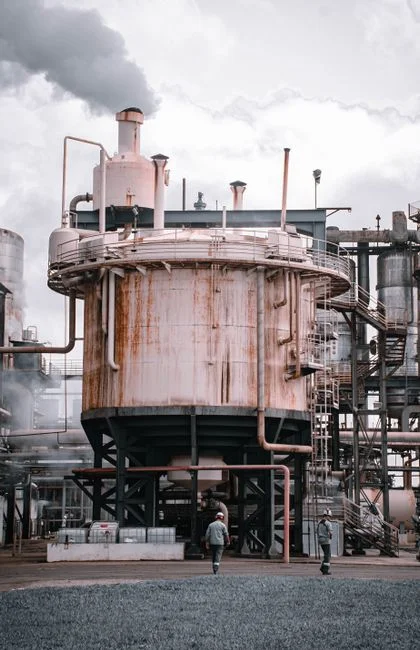
The seven-stage train below is what a UK or EU-equivalent brewery expansion typically lands on once the permit envelope and the influent envelope are fixed. Unit-operation cues come from the Carlsberg India installation (S1, 2013-08) and from the Magor permit boundary conditions (per EPR/BX7282IS, 2021-08).
- Screening and grit removal. A rotary mechanical bar screen with 3–6 mm aperture sits ahead of the lift pumps and protects the UASB distributor nozzles from label debris and grit from the yard. This is a default first unit on any brewery expansion because label-fibre and grit carry-through is one of the most common causes of UASB distributor plugging.
- Flow and load equalization. Buffer/equalization tank sized for 6–12 hours of average flow, with mechanical mixing and pH correction. The Carlsberg plant uses a buffer tank as the first biological-stage feed (S1, 2013-08), and the same duty applies to a 10,000 m³/day expansion.
- High-rate anaerobic treatment (UASB, UASBR, or IC). Organic loading of 8–15 kg COD/m³·day is realistic on brewery wastewater. The Carlsberg UASBR delivers the bulk of COD removal before any aerobic polishing (S1, 2013-08), with overall plant COD removal of 96–98%.
- Aerobic polishing. Activated-sludge aeration tank, SAFF, or SBR. The purpose is to push residual BOD below 25 mg/L, oxidize sulfide, and strip odorous reduced compounds. The Carlsberg aeration tank plus SAFF reactor pair is the proven arrangement (S1, 2013-08). For an expansion where energy is the constraint, our SBR energy efficiency engineering guide covers diffuser and DO-control retrofits in detail.
- Tertiary solids separation. A DAF system for tertiary solids separation or a parallel-plate separator to drop SS to below 30 mg/L ahead of the polishing filter.
- Polishing filtration. Sand filter followed by activated carbon. Carlsberg's train ends with sand + activated carbon (S1, 2013-08) and reaches final effluent COD of 8–18.5 mg/L. For high-end reuse targets, the next step is a membrane stage (see the best MBR membrane module for industrial use for current spec ranges).
- Sludge handling and biogas treatment. Combined anaerobic plus aerobic surplus sludge is dewatered on sludge drying beds (Carlsberg) or by mechanical dewatering. For a brownfield expansion at this scale, a plate-and-frame filter press for sludge dewatering is the right default because cake solids of 22–28% are achievable on mixed anaerobic/aerobic brewery sludge. Biogas from the UASB can be treated in a CHP unit once H₂S is scrubbed to ≤200 ppm at the engine inlet and the mass emission at the scrubber outlet does not exceed 0.22 g/s (per EPR/BX7282IS, 2021-08).
Where space is tight and the discharge consent is moving toward reuse-grade quality, the activated-sludge or SAFF step in stage 4 can be replaced by an MBR membrane bioreactor system; the comparison in the next section sets out the trade-offs.
Discharge Limits That Drive the Design
Every upstream choice should trace back to a number in the permit. The Magor consent (per EPR/BX7282IS, 2021-08) is the cleanest published example for a UK/EU-equivalent brewery expansion and is used here as the design bar.
| Parameter | Limit | Monitoring frequency | Source |
|---|---|---|---|
| Flow | 10,000 m³/day continuous; 126 L/s | Continuous | EPR/BX7282IS, 2021-08 |
| pH | >5, <9 | Continuous | EPR/BX7282IS, 2021-08 |
| Temperature | 30 °C | Continuous | EPR/BX7282IS, 2021-08 |
| BOD | 200 mg/L | Weekly composite | EPR/BX7282IS, 2021-08 |
| COD | 450 mg/L | Weekly composite | EPR/BX7282IS, 2021-08 |
| Suspended solids | 150 mg/L | Weekly | EPR/BX7282IS, 2021-08 |
| Total copper | 0.01 mg/L (annual average) | Monthly composite | EPR/BX7282IS, 2021-08 |
| Total zinc | 0.07 mg/L (annual average) | Monthly composite | EPR/BX7282IS, 2021-08 |
| Total nickel | 0.03 mg/L (annual average) | Monthly composite | EPR/BX7282IS, 2021-08 |
| Total chromium | 0.015 mg/L (annual average) | Monthly composite | EPR/BX7282IS, 2021-08 |
| Total cadmium | 0.005 mg/L (annual average) | Monthly composite | EPR/BX7282IS, 2021-08 |
| Total mercury | 0.0005 mg/L (annual average) | Monthly composite | EPR/BX7282IS, 2021-08 |
| Total arsenic | 0.025 mg/L (annual average) | Monthly composite | EPR/BX7282IS, 2021-08 |
| Annual mercury cap | 915 g/yr | Annual | EPR/BX7282IS Table S3.3, 2021-08 |
| Annual cadmium cap | 9,150 g/yr | Annual | EPR/BX7282IS Table S3.3, 2021-08 |
Two design consequences follow. First, the metal limits are tight enough that source control on bottle-wash caustic and label adhesives matters more than end-of-pipe polishing; the cheapest compliance route is to segregate the metal-bearing streams. Second, the annual mass caps for mercury and cadmium (per EPR/BX7282IS Table S3.3, 2021-08) translate the upstream metal load into a sludge-management problem — those metals do not disappear, they accumulate in the cake from the plate-and-frame filter press for sludge dewatering, which then drives the disposal route.
Treatment Technology Comparison for Brewery ETP Expansion
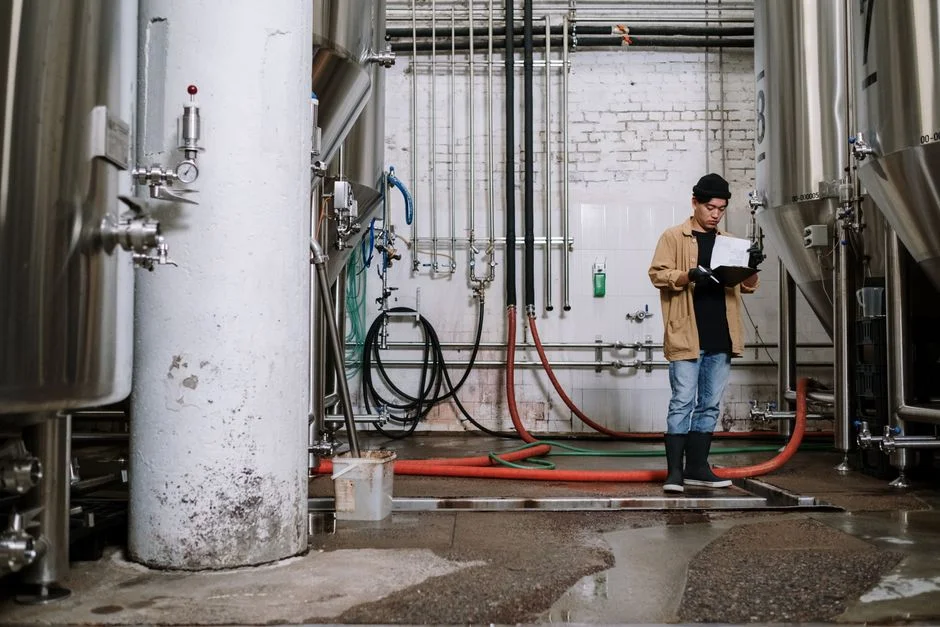
The right route depends on footprint, energy, and the discharge consent trajectory. The table below compares the three credible options at the 5,000–15,000 m³/day scale that covers most AB InBev-style expansion steps. Carlsberg data (S1, 2013-08) is the published reference; MBR footprint and energy values are typical for the 2024–2026 generation of modules (HydropureWater field data, 2026).
| Criterion | UASB + aerobic polishing | Conventional activated sludge (CAS) | MBR |
|---|---|---|---|
| Footprint | Moderate (large anaerobic tank, smaller aerobic) | Largest (big aeration basin + clarifier) | Smallest — ~60% of CAS footprint |
| Aeration energy | Low (anaerobic removes bulk COD) | High (full load oxidised aerobically) | Moderate (high MLSS, but small basin) |
| Biogas recovery | Yes (CHP-ready) | No | No (unless paired with upstream UASB) |
| Effluent COD | 50–100 mg/L before polishing | 60–120 mg/L | <30 mg/L |
| Effluent SS | 20–50 mg/L after DAF/sand | 10–30 mg/L after clarifier | <1 mg/L (sub-µm membrane) |
| Sludge yield | Low (anaerobic) + moderate aerobic | High (0.4–0.6 kg TSS/kg COD) | Moderate (high MLSS, low yield) |
| Operator skill | High (anaerobic biology) | Low–medium | Medium (membrane maintenance) |
| Best fit | Flow > 2,000 m³/day, biogas use available | Small expansion, existing aerobic basin | Space-constrained site or reuse-grade consent |
| Reference | Carlsberg India, 400 m³/day (S1, 2013-08) | Pre-1997 Carlsberg configuration (S1, 2013-08) | HydropureWater MBR field data, 2026 |
Where the expansion is a debottleneck (hydraulic load <50% of biotank working volume), debottleneck the existing aeration basin and add a DAF plus sand filter on the back end. Where the expansion is a step change (>80% of biotank volume), prefer either an MBR in a new tank or a parallel UASB plus IC skid; both avoid overloading the existing biology. The granular activated sludge technology reference is worth a read here as an alternative to conventional CAS for high-strength brewery waste.
Retrofit vs Greenfield: Decision Framework
The retrofit-versus-greenfield call is driven by four engineering questions, not by capital preference.
- Does the existing biotank have ≥30% spare organic capacity? If yes, a retrofit is normally cheaper. Diffuser upgrades and a new DAF skid on the back end typically deliver the incremental capacity at 30–45% of a comparable MBR greenfield CAPEX for the same organic load.
- Will the permit allow higher mass emissions at the same concentration? If no — and a flow increase above 25% will normally require a full permit review under the Environmental Permitting (England and Wales) Regulations 2016 — then a greenfield line is the only path that doesn't risk a consent refusal. Pre-consult the regulator before locking in process choice.
- Is the site footprint forcing a compact unit? If yes, MBR is the only realistic option at 60% of the CAS footprint (HydropureWater MBR field data, 2026). Pair it with a small equalization tank and a DAF pre-stage to protect the membranes.
- Is the sludge line scoped? This is the most commonly under-scoped item on brewery retrofits. Combined anaerobic plus aerobic sludge will not dewater to a stackable cake on drying beds alone at this scale; include a plate-and-frame filter press for sludge dewatering sized for the combined mass load, and an automatic chemical dosing system for polymer make-up and CIP pH correction.
Operating cost favours anaerobic for any flow above about 2,000 m³/day because the biogas offset covers a meaningful fraction of the aeration bill. Below that, the anaerobic biology is harder to keep stable and CAS or MBR wins on simplicity.
Frequently Asked Questions
What hydraulic capacity does the ETP need after an AB InBev-style brewery expansion?
The ETP must be sized to the new permitted hydraulic envelope, not the historical average flow. The existing AB InBev Magor site is permitted to 10,000 m³/day continuous at 126 L/s at emission point ST 4369 8494 (per EPR/BX7282IS, 2021-08). An expansion permit will set a new ceiling, and the equalization tank plus biological stage must handle that ceiling with full treatment, not just screening.
What BOD, COD, and suspended solids limits does the ETP need to meet?
For a UK/EU-equivalent expansion, design to BOD 200 mg/L, COD 450 mg/L, and SS 150 mg/L as weekly composite limits at the final effluent (per EPR/BX7282IS, 2021-08). pH must sit between 5 and 9, and temperature must not exceed 30 °C, both measured continuously. The Carlsberg India plant (S1, 2013-08) demonstrates that a UASBR plus aeration plus sand/activated-carbon polishing can deliver final COD of 8–18.5 mg/L against this envelope.
Can we just retrofit the existing ETP or do we need a new line?
Retrofit is viable when the existing equalization tank and primary clarifier have spare hydraulic capacity and the existing UASB or aeration basin can accept ≥30% more load via diffuser upgrades. Greenfield is required when the biotank is organically overloaded, when the permit will not allow higher mass emissions at the same concentration, or when the site footprint forces a compact MBR. An expansion that raises design flow by more than 25% typically triggers a full permit review rather than a notification, so pre-consult the regulator before committing.
Which heavy metals drive sludge handling on a brewery expansion?
Copper, zinc, nickel, chromium, cadmium, mercury, and arsenic all have annual-average concentration limits in the Magor permit (per EPR/BX7282IS, 2021-08), with mercury capped at 0.0005 mg/L and cadmium at 0.005 mg/L. The annual mass caps — 915 g/yr mercury and 9,150 g/yr cadmium (per EPR/BX7282IS Table S3.3, 2021-08) — mean the metal load ends up in the sludge cake, which then drives the disposal route and the dewatering specification.
What removal efficiency can we expect from a UASB plus aerobic polishing train?
The Carlsberg India installation (S1, 2013-08) records overall COD removal of 96–98%, TSS removal of 88–98%, and BOD removal of 99% across the buffer tank, UASBR, primary plate separator, aeration tank, SAFF reactor, parallel plate separator, sand filter, and activated carbon filter. The UASB takes the bulk of the organic load; the aerobic and tertiary stages polish to the consent envelope.