Determine Which Rules Govern the Marlette-Area Facility
Plastics and rubber plants near Marlette generally meet sewer pretreatment limits through a permit-specific treatment train: segregate process wastewater, characterize it, remove the pollutants and flow characteristics prohibited by the local sewer authority, monitor results, and maintain records. EPA’s plastics molding and forming rule is 40 CFR Part 463, promulgated in 1984; indirect dischargers are subject to 40 CFR Part 403. Part 463 covers processes including extrusion, molding, coating, laminating, thermoforming, calendering, casting, foaming, cleaning, and finishing, but resin-manufacturing operations may fall under 40 CFR Part 414. Because the supplied research does not establish Marlette’s local limits or permit, each plant must confirm its requirements with the receiving publicly owned treatment works (POTW) before selecting equipment.
EPA identifies the correct federal category from the plant’s actual production processes, not from a company description or industry code alone. The agency states that NAICS group 3261 is a guide and that the applicability provisions in 40 CFR Part 463 provide the precise definition of coverage. A plant should therefore list extrusion, molding, coating, laminating, thermoforming, calendering, casting, foaming, cleaning, and finishing operations before deciding which rules apply.
The resin question requires a separate check. EPA explains that plastic molding and forming processes used by resin manufacturers to process crude intermediate plastic material for off-site shipment are excluded from Part 463 and regulated under 40 CFR Part 414. If that material is further processed on-site into an intermediate or final product by molding and forming, the PM&F rule applies to that forming operation. A coating operation can also affect category selection, so a plant should document the substrate, coating chemistry, and production sequence rather than assume all operations fall within one rule.
The plant is an indirect discharger when it discharges process wastewater to a POTW rather than directly to waters of the United States. EPA reported that 1,145 indirect dischargers were subject to the General Pretreatment Regulation at the time of the 1984 PM&F rulemaking. That historical figure establishes the framework, not current Marlette permit conditions. For current requirements, obtain the industrial user permit, sewer-use ordinance, sewerage-system connection or discharge permit, and a written interpretation from the receiving POTW. The supplied research does not identify the specific POTW serving a Marlette-area plant or its numerical discharge limits.
| Determination | Evidence required | Decision consequence |
|---|---|---|
| Federal process category | Process inventory and equipment descriptions | Assess 40 CFR Part 463, Part 414, and any operation-specific category under EPA’s applicability provisions. |
| Discharge pathway | Sewer connection and discharge authorization | Confirm POTW control and the applicable General Pretreatment Regulation route under 40 CFR Part 403. |
| Locally enforceable requirements | Industrial user permit, sewer-use rules, discharge permit, and POTW interpretation | Set treatment objectives, monitoring, reporting, and authorization conditions. |
The plastics and rubber pretreatment compliance guide provides a useful federal-category overview, while the 2026 plastics and rubber pretreatment guide emphasizes the need to translate requirements into an operating program. Neither substitutes for the permit issued to the Marlette-area facility.
Map Each Wastewater Stream Before Selecting Treatment
A permitable treatment train starts with a traceable wastewater mass balance, because a permit limit cannot be assigned to a treatment step until the plant identifies what enters the sewer, where it comes from, and how it varies. EPA’s 1995 Profile of the Rubber and Plastics Industry describes process water used to cool or heat plastic products and to clean product and equipment surfaces. The plant should map those activities and identify separate wash, coating, finishing, floor-drainage, and other contaminated streams.
Non-contact cooling water should remain segregated from contaminated wastewater. EPA states that non-contact cooling water—water that does not contact either the plastic product or equipment surfaces that have contacted the product—is outside Part 463 coverage, although an individual permit may address it case by case. That exclusion does not establish a local right to discharge; the POTW’s rules and permit still govern the connection.
The next step is to translate the local permit into a sampling and characterization program. EPA’s 1995 sector notebook identifies wastewater terms including BOD, COD, TSS, and total organic carbon, but it is an older sector reference rather than a current Marlette permit. The plant should request representative analysis of flow, pH, TSS, oil and grease where relevant, organics, and any pollutants specifically named by the POTW. Any required toxicity, priority-pollutant, or process-specific testing must be identified in writing rather than assumed from the 1995 notebook.
| Stream or source | Field definition | Characterization needed |
|---|---|---|
| Non-contact cooling or heating water | No contact with products or product-contact equipment surfaces | Confirm segregation, connection status, and POTW treatment case by case. |
| Product and equipment cleaning | Wash water contacting production surfaces, equipment, or residues | Flow variability, pH, TSS, organics, oil and grease where relevant, and permit-specific constituents. |
| Coating, finishing, and other process washes | Water carrying production chemicals, coatings, or finishing residues | Chemical inventory, flow, constituent profile, and compatible treatment requirements. |
| Floor drainage and leaks | Drainage that may contact production areas, stored materials, or equipment | Routing, isolation controls, possible priority pollutants, and bypass prevention. |
Before selecting a skid, mark clean-water and dirty-water segregation, leak-control points, floor-drainage routes, sampling locations, and bypass points on the process diagram. A US industrial wastewater compliance and technology guide can support technology comparisons, but vendor selection should follow the characterized flow, pollutant profile, and written discharge conditions.
Build a Pretreatment Train Around the Permit
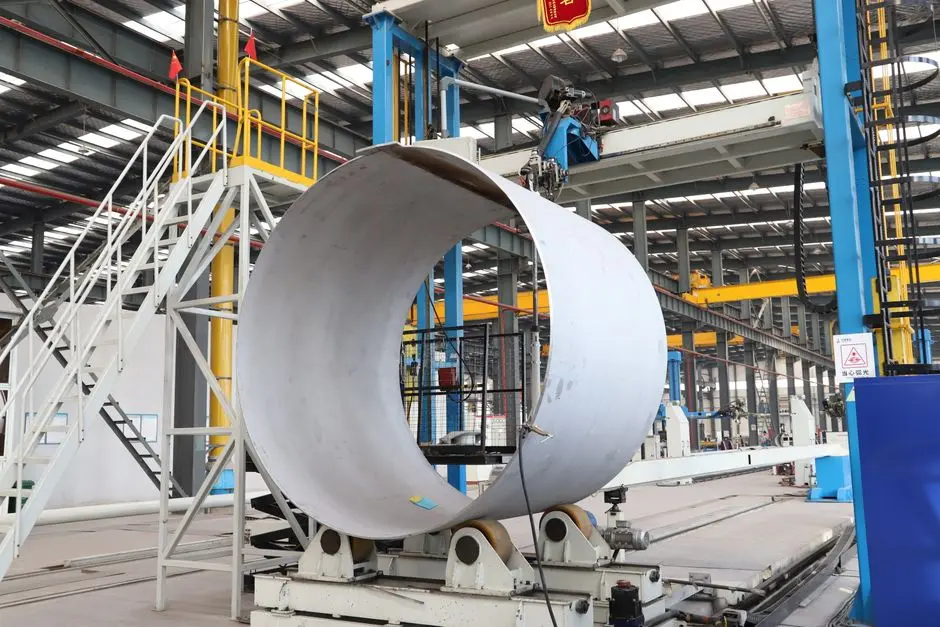
Each treatment function must answer a documented wastewater problem identified by the permit or representative sampling. Equalization should be evaluated where flow or concentration variability would disrupt downstream treatment, chemical feed, or compliance monitoring. Physical, chemical, and toxic-organic requirements should then be assigned to the unit processes capable of addressing them, with performance criteria expressed against the POTW’s conditions rather than a generic treatment objective.
For wastewater containing suspended solids, oil and grease, FOG, or colloidal material, evaluate an industrial DAF system for plastics and rubber pretreatment. DAF is a candidate process, not proof of compliance: the equipment must be evaluated against characterized peak and average flow, pollutant loading, required removal, operating variability, and the receiving sewer’s discharge conditions. An industrial lamella clarifier for pretreatment solids separation may be appropriate where the selected solids-management route requires flocculation, sludge recirculation, and inclined-plate separation.
Controlled chemical dosing follows characterization. Automatic dosing becomes relevant when the design requires precise, PLC-controlled coagulant, flocculant, or pH adjustment; the required chemical, target range, and control response must be tied to the wastewater profile and permit condition. A more detailed industrial ETP and DAF treatment example can help frame equipment scope, but its project conditions are not Marlette requirements.
| Design question | Required evidence | Treatment response |
|---|---|---|
| Must flow or concentration be stabilized? | Representative flow and constituent data across production conditions | Evaluate equalization and the operating controls it needs. |
| Must oil, FOG, colloids, or suspended solids be removed? | Characterized pollutant profile and applicable local limits | Evaluate DAF, with coagulation or flocculation only where the chemistry requires it. |
| How will concentrated solids be separated? | Solids-generation rate, residual chemistry, and authorized disposal route | Evaluate sludge thickening, dewatering, and handling as a complete route. |
| Can every step be traced to a requirement? | Named permit condition or measured wastewater characteristic | Retain the step; otherwise treat it as an unresolved design hypothesis. |
Sludge treatment is part of the wastewater scope. Water must be separated from concentrated solids before disposal or further handling, while the local waste classification, disposal authorization, and permit conditions determine the acceptable route. A chemical-precipitation treatment reference can illustrate process logic, but it does not establish the solids profile or disposal requirements for a plastics or rubber plant near Marlette.
Prove Compliance Through Monitoring and Records
Compliance evidence begins with the permit, not the treatment-control panel. Convert each local requirement into an operating checklist covering monitoring points, parameters, sampling methods, frequencies, record retention, reporting, and notification. The checklist should identify who collects samples, how they are preserved, which laboratory method is used, where results are logged, and which operating decision follows an exceedance or invalid result.
At commissioning, verify the complete train with representative wastewater and side-by-side influent and treated-effluent sampling. Startup results from clean water or a short equipment demonstration do not establish performance across production conditions. Record the characterized influent, final treatment settings, effluent results, operating conditions, and any deviations in one commissioning package for review with the POTW or compliance team.
After startup, trend pH, flow, TSS, and every permit-specific constituent alongside treatment operating parameters. A digital-twin review for wastewater facilities can help identify useful operating links, but a monitoring system should remain traceable to the written permit. Maintain chemical inventory, calibration records, sludge-transfer records, bypass provisions, and alarm-response documentation because they demonstrate both process control and compliance readiness.
Reconfirm the requirements after adding a production line, changing cleaning chemicals, altering materials, or modifying drainage and process-water use. These changes can alter flow, constituent loading, or the applicable pretreatment category. The POTW should confirm whether a permit modification or new characterization is required before the change is implemented.
Use a 30-Day Compliance and Procurement Plan

The first 30 days should reduce regulatory and procurement uncertainty, not rush an equipment order based on catalog capacity. The sequence below converts permit requirements into a documented design basis before a supplier commits to equipment scope.
| Timing | Action | Required output |
|---|---|---|
| Days 1–5 | Obtain the local pretreatment permit, sewer-use rules, POTW contact, discharge application, and monitoring or reporting forms. | Regulatory document register and confirmed POTW contact. |
| Days 6–12 | Map wastewater streams, separate clean and dirty flows, identify bypass points, and rank permit parameters by mass-loading and operational risk. | Annotated process-water diagram and ranked action list. |
| Days 13–20 | Complete representative sampling and obtain required toxicity, priority-pollutant, or process-specific characterization. | Characterization report with sampling methods and identified data gaps. |
| Days 21–25 | Issue a treatment basis of design linking each permit condition to a process step, control point, and monitoring method. | Auditable process-to-permit matrix. |
| Days 26–30 | Request vendor sizing against actual flow, quality, footprint, utilities, sludge handling, controls, commissioning support, and permit-validation responsibilities. | Bid comparison with the equipment and compliance boundary defined. |
The same permit-to-treatment matrix should be used for purchasing. Require each supplier to identify the applicable local permit, treatment performance criteria, test methods, included ancillaries, controls, commissioning plan, and the boundary between equipment supply and permit-compliance support. A plastics and rubber permit-to-treatment framework or the regional pretreatment guide for fabricated metals plants can support the procurement sequence, but neither establishes Marlette-area limits.
For budgeting, request a written offer that separates equipment, ancillaries, controls, installation assumptions, commissioning, validation, and permit-support responsibilities. If no permit-specific flow or pollutant data are available, require the supplier to identify them as design assumptions and request the actual characterization before accepting a performance guarantee. Also ask who owns unresolved permit interpretation: the plant, the POTW, the equipment supplier, or a specified compliance consultant.
Frequently Asked Questions
What pretreatment limit applies to a plastics plant near Marlette?
The enforceable limit is the applicable condition in the plant’s POTW industrial user permit and sewer rules, after determining the correct federal process category. The supplied research does not provide a Marlette-specific numerical limit, so obtain the current permit and written POTW interpretation before ordering treatment equipment.
Does 40 CFR Part 463 automatically determine whether a plant is compliant?
No. EPA identifies Part 463 as the plastics molding and forming category, but category selection does not establish the plant’s local limits, monitoring conditions, reporting duties, or enforcement status. Those are separate questions under the POTW’s pretreatment program and the General Pretreatment Regulation.
How should DAF equipment be sized for a plastics or rubber plant?
Size it against characterized peak and average flow, pollutant loading, required removal, operating variability, and the receiving sewer’s discharge conditions. No catalog flow range replaces project-specific data, and the supplier should state which measured inputs support the equipment selection.
What should I ask an industrial wastewater supplier before buying pretreatment equipment?
Request a written process basis, performance criteria tied to the permit, test methods, utilities, footprint, sludge-handling scope, controls, commissioning plan, and named compliance responsibilities. Require the supplier to explain which data it used and which permit or wastewater questions remain unresolved before the offer is converted into a purchase order.
When is sludge dewatering equipment needed?
It becomes relevant when the selected treatment process creates a concentrated solid stream that must be separated for authorized disposal or further treatment. The configuration should follow the waste profile, permit conditions, and disposal route; a wastewater equipment decision framework can help structure that comparison without presuming a dewatering requirement.
Related Equipment
- industrial DAF system for plastics and rubber pretreatment — specifications, capacity range, and technical data