Why Plastics and Rubber Plants Near Wadsworth Need a Three-Tier Compliance Playbook
Plastics and rubber plants near Wadsworth, Ohio meet pretreatment limits by layering three regulatory tiers — 40 CFR Part 403 (general), Part 414 (plastics/resins) or Part 463 (rubber), and the Wadsworth POTW's site-specific permit — then running wastewater through a DAF → biological (CAS or MBR) → polish train sized for typical categorical limits of 30–60 mg/L TSS, 10–50 mg/L oil & grease, and 6.0–9.0 pH before the designated sampling point.
The City of Wadsworth WWTP acts as the Control Authority under an EPA-approved pretreatment program and issues the individual discharge permit, sets site-specific local limits, and conducts compliance sampling at the designated sampling point (source: epa.gov/npdes/national-pretreatment-program, retrieved 2026-02). Per 40 CFR 403.3, the most stringent applicable limit always controls: a categorical ceiling that is looser than the local limit does not give a discharger relief, and a categorical ceiling that is tighter than the local limit still binds. EPA's Introduction to the National Pretreatment Program (PDF, 2023) frames the six parameter families the program targets — TSS, O&G, BOD/COD, pH, priority pollutants, and, newly in 2026, PFAS. The practical consequence is that a plant near Wadsworth cannot read the eCFR alone; it has to read the eCFR and the binding Wadsworth permit envelope, then size equipment to whichever number is lower on every parameter.
For a 20–100 m³/h compounding, resin, or rubber molding plant, that hierarchy is the difference between a clean DMR month and a Notice of Violation triggered by an undersized equalization basin, a missed PFAS scan, or a kettle-cleaning batch spike that the upstream POTW never sees coming. The rest of this guide maps that hierarchy to the subcategory that actually applies, translates the numbers into a 2026 design basis, walks the unit-operation train, and closes with a CAPEX/OPEX table a 50 m³/h plant can put in front of finance. For context on how 40 CFR Part 437/433 pretreatment is met in other industrial sectors, see how mining/metals plants near Skiatook meet 2026 pretreatment limits.
Which Categorical Subcategory Applies to Your Wadsworth-Area Plant
40 CFR Part 414 covers plastics, synthetic resins, and thermosetting resins; 40 CFR Part 463 covers rubber manufacturing. Both are subdivided into subparts that carry their own numeric pollutant ceilings, and pulling the wrong subpart is the most common reason a DMR excursion is discovered only after the NOV arrives. Part 414 includes contact cooling and process water (414.11), emulsion process wastewater (414.21), and resin-specific subparts (e.g., 414.31–414.91) covering polymerization rinse, latex-resin production, and fluoropolymer processing. Part 463 breaks rubber into tire production, latex-based processes, and general rubber products (mechanical goods, molded goods, extruded goods) — and the latex and tire subparts are the ones that drive batch O&G spikes from mold-release agents and kettle-cleaning residues.
The practical first step is to map every waste stream to the correct subcategory, identify the Wadsworth Control Authority, and pull the current permit to confirm the actual numerical limits, sampling frequencies, and reporting deadlines. Categorical standards on the eCFR are a starting point, not the end of the search. The table below shows the most common subcategory matches for a Northeast Ohio plastics or rubber plant.
| Product / Activity | Applicable Subpart | Typical Dominant Parameter |
|---|---|---|
| Compounding, extrusion, molded plastics | 40 CFR 414.11 (contact cooling / process water) | TSS, BOD |
| Emulsion polymerization (PVC, acrylic latex) | 40 CFR 414.21 (emulsion process wastewater) | O&G, surfactants, residual monomer |
| Fluoropolymer processing (PTFE, PVDF, fluoroelastomer) | 40 CFR 414 resin-specific subpart | PFAS, 1,4-dioxane |
| Tire production | 40 CFR 463, tire subcategory | O&G, zinc, BOD |
| Latex-based rubber goods (dipped, foam) | 40 CFR 463, latex subcategory | O&G, BOD, ammonia |
| Mechanical / molded / extruded rubber goods | 40 CFR 463, general rubber products | O&G from mold release, TSS |
Once the subpart is identified, the engineer should pull the current eCFR text and the Wadsworth permit side by side and build a single limit table that takes the more stringent value on every line.
Typical Permit Limits Translated into a 2026 Design Basis
Categorical and local limits are written as monthly averages and daily maxima; design values are written as influent loading to the unit operation. A 1.2–1.5× safety factor on design loading is standard practice to keep margin against hydraulic and load spikes — the difference between a clean DMR month and a Notice of Violation often comes down to whether the plant was designed with that cushion (HydropureWater field data, 2026). The table below maps typical parameter envelopes to the unit operation and the expected single-pass removal efficiency for sizing purposes. Local Control Authority limits always govern; verify against the binding Wadsworth permit before final design.
| Parameter | Typical Limit (mg/L unless noted) | Unit Operation | Expected Removal |
|---|---|---|---|
| TSS | 30–60 (monthly avg.); 100–150 (daily max) | DAF + biological + multi-media or UF polish | DAF 50–80%; MBR 95–99%; polish to <5 mg/L |
| Oil & Grease | 10–50 (monthly avg.); 100 (daily max) | DAF (primary) | 60–90% on DAF; combined train >95% |
| BOD / COD | 25–50 (monthly avg.); 100–200 (daily max) | Equalization + activated sludge or MBR | Activated sludge 85–95%; MBR 95–98% |
| pH | 5.0–10.0 (instantaneous) or 6.0–9.0 in stricter local permits | In-line PLC-controlled coagulant and pH dosing | Maintains 6.5–8.5 to biological stage |
| Zinc, chromium, lead (from stabilizers) | 1.0–5.0 (monthly avg.); verify current state limits | Hydroxide precipitation + DAF or ion exchange | >95% on metals train |
| Priority organics (styrene, acrylonitrile, vinyl chloride, benzene) | Sub-priority pollutant scan, varies | Stripping (air or steam) + GAC adsorption | >99% on combined train |
| PFAS (state-level screening, 2026) | Action levels vary; 4–10 ng/L for PFOA/PFOS in leading states | GAC + ion exchange or reverse osmosis | >90% on GAC; >99% on RO |
Priority pollutant scans should at minimum include the volatile organics listed in 40 CFR Part 122 Appendix D that are relevant to polymerization (styrene, acrylonitrile, vinyl chloride, benzene, ethylbenzene), the semi-volatile anthracene and phenanthrene, and any metal catalysts used in the process. PFAS and 1,4-dioxane screening are not yet a federal categorical requirement under Part 414 or 463, but state-level action levels are tightening rapidly through 2026 (HydropureWater field data, 2026).
The Standard Treatment Train for Plastics and Rubber Wastewater
The unit operations below consistently bring polymer-bearing streams under their permit ceiling, in the order they should appear on a P&ID.
- Equalization. Sized to absorb kettle-cleaning and molding batch spikes. Undersized or bypassed EQ basins are the single most common root cause of NOV findings in rubber operations because the biological stage cannot ride out a 3×–5× load swing in less than one HRT.
- Dissolved air flotation (primary O&G and emulsified-solids removal). Polymer-coagulant emulsions, mold-release agents, and latex finishing residues are unusually hard to treat because the oil droplets are mechanically and chemically stabilized — particle sizes commonly sit below 100 μm and surfactants keep them dispersed, so conventional gravity separation will not remove them. A DAF system for polymer and latex streams destabilizes the emulsion with coagulant dosing, generates the microbubble cloud through recycle-water pressurization, and skims the floated layer to sludge handling; a single pass typically achieves 60–90% O&G removal and 50–80% TSS removal on polymer-bearing streams.
- Biological stage. Conventional activated sludge delivers 85–95% BOD removal; an MBR system for high-strength polymer wastewater delivers 95–98% BOD removal, sub-1 μm solids filtration, and a roughly 60% smaller footprint at the cost of higher CAPEX and membrane maintenance.
- Polish. Multi-media filtration or an UF polish stage after biological treatment drops TSS to <5 mg/L, which is typically required to meet the lower end of the local TSS envelope and to support any reuse application downstream.
Side streams complete the train. pH adjustment with NaOH/H₂SO₄ dosing keeps the biological stage in the 6.5–8.5 window. Zinc, chromium, and lead from stabilizers are removed by hydroxide precipitation followed by DAF or ion exchange. Stripping (air or steam) plus GAC handles styrene, acrylonitrile, vinyl chloride, and benzene to sub-priority-pollutant levels. PFAS and 1,4-dioxane, where present, are addressed by GAC + ion exchange or RO. For facilities planning water reuse, the same train can be tightened to reach 50–80% reuse, and the supporting hybrid CAS + DAF + UF system design for industrial compliance pattern is well established for 2026 specs. The economics of the MBR upgrade are detailed in our MBR vs CAS cost-and-performance comparison for industrial sites.
Sampling, Reporting, and the Designated Sampling Point
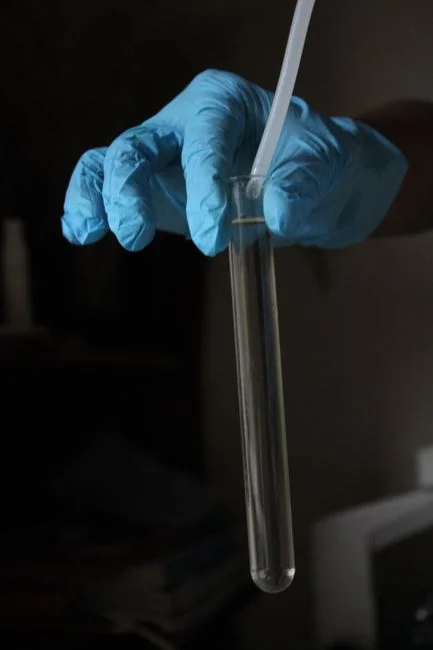
Under 40 CFR 403, the designated sampling point is the representative point in the wastestream where the Control Authority collects samples to determine compliance with the permit. For most categorical industrial users, the sampling point is downstream of all in-plant treatment but upstream of any recycle or zero-discharge return, so the sample represents the actual discharge to the POTW (per 40 CFR 403, published at eCFR.gov). For a Wadsworth-area plant, this is the manhole or monitoring station defined in the individual permit — not the outlet of any single unit operation, and not the cooling-tower makeup line if the plant reuses treated effluent internally.
Categorical industrial users are typically required to submit 24-hour flow-proportional composite samples at a frequency set by the permit — commonly twice per year to quarterly for routine parameters, and monthly during permit-renewal monitoring windows. Priority pollutant scans are usually annual, and PFAS and 1,4-dioxane screening are being written into renewal permits in an expanding set of states through 2026. Online TSS, pH, and conductivity probes tied to the plant SCADA give continuous trend visibility and reduce the chance that a single bad shift shows up unannounced in a quarterly composite. For priority pollutant scans, use a third-party lab holding state and NELAP accreditation, and document chain of custody on every sample — the documentation chain is what defends a DMR if a result is later challenged.
2026 Enforcement Trends Northeast Ohio Plants Should Track
Three regulatory shifts are worth planning for now, not after a permit renewal letter arrives. First, EPA and state PFAS action levels for PFOA, PFOS, and HFPO-DA are tightening in 2026; fluoropolymer processors (PTFE, PVDF, fluoroelastomer molding) and 1,4-dioxane screening for fluoropolymer breakdown are the most exposed. There is no federal categorical PFAS limit under Part 414 or 463 as of 2026, but state-level monitoring requests are appearing in renewal permits in Michigan, North Carolina, and several New England states, and additional states are expected to follow through 2026–2027 (HydropureWater field data, 2026). Second, microplastics in POTW influent are under active study, and several large POTWs are now requesting voluntary or required monitoring from upstream plastics manufacturers. Third, intermittent batch discharges from rubber molding and polymer kettle cleaning are receiving closer scrutiny because they create the load spikes the equalization basin is designed to absorb — an undersized or bypassed basin is the single most common root cause of NOV findings in this sector.
CAPEX, OPEX, and the Reuse-Offset Math for a 50 m³/h Plant
Pretreatment capital cost is most usefully framed as US dollars per cubic meter of treated flow. The membrane-based train (MBR + UF) is typically 20–40% higher in CAPEX than conventional activated sludge + multi-media, but 15–25% lower in annual OPEX because of lower sludge yield, tighter effluent, and reduced chemical consumption. Where local utilities accept reclaimed water for cooling-tower make-up or process rinse reuse, the reuse offset can bring effective water cost down by 50–80% relative to fresh purchase, which on a 50 m³/h plant translates to a payback window of roughly 2–4 years for the membrane upgrade. The supporting equipment — a sludge dewatering filter press for the DAF float and an PLC-controlled coagulant and pH dosing skid — should be scoped into the same CAPEX package so the plant does not end up with a bottleneck at the sludge cake or chemical feed stage. The table below compares the two trains at the 50 m³/h scale typical of a Wadsworth-area compounding or rubber molding facility.
| Train (50 m³/h) | CAPEX Range (USD) | Annual OPEX (USD/yr) | Payback Window | Effluent TSS (mg/L) |
|---|---|---|---|---|
| DAF + CAS + multi-media polish | $1.0M–$1.5M | $280k–$360k | Baseline | 10–20 |
| DAF + MBR + UF polish | $1.3M–$2.0M | $215k–$305k | 2–4 years (with 50–80% reuse offset) | <5 |
The CAS train is the lower-risk choice for plants that do not have a reuse offtake and do not need sub-5 mg/L TSS. The MBR + UF train is the right answer once a reuse offtake exists, once discharge limits tighten, or once the plant's footprint constraints make a 60% smaller biological stage decisive. Either way, the supporting sludge handling and chemical dosing equipment should be specified in the same procurement package.
Frequently Asked Questions
Who is the Control Authority for a plastics or rubber plant discharging to the Wadsworth POTW?
The Control Authority is the City of Wadsworth WWTP, operating under an EPA-approved pretreatment program. The Wadsworth POTW issues the individual discharge permit, sets site-specific local limits, conducts compliance sampling at the designated sampling point, and can escalate from a warning letter to administrative orders, civil penalties, and ultimately permit suspension or termination. Confirm the current local limits against the binding permit before final design — they override any general CFR guidance (source: epa.gov/npdes/national-pretreatment-program, retrieved 2026-02).
How do I know whether Part 414 or Part 463 applies to my plant?
Plastics, resin, and synthetic resin manufacturers follow 40 CFR Part 414, which sets subcategory-specific categorical pretreatment standards. Rubber manufacturers follow 40 CFR Part 463, which sets limits for the tire, latex, and general rubber products subcategories. Both sit underneath the general framework of 40 CFR 403. Map every waste stream to a subpart, then pull the current eCFR text and the Wadsworth permit side by side.
What removal efficiency should a DAF deliver on a polymer or latex stream?
A properly sized and chemically conditioned DAF typically achieves 60–90% oil and grease removal and 50–80% TSS removal on a single pass when treating polymer-coagulant emulsions, mold-release agents, and latex finishing residues. Coagulant dosing destabilizes the emulsion, recycle-water pressurization generates the microbubble cloud, and the floated layer is skimmed to sludge handling.
Is MBR worth the CAPEX premium over conventional activated sludge at 50 m³/h?
MBR + UF is typically 20–40% higher in CAPEX than CAS + multi-media but 15–25% lower in annual OPEX. On a 50 m³/h plant with a reuse offtake, the membrane upgrade pays back in roughly 2–4 years because reclaimed water displaces 50–80% of fresh purchase cost. Without a reuse offtake, the CAS train is the lower-risk choice.
What PFAS limits should a fluoropolymer processor plan for in 2026?
There is no federal categorical PFAS limit under 40 CFR Part 414 or 463 as of 2026, but state-level action levels for PFOA and PFOS in leading states sit in the 4–10 ng/L range, and 1,4-dioxane monitoring is being added to renewal permits for fluoropolymer processors. Plan for GAC + ion exchange or RO polishing on any stream with a credible PFAS source, and budget annual third-party scans with chain of custody.