Why Skiatook-Area Mining and Metals Plants Discharge to a POTW, Not a River
Mining and metals plants near Skiatook, Oklahoma that route wastewater to a sanitary sewer are governed by Clean Water Act §307(b) and 40 CFR Part 403, with categorical ceilings in 40 CFR Part 437 (Ore Mining and Dressing) and 40 CFR Part 433 (Metal Finishing). A facility sending process water to a river would instead need an NPDES permit under CWA §402 — a different rule set, different sampling cadence, and a different enforcement risk profile. Most operations in northeastern Oklahoma carry both authorizations in parallel because stormwater outfalls from yards, leach pads, and mill floors remain separate point-source discharges subject to NPDES (per Fluence, 2024-11). Confusing the two pathways is the single most expensive mistake a project team can make on a 2026 capital plan.
Skiatook sits in Tulsa County, and the receiving control authority is most often the City of Skiatook wastewater system or a neighboring Tulsa-area POTW. The exact pretreatment limits, sampling frequency, and Self-Monitoring Report cadence are written into that POTW's sewer-use ordinance, not into the federal CFR. The federal categorical standard sets the floor; the local ordinance almost always sets a tighter ceiling on zinc, copper, lead, and ammonia — typically 0.3–1.0 mg/L monthly average for zinc versus the 0.5 mg/L monthly average in 40 CFR Part 437. Penalty exposure under CWA §309 runs to $25,000 per day per violation, plus Significant Noncompliance (SNUR) listing risk that triggers public notice and EPA Region 6 attention.
The local geology is the reason this rule set exists in the first place. NE Oklahoma sits inside the legacy Tri-State lead-zinc district, and Tulsa County still hosts active aggregate operations and oil-field-services tenants that produce saline brine co-streams. That combination — acid-generation potential, heavy-metal leachate, and high-TDS brine — is exactly the pollutant envelope 40 CFR Part 403 was written to intercept before it reaches a municipal biological plant. The compliance engineering below assumes the local POTW is the binding constraint.
The Influent Chemistry That Drives the 2026 Design
Raw acid mine drainage and spent process solutions typically arrive at the head of the pretreatment plant at pH 2–4, with total suspended solids in the hundreds to several thousand mg/L and dissolved metals (Pb, Cu, Zn, Cd, Ni, As) that need to drop by one to three orders of magnitude before discharge. Leach-pad runoff and brine streams layer elevated sulfate and total dissolved solids on top of that profile, and in the Skiatook / Tulsa area, oil-field brine co-tenants can push chloride and TDS high enough to disqualify a hydroxide-only train without a polishing step. Skiatook and Tulsa County are in the Tri-State mining belt, so legacy lead/zinc loading in groundwater and stormwater contacts is the rule, not the exception (per EPA Region 6 basin assessments, 2024-08).
The single most common reason a plant oversizes or undersizes the equalization basin is picking the wrong design basis — usually because stormwater was mixed in or because the production-side batch schedule was not characterized. A 4-hour basin passes every shift-change slug and every dump-leach cycle straight into the clarifier, and retrofitting equalization after civil work is complete is the most expensive change order in a pretreatment project. The right move is a flow-proportional composite sampler on the existing discharge for at least one representative month before the P&ID is locked.
The 2024–2026 EPA trend line adds two parameters to that raw-water list. The Lead and Copper Rule Revisions (LCRR) are pushing lead action levels toward 10 µg/L at the tap, which forces POTWs to re-derive local limits downward on whatever the IU sends them. The 2024 Multi-Sector General Permit added PFAS monitoring (PFOS, PFOA, PFHxS, PFNA) for sectors that include metal mining, and Oklahoma control authorities are starting to adopt the same analytical suite for sewer discharges (per EPA 2024 MSGP, finalized 2024-09). If the influent carries any of these, the analytical budget — not the process budget — is where the 2026 design will need attention.
Categorical vs Local POTW Limits: The Numbers That Actually Matter
40 CFR Part 437.40–437.47 sets the categorical ceiling for ore mining and dressing wastewater, with representative subcategory limits in the table below. 40 CFR Part 433.15 applies on top of that wherever a plant runs plating, pickling, or anodizing — copper capped at 3.38 mg/L daily max and 2.07 mg/L monthly average, total chromium at 2.77 / 1.71 mg/L. The federal numbers are a floor; typical 2026 local POTW ordinances in the Tulsa area tighten zinc to 0.3–1.0 mg/L monthly average and copper to 0.3–0.5 mg/L monthly average, which is what the equipment has to be sized to hit.
| Pollutant | 40 CFR Part 437 Daily Max (mg/L) | 40 CFR Part 437 Monthly Avg (mg/L) | Typical 2026 Tulsa-Area POTW Limit (mg/L) |
|---|---|---|---|
| Total Suspended Solids | 50 | 25 | 10–30 (instantaneous) |
| Zinc | 1.0 | 0.5 | 0.3–1.0 (monthly avg) |
| Copper | 1.0 | 0.5 | 0.3–0.5 (monthly avg) |
| Lead | 0.5 | 0.25 | 0.1–0.3 (monthly avg) |
| Total Chromium | 1.0 | 0.5 | 0.5–1.0 (monthly avg) |
| Cadmium | 0.5 | 0.25 | 0.05–0.2 (monthly avg) |
| Nickel | 1.0 | 0.5 | 0.3–0.5 (monthly avg) |
| Arsenic | 0.5 | 0.25 | 0.1–0.2 (monthly avg) |
| Oil & Grease | 50 | 25 | 10–25 (instantaneous) |
| pH | 6.0–9.0 (instantaneous) | 6.5–9.0 (instantaneous) | |
Three 2024–2026 EPA actions are reshaping what counts as compliant in 2026. The LCRR is pushing lead action levels toward 10 µg/L, which forces a re-derivation of local limits at lower numbers (per EPA LCRR finalization, 2024). The 2024 MSGP added PFAS monitoring for metal mining, and Oklahoma POTWs are adopting the same PFOS, PFOA, PFHxS, PFNA panel for sewer discharges. The 2025 ore-mining BAT revisions tightened the cost-benefit envelope on total recoverable metals (per EPA ore-mining BAT revisions, 2025-03). Treat all three as the next permit-cycle risk, not as background.
pH control is the most leveraged variable in the train. Target pH 6.5–9.0 to satisfy virtually every POTW's instantaneous range, and stage dosing in two reactors if the influent swings more than 2 pH units. Each 1 pH unit away from a metal's precipitation optimum can cut removal by an order of magnitude — zinc from <1 mg/L to 10+ mg/L with no other change to the chemistry (per HydropureWater field data, 2025). An automatic PLC-controlled dosing skid sized for ±0.2 pH control is the cheapest insurance against an excursion that ends up on the SNUR list.
The 2026 Pretreatment Train, Step by Step
The unit-process sequence below is the order it actually appears on the P&ID for a 2026 NE Oklahoma mining/metals plant discharging to a municipal sewer. Each step has a sizing parameter, a failure mode, and a 2026 cost lever.
| Step | Equipment | Design Parameter | Failure Mode |
|---|---|---|---|
| 1. Equalization | EQ basin, mechanical mixer, pH/temperature probes | 8–24 h of average daily flow | Slug passes through, clarifier overloads |
| 2. pH correction | PLC-controlled dosing skid with NaOH or lime | pH 6.5–9.0, ±0.2 control | Underdose → metal pass-through; overdose → wasted reagent |
| 3. Precipitation | Two-stage reactor (hydroxide ± sulfide on slipstream) | 85–95% metals removal (hydroxide), 0.01–0.05 mg/L residual (sulfide) | Single reactor can't hold pH across swings |
| 4. Coagulation/flocculation | Polymer feed (0.5–3 mg/L), static mixer, floc tank | 20–40 m/h clarifier overflow rate with no carryover | Polymer overdose raises TDS bleed |
| 5. Solids separation | DAF or lamella clarifier (see next section) | 5–25 m/h (DAF) or 20–40 m/h (lamella) | Underflow solids carryover to multimedia filter |
| 6. Polishing | multimedia filter (anthracite/sand/garnet) | 1–2 m/h, backwash on ΔP | Filter exhausts during a clarifier upset |
| 7. Disinfection | chlorine dioxide generator (1–5 mg/L) | CT for the worst-case force main in the collection system | Trihalomethane formation if substituted with Cl₂ |
| 8. Sludge handling | plate-and-frame filter press | 25–35% dry solids cake | Filtrate returns to head of plant, never to sewer |
Equalization is the most undersized piece of equipment in the typical mining/metals pretreatment plant. Spec the basin at 8–24 hours of average daily flow; a 4-hour basin passes every spike from shift changes, dump-leach cycles, and mill clean-outs straight into the clarifier (per HydropureWater field data, 2025). pH correction comes next. Lime (Ca(OH)2) is cheaper per ton but generates 3–5× more sludge, so high-TDS mining streams typically justify NaOH. Stage dosing in two reactors when the influent swings more than 2 pH units.
Hydroxide precipitation with NaOH or lime is the default chemistry for most plants because the reagent is cheap and the chemistry is well understood. Sulfide precipitation (NaHS, FeS, Na2S) is reserved for streams where residual metal must drop below 0.1 mg/L — sulfide residuals of 0.01–0.05 mg/L for Cu/Zn/Cd/Ni are achievable, an order of magnitude lower than hydroxide — but reagent cost runs 2–4× higher and operators must control H2S off-gas with sealed, scrubbed reactors (per HydropureWater field data, 2025). Jar testing is mandatory to lock in the per-metal pH optimum; vendor curves are not a substitute. Polymer coagulant aid at 0.5–3 mg/L flocs the metal-hydroxide particles for clarifier hydraulic loading of 20–40 m/h without carryover and reduces TDS bleed by collapsing the colloidal fraction before settling. Disinfection with chlorine dioxide at 1–5 mg/L provides the residual the POTW asks for without forming the regulated trihalomethanes chlorine produces — check the local ordinance, because the trigger is usually a long force main or a pathogen-prone co-tenant in the collection system.
DAF or Lamella: The Decision Most Skiatook Engineers Actually Face
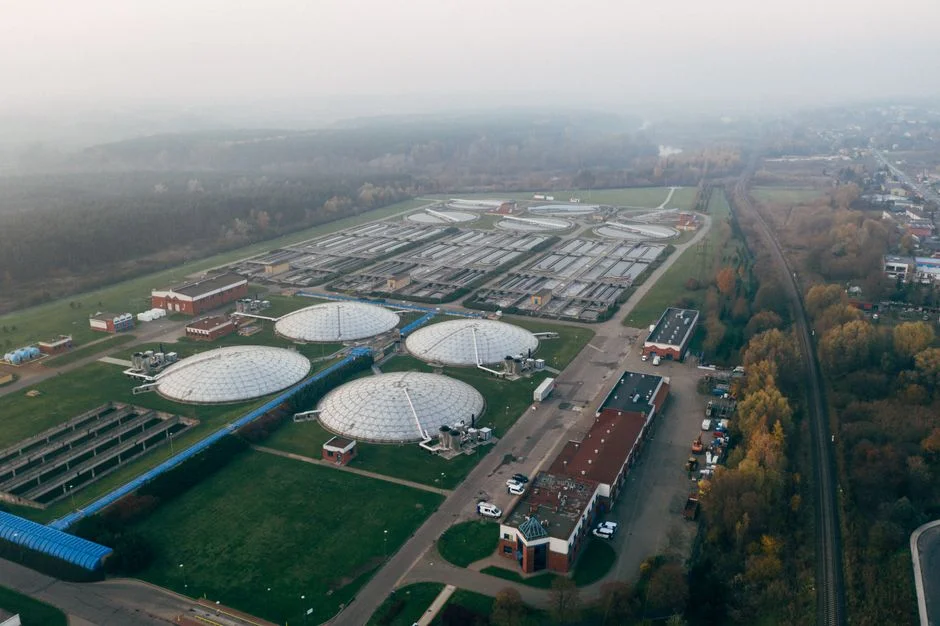
This is the unit-process decision that drives the footprint, the OPEX, and the reagent consumption of the whole plant. A DAF system operates at 5–25 m/h hydraulic loading, floats oil-coated and colloidal particles with microbubbles, and delivers 90–98% TSS removal and 85–95% oil/grease removal in mining/metal-finishing service. The DAF family covers 4–300 m³/h across 13 models, which fits most plant scales without civil redesign. A lamella clarifier operates at 20–40 m/h surface loading in roughly one-third the footprint of a conventional clarifier, has a denser sludge blanket, lower chemical consumption, and handles heavy metal-hydroxide flocs well. It does not remove free oil or colloidal fines as effectively as DAF.
| Parameter | DAF | Lamella Clarifier |
|---|---|---|
| Hydraulic loading | 5–25 m/h | 20–40 m/h |
| Flow range | 4–300 m³/h (13 models) | 50–500+ m³/h |
| TSS removal | 90–98% | 80–95% |
| Oil/grease removal | 85–95% | 30–60% |
| Footprint | Larger for high flow | ~1/3 of conventional |
| Best fit | Oil, colloidal fines, flow <200 m³/h | Metal-bearing sludge, flow >100 m³/h |
| Chemical consumption | Higher (polymer + coagulant) | Lower (denser sludge blanket) |
The decision heuristic is straightforward. DAF when the stream carries oil, grease, or fine colloidal metals; lamella when the stream is primarily a metal-hydroxide sludge at high flow and footprint is constrained. A multimedia filter downstream of either unit strips residual TSS to <10 mg/L and acts as a safety net for the days when the clarifier underperforms because of a polymer mis-dose or a hydraulic surge. Sludge from both units is a regulated waste. A plate-and-frame filter press dewateres the sludge to 25–35% dry solids, producing stackable cake for a Subtitle-D landfill or — for recoverable metals — a smelter. Filtrate returns to the head of the plant, never to the sewer. For a deeper side-by-side of the two separators, see the Central City DAF-vs-clarifier factory guide.
Sizing and Selection Matrix by Flow Band
Design for the peak 2-hour flow with 20–30% turndown capacity, and treat to the local POTW's sewer-use ordinance — not just to the federal categorical standard, because the local numbers are tighter and the penalty structure (CWA §309 civil penalties up to $25,000/day per violation, plus SNUR risk) is enforced daily. The table below maps typical flow bands to delivery format and unit-process selection for a 2026 NE Oklahoma project.
| Flow Band | Delivery Format | Equalization | Solids Separation | Polishing | Typical CAPEX (2026 USD) |
|---|---|---|---|---|---|
| < 10 m³/h | Packaged skid, PLC-controlled | 24–48 h tankage | Small DAF system | Cartridge or multimedia | $150,000–$400,000 |
| 10–50 m³/h | Factory-built modules, site-assembled | 12–24 h basin, mixed | DAF or lamella | multimedia filter | $400,000–$1,200,000 |
| 50–100 m³/h | Factory skid + civil EQ basin | 12–24 h basin, mixed, aerated | DAF or lamella clarifier | Multimedia + ClO2 | $1,200,000–$2,500,000 |
| > 100 m³/h | Civil-dominant, parallel trains | 8–24 h basin, mechanical mixer | Multiple DAF trains OR lamella | Multimedia + ClO2, possibly RO | $2,500,000–$8,000,000+ |
OPEX typically runs 15–25% of CAPEX annually for reagent, power, and polymer, with sludge disposal a separate line item that can swing 20–40% of OPEX at higher metal loadings. Higher-TDS or brine co-streams push the train toward RO polishing — typical recovery is 65–75% with 4–8 kWh/m³ energy footprint — but brine RO concentrate becomes its own disposal problem and should be priced as a separate scope. For a parallel compliance blueprint covering adjacent sectors, the Brandon-area pretreatment compliance playbook walks through the same matrix from a different regulatory anchor, and the Springdale MBR-vs-CAS comparison for mining wastewater covers the biological side if a high-strength organic load is in the mix.
The 2026 Compliance Calendar and What Skiatook Plants Get Audited On
Categorical Industrial Users (CIUs) under 40 CFR Part 403 sample on a schedule defined by their control authority — typically 24-hour flow-proportional composite samples for metals, grab samples for pH, temperature, and cyanide, with frequency tied to discharge volume and categorical status. Plants under 100,000 gpd with no toxic pollutants typically fall into a "non-significant" cadence; larger or categorical users move to monthly or semi-annual reporting. The Self-Monitoring Report (SMR) goes to the POTW on the cadence the ordinance specifies, and the report must include both daily-max and monthly-average values to avoid the SNUR trigger.
Two plan documents drive the 2026 audit posture. A Slug Control Plan and a Best Management Practices (BMP) plan are required as a condition of discharge authorization for most CIUs in Oklahoma; they describe how the plant will prevent and contain batch discharges that could pass through or interfere with the POTW. A 2026 site-specific addition: PFAS monitoring under the 2024 Multi-Sector General Permit is being adopted by local control authorities even for sewer discharges, and the analytical cost (LC-MS/MS for PFOS, PFOA, PFHxS, PFNA) should be in the 2026 compliance budget. CWA §309 civil penalties up to $25,000/day per violation make a single excursion a board-level event — design to the local ordinance, not the federal floor.
Frequently Asked Questions
Is a Skiatook-area mining or metals plant regulated by NPDES or by the local POTW when it discharges to a sewer?
Sewer discharges to a POTW are regulated under CWA §307(b) and 40 CFR Part 403, with categorical standards in 40 CFR Part 437 (Ore Mining) and 40 CFR Part 433 (Metal Finishing). Direct discharges to surface water require a separate NPDES permit under CWA §402. Most plants carry both authorizations in parallel because stormwater outfalls are separate point sources (per Fluence, 2024-11).
Are the local Tulsa-area POTW limits tighter than the 40 CFR Part 437 categorical standards?
Yes. Typical 2026 local POTW ordinances tighten zinc to 0.3–1.0 mg/L monthly average and copper to 0.3–0.5 mg/L monthly average, versus the 40 CFR Part 437 floor of 1.0 mg/L daily max and 0.5 mg/L monthly average for zinc. Confirm the exact numbers against the receiving control authority's sewer-use ordinance before sizing equipment.
When does sulfide precipitation beat hydroxide precipitation in a mining pretreatment train?
Sulfide precipitation (NaHS, FeS) achieves residual metals of 0.01–0.05 mg/L versus 0.5–2.0 mg/L for hydroxide, which matters when the local limit is below 0.3 mg/L. Reagent cost runs 2–4× higher and the system requires sealed reactors with H2S scrubbing. For most mining flows, hydroxide precipitation with sulfide polishing on a slipstream is the cost-effective compromise.
What flow range does a standard DAF system cover in 2026, and when does lamella become more economical?
Standard DAF units cover 4–300 m³/h across 13 models, with hydraulic loading of 5–25 m/h. Below 10 m³/h, packaged skid systems are common; above 100 m³/h, multiple DAF trains in parallel or a lamella clarifier typically becomes more economical because civil works for equalization dominate the schedule.