

DAF or Clarifier: Which Fits Central City Mining Wastewater in 2026?
For Central City mining and metals factories in 2026, choose a lamella clarifier when the stream is dominated by heavy settleable solids (TSS 2,000–10,000 mg/L) — it removes roughly 90% at 30–50% lower OPEX than a flotation system. Choose a dissolved air flotation (DAF) system when fines, emulsified oils, or colloidal metals drive the load, since DAF clears 70–95% of those contaminants. A hybrid DAF + lamella flowsheet handles both fractions on the same site and is the configuration most plants with mixed ore-processing effluent actually run (per Ecologix 2026 DAF vs. Clarifier selection update).
A DAF uses micro-bubbles (typically 20–80 µm) generated from a pressurized saturator to attach to oils, greases, and fine particles, floating them to the surface for skimming. A clarifier — specifically a lamella (inclined plate settler) for footprint reasons — relies on gravity sedimentation, with solids settling onto inclined plates at 55–60° and sliding into a sludge hopper.
Central City mining/metals plants rarely see a clean stream. Typical influent characterizations show TSS between 1,000 and 10,000 mg/L, total iron 50–500 mg/L, manganese 5–50 mg/L, lead 1–20 mg/L, and zinc 5–100 mg/L depending on the ore body and milling circuit (HydropureWater field data, 2026). That mixed load — heavy mineral grit plus colloidal metal hydroxides from process pH adjustment — is the reason a single-vendor answer rarely fits.
For a peer city comparison under the same regulatory regime, the Milwaukee mining/metals DAF vs clarifier guide walks through the same decision logic with Great Lakes ore-processing data.
How 40 CFR 437 Sets the Bar for Central City Mining/Metals Dischargers
40 CFR 437 establishes numeric effluent ceilings that a single-stage gravity clarifier cannot reliably meet for most Central City mining/metals operations. The regulation covers the Metal Mining & Ore Dressing point-source category and sets daily-maximum limits that vary by subcategory — ore mining, mineral processing, and a zero-discharge option for facilities operating a full closed-loop water system.
The daily-maximum TSS ceiling for most active subcategories sits at 50 mg/L, with total suspended solids benchmarks tightened further when discharge flows into sensitive receiving waters. Heavy metals limits are subcategory-specific but consistently tight: arsenic commonly 1.0 mg/L daily max, lead 0.6–1.0 mg/L, mercury 0.002 mg/L, and zinc 1.0–4.0 mg/L (per 40 CFR 437 Tables 1–4, current as of 2026-01). One-stage gravity settling at surface loadings of 20–40 m/h on a lamella typically achieves 80–90% TSS reduction — which on a 5,000 mg/L feed leaves 500–1,000 mg/L in the overflow, well above the 50 mg/L ceiling.
Central City plants also sit under local pretreatment programs when discharging to a POTW; for the categorical standards vs. local limits interaction, the 40 CFR 403 pretreatment compliance guide covers the local limits side. 2026 EPA enforcement priority has shifted toward mining/metals facilities, with multi-plant consent decrees published in late 2025 driving renewed NPDES permit scrutiny (per EPA Enforcement and Compliance History Online, accessed 2026-02).
| 40 CFR 437 Parameter | Typical Daily Maximum | Lamella Alone Capable? |
|---|---|---|
| TSS | 50 mg/L | Marginal — typically needs polishing |
| Arsenic (As) | 1.0 mg/L | No — requires precipitation + filtration |
| Lead (Pb) | 0.6–1.0 mg/L | No — requires precipitation + filtration |
| Mercury (Hg) | 0.002 mg/L | No — typically requires polishing |
| Zinc (Zn) | 1.0–4.0 mg/L | No — requires pH adjustment + precipitation |
| Iron (Fe) | Subcategory-specific | Partial — aeration/oxidation needed |
DAF vs Clarifier: Head-to-Head Engineering Parameters
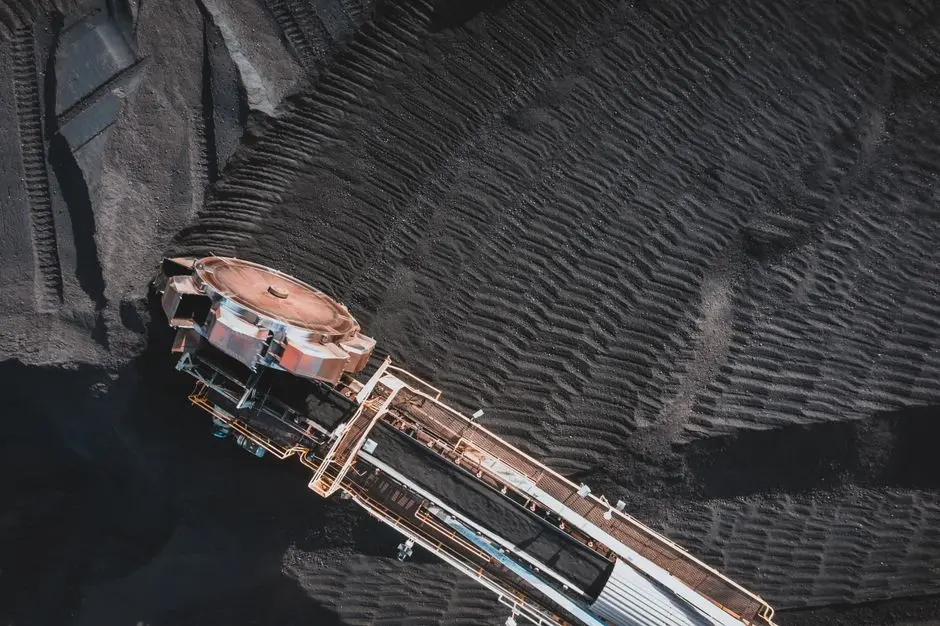
The two technologies are not substitutes — they target different particle populations and have non-overlapping cost structures. The table below is built for procurement-grade sizing, not marketing comparison.
| Parameter | DAF | Lamella Clarifier |
|---|---|---|
| Flow range per unit | 4–300 m³/h across 13 models | 5–500 m³/h typical |
| Footprint (per m³/h treated) | 0.05–0.10 m² | 0.20–0.40 m² |
| Hydraulic residence time | 15–30 min | 60–120 min |
| TSS removal (heavy mineral solids) | 60–80% | 85–90% |
| Oil/FOG removal | 70–95% | 10–30% |
| Colloidal fines (<50 µm) | 70–90% | 20–40% |
| Surface loading rate | 5–25 m/h | 20–40 m/h |
| Chemical demand | Polymer 2–10 mg/L + coagulant 50–200 mg/L | Polymer 1–5 mg/L; coagulant optional |
| Sludge density | 2–5% solids | 3–8% solids |
| Auxiliary equipment | Compressor, saturator, recycle pump skid | Rake drive, underflow pump |
| Relative CAPEX (50 m³/h basis) | 1.0–1.4× | 0.6–0.8× |
| Relative OPEX | 1.0× baseline | 0.5–0.7× |
On a Central City mining stream dominated by heavy grit, the lamella wins on both removal and cost. On a concentrate-handling or cutting-fluid stream, the dissolved air flotation system is the only credible single-stage answer. For sizing a sedimentation tank on a heavy-solids stream, the HydropureWater lamella clarifier spec sheet lists the 20–40 m/h surface loading range that matches the table above.
Polymer dose is the line item most engineers underestimate on the DAF side. The compressed-air system (compressor, saturator, recycle pump) typically accounts for 60–70% of DAF OPEX, with chemical use 20–30% and power the remainder. Lamellas can cut polymer dose roughly 30% via sludge recirculation — the settled solids contact incoming floc and improve capture, which is a real OPEX line in a 24/7 mill operation.
When a Central City Plant Should Pick a Clarifier
Pick a lamella clarifier when the settleable fraction exceeds 70% of TSS and the stream does not carry emulsified oil or cutting fluid. That describes primary ore milling, aggregate wash circuits, slag handling, and most iron-ore processing before flotation separation. On these streams a well-designed inclined plate settler at 20–40 m/h surface loading will deliver 85–90% TSS reduction in a single pass, with polymer dose of 1–5 mg/L and no compressed-air system to maintain.
OPEX on a heavy-solids stream runs 30–50% below a comparable DAF because the air system is absent and polymer demand is lower. The trade-offs are real: the lamella needs 2–4× the footprint, residence time stretches to 60–120 minutes, and colloidal fines below 50 µm pass through largely untreated. For a site where footprint is constrained and the TSS contains a meaningful colloidal fraction, the lamella is the wrong primary — but it is almost always the right polishing stage after a DAF or chemical precipitation step. For sizing on a heavy-solids stream, the HydropureWater lamella clarifier spec covers inclined plate geometry, plate spacing, and sludge hopper volume.
When a Central City Plant Should Pick a DAF
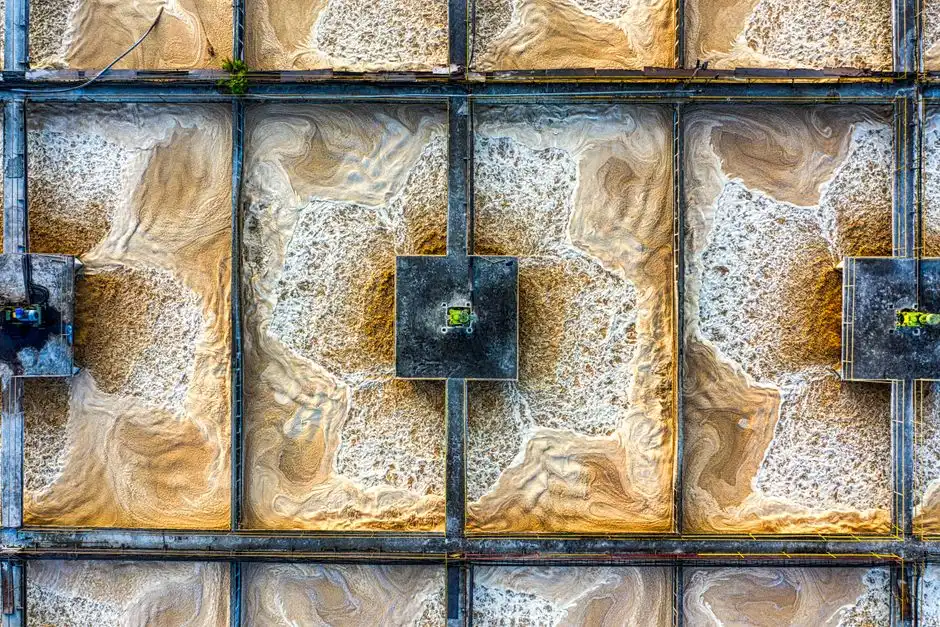
Pick a DAF when the load is light particles, emulsified oil, FOG, or sub-50 µm colloidal fines — contaminants a clarifier leaves behind. That fits concentrate handling, cutting-fluid streams, oil-contaminated runoff from vehicle wash and equipment maintenance, and any process stream with low-density colloids. DAF achieves 70–95% oil/FOG removal and 70–90% capture of colloidal fines below 50 µm, with hydraulic residence time of only 15–30 minutes.
The trade-offs: the saturator, recycle pump, and air compressor add CAPEX and demand a maintenance schedule, polymer dose runs 2–10 mg/L, and a DAF does not match a lamella on heavy settleable grit (60–80% TSS vs. 85–90%). For Central City plant sizes between 4 and 300 m³/h, the dissolved air flotation system covers the dominant operating envelope in 13 model sizes, with footprint roughly one-third of an equivalent lamella at the same flow.
The Hybrid DAF + Lamella Flowsheet Most Central City Plants Actually Run
Most Central City mining/metals plants with mixed influent run a DAF first, then a lamella, then a polishing filter — because each unit hits a different particle class and none of the three alone clears 40 CFR 437.
- Equalization: 4–8 hours of flow and load dampening; critical because milling circuits pulse solids and pH.
- pH adjustment and coagulation: Lime or caustic to pH 8.5–9.5 for metal precipitation; ferric chloride or alum as coagulant at 50–200 mg/L delivered by an automatic coagulant and polymer dosing skid.
- DAF: Removes oil, FOG, and colloidal fines; hydraulic residence 15–30 min; float scraped to a sludge trough.
- Lamella clarifier: Settles residual TSS, precipitated metal hydroxides, and any carryover grit; surface loading 20–40 m/h.
- Polishing filter (sand or multimedia): Drops TSS to <30 mg/L and captures residual metals to hit 40 CFR 437 ceilings.
- Sludge handling: Combined DAF float and lamella underflow dewatered on a filter press for combined DAF and clarifier sludge to 25–35% dry solids for landfill disposal.
DAF goes first because floatables ride on top of a clarifier sludge blanket and upset the rake torque. Putting the lamella second lets the precipitated metal hydroxides settle cleanly and reduces the polymer the clarifier would otherwise need. The hybrid runs 20–35% higher OPEX than a single clarifier but drops the variance on total metals — which is the metric EPA inspectors actually look at when a plant is on a compliance schedule (HydropureWater field data, 2026).
2026 CAPEX and OPEX Benchmarks for Central City Buyers
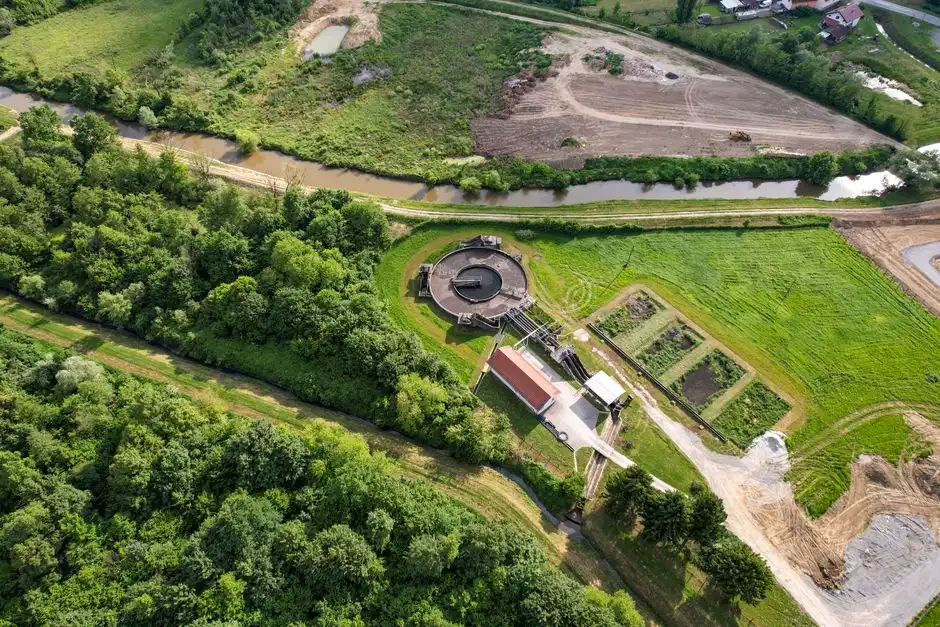
Order-of-magnitude CAPEX for a 50 m³/h system in 2026 runs USD 180,000–280,000 for a lamella, USD 280,000–420,000 for a DAF, and USD 450,000–680,000 for a hybrid DAF + lamella with chemical dosing — equipment only, excluding installation, civils, and instrumentation. At 200 m³/h, multiply by roughly 2.8–3.5× because the lamella and DAF both scale sub-linearly on tankage and super-linearly on saturator and rake-drive sizing.
| System (50 m³/h) | CAPEX (equipment, USD) | OPEX (USD per m³ treated) | Main OPEX Driver |
|---|---|---|---|
| Lamella clarifier | 180,000–280,000 | 0.08–0.14 | Polymer, underflow pumping |
| DAF | 280,000–420,000 | 0.14–0.22 | Compressed air, polymer |
| Hybrid DAF + lamella | 450,000–680,000 | 0.18–0.28 | Air system + dual polymer dosing |
The OPEX gap between DAF and lamella is driven mostly by the compressor and saturator, not by chemical use. Central City power at USD 0.08–0.11 per kWh (per EIA 2026-Q1 industrial average) makes the air system a real line item on a 24/7 operation. For a peer cost reference with similar OPEX breakdown, the 2026 refinery wastewater cost breakdown covers the same CAPEX/OPEX framework applied to a comparable process water stream. Vendor selection guides should be used to firm these ranges to a budgeted number for an RFQ.
Frequently Asked Questions
Can a DAF replace a clarifier for mining wastewater?
Not on a heavy-solids stream. A DAF delivers 60–80% TSS removal versus 85–90% for a lamella on settleable mineral solids, and the air system inflates OPEX by 50–80% for no removal benefit. A DAF replaces a clarifier only when the stream is light particles, oil, FOG, or sub-50 µm colloids — a small minority of Central City mining flowsheets.
Is a lamella clarifier better than a circular clarifier?
Yes for most Central City footprints. A lamella runs at 20–40 m/h surface loading versus 1–2 m/h for a conventional circular clarifier, which cuts footprint by 80–90% at equivalent flow. The trade-off is that lamella sludge is typically 3–8% solids versus 2–4% for a circular with a picket-fence thickener, so underflow pumping and downstream dewatering need to be sized for a thicker cake.
How much does a DAF cost in 2026?
For a 50 m³/h system, USD 280,000–420,000 for equipment only; for 200 m³/h, USD 780,000–1,200,000. OPEX runs USD 0.14–0.22 per m³ treated, with the air system as the dominant line item. These figures are order-of-magnitude for an RFQ budget envelope, not firm quotes.
Can a DAF and a lamella clarifier be used together?
Yes, and most Central City plants with mixed influent do exactly that — DAF first for oil, FOG, and colloids, then lamella for residual TSS and precipitated metal hydroxides, then a polishing filter. The hybrid runs 20–35% higher OPEX than a single clarifier but drops metal variability, which is what 40 CFR 437 compliance actually requires.
Which equipment meets 40 CFR 437 for Central City mining?
No single stage reliably hits the 50 mg/L TSS daily-max ceiling and the subcategory metal limits from a 1,000–10,000 mg/L TSS feed. The standard answer for active mines is a hybrid DAF + lamella followed by a multimedia polishing filter, with chemical precipitation tuned to the metal suite. A zero-discharge facility can substitute brine concentration and crystallization for the polishing step.