Why High-Turbidity Groundwater Fails as Boiler Feedwater
Turbidity is a measure of the cloudiness of water and indicates water quality and filtration effectiveness, per the U.S. EPA's National Primary Drinking Water Regulations. AOS Treatment Solutions states that the suspended load behind that cloudiness can include sand, silt, organic matter, eroded soil, decaying plant and animal material, and metal-bearing particles such as lead, mercury, and cadmium stripped from the watershed; turbidity also allows disease-causing organisms to "hide" from disinfection.
AOS Treatment Solutions cites the working benchmarks used in the field: finished drinking water should stay below 1 NTU in 95% of daily supply, with natural surface sources below 5 NTU. Boiler duty is at least as strict as those numbers, because the suspended load carries hardness, iron, manganese, silica, and biological activity directly into a hot, concentrating boiler—the combination that produces scale, carryover, under-deposit corrosion, and tube failures. Reducing turbidity is necessary, but the system must still strip dissolved hardness and dissolved solids before the water meets the deaerator; the following sections detail that wider scope.
The 2026 Process Train for Industrial Boiler Feedwater
A defensible high-turbidity groundwater train for boiler feedwater is staged rather than built around a single unit operation. The chain runs: raw well → intake screening → raw-water storage → coagulation / flocculation, supported by an automatic chemical dosing system for coagulant and pH control → sedimentation or dissolved air flotation → media filtration or ultrafiltration → cartridge polish → twin-tank softener → reverse osmosis → mixed-bed or EDI polish → deaerator → boiler. The membrane stages should be sized to the Akademik Gıda operating window: in that cooling-tower and boiler-feed reuse study, ultrafiltration ran at 2 bar transmembrane pressure and nanofiltration at 4 bar, with UF molecular-weight cut-offs tested at 10 kDa and 5 kDa. The pretreatment argument is reinforced by the Voronezh State University review, which warns that reverse osmosis and electrodialysis membranes foul on suspended solids and lose activity unless particulates are removed upstream—a finding that applies equally to RO fed from groundwater. The softener step needs to match boiler-feed duty without leaving the plant dry during regeneration, which is what a twin-tank industrial softener sized at 1–45 T/h with paired 60–2,000 L brine tanks and alternating vessels is built for. Exact coagulant dose, backwash interval, and SDI target remain project-specific and should be confirmed with a jar test and on-site pilot, not taken from generic defaults.
Filtration Technologies Compared: Multi-Media, UF, and RO
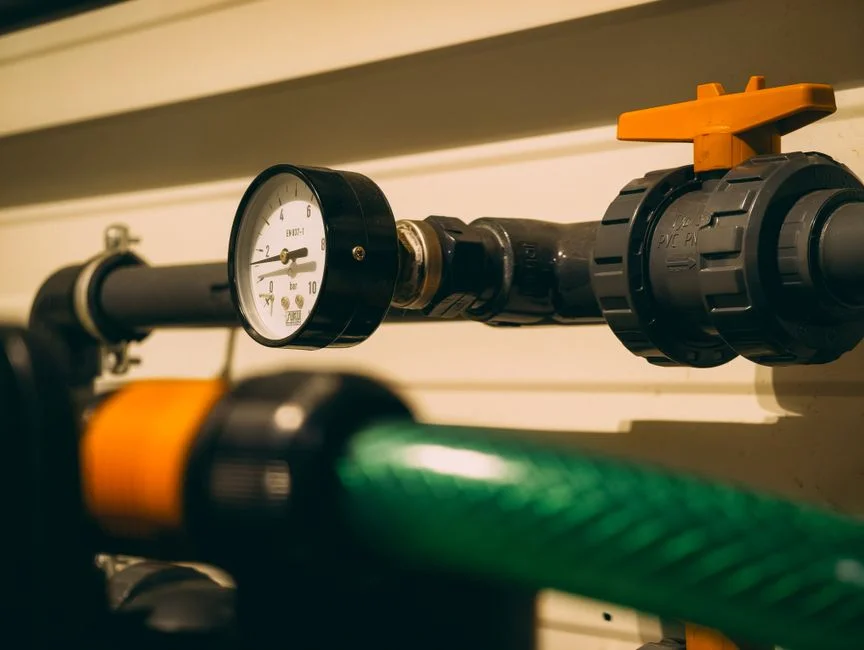
Feed-turbidity levels dictate the filtration technology required, with polishing requirements secondary. A deep-bed anthracite/sand/garnet multi-media filter handles moderate-turbidity well water and is sized to drop the Silt Density Index enough to protect downstream RO membranes. A PVDF ultrafiltration system at 0.03 µm absolute pore size, operating around 2 bar transmembrane pressure (matching the Akademik Gıda figure), accepts up to 300 ppm of feed turbidity, runs chemical-free with automatic backwash and air scour, and is rated for 2,000–40,000 L/h—making it the preferred choice when feed quality varies seasonally. An integrated JY purification system collapses coagulation, flocculation, sedimentation, filtration, and automatic backwash into one skid, taking feed up to 3,000 mg/L turbidity down to below 3 mg/L at 10–200 m³/h, which is the right front end when a well is being commissioned, a construction site is upstream, or mining/soil work has re-suspended fines. An industrial reverse osmosis system follows the clarifier, strips dissolved solids at up to 95% recovery under PLC control, and delivers boiler-feed purity. The table below compares these options on the metrics a process engineer requires.
| Technology | Feed turbidity tolerance | Typical effluent | Role vs. RO | Chemical demand | Wastewater / backwash |
|---|---|---|---|---|---|
| Multi-media filter (anthracite/sand/garnet) | Moderate, project-specific | Reduced suspended solids, SDI lowered for RO protection | Pretreatment only | Often paired with coagulant | Routine backwash volume |
| PVDF ultrafiltration (0.03 µm, ~2 bar) | Up to 300 ppm | Near-absolute particulate barrier; low and stable SDI | Pretreatment only | Chemical-free backwash + air scour | Periodic backwash, low volume |
| Integrated JY purification unit | Up to 3,000 mg/L → <3 mg/L | Pre-conditioned for downstream media or UF | Front-end pretreatment | Coagulant/flocculant feed required | Sedimentation and backwash sludge |
| Reverse osmosis (industrial RO) | Requires low-SDI feed from upstream | Ultra-pure permeate, up to 95% recovery | Polishing / dissolved-solids removal | Antiscalant, occasional CIP | Concentrate stream management |
Parameter Table: What Each Stage Should Achieve
The parameter targets below are anchored in figures from the supplied research or equipment specifications; project-specific variables must be collected by the engineer.
| Stage | Key parameter | Value / target | Source |
|---|---|---|---|
| Raw groundwater (well) | Turbidity, Fe/Mn, hardness, silica, TDS | Project-specific — request site water analysis | — |
| Drinking-water benchmark | Finished turbidity | <1 NTU in 95% of daily supply; natural sources <5 NTU | AOS Treatment Solutions |
| Multi-media filter outlet | SDI | Reduced to a level that protects RO membranes | Multi-media filter spec |
| Ultrafiltration outlet | Pore size / operating pressure | 0.03 µm absolute; ~2 bar transmembrane pressure | PVDF UF system spec; Akademik Gıda |
| Ultrafiltration inlet | Feed turbidity tolerance | Up to 300 ppm, chemical-free backwash | PVDF UF system spec |
| Reverse osmosis outlet | Recovery / permeate quality | Up to 95% recovery; ultra-pure permeate | Industrial RO spec |
| Softener outlet | Continuous duty | 1–45 T/h from twin alternating vessels | Twin-tank industrial softener spec |
| Boiler-feed conductivity / silica | Boiler-pressure-specific | Set by engineer from boiler pressure and condensate target | — |
Decision Framework: Choosing the Right Filtration Configuration
Three feed-quality scenarios cover most industrial groundwater sites. If raw groundwater turbidity is moderate—low hundreds of ppm or less and reasonably steady—a multi-media filter ahead of a twin-tank industrial softener and an industrial reverse osmosis system is typically the lowest-CAPEX train that meets boiler-feed targets. If turbidity spikes seasonally or feed quality drifts, make a PVDF ultrafiltration system the primary clarifier: its 0.03 µm barrier holds up to 300 ppm feed turbidity, runs chemical-free, and provides RO with a more stable SDI than media alone. If raw water carries very high turbidity—≥1,000 mg/L from construction runoff, mining, or well work—front the train with an integrated JY purification system (≤3,000 mg/L → <3 mg/L) before the media or UF stage, paired with a dissolved air flotation step for fine suspended loads. Two cross-cutting constraints apply: the Akademik Gıda evidence that membrane performance is sensitive to operating pressure and MWCO selection, and the Voronezh review's warning that suspended solids will disable RO and electrodialysis membranes without adequate pretreatment.
Sizing, Pilot Testing, and What to Verify Before Purchase
A defensible specification relies on data provided to the supplier, rather than generic catalog selections. Provide the vendor with feed flow rate (peak and average), raw turbidity, iron and manganese, hardness, silica, TDS, temperature, target boiler pressure, and target condensate quality. Run a jar test to fix coagulant type and dose, then run an on-site pilot of the chosen UF or media filter for at least one full operating cycle that includes a backwash event, measuring SDI on the pilot effluent to confirm RO protection. Cost discipline depends on ultrafiltration's chemical-free backwash versus media filtration's coagulant and backwash-water demand, and RO recovery (up to 95% per the industrial reverse osmosis spec) versus a two-pass design that doubles energy use. For uptime, keep replacement RO and UF membrane elements and the supporting valves, instruments, and filter media on the shelf; supplier-independent replacements protect the schedule if a membrane fails between planned change-outs. A RO process guide for industrial reuse and a UV disinfection for industrial reuse primer support wider reuse design, while cooling blowdown logic is covered separately in a cooling blowdown treatment guide.
Frequently Asked Questions
What feed-turbidity range can each filtration stage actually handle?
The integrated JY purification unit is rated for up to 3,000 mg/L feed turbidity and discharges below 3 mg/L. A PVDF ultrafiltration system accepts up to 300 ppm feed turbidity at 0.03 µm pore size with chemical-free automatic backwash. A multi-media filter sits below that envelope, protecting RO from particulates in moderate-turbidity well water.
How is the operating cost of a UF-based train different from a multi-media-based train?
Ultrafiltration at around 2 bar transmembrane pressure with chemical-free backwash typically trades coagulant and backwash-water demand for membrane replacement and a more consistent RO feed, while RO recovery up to 95% controls concentrate volume. Without a site-specific jar test, SDI log, and feed analysis, any operating-cost quote is an estimate—request these inputs from the supplier before comparing totals.
What does a supplier actually need to size a boiler feedwater train correctly?
Feed flow rate (peak and average), raw turbidity, iron and manganese, hardness, silica, TDS, temperature, target boiler pressure, and target condensate quality. A supplier that quotes a complete train without requesting this data is failing to provide an engineering-backed package—require a written basis of design tied to your water analysis.
What is the realistic lead time and pilot-testing path for a 2026 project?
Lead time depends on vessel fabrication, membrane stocking, and PLC panel build, varying by capacity and skid complexity. De-risk the project with a written pilot plan: jar test for coagulant selection, on-site pilot of the chosen UF or media filter for at least one cycle including a backwash event, and SDI measurement on the clarifier effluent to confirm RO protection before releasing the purchase order.
Related Equipment
- integrated JY purification system — specifications, capacity range, and technical data
- industrial reverse osmosis system — specifications, capacity range, and technical data