
The Real Choice for a Compton Chemicals Plant in 2026
For a chemicals plant in Compton, the choice between a DAF system and a sedimentation clarifier in 2026 is driven by the specific composition of the wastewater. A dissolved air flotation (DAF) clarifier uses 30–50 micron micro-bubbles to lift suspended solids, oils, and FOG to the surface for removal by skimmers, and is typically paired with chemical coagulation and flocculation upstream (Clearwater Industries, 2026-04-27). A gravity or lamella clarifier settles heavier particles by gravity or on inclined plates. If the stream carries significant FOG, light solids, or low-buoyancy floc, DAF is usually the better primary step; for predominantly heavy, settleable inorganic solids, a lamella clarifier is more cost-effective. Many plants run both in series.
Both units are widely used in industrial wastewater treatment, but they separate on different physical principles and target different fractions of the pollutant load. A DAF clarifier and a lamella clarifier are not interchangeable. Treating them as equivalent options often results in a 40 GPM unit that cannot skim a 200 mg/L FOG stream, or a civil clarifier that allows FOG to bypass treatment. The rest of this article scores the two on the same axes — FOG/TSS removal, footprint, chemical demand, operating cost, start-up, and sludge character — so a plant engineer in Compton can walk into a vendor meeting with a defensible shortlist.
How a DAF Clarifier Works in a Chemicals Plant
A DAF system pressurizes a side stream of clarified water with air in a saturation vessel; when the pressure is released at the inlet of the flotation tank, micro-bubbles 30–50 µm in diameter nucleate and attach to flocculated particles, lifting them to the surface as a floating blanket (Clearwater Industries, 2026-04-27). A paddle or belt skimmer then sweeps the floated sludge into a collection trough. A bottom auger handles the heavier settled fraction, so a DAF unit performs a small amount of sedimentation in parallel with flotation (Clearwater Industries, 2026-04-27).
Upstream chemical conditioning is integral to the process. Coagulant, pH adjustment, and polymer flocculant are dosed in series through either 15–45 s serpentine flocculation tubes or impeller mix tanks, with inline pH sensing and sample valves for jar-test correlation (Clearwater Industries, 2026-04-27). The chemicals enlarge the particles and provide a hydrophobic surface for micro-bubbles to attach to. Without that conditioning, a DAF still floats free oil, but TSS removal collapses. In a chemicals plant, a PLC-controlled coagulant and polymer dosing skid is necessary equipment for the flotation vessel.
Start-up is a critical engineering constraint. The DAF vessel must be filled with clean water before the recirculation and pressurization loop is engaged; filling with raw wastewater risks discharging untreated water and damaging the saturation pump and air-dissolution system (Clearwater Industries, 2026-04-27). A plant without a clean utility loop or a backwash reservoir needs to plan for one. The skid-mounted DAF clarifier format — pre-assembled, PLC-controlled, with chemical conditioning, sensors, and a control panel — ensures the clean-water fill, saturation loop, and skimming logic function as a tested system (Clearwater Industries, 2026-04-27).
How a Gravity or Lamella Clarifier Works in a Chemicals Plant

A conventional clarifier relies on gravity settling: denser particles drop to a sludge blanket at the bottom of a tank, and clarified water overflows a peripheral weir. The Hazen surface overflow rate — gallons per day per square foot of surface area — is the design variable that governs whether particles reach the floor before the water leaves the tank.
A lamella clarifier adds a pack of parallel inclined plates at 55–60°, which multiplies the effective settling area inside a smaller footprint. Solids settle onto the plate face, slide down to a hopper, and the clarified stream exits through a top weir. This variant is most commonly benchmarked against DAF in 2026 because it fits on a chemical-plant pad without civil excavation for a 40 ft diameter basin. A high-efficiency sedimentation tank built on lamella plate geometry is the practical counterpart to a DAF skid on a constrained site.
The transition between these two technologies often hinges on the density of the particles being removed. Lamella clarifiers perform best on heavy, settleable inorganic solids and are less effective on light oils, emulsified FOG, or low-specific-gravity floc. Chemical dosing is still used ahead of a clarifier, but the dose rate and polymer choice are tuned to grow dense, settleable floc rather than the buoyant floc a DAF requires. Over-polymerizing a clarifier feed is a common 2026 commissioning error: the floc becomes too light to settle and exits over the weir, mimicking a hydraulic failure.
Head-to-Head: DAF vs Clarifier for Chemicals Wastewater
The table below allows a plant engineer to score their own stream against each option. All numeric values are anchored to the Clearwater Industries DAF documentation cited inline.
| Parameter | DAF Clarifier | Lamella / Gravity Clarifier |
|---|---|---|
| Separation mechanism | Lifts particles with 30–50 µm micro-bubbles; skims floated sludge; bottom auger handles settled fraction (Clearwater Industries, 2026-04-27) | Gravity settling on inclined plates or open floor; clarified water exits over weir |
| Target contaminants | Free oil, emulsified FOG, light suspended solids, low-buoyancy floc, surfactants | Heavy settleable inorganic solids, metal hydroxides, catalyst fines, turbidity |
| Footprint proxy | Single skid ≤66 GPM, two-skid >66 GPM, pre-assembled plug-and-play (Clearwater Industries, 2026-04-27) | Higher surface loading rate than a conventional clarifier, but typically needs more floor area per m³/h than a DAF when FOG is present |
| Chemical demand | Requires polymer-flocculated feed; sensitive to under-dosing | Requires coagulation but is sensitive to over-polymerized, low-density floc that refuses to settle |
| Sludge character | Thick floated layer plus small settled-solids stream; both streams need dewatering | Single bottom sludge, typically higher solids content under steady operation |
| Start-up constraint | Must fill vessel with clean water before pressurization loop engages (Clearwater Industries, 2026-04-27) | More forgiving; can be filled with process water |
| Best-fit stream | Oily, surfactant-bearing, batch chemicals streams | Inorganic-heavy streams with low FOG, steady flow |
| Downstream compatibility | Pre-treatment ahead of MBR or RO; protects membranes from oil fouling | Pre-treatment for biological polishing where slight TSS carryover is acceptable |
Comparing these performance metrics helps determine the optimal equipment configuration. If the influent matches the DAF column on three or more rows, DAF is the structural answer; if it matches the clarifier column, the lamella wins on both capital and operating cost.
When a Compton Chemicals Plant Should Pick DAF
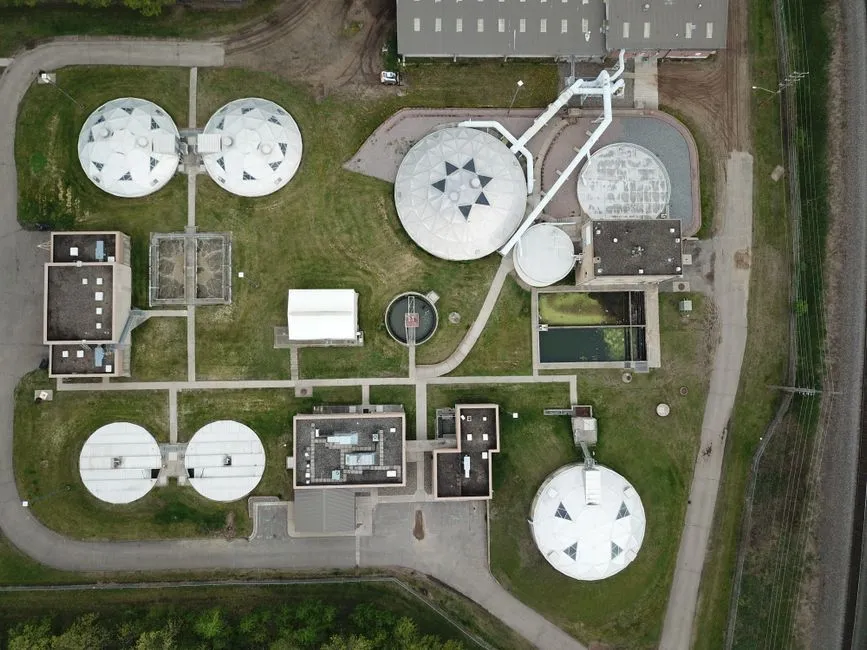
A DAF is the preferred choice when the influent carries free oil, emulsified FOG, surfactants, or low-specific-gravity floc that a clarifier cannot reliably remove. A lamella unit will allow FOG to bypass the plates into the downstream biological or membrane step, fouling media and triggering a sewer surcharge. A DAF should also be selected when downstream processes — such as an MBR, industrial RO, or direct sewer discharge — have tight TSS or FOG limits that a clarifier cannot meet.
Choose a DAF when footprint is constrained and a skid-mounted, pre-assembled DAF clarifier with PLC-controlled dosing, skimming, and sludge discharge (Clearwater Industries, 2026-04-27) can replace a larger civil clarifier structure. The single-skid / two-skid split at 66 GPM (Clearwater Industries, 2026-04-27) provides a clear layout rule for facility planning.
Pick a DAF when the chemicals process is batch and the upstream composition swings, as DAF responds to chemical conditioning changes in real time. Coagulant and polymer pump speeds are setpoints on the PLC, allowing for rapid adjustment, which is essential for a Compton plant running multiple product campaigns through the same drain header.
When a Lamella Clarifier Is the Better 2026 Choice
A lamella clarifier is the better choice when the wastewater is dominated by heavy, settleable inorganic solids, such as metal hydroxides, catalyst fines, or gypsum-like precipitates, with minimal oil or FOG. The inclined plates provide high effective surface area in a compact tank, and the chemistry requires only basic coagulant or low-polymer dosing, keeping operating costs lower.
Select a lamella clarifier when the plant already operates a chemical precipitation reactor and requires reliable solids–liquid separation with minimal polymer consumption. A lamella unit is more forgiving of suboptimal chemistry than a DAF, which relies on a tightly conditioned, buoyant floc.
Pick a lamella clarifier when flow is high and relatively constant, contaminant load is moderate, and the project budget cannot support the saturation pump, compressor, and air-dissolution package required by a DAF. A high-efficiency sedimentation tank is also appropriate when the downstream step is biological polishing and higher TSS carryover is acceptable, as the clarifier's bottom sludge is well-conditioned for dewatering on a plate press.
Building the Right Treatment Train Around Your Primary Separator
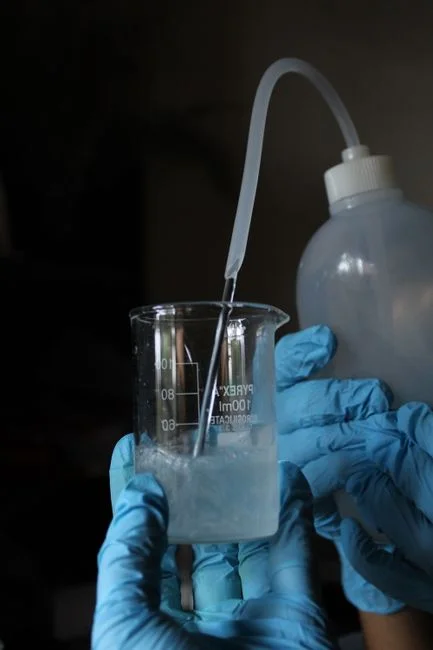
Selecting DAF or lamella is one part of a 2026 chemicals-plant upgrade, as the primary separator functions as the center of a larger treatment train. Upstream of either unit, a headworks bar screen protects pumps, valves, and the chemical conditioning train from rags, lint, and debris — a missing screen is the most common cause of dosing-pump failures on DAF skids.
Chemical conditioning should be specified as a packaged PLC-controlled coagulant and polymer dosing skid rather than loose metering pumps. The dosing logic is where most of the operating-cost debate occurs, and AI chemical dosing optimization is best applied on this skid rather than the flotation tank itself.
Downstream of a DAF, both the floated sludge and the settled-solids stream require dewatering; a plate and frame sludge dewatering press sized off the sludge dewatering selection guide for DAF and clarifier residuals is the standard 2026 solution. If the project targets water reuse, an MBR system installed after the primary separator polishes residual TSS and BOD to protect downstream industrial RO membranes.
Frequently Asked Questions
How do I size a DAF vs a lamella clarifier for a 50 GPM chemicals stream in Compton?
Sizing must start from a jar-tested float-and-settle curve on the actual stream. For a DAF, provide the vendor with peak flow, peak FOG, peak TSS, temperature, and downstream TSS or FOG targets; they will determine hydraulic loading, air-to-solids ratios, and skid counts based on the 66 GPM breakpoint (Clearwater Industries, 2026-04-27). For a lamella clarifier, these inputs plus a target surface overflow rate drive the necessary plate area.
What does a DAF system cost vs a lamella clarifier for a 50–100 GPM chemicals plant
Frequently Asked Questions
Should a chemicals plant in Compton choose a DAF or a clarifier for oily wastewater in 2026?
For chemical manufacturing sites in Compton, a Dissolved Air Flotation (DAF) unit is generally superior to a gravity clarifier if the oily wastewater contains emulsified hydrocarbons or low-density particles. While gravity clarifiers rely on Stokes' Law and are effective for heavy inorganic solids, DAF systems utilize micro-bubbles to float contaminants with specific gravities near or below 1.0, which is typical for chemical process oils and greases.
Given the strict industrial pretreatment standards enforced by the Los Angeles County Sanitation Districts (LACSD), a DAF is preferred if your process stream requires removal of FOG (Fats, Oils, and Grease) to levels below 100 mg/L or if the influent is subject to high variability in flow and chemical composition. Clarifiers are best reserved for stable, high-solids inorganic streams where chemical precipitation of heavy metals is the primary treatment objective.
What flow rate and FOG load justify a DAF clarifier over a lamella clarifier?
A DAF system is typically justified when the influent FOG concentrations consistently exceed 200 mg/L, as gravity-based lamella clarifiers often struggle with surface oil accumulation that blinds plate packs. For flow rates, DAF units are highly effective in the 50 to 500 GPM range, where the footprint of a traditional circular clarifier would be prohibitive for land-constrained industrial sites in the Compton area.
If your wastewater exhibits a high oil-to-water emulsion ratio or has a high percentage of non-settleable solids, the DAF becomes the technical baseline regardless of flow. Lamella clarifiers should only be prioritized if the wastewater is predominantly inorganic, contains high concentrations of heavy, settleable sludge, and has FOG levels consistently below 50 mg/L to prevent plate fouling.
How do I size a DAF or lamella clarifier for a chemicals wastewater stream, and what data do I need to send a vendor?
Sizing is determined by the hydraulic loading rate (HLR) and the solids loading rate. For DAF systems, you must calculate the Air-to-Solids (A/S) ratio, typically ranging from 0.01 to 0.06 ml air/mg solids, to ensure adequate flotation. For lamella clarifiers, the effective settling area must be calculated based on the rise rate, usually kept between 0.1 and 0.3 GPM/ft² of projected plate area.
To receive an accurate quote, you must provide a certified lab analysis including: peak and average flow rates (GPM), influent pH, total suspended solids (TSS), oil and grease (O&G) content, chemical oxygen demand (COD), and temperature. You should also provide a site plan showing available square footage and the specific LACSD discharge permit limits for your facility.
What is the lead time and typical delivery scope for a skid-mounted DAF system for a US chemicals plant?
As of 2026, lead times for custom-engineered, skid-mounted DAF systems typically range from 16 to 24 weeks, depending on the complexity of the materials of construction (e.g., 304L vs. 316L stainless steel) and the integration of automation controls. Supply chain volatility for specialized pumps and PLC components remains a critical factor in delivery scheduling.
A standard delivery scope includes the DAF tank, a recycle pump, an air saturation system (saturator/compressor), a chemical flocculation/coagulation tank with mixers, and an integrated control panel. Skid-mounted systems are pre-piped and pre-wired to minimize on-site installation time, though the client is responsible for concrete pad preparation, influent/effluent piping, and local electrical hookups.
What compliance risks should a Compton chemicals plant consider when selecting a DAF or clarifier under 2026 pretreatment limits?
Compton facilities must adhere to the LACSD industrial wastewater ordinances, which impose strict categorical pretreatment standards. The primary risk with clarifiers is their inability to remove dissolved organic pollutants or finely emulsified oils, which can lead to exceedances in O&G and COD limits at the point of discharge. Failure to remove these components can result in heavy surcharges or permit revocation.
Additionally, both systems produce hazardous sludge that must be characterized for disposal. A DAF system often produces a higher volume of float (sludge) with a lower solids content compared to a clarifier, which may increase sludge hauling costs. You must ensure your selected system is integrated with an adequate dewatering process, such as a filter press, to meet landfill acceptance criteria for liquid content in California.