The Challenge of Oil and Grease in Industrial Wastewater
Oil and grease (O&G) rank among the most common and operationally damaging contaminants in industrial wastewater, present in effluents from food processing, petroleum refining, metalworking, and automotive manufacturing facilities. These substances coat sieves, pipes, and mechanical components, reducing equipment efficiency and increasing maintenance frequency. When carried into downstream biological treatment, O&G causes anoxia in aeration tanks, inhibits microbial activity, and rapidly fouls membrane filters and other polishing media (Sigma DAF Clarifiers, 2026). Discharge regulations impose strict O&G limits, typically 10–20 mg/L for direct discharge to surface waters and as low as 5 mg/L for sensitive receiving environments or municipal sewer connections, with non-compliance triggering substantial fines and the risk of operational shutdowns (HydroChemix, 2026).
Understanding Oil and Grease Forms: Free, Emulsified, and Dissolved
Effective O&G treatment requires characterization because the physical state of the oil dictates which removal technology will work. Free oil exists as large droplets greater than 150 microns that rise to the surface under gravity and account for 60–80% of total O&G in most industrial streams. Emulsified oil consists of droplets in the 0.1–150 micron range, stabilized by surfactants, soaps, or mechanical shear, representing 20–40% of total O&G and constituting the most operationally challenging fraction. Dissolved oil exists at the molecular level (droplets below 0.1 microns) and generally accounts for less than 5% of total O&G, but cannot be removed by physical separation or chemical coagulation alone, requiring activated carbon adsorption, biological treatment, or advanced oxidation instead (HydroChemix, 2026). Proper characterization of these three fractions is the first engineering step in selecting a treatment train.
Primary Physical Separation Technologies for Free Oil

Gravity separation acts as the standard first stage for free oil removal in any industrial wastewater pretreatment program. API separators operate on Stokes' Law principles, using long, low-velocity channels to allow droplets larger than 150 microns to rise to the surface, where mechanical skimmers collect them, typically achieving effluent O&G of 50–100 mg/L. Corrugated Plate Interceptors (CPI) improve on this design with inclined plates that shorten the rising distance for oil droplets, capturing particles down to 60 microns in a footprint roughly one-third the size of an equivalent API unit. Cavitated Air Flotation (CAF) systems use a specially designed agitator screw that generates a vortex and surface depression, drawing in air and dispersing it as bubbles that coalesce with oil particles, delivering 60–80% O&G removal at low capital and operating cost, which makes them attractive as either a standalone roughing stage or a pretreatment step ahead of HydropureWater dissolved air flotation (DAF) systems when influent O&G is very high (Sigma DAF Clarifiers, 2026). These physical technologies are best suited to less dense oils of approximately 0.8 kg/L; heavier or more viscous oils often require heated piping or alternative handling. For facilities integrating primary sedimentation with downstream chemical treatment, high-efficiency lamella clarifiers for primary separation provide a compact alternative to conventional API channels.
Chemical Treatment: Breaking Emulsions for Effective Removal
Chemical treatment must neutralize surface charges and destabilize emulsions before separation can occur because emulsified oil droplets carry a negative surface charge (zeta potential) that prevents them from coalescing under gravity. Coagulation begins with the addition of a charge-neutralizing chemical; Polyaluminium Chloride (PAC) is one of the most effective options because its highly charged aluminum species rapidly destabilize oil droplets, producing denser flocs and 30–50% less sludge volume than conventional alum. Typical PAC dosages for emulsified oil range from 50 to 300 mg/L, depending on oil concentration, emulsion stability, and water chemistry. For strongly stabilized emulsions containing synthetic surfactants, dedicated demulsifiers (typically polyamine-based cationic polymers or polyaluminum blends) are dosed at 5–50 mg/L ahead of the coagulant to displace surfactant molecules from the oil-water interface. pH adjustment is another critical lever: lowering pH to 4.0–5.0 with sulfuric or hydrochloric acid can break many emulsions by protonating surfactant functional groups, after which the pH is readjusted to 6.5–7.5 before coagulant addition, a two-stage approach common in refinery and metalworking operations. Once coagulation has produced micro-flocs, Polyacrylamide (PAM) flocculants bridge them into larger, floatable aggregates, with cationic grades of 20–60% charge density and 8–12 million Da molecular weight proving most effective for negatively charged oil flocs at typical dosages of 1.0–1.5 mg/L. Jar testing remains the only reliable method for determining optimal chemical dosages for a given wastewater, and precise, PLC-controlled chemical dosing systems are essential for translating jar-test results into consistent full-scale performance. Two-stage pH programs also depend on reliable automatic pH control systems for optimal chemical treatment to avoid overdosing acid or caustic.
High-Efficiency Separation: Dissolved Air Flotation (DAF) Systems
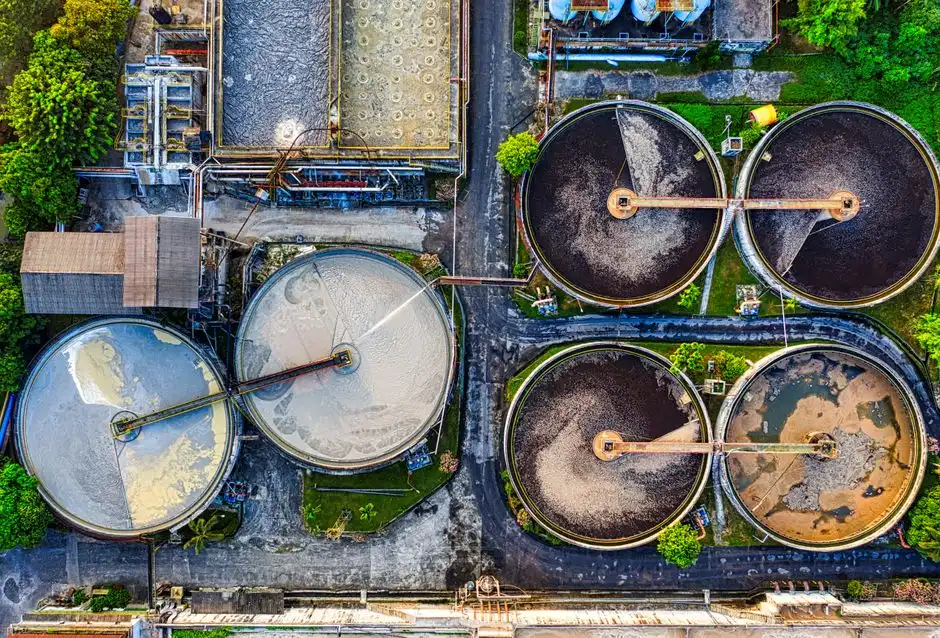
Dissolved Air Flotation (DAF) serves as the preferred separation technology for industrial O&G removal, particularly when chemical coagulation and flocculation have prepared the wastewater. In a DAF unit, water saturated with air at 5–6 bar is released into the flocculated stream at atmospheric pressure, generating millions of micro-bubbles in the 30–100 micron range that attach to oil-laden flocs and float them to the surface for removal by mechanical skimming (HydroChemix, 2026; Sigma DAF Clarifiers, 2026). When properly designed and operated with a matched chemical program, DAF achieves 90–98% O&G removal, with typical effluent values of O&G below 10–20 mg/L, TSS below 20–50 mg/L, and COD below 50–100 mg/L. Compared with alternative separators, DAF systems treat high volumetric loads in short hydraulic residence times, occupy a fraction of the footprint of an equivalent clarifier, require minimal operator intervention, and are readily automated. Positioned as primary treatment ahead of biological or membrane processes, a properly operated DAF unit ensures that downstream secondary and tertiary systems are not compromised by oil fouling, anoxia, or excessive sludge loading.
Selecting the Right O&G Removal System: A Decision Framework
Technology selection depends on influent O&G concentration, oil form (free, emulsified, or dissolved), target effluent quality, available footprint, and operating cost. The following decision framework summarizes the most common configurations:
- Free oil >150 microns, low to moderate loading: API separator or CPI alone; expect 50–100 mg/L effluent O&G.
- High free-oil loading, very high influent concentration: CPI or CAF as roughing step, followed by DAF for polishing.
- Significant emulsified oil, discharge limit 10–20 mg/L: Chemical coagulation (PAC) plus flocculation (cationic PAM) followed by DAF; expect <15 mg/L effluent.
- Stringent limit (≤5–10 mg/L) or dissolved oil present: DAF pretreatment followed by activated carbon, biological treatment, or Advanced Oxidation Processes (AOP).
For most industrial applications, DAF combined with PAC and PAM delivers the best balance of treatment performance, footprint, and operating cost. The table below consolidates the key performance and operating parameters for the principal technologies discussed.
| Technology | Target Oil Form | Minimum Droplet Size | Typical Removal Efficiency | Typical Effluent O&G | Chemical Reagent Required |
|---|---|---|---|---|---|
| API Separator | Free oil | ~150 µm | 60–80% | 50–100 mg/L | None |
| CPI | Free oil | ~60 µm | 70–85% | 30–80 mg/L | None |
| CAF | Free + coarse emulsified | ~40 µm | 60–80% | 40–100 mg/L | None (or minimal) |
| DAF (with PAC + PAM) | Emulsified oil | ~5–10 µm (with chemicals) | 90–98% | <10–20 mg/L | PAC 50–300 mg/L; PAM 1.0–1.5 mg/L |
| Activated Carbon / Biological / AOP | Dissolved oil | <0.1 µm (molecular) | Polishing to <5 mg/L | ≤5 mg/L | Carbon replacement or biological nutrients |
For readers weighing clarifier-based flowsheets against DAF, the operating-cost and footprint differences are documented in detail in this DAF or clarifier for industrial wastewater applications comparison, while broader procurement guidance is available in this overview of how to compare reliable industrial wastewater treatment solutions in 2026.
Optimization and Compliance Strategies for 2026
Consistent compliance depends on disciplined chemical and process control. The single most important operational lever is proper chemical dosing: under-dosing leaves emulsified oil in the effluent, while overdosing can restabilize the charge on oil droplets and worsen performance. Operators should run jar tests whenever influent characteristics change due to production recipe shifts, seasonal effects, or new waste streams, and they should track four key indicators of optimum dosing: clear supernatant, well-formed flocs, low residual turbidity, and effluent O&G below the discharge limit. A two-stage pH program (4.0–5.0 for emulsion breaking, then 6.5–7.5 for coagulation) should be automated wherever possible to remove operator variability. Substituting PAC for conventional alum reduces sludge volume by 30–50%, directly lowering disposal cost, and continuous online monitoring of O&G, TSS, and COD allows the team to respond to upset conditions before they trigger a non-compliance event. Holding effluent to 10–20 mg/L (or 5 mg/L in sensitive environments) protects the facility from fines, prevents the operational shutdowns that follow failed compliance tests, and preserves the performance of all downstream treatment stages.
Industrial Case Studies: Proven Success in O&G Removal
A refinery processing 150,000 barrels per day generated approximately 3,000 m³/day of wastewater with O&G of 2,000–5,000 mg/L. An API separator reduced O&G to 200–300 mg/L, after which a DAF system dosed with PAC at 120 mg/L and cationic PAM at 1.5 mg/L consistently achieved effluent O&G below 15 mg/L, meeting the local 20 mg/L discharge standard. Switching from the previous alum-and-anionic-polymer program reduced annual chemical cost by approximately 60%, to $180,000 per year (HydroChemix, 2026). In a separate application, a vegetable oil refinery treating 500 m³/day at 1,500 mg/L O&G implemented a pH-adjustment-to-5.0-then-7.0 program ahead of DAF with PAC at 80 mg/L and cationic PAM at 1.0 mg/L, achieving effluent O&G of 8–12 mg/L while recovering approximately 200 kg/day of float oil for recycling into animal feed production, directly offsetting treatment cost.
Frequently Asked Questions
What is the most effective technology for removing emulsified oil from industrial wastewater?
Dissolved air flotation (DAF) combined with chemical coagulation using Polyaluminium Chloride (PAC) and flocculation with cationic Polyacrylamide (PAM) is the most effective configuration for emuls
Frequently Asked Questions
What are the key differences between free, emulsified, and dissolved oil in industrial wastewater?
Free oil exists as a separate phase that rises to the surface due to density differences, typically consisting of droplets larger than 150 microns. Emulsified oil consists of smaller droplets (typically 1 to 100 microns) stabilized by surfactants or mechanical shear, preventing natural separation. Dissolved oil exists at the molecular level, often at concentrations below 10-20 mg/L, making it impossible to remove through gravity separation alone.
How does a Dissolved Air Flotation (DAF) system effectively remove oil and grease?
A DAF system works by saturating a portion of the influent or recycled water with air at high pressure (typically 40-70 psi). When this pressurized water is released into the flotation tank, it creates microscopic bubbles (30-50 microns) that attach to oil droplets and suspended solids, significantly reducing their effective density. This buoyancy force causes the contaminants to rise to the surface as a float layer, which is then removed by mechanical skimmers, frequently achieving 85-95% oil and grease removal efficiency.
What are the chemicals typically used for breaking oil emulsions in industrial wastewater and what are their dosages?
Emulsion breaking typically requires inorganic coagulants like aluminum sulfate (alum) or ferric chloride, and organic polymers such as cationic polyacrylamides. Dosage rates are highly site-specific, but coagulants are generally applied at concentrations ranging from 50 to 500 mg/L to neutralize droplet charges. Following coagulation, flocculants are added at much lower concentrations, typically 1 to 10 mg/L, to bridge the neutralized droplets into larger, separable flocs.
What are the environmental regulations for oil and grease discharge from industrial facilities in 2026?
As of 2026, discharge limits are governed by localized NPDES permits and pretreatment standards, which often set maximum daily limits for oil and grease between 50 mg/L and 100 mg/L for direct discharge to surface waters. Facilities discharging to Publicly Owned Treatment Works (POTWs) must adhere to specific local limits, which are increasingly stringent to prevent sewer blockages and inhibition of biological treatment processes, often requiring concentrations below 100 mg/L to avoid surcharges or non-compliance penalties.
Can oil and grease be removed from industrial wastewater without chemicals?
Yes, non-chemical removal is possible for free-floating oil using physical separation technologies such as API oil-water separators, corrugated plate interceptors (CPI), and belt or disk oil skimmers. While these methods are highly effective for removing free oil to levels near 50-100 mg/L, they cannot break stable emulsions or remove dissolved hydrocarbons. For applications requiring lower discharge limits or the removal of emulsified phases, mechanical filtration or membrane technologies like ultrafiltration (UF) can be employed as chemical-free alternatives.