What an Effluent Treatment Plant in Abha Is Required to Do
An effluent treatment plant in Abha is engineered to treat industrial or municipal wastewater so that the discharged effluent complies with Saudi Arabian standards issued by the National Center for Environmental Compliance (NCEC, formerly PME) and Presidential Resolution 44/1989. A modern ETP applies primary, secondary, and tertiary stages. Primary treatment removes about 60% of suspended solids; secondary biological treatment removes more than 90% of suspended solids and reduces BOD and COD. Tertiary polishing — typically sand/carbon filtration or membrane filtration such as UF or RO — is increasingly used to allow reuse in cooling or irrigation, which is a stated Saudi water-security priority under Vision 2030.
Effluent, in standard engineering usage, is the liquid waste stream discharged from industrial, commercial, or institutional premises that cannot be released to surface water without prior treatment, and is also referred to as "trade effluent" or "wastewater" in industry summaries such as Water & Wastes Digest. The goal of any treatment chain is to remove as much of the suspended solids and dissolved organics as possible before the stream is discharged, with the limit set by the receiving environment or the intended reuse application. In Saudi Arabia, the regulator that the buyer must design against is the National Center for Environmental Compliance (NCEC), which superseded PME; the buyer should request the latest NCEC discharge-limit schedule for the relevant industry category before any sizing exercise is started.
Because primary treatment alone only removes roughly 60% of suspended solids — a figure the USGS reports through the W&W Digest summary — any ETP that targets reuse, or that must meet tight NCEC BOD/COD limits, must add biological secondary treatment and a polishing tertiary stage. A second, Abha-specific design factor is climate. The city sits on the Asir highland at roughly 2,200 m elevation, where winter wastewater temperatures drop well below the values typical of Jeddah or Dammam; biological reaction rates slow with temperature, so the engineer should plan for longer hydraulic retention time (HRT) or enclosed/insulated basins compared with a coastal Saudi plant of the same hydraulic capacity.
The 2026 Process Train Used in Modern Abha ETPs
The 2026 process train visible on any Abha ETP P&ID is built from five functional blocks: inlet works and primary treatment, biological secondary treatment, tertiary polishing, sludge handling, and — where the client requires it — an advanced polishing step. Each block has a defined process function that the engineer can review against a vendor proposal.
The primary block starts with screening to remove large solids, then grit removal, an oil and grease trap, and an equalization tank that buffers flow and concentration swings from batch industrial discharges. pH correction brings the stream into a neutral range of 6.5–8.5 using acid or caustic dosing, followed by coagulation/flocculation and a primary clarifier that settles out the bound flocs as sludge; this stage removes settleable solids and a portion of the COD, as described in the standard multi-stage ETP process diagram. The secondary block is an aeration tank in which microorganisms oxidize the remaining dissolved organics, reducing BOD and COD; a secondary clarifier downstream separates the biological sludge from the clarified water. The tertiary block polishes the clarified secondary effluent through sand filtration, activated carbon, and/or membrane filtration, with UF typically using 0.03-micron PVDF membranes to strip residual colloids, bacteria, and turbidity. Sludge collected from the clarifiers is thickened and dewatered on a plate-and-frame filter press or a centrifuge, and the cake is disposed of in line with NCEC solid-waste rules. Where reuse targets are aggressive, a constructed-wetland or nanofiltration polishing step is added on top.
| Stage | Unit Operation | Process Function |
|---|---|---|
| Primary | Bar screen, grit chamber, oil/grease trap, equalization, pH correction, coagulation/flocculation, primary clarifier | Remove settleable solids, balance flow, adjust pH to 6.5–8.5, settle a portion of COD |
| Secondary (biological) | Aeration tank, secondary clarifier | Microbial oxidation of BOD and COD; solids–liquid separation |
| Tertiary (polishing) | Sand filter, activated carbon, UF (≈0.03 µm PVDF), optional RO | Remove residual colloids, bacteria, turbidity, and dissolved ions for reuse |
| Sludge handling | Thickener, plate-and-frame filter press or centrifuge | Reduce sludge volume; produce cake for NCEC-compliant disposal |
| Advanced (optional) | Constructed wetland or nanofiltration | Micropollutant and nutrient polishing for strict reuse or discharge targets |
Inlet works typically begin with rotary mechanical bar screens sized to the peak hourly flow rather than the daily average, because the screen is the first line of defence and is the most common site of hydraulic upset.
Sizing an ETP for Abha: Flow, Load, and Climate Inputs
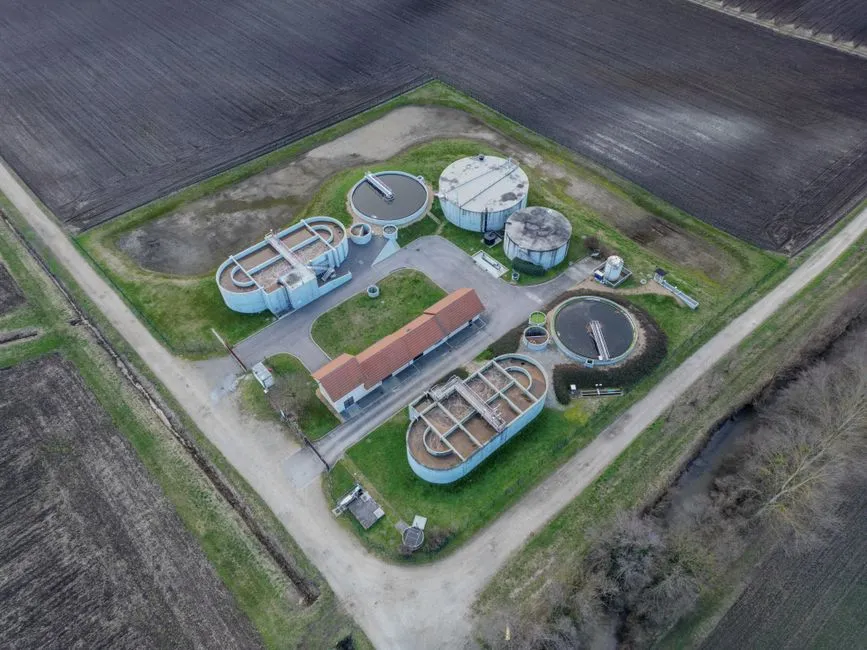
The single most common mistake a buyer makes is to ask a vendor for a "generic X m³/day ETP" before they have characterized their own waste. A defensible 2026 sizing exercise for an Abha site starts from three measured inputs, not from a catalog number. The first is the average daily flow in m³/day, derived from a flow survey or from metered discharge records, ideally across at least one production cycle. The second is the peak hourly flow in m³/h, which sizes the inlet works, the equalization tank, and the hydraulic capacity of every downstream unit. The third is the influent concentrations of BOD, COD, TSS, oil and grease, pH, and temperature, drawn from a representative composite sample.
Secondary stage sizing is then driven by the food-to-microorganism (F/M) ratio and the mixed liquor suspended solids (MLSS) target, both of which depend on temperature. Because Abha's highland climate delivers cooler wastewater than the lowland coastal sites most vendors size for, the engineer should plan for either a longer HRT, a larger aeration basin volume, or a covered/insulated reactor to hold nitrification performance through the cooler months. The equalization tank volume should be sized to at least one shift of average flow, so it can buffer the pH and concentration swings typical of batch industrial discharges — a smaller buffer pushes those swings straight into the biological stage and forces the operator to dose chemicals reactively rather than at a steady rate. Tertiary and reuse sizing must be derived from the NCEC reuse standard for the intended end use — irrigation, cooling-tower make-up, or boiler feed — and not from the discharge limit alone, because reuse limits for specific conductivity, chloride, and SAR are tighter than discharge limits for the same plant. The output of this exercise is a sizing datasheet the buyer fills in and sends to each shortlisted supplier, rather than an assumed capacity number, and it pairs naturally with compact options such as underground integrated package sewage treatment plants for small communities or MBR membrane bioreactor systems where footprint is constrained.
Package ETP vs Custom-Built vs MBR: Choosing the Right Configuration
Once the sizing datasheet is in hand, the next decision is configuration, and this is the stage where most EPC scope creep starts. Three configurations dominate the Abha 2026 market: skid-mounted or underground package plants, custom-built concrete ETPs sized to the site, and MBR membrane bioreactor systems that combine activated sludge with submerged membranes.
Package plants are skid-tested, factory-commissioned, and require limited on-site civil work, which makes them a strong fit for small communities, hotels, hospitals, and small factories with relatively stable influent. Custom-built concrete ETPs suit large industrial flows, high-strength wastewater with elevated COD/TSS, and sites where footprint or influent variability rules out a standard skid. MBR systems combine an activated-sludge bioreactor with submerged membranes at sub-1-micron pore size, achieve near-reuse-quality effluent in a smaller footprint, and are a strong fit for land-constrained Abha plots or for projects that have reuse as a stated end use. Where high removal of micropollutants is required, the engineer should add a polishing stage based on constructed wetlands or advanced adsorption media, an approach documented in the 2022 Wageningen University PhD thesis by Yu Lei on micropollutant removal from WWTP effluent. Selection is driven by influent strength, discharge vs. reuse target, available footprint, and operator skill level — not by sticker price alone.
| Configuration | Best-Fit Application | Strengths | Limits to Check |
|---|---|---|---|
| Package / underground integrated ETP | Small communities, hotels, hospitals, light industry with stable influent | Fast install, skid-tested, lower civil cost | Limited tolerance for swings in COD/TSS; smaller equalization buffer |
| Custom-built concrete ETP | Large industrial flows, high-strength wastewater, tight site constraints | Designed to the influent, scalable, robust | Longer build, higher civil cost, needs experienced EPC |
| MBR (membrane bioreactor) | Land-constrained sites, reuse targets, variable load | Near-reuse effluent, small footprint, high MLSS | Membrane fouling control, air-scour energy, membrane replacement budget |
For high-strength streams or pre-treatment ahead of an MBR, a dissolved air flotation (DAF) system is a common upgrade path that removes emulsified oils and floating solids before the biological stage.
Reuse, Polishing, and the Move Toward ZLD in Saudi Arabia
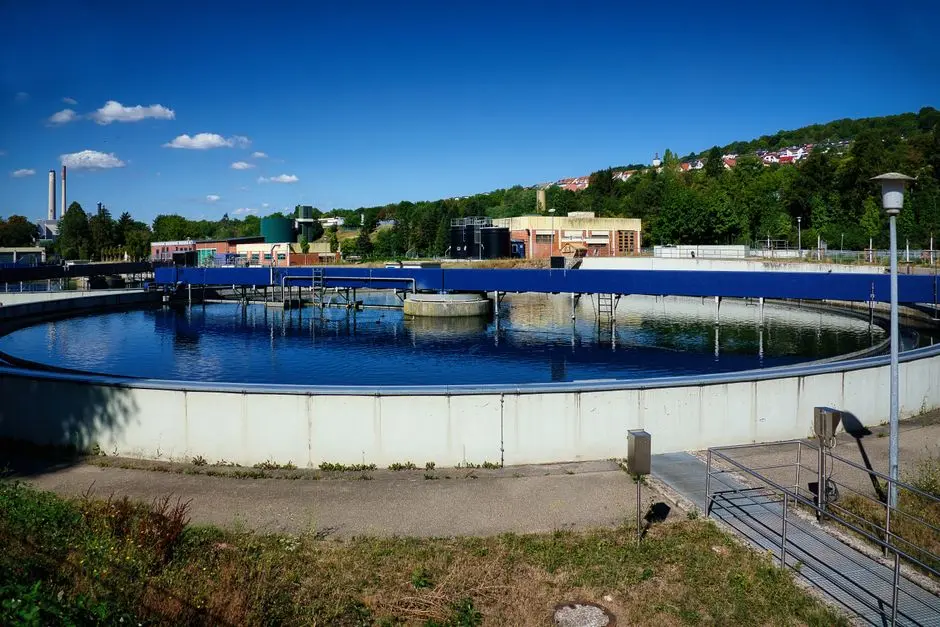
Reuse is no longer an upgrade option in Saudi Arabia — it is a stated Vision 2030 water-security priority, and Saudi clients ask "can the ETP reuse effluent?" from day one of the engineering review. That question changes the design target from a discharge limit to a fit-for-purpose reuse specification, and the polishing block is what makes that target technically and economically reachable. Tertiary UF provides a robust barrier for bacteria, colloids, and most suspended solids; RO is added when the end use is irrigation with a tight salinity or SAR limit, or when the stream is destined for boiler feed. For polishing secondary effluent to meet strict reuse or discharge limits, membrane technology — and specifically nanofiltration — has been demonstrated as a feasible technique, as shown in the University of Twente PhD thesis on direct nanofiltration of WWTP effluent for effluent reclamation.
Where land is available and the project budget is tight, constructed wetlands offer a low-energy polishing option for nutrient and micropollutant reduction from WWTP effluent, again documented in the 2022 Wageningen University PhD work. Where the site cannot tolerate any liquid discharge — for example, a remote industrial plot with no approved discharge point — the system trends toward a zero-liquid-discharge (ZLD) configuration that uses brine concentrators and a crystallizer to convert the brine stream to dry salt; this is a separate engineering scope and should be priced independently rather than buried inside the ETP CAPEX. Two equipment blocks the buyer should evaluate alongside the ETP are UF water treatment systems for the reuse barrier and industrial RO systems for the higher-purity reuse or boiler-feed end of the train.
2026 Supplier Selection Checklist for an Abha ETP Project
The technical review is only half of a 2026 ETP procurement. The other half is a supplier-qualification pass that protects the EPC and the client against the scope creep and performance disputes that historically dominate Saudi ETP projects. The first check is reference plants: the supplier must demonstrate prior KSA reference plants — ideally in the Asir region — backed by NCEC-compliant discharge data, not just design theory or a generic reference list. The second check is documentation: the buyer should request the full P&ID, equipment list with makes and models, the electrical load list, and the PLC/HMI architecture before signing the contract, because this is the single biggest filter against future scope creep. The third check is the performance test: the supplier should provide FAT and SAT protocols, including a 14-day consecutive performance test against the NCEC discharge table, with pass/fail criteria written into the contract.
The fourth check is local service: verify local coverage in Abha and Khamis Mushait, including response time, spare-parts warehouse location, and the presence of a certified commissioning engineer resident in the Kingdom. The fifth check is sludge handling, which is almost always under-scoped: a dewatering solution — typically a plate and frame filter press — and a clear destination for the dewatered cake must be specified in the scope, not left as "by others." Finally, frame pricing as an itemized "what is included / what is excluded" schedule and as a unit-price line item, so that future change orders are not open-quoted; the automatic chemical dosing system scope is a common line item that is left vague in early bids and should be quantified at the quotation stage. A supplier that passes all six checks, with documentation in hand, is the supplier that survives the 14-day performance test without dispute.
Frequently Asked Questions
What is the typical capacity range for an ETP in Abha, and how is it determined?
Capacity is determined by the site's own flow and load data, not by a generic industry range, so the buyer should commission a flow survey and a composite influent sample before asking for quotes. Abha's cooler highland climate also tends to require a larger aeration volume than a lowland plant of the same hydraulic capacity, because biological rates slow with temperature.
Which Saudi authority regulates effluent discharge, and what is the key compliance document?
Discharge to the environment or to a municipal sewer is regulated by the National Center for Environmental Compliance (NCEC), which superseded PME. The buyer should request the latest NCEC discharge-limit schedule for the relevant industry category from the supplier before any sizing exercise, and attach that schedule to the performance-test clause in the contract.
How long does it take to build a 2026 ETP in Abha, and what affects the schedule?
Lead time depends on four variables: engineering design, equipment fabrication, civil works, and NCEC permitting. Engineered package plants typically ship faster than fully custom concrete ETPs, while MBR systems sit between the two because the membrane skids are factory-built but the bioreactor civil work is site-specific.
What is the budget envelope for an ETP in Abha, and what drives the cost?
Cost is driven by the four sizing inputs — flow, influent load, discharge vs. reuse target, and the level of automation — so a fixed price cannot be quoted before those inputs are in hand. The buyer should ask each shortlisted supplier for an itemized CAPEX and a 5-year OPEX that breaks out chemicals, energy, and sludge handling, and then compare those line items side by side rather than only the headline number.
How do I choose between a package plant, a custom ETP, and an MBR?
Use the decision matrix in this guide to shortlist before requesting bids: package plants for small, stable flows; custom concrete for large or high-strength flows; and MBR for land-constrained sites or for any project with a reuse target. Validate the shortlist against the supplier-qualification checklist before issuing the purchase order.