Why sizing a containerized MBR in Rabat is different from a generic STP quote
Most vendor quotations for a containerized MBR membrane bioreactor system arrive as a single m³/day figure with no flow balance, no peaking assumption, and no site-specific check, which is exactly why a project engineer cannot defend the number to ONEE or to a client reviewer. Rabat sits in a coastal Mediterranean–Atlantic band where influent temperature stays inside the 20–30°C operating window used in the Pure Aqua MBR-C reference design (Pure Aqua, 2026) for most of the year, but winter shoulder months can push below 20°C if the aeration tank is poorly insulated.
Seasonal camps compound the problem: occupancy peaks on weekends and during summer holidays, so a residential diurnal curve understates peak hour flow. Suburban compounds in Rabat's periphery also tend to combine black-water and grey-water streams, which raises organic load and forces a different aeration blower setting than a pure-sewage assumption. Containerized MBRs differ from buried package plants because the hydraulic profile, membrane tank geometry, and blower head are constrained by the ISO envelope; you scale container count up rather than simply increasing tank volume. These technical constraints require a rigorous approach to flow and load balancing.
Step 1 — Build the Rabat flow and load balance
Average daily flow in m³/day must be derived from population rather than copied from a vendor brochure to ensure a defensible design. For a residential compound, use the design population (occupied units × average household occupancy); for a camp, use peak-season headcount, not annual average. Apply the 50 gpd per capita allowance from the Pure Aqua MBR-C reference sizing (Pure Aqua, 2026) as the starting benchmark, then adjust for low-flow fixtures where the project specification demands it. Multiply the resulting average daily flow by a peaking factor — typically 2.0–2.5× for residential and up to 3.0× for seasonal camps — to obtain the peak hour flow that the membrane tank hydraulics must pass. Next, estimate BOD/COD load per capita so that the aeration blower and MLSS target inside the bioreactor can be sized; this drives hydraulic retention time, not just tank volume, and it is the input most often skipped in a vendor quote. Finally, confirm that the design influent temperature stays inside the 20–30°C window with a 20°C design point (Pure Aqua, 2026); if summer peaks push above 30°C, request a derated flux curve from the membrane supplier before signing the PO. For a deeper look at how the biological step compares with other removal technologies, see the comparison of COD/BOD removal technologies.
| Parameter | Residential compound | Seasonal camp | Source |
|---|---|---|---|
| Per-capita flow basis | 50 gpd per capita (~190 Lpcd) | 50 gpd per capita (~190 Lpcd) | Pure Aqua MBR-C reference, 2026 |
| Peaking factor (peak hour / average day) | 2.0–2.5× | 2.5–3.0× | Engineer judgment, no single cited value |
| Design influent temperature | 20–30°C, design point 20°C | 20–30°C, design point 20°C | Pure Aqua MBR-C reference, 2026 |
| Pre-treatment screen | 1.5 mm drum screen | 1.5 mm drum screen | Pure Aqua MBR-C reference, 2026 |
Step 2 — Match the flow to a 20-ft or 40-ft HC container
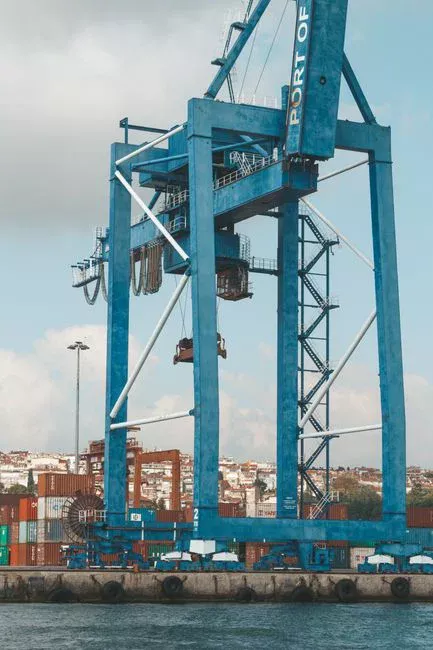
Container footprint selection relies on the m³/day envelope, with the MENA-Water benchmark stating that more than 1,200 m³/day of UF filtration can be packaged inside a single 40-foot ISO container using stainless internal tanks (MENA-Water, 2026). Pure Aqua's MBR-C ships in both 20-foot and 40-foot high-cube (HC) formats, with the selection driven by capacity rather than by site layout (Pure Aqua, 2026). For a small residential cluster in the ~10–50 m³/day range, a 20-ft HC container is usually sufficient and is easier to crane onto a constrained Rabat plot; for a 500-unit residence or a 200-person camp that lands in the 50–250 m³/day range, a single 40-ft HC is the default. Above ~300 m³/day, plan for one or more 40-ft HC containers rather than over-stretching a single skid past the 1,200 m³/day benchmark. Confirm with the supplier that the container is rated for outdoor service — insulated walls, zero water leakage, enhanced structure, and seaworthy-grade construction are all listed for the MBR-C reference (Pure Aqua, 2026) — so the unit survives road transport from Casablanca port to a Rabat site. Finally, insist on a 1.5 mm drum screen for pre-treatment (Pure Aqua, 2026) to keep peak-flow camp solids away from the UF membranes.
| Flow range (m³/day) | Typical application | Container configuration | Benchmark source |
|---|---|---|---|
| 10–50 | Small residential cluster, small staff camp | 20-ft HC | Pure Aqua MBR-C format, 2026 |
| 50–300 | 500-unit residence, 200-person camp | Single 40-ft HC | MENA-Water, 2026; Pure Aqua, 2026 |
| 300–1,200 | Large resort, multi-block residential | One or more 40-ft HC units | MENA-Water, 2026 |
| >1,200 | District-scale, multi-container layout | Custom multi-container | MENA-Water, 2026 |
Step 3 — Specify the MBR membrane module and cleaning strategy
Membrane specification requires locking the pore size and the cleaning strategy before requesting a quote. Specify submerged hollow-fiber UF modules with a nominal pore size of 0.04 µm, as published for the Pure Aqua MBR-C (Pure Aqua, 2026). That figure sits inside the 2–100 nm UF range defined for ultrafiltration membranes (HUBER/MENA-Water, 2026) and supports the 99.9999% virus and bacteria log-removal claim published by MENA-Water for its UF core (MENA-Water, 2026). For aeration, use fine-bubble diffusers in the biological tank to drive biomass growth and coarse-bubble diffusers at the membrane modules for continuous air-scour cleaning — both are part of the MBR-C reference design (Pure Aqua, 2026). Insist on a built-in membrane cleaning and air-scouring system so the camp operator does not have to retrofit a cleaning cycle after delivery. The MENA-Water design intent is to keep chemical cleaning to roughly 1–2 maintenance clearings per year (MENA-Water, 2026), so budget downtime and cleaning chemicals around that cadence, not a weekly CIP. Where the project targets landscape irrigation reuse, pair the MBR with a UV sterilizer for downstream disinfection to meet the pathogen targets typical of such reuse. Membrane area itself should be sourced as a DF series PVDF flat sheet MBR module if flat-sheet geometry better fits the container's tank footprint.
Step 4 — Site, power, and operational checks for a Rabat installation
A correctly sized MBR requires the power supply, temperature window, and headworks to be fully aligned for successful site operation. The MBR-C electrical specification is 460V/3Ph/60Hz (Pure Aqua, 2026); Moroccan site supply is 400V/3Ph/50Hz, so the supplier must quote a transformer or a 50Hz motor set, and the buyer should treat that as a non-optional line item. Operating temperature is rated 20–30°C with a design point of 20°C (Pure Aqua, 2026); verify that winter aeration tank temperature does not drop below 20°C, otherwise membrane flux derates and the m³/day number no longer holds. Plan standby pumps and remote monitoring (Pure Aqua, 2026) so an unattended camp does not overflow during off-season weeks. If the discharge or reuse target requires nitrate control, include an anoxic zone for denitrification (Pure Aqua, 2026); otherwise the default aerobic configuration is acceptable. Allow space on the plot for a sludge storage tank and periodic dewatering — even a small residential MBR produces waste-activated sludge that must be removed, and a rotary mechanical bar screen for headworks protection upstream of the container keeps rags and grit out of the bioreactor. The sizing method used for a similar Moroccan-coast climate is also covered in the sizing a containerized MBR STP in Amman reference.
Sizing worksheet: from 50 residents to 1,000 residents
The table below ties population to flow, container choice, and approximate module count so a project engineer can quote a defensible number today. Use 50 gpd per capita (Pure Aqua, 2026) as the average flow baseline; treat it as a vendor-published reference figure, not a Moroccan regulatory value. Apply 2.0× peaking for residential and 2.5–3.0× for seasonal camps when sizing the membrane tank hydraulic capacity. Map flows below ~50 m³/day to a 20-ft HC container, flows from ~50 to ~300 m³/day to a single 40-ft HC container, and flows from ~300 to ~1,200 m³/day to one or more 40-ft HC containers per the MENA-Water 1,200 m³/day-per-40-ft benchmark (MENA-Water, 2026). Flag any project that exceeds that benchmark for a custom multi-container layout rather than over-stretching a single skid. The resulting m³/day is the sizing envelope, not a performance guarantee; final supplier selection should be based on whether the proposed membrane area can sustain the design flux at the actual Rabat site temperature, and the containerized MBR membrane bioreactor system plus a DF series PVDF flat sheet MBR module combination is one defensible configuration to evaluate. For projects in colder climates, the same workflow is adapted in the containerized MBR sizing in cold-climate projects guide.
| Population | Avg flow @50 gpd/cap (m³/day) | Peak flow — residential 2.0× (m³/day) | Peak flow — camp 3.0× (m³/day) | Container choice |
|---|---|---|---|---|
| 50 | ~9.5 | ~19 | ~28 | 20-ft HC |
| 200 | ~38 | ~76 | ~114 | Single 40-ft HC |
| 500 | ~95 | ~190 | ~285 | Single 40-ft HC |
| 1,000 | ~190 | ~380 | ~570 | One or more 40-ft HC |
Frequently Asked Questions
What per-capita flow should I use to size a containerized MBR in Rabat?
Use 50 gpd per capita (~190 Lpcd) as the published reference baseline from the Pure Aqua MBR-C design (Pure Aqua, 2026), then adjust for low-flow fixtures if the project specification calls for
Frequently Asked Questions
How many people can a 20-ft containerized MBR serve in Rabat?
A standard 20-ft containerized MBR system typically supports between 150 to 300 residents, depending on the organic loading and the specific membrane surface area utilized. In the context of Rabat, where municipal sewer temperatures remain moderate, these systems generally handle an average daily hydraulic capacity of 30 to 60 cubic meters per day (m³/day).
What per-capita flow should I use to size a containerized MBR STP for a camp in Morocco?
For temporary camps or construction housing projects in Morocco, a design per-capita flow of 120 to 150 liters per person per day (L/p/d) is recommended. This range accounts for standard domestic usage including personal hygiene and basic kitchen requirements, ensuring the biological treatment capacity is not overwhelmed during peak morning and evening hours.
How do I choose between a 20-ft and 40-ft containerized MBR for a 500-unit residential project?
For a 500-unit project, a single container is insufficient; you would require a modular approach using multiple 40-ft units. Given an average occupancy of 3 to 4 people per unit and a flow of 150 L/p/d, the daily load would reach 225 to 300 m³/day, necessitating a parallel configuration of at least three 40-ft containerized MBRs to provide redundancy and ensure maintenance can be performed without bypassing untreated effluent.
What discharge or reuse quality can I expect from a containerized MBR in Morocco, and which authority approves it?
Containerized MBR systems consistently meet the Moroccan standard NM 03.7.001, typically achieving BOD5 levels below 10 mg/L and TSS near 0 mg/L, which is suitable for unrestricted irrigation. Approval for the installation and discharge permits must be obtained from the Agence du Bassin Hydraulique (ABH) covering the Rabat-Salé-Kénitra region, in coordination with the local environmental authorities.
What is the typical lead time and supply risk when buying a containerized MBR from outside Morocco?
Importing a containerized MBR usually involves a manufacturing lead time of 12 to 18 weeks, plus 4 to 6 weeks for international shipping and customs clearance at the Port of Casablanca. Supply risks include delays in obtaining the "Certificat de Conformité" for electrical and technical equipment and potential port congestion, making it critical to factor in a 20% contingency buffer for the project schedule.