How do I size a containerized MBR STP for a residential or camp project in Almaty, Kazakhstan?
A containerized MBR STP for an Almaty residential or camp project is sized by working through six steps: (1) count the served population, (2) apply a locally confirmed per-capita flow to get the average daily flow, (3) apply a peaking factor to derive peak daily and peak hourly flow, (4) select a submerged UF-membrane MBR in a 20 ft or 40 ft ISO container — the ultrafiltration pore size is 0.02–0.04 µm per ClearFox's product description, (5) confirm the membrane cassette area per container from the vendor's module family — submerged cassette arrays from PCI's HF-Z line scale from about 480 m² (12 modules) up to roughly 2,080 m² (40 modules), and (6) derate the biology for cold-season operation and confirm the discharge or reuse limit with the local authority.
Containerized MBRs deliver reuse-grade effluent in roughly half the footprint of a conventional activated-sludge plant and arrive factory-tested for plug-and-play deployment.
What a containerized MBR STP actually is — and why it fits Almaty
A containerized MBR is a complete activated-sludge + submerged ultrafiltration system that is pre-assembled, piped, wired, and tested inside an ISO 20 ft or 40 ft shipping container (ClearFox, 2026 product page; Skyview product page, mbrwatertreatment.com). The UF step, with a pore size of 0.02–0.04 µm per ClearFox, replaces the secondary clarifier of a conventional activated-sludge plant, so the container holds everything: bioreactor, membrane cassette, blowers, pumps, and PLC controls (PCI Membranes, pcimembranes.com).
For an Almaty project, the practical benefit is that the unit is factory-built and plug-and-play — it can be trucked or railed in from China or the EU, lifted onto a pad, and commissioned without any concrete tank construction (ClearFox, 2026; SIGMADAF video, 2024-02). That removes the civil-works risk that often blows up a winter schedule in the Almaty region. Because MBR effluent is essentially free of suspended solids with reduced bacteria and viral content, it needs only minimal disinfection and is suitable for direct reuse or for feeding a downstream RO polishing step (PCI Membranes).
For an engineer building a datasheet, that means the container you are sizing is not just a tank — it is the entire secondary and tertiary treatment train. Anything you do not have to build on site is a saving in wintertime construction risk. A packaged containerized MBR membrane bioreactor system from the vendor's standard product line is the most defensible procurement path for a tender.
Step 1 — Establish the served population and load profile
The first sizing input is not a flow figure; it is a count of who is actually generating sewage and when. Three project archetypes are typical around Almaty, and each has a different occupancy profile:
- Permanent residential complex — full-time occupancy, with diurnal peaks in the morning and evening and a weekend pattern that broadly tracks the weekday.
- Seasonal mountain-resort camp — low baseline outside ski season, sharp weekend and holiday peaks in winter, and a high per-capita load because guest turnover drives laundry and food-service volume.
- Construction or worker camp — rotational occupancy, often near 100% during the construction window, with on-site kitchen/dining and typically a vehicle-wash stream.
Before you touch a calculator, collect these inputs from the project offtaker: design population (peak and average), occupancy schedule, whether food service is on-site, laundry volume, and any non-domestic streams (vehicle wash, equipment wash, concrete-batching water). FOG (fat, oil, and grease) content from camp kitchens and turbidity from vehicle wash are explicit design parameters that drive the upstream pretreatment on a containerized MBR (Skyview product page, mbrwatertreatment.com).
One important caveat: the supplied research does not provide a per-capita flow norm for Kazakhstan. Do not invent one — confirm the local per-capita figure with the design institute and the project offtaker before locking the population to flow calculation.
Step 2 — Convert population to average daily flow
Average daily flow (ADF) is population × per-capita water use × return-as-sewage factor. The per-capita figure is the number you must get locally — for the purpose of this datasheet, treat it as a variable the engineer will overwrite with the confirmed norm. Design average flow drives biological tank sizing; design peak daily flow drives hydraulic capacity, and the peaking factor for residential patterns is typically in the 1.5–2.0 range, with camp patterns running higher — the supplied research does not quote a specific Kazakh value, so the engineer must request a vendor or institute confirmation for the project at hand.
The table below shows how a placeholder per-capita flow assumption maps to typical Almaty-region project sizes, so the reader can see where their own project lands. Replace the per-capita cell with the locally confirmed value before sending the datasheet to procurement.
| Project type | Design population | Per-capita flow (L/p/d, to confirm) | Indicative ADF (m³/d) | Peak daily flow (m³/d, factor to confirm) |
|---|---|---|---|---|
| Worker camp | 200 | [insert local norm] | [calculated] | [calculated] |
| Residential block | 500 | [insert local norm] | [calculated] | [calculated] |
| Residential estate | 1,000 | [insert local norm] | [calculated] | [calculated] |
| Mountain-resort peak (ski season) | 1,500 | [insert local norm] | [calculated] | [calculated] |
For a cold-climate mountain site around Almaty, occupancy can swing sharply with ski season, so size for the peak, not the annual average — under-sizing the peak is the most common reason a packaged plant fails its first winter.
Step 3 — Pick the right containerized MBR configuration
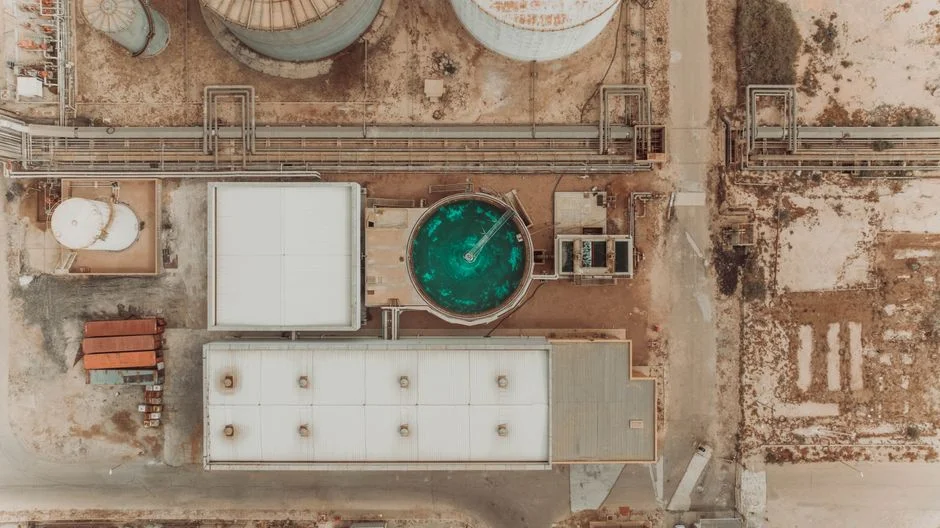
With a peak flow figure in hand, the next decision is submerged versus pressure-driven cassette and 20 ft versus 40 ft container. PCI Membranes states the rule directly: pressure-driven membrane systems are preferred for smaller installations and tough industrial wastewaters, while submerged membrane systems are preferred for medium and large installations (PCI Membranes). For an Almaty residential block, worker camp, or resort at the sizes engineers typically scope, the submerged cassette in an ISO container is the practical choice, and both ClearFox and Skyview ship this configuration in 20 ft and 40 ft formats (ClearFox, 2026; Skyview).
Use the table below to shortlist the configuration against your peak flow band, then confirm the exact flow-per-container figure from the vendor's datasheet — the supplied research does not quote that number.
| Configuration | Typical flow band (to confirm with vendor) | Container form factor | Notes |
|---|---|---|---|
| Submerged UF cassette, 20 ft ISO | Small camp / residential block (lower band) | 20 ft | Easiest to road to remote Almaty-region sites |
| Submerged UF cassette, 40 ft ISO | Larger residential estate / resort (upper band) | 40 ft | More membrane area and blower room per unit |
| Modular process train (A2O+MBR, optional chem-P, DAF, ozone) | Selected when influent character demands it | 20 ft or 40 ft | Skyview offers modular trains to match the influent |
ClearFox delivers factory-tested, ready-to-connect units; Skyview offers modular process trains (A2O+MBR, optional chemical P-removal, air flotation, ozone) so the influent character — not just the flow — drives the configuration (ClearFox, 2026; Skyview product page). For a Kazakh tender, match the flat-sheet MBR membrane module family to the influent, not the other way around.
Step 4 — Size the membrane cassette area and module count
The membrane step must handle the peak hourly flow at a defined flux, and the flux is a vendor-specific number that you must take from the selected cassette family datasheet — it is not a generic value. To bracket the realistic scale, the PCI HF-Z cassette family (PVDF hollow-fibre, 0.02 µm pore size) is available in two module heights — 1,948 mm (S-type) and 2,448 mm (U-type) — and two cassette sizes: up to 12 modules and up to 40 modules. That translates to 480 m² (S12) up to 624 m² (U12) for a 12-module cassette, and 1,600 m² (S40) up to 2,080 m² (U40) for a 40-module cassette (PCI Membranes, pcimembranes.com).
For a typical worker camp or residential block, the total membrane area is in the low hundreds of m², so a single 12-module cassette bank is often sufficient. This is an indicative scale, not a calculated value — the research does not give a flux figure, so the final number comes from the vendor's module family. For a 2026 selection, default to PCI's second-generation cassettes (launched 2022), which deliver +10% membrane packing density and −5% scouring energy versus the first generation (PCI Membranes).
| Cassette configuration | Modules per cassette | Module height | Membrane area | Indicative project scale |
|---|---|---|---|---|
| S12 (first/second gen) | 12 | 1,948 mm | 480 m² | Small camp / residential block |
| U12 (first/second gen) | 12 | 2,448 mm | 624 m² | Small camp / residential block (taller modules) |
| S40 (first/second gen) | 40 | 1,948 mm | 1,600 m² | Large estate / resort |
| U40 (first/second gen) | 40 | 2,448 mm | 2,080 m² | Large estate / resort (taller modules) |
Keep the spare-parts story simple by standardising on one cassette family across the project, and confirm availability of spare UF and RO membrane elements through local stock or short lead time before signing the purchase order.
Step 5 — Adjust for Almaty's cold climate, logistics, and discharge expectations
A datasheet that is correct on paper can still fail in January in the Almaty region. MBR biology slows in cold influent, so the biological tank sizing must reflect the lowest expected operating temperature; the research does not provide a Kazakh winter derating factor, so the engineer must request it from the vendor as part of the technical clarification. The container must be sited with room for an insulated enclosure or housing for extreme-cold operation, and the influent piping must be protected from freezing — these are civil items that the EPC contractor must price separately, not inside the containerized MBR supply.
On logistics, the container will arrive by rail or road, often from China or the EU. The 20 ft ISO form factor is the most universally roadable to remote Almaty-region sites (ClearFox, 2026). SIGMADAF offers stainless-steel 304 tank construction for corrosion resistance in harsh environments, which is worth specifying if the unit will sit outdoors through a winter (SIGMADAF video description, 2024-02).
On discharge, because MBR effluent is essentially free of suspended solids (PCI Membranes), it is suitable for reuse in camp irrigation, dust suppression, or toilet flushing, and the design should decide reuse versus surface discharge early because that choice drives the downstream disinfection train. If reuse is the target, a UV sterilizer for the reuse water train is a typical add-on to the container scope.
Step 6 — Build the vendor RFQ and validate the datasheet
Walking into a vendor meeting with a complete brief is the single biggest determinant of whether you get a defensible quotation in one round. The inputs the vendor must receive are: design population, average and peak flow, influent BOD/COD/TSS/FOG, minimum and maximum operating temperature, target effluent quality, available container footprint, power supply, and the discharge or reuse end use. The outputs the vendor must return are: number of containers, ISO size, membrane cassette area, module count and generation, blower and pump power, total connected load, footprint, and a process flow diagram.
State explicitly that you require a fully automated PLC-controlled MBR — this is a hard requirement for remote Almaty camps because it minimises operator intervention (PCI Membranes). Confirm in the quotation that the proposed unit is in fact fully automated and not a semi-manual configuration dressed up as packaged. Cross-reference the returned quotation against the six steps in this guide before signing, and ask the vendor to fill in the cells in the Step 2 and Step 4 tables with their own numbers so you can see the calculation chain end to end. If you are evaluating an integrated packaged sewage treatment system as an alternative, run the same six-step datasheet against it for an apples-to-apples comparison.
Frequently Asked Questions
What per-capita flow should I use to size a containerized MBR STP in Kazakhstan?
The supplied research does not provide a Kazakhstan-specific per-capita flow norm, so the engineer must request this figure from the project offtaker and the local design institute rather than assume one. For comparison, the datasheets in Step 2 of this guide show how the same per-capita assumption maps to typical Almaty project sizes (200, 500, 1,000, and 1,500-person scenarios).
What is the realistic cost or budget range for a containerized MBR STP for a 500-person Almaty camp?
No price figure is provided in the supplied research, so do not anchor a budget on an assumed number. Instead, ask each vendor for an itemised quotation that breaks out the container count, cassette area, blower and pump power, and PLC scope, then compare like for like against the inputs in Step 6. This is the only defensible way to build a budget for a tender.
How do I choose a containerized MBR supplier for an Almaty-region project?
Verify three things in writing before signing: that the unit is delivered factory-tested and ready to connect (ClearFox, 2026), that the proposed cassette is a current-generation PCI HF-Z or equivalent with confirmed 0.02 µm PVDF specification, and that the quotation includes full PLC automation with remote monitoring (PCI Membranes). Ask for reference projects in cold-climate locations similar to the Almaty region and request contact details for the operating client.
What compliance risk should I check before specifying a containerized MBR in the Almaty region?
MBR effluent is essentially free of suspended solids and is suitable for discharge to sensitive receiving bodies, reuse applications, or feeding a downstream RO process (PCI Membranes), but the specific discharge or reuse limits for the Ili Balkhash basin must be confirmed in writing with the local authority before the design is frozen. Because the influent temperature in winter is a hard constraint on biological performance, request the vendor's derating factor for the lowest expected operating temperature and document it as a contract performance guarantee.