
Why a Containerized MBR STP Fits Jakarta Projects
A containerized MBR STP is a factory-built sewage treatment plant in which the equalisation, anoxic and aerobic tanks, blowers, control panel and submerged MBR membrane modules are preinstalled, plumbed, wired and tested inside a single ISO shipping container (per Traya Hydrotech, trayahydrotech.com). Membrane bioreactor technology is a widely specified option in Indonesia because the small footprint, operational reliability and reuse-quality effluent suit dense urban and remote-camp conditions (per Traya Hydrotech).
For a Jakarta apartment block, housing estate or work camp, the architecture matters as much as the biology: the container limits on-site civil work, the modules can be lifted into a tight urban compound, and the whole train can be relocated if a mining or oil and gas camp is demobilised (per Dynatec Systems, dynatecsystems.com). An out-of-basin MBR configuration also keeps the membrane train separable from the bioreactor, meaning a future retrofit or skid-level expansion does not require replacing the biological tanks (per Dynatec Systems). When these factors line up—constrained plot, fast programme, relocation possible—a containerized MBR is usually the most defensible architecture. If you are weighing it against a concrete-tank conventional activated-sludge plant, the right question is not "is MBR better?" but "does my site allow the civil footprint, and do I need reuse-quality permeate?" The HydropureWater integrated MBR wastewater treatment system is built on that same plug-and-play premise and is the reference platform for the sizing workflow that follows.
The Jakarta Sizing Workflow: Population to m³/day
The defensible way to reach a m³/day figure is to walk five steps in order and complete each one.
- Fix the design population. For a Jakarta housing estate or apartment, use the permanent resident count stated in the building permit or the marketing brief. For a construction, mining or oil and gas camp, add peak-shift workers, day visitors and any on-site subcontractor population, because the STP must serve the worst realistic occupancy, not the average one.
- Apply a per-capita sewage flow. Per-capita sewage flow is project-specific and is not something the equipment supplier should invent. The engineer must obtain the figure from the local water utility (typically PDAM Jaya for Greater Jakarta) or from the relevant Indonesian design code used by the project, and then document the source in the design basis.
- Apply a peak factor. Average daily flow is converted to peak hourly flow by a peak factor that depends on population size, occupancy pattern and network retention. The peak factor is also project-specific and must be confirmed with the designing engineer against the same Indonesian design code.
- Derive average m³/day. Population × per-capita flow = the average m³/day figure that becomes the sizing basis for the containerized MBR train. The peak m³/h figure is then used to check pump duty, equalisation volume and membrane flux, not the container count.
- Layer Jakarta climate on top. Jakarta's tropical ambient temperature accelerates biological kinetics, which generally helps the bioreactor but raises oxygen demand. Wet-season rainfall drives inflow and infiltration into the sewer, which can distort the dry-weather flow assumption. The engineer must request wet-weather flow data from the utility, or from the camp's own monitoring, before fixing equalisation volume.
Steps 1 to 4 provide the m³/day number that drives the container count, while step 5 protects that number from being invalidated by Jakarta's monsoon.
Converting m³/day into Container Count and Tankage
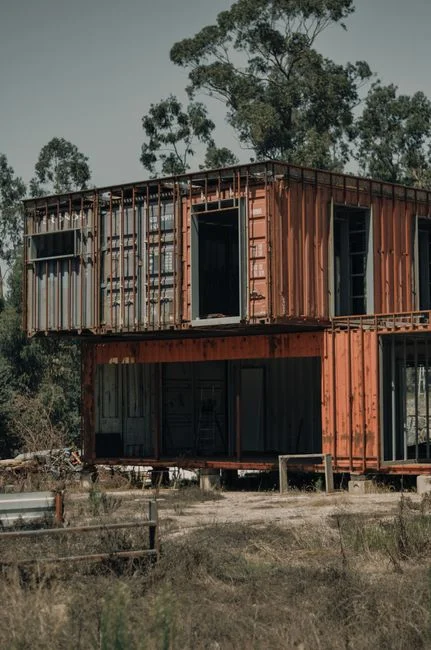
Containerized MBR STPs are commonly supplied in 20-ft and 40-ft ISO container footprints, and the number of containers is driven by four physical items: the design flow, the equalisation volume, the bioreactor volume and the footprint of the MBR membrane skid. The HydropureWater integrated MBR wastewater treatment system covers a 10–2,000 m³/day flow range, so the majority of Jakarta residential and camp projects fall inside a single-container or two-container configuration (per HydropureWater MBR product spec). All equalisation, anoxic, aerobic and MBR tanks live inside the container, reducing on-site civil work to a plinth, an inlet pipe and an outlet pipe (per Traya Hydrotech and Dynatec Systems). You must confirm the plot dimensions, the crane access and the stacking envelope in the Jakarta site before fixing the container count; re-engineering a 40-ft container into two 20-ft units after the purchase order is issued is an avoidable delay that inflates EPC programmes.
Sizing the MBR Membrane Area and Module Count
Membrane area is the binding sizing constraint because it serves as the absolute barrier between the mixed liquor and the permeate. The four key inputs are design flux (L/m²·h), hydraulic retention time, mixed liquor suspended solids in the membrane tank, and the target permeate quality. The reference component is the HydropureWater DF-series flat-sheet MBR module: 0.1 μm PVDF membrane, 80–225 m² of membrane area per module, and a per-module output of 32–135 m³/day (per HydropureWater DF module spec). The worked logic is straightforward:
- Required membrane area (m²) = design flow (m³/h) ÷ design flux (m³/m²·h)
- Module count = required area ÷ area per module (or required flow ÷ module flow rating, after the two are cross-checked)
Because the MBR is an absolute barrier, the permeate is produced well below typical discharge limits for BOD, TSS, TKN and ammonia, effectively collapsing the secondary clarifier and tertiary polish into a single step (per Dynatec Systems). The DF-series module is documented on the product page for the DF-series flat-sheet MBR module, and the platform that houses it is the integrated MBR wastewater treatment system.
| Parameter | Value / Range | Source |
|---|---|---|
| Membrane pore size | 0.1 μm | HydropureWater DF module spec |
| Membrane material | PVDF (flat-sheet, submerged) | HydropureWater DF module spec |
| Membrane area per module | 80–225 m² | HydropureWater DF module spec |
| Permeate output per module | 32–135 m³/day | HydropureWater DF module spec |
| Containerized MBR flow range | 10–2,000 m³/day | HydropureWater MBR product spec |
Jakarta-Specific Design Adjustments You Must Build In
Generic sizing math will fail on a Jakarta site unless four local factors are written into the spec from day one. First, rainfall and inflow/infiltration: Jakarta's monsoon pattern can push wet-weather flows well above dry-weather design flow, so the equalisation tank and the feed pump duty must accommodate the wet-weather envelope. Second, power reliability: containerized MBR blowers and permeate pumps run continuously, so a generator or UPS sizing allowance must be part of the electrical spec for the aeration and permeate cycle. Third, discharge and reuse target: confirm the project is bound by the applicable Indonesian domestic wastewater effluent standards for BOD, TSS, TKN and ammonia; the spec must name the limit values and the reuse end-use (per Dynatec Systems). Fourth, site logistics: container delivery, lifting, stacking and clearances for the control panel and sludge line are real constraints and should be locked in before the container count is finalised.
Worked Example: 500-Person Jakarta Camp
A 500-person construction or mining camp in Greater Jakarta requires careful calculation of per-capita sewage flow and peak factors, which must be confirmed with PDAM Jaya or the project design code. Once those two inputs are fixed, average m³/day = 500 × per-capita flow, and that figure is mapped onto the 10–2,000 m³/day HydropureWater integrated MBR wastewater treatment system range, which makes a single-container configuration plausible for typical domestic-strength wastewater (per HydropureWater MBR product spec). Membrane sizing is then: required m² = design flow (m³/h) ÷ design flux; module count = required m² ÷ area per module, cross-checked against the 32–135 m³/day per-module output documented for the DF-series flat-sheet MBR module (per HydropureWater DF module spec). Before the purchase order is cut, the engineer must re-check the four Jakarta-specific items—wet-weather flow, power backup, discharge target and site logistics—so the sized scope is actually buildable on the chosen plot.
Procurement Checklist Before You Order a Containerized MBR STP
The fastest way to burn programme on a Jakarta STP is to let the supplier guess the inputs. Lock the following down in the design basis before the enquiry is issued and attach each one to the purchase order as a clarifier.
| Input | Why it must be locked | Source to attach |
|---|---|---|
| Design population and occupancy profile | Drives m³/day directly | Building permit, camp HR roster |
| Per-capita sewage flow | Drives average and peak m³/day | PDAM Jaya or project design code |
| Peak factor | Drives pump duty and equalisation | Project design code (engineer to confirm) |
| Site constraints (footprint, craneage, noise) | Fixes 20-ft vs 40-ft vs multi-container | Site survey, Jakarta district logistics note |
| Discharge or reuse target | Names the applicable BOD/TSS/TKN/NH₃ limit | Indonesian domestic effluent standard for the project |
| Headworks protection | Prevents debris loading on the MBR | HydropureWater rotary mechanical bar screen (GX series) |
| Sludge handling | Confirms whether a downstream dewatering step is in scope | HydropureWater plate and frame filter press for sludge dewatering |
Frequently Asked Questions
What per-capita flow and peak factor should a Jakarta residential STP use?
Per-capita sewage flow and the peak factor must be obtained from PDAM Jaya or the relevant Indonesian design code and documented in the design basis. Confirm both values in writing before the purchase order is issued.
How many containers does a 200-person or 500-person Jakarta camp need?
Container count is driven by the m³/day figure, equalisation volume and membrane skid footprint, not by headcount alone. Both populations fall inside the 10–2,000 m³/day range of the HydropureWater integrated MBR wastewater treatment system, making a single-container configuration plausible once the per-capita flow and peak factor are confirmed (per HydropureWater MBR product spec).
What influent and effluent quality can a containerized MBR realistically guarantee?
The MBR membrane is an absolute barrier, producing permeate well below typical discharge limits for BOD, TSS, TKN and ammonia (per Dynatec Systems). The exact contract values must be named against the applicable Indonesian domestic effluent standard in the purchase order.
What lead time and factory-acceptance testing should a Jakarta buyer expect for a containerized MBR?
Containerized MBR STPs are pre-plumbed, pre-wired and undergo comprehensive testing before shipment, allowing for fast on-site installation (per Traya Hydrotech). The buyer should request the factory acceptance test protocol, the witness-testing option and the shipping split (20-ft vs 40-ft ISO) in the enquiry to ensure programme and craneage are locked alongside the flow spec.