

Why a Containerized MBR Fits Hamburg Residential and Camp Projects
A membrane bioreactor (MBR) combines biological treatment with ultrafiltration membrane separation, replacing the secondary clarifier used in conventional activated-sludge systems. Because the membranes retain biomass, the aeration tank can run at a much higher mixed-liquor suspended solids (MLSS) concentration, and PCI Membranes reports an overall plant footprint reduction of up to 50% versus a conventional activated-sludge (CAS) layout of the same treatment capacity.
Wrapping that process in a standardized ISO high-cube container (20 ft or 40 ft) turns the MBR into a road-delivered, crane-set, factory-tested package — MENA-Water describes its containerized MBR plants as Plug & Play units that can be commissioned on site with minimal civil work. Skyview's application list confirms the architecture is used for municipal, residential and catering wastewater streams, which is the character of sewage from a residential block, a worker camp or a refugee/migrant accommodation. For Hamburg specifically, where winter sewage temperatures can drop below 10 °C and many sites have poor soil conditions for buried concrete tanks, a factory-built, above-grade container avoids deep excavation and shortens the on-site installation window to weeks rather than months. Designers must reconcile a small, fixed envelope with the German discharge regime addressed in Step 5.
Step 1 — Define the Design Population and Per-Capita Flow
Every MBR sizing calculation starts with two numbers: the population served and the per-capita wastewater flow. For a residential block, multiply the number of apartments by the expected average occupancy; for a worker camp or migrant accommodation, use the number of beds multiplied by the planned occupancy factor. The per-capita flow should match the actual wastewater character: Pure Aqua's containerized MBR-C data sheet lists an approximate population figure of 50 gallons per capita per day (roughly 190 L/person/day) as the sizing reference, and that figure is widely used in international MBR package-plant sizing data. Cross-check it against the project's water-supply billing data or the local water-utility standard before freezing the number, because an under-sized per-capita assumption is the most common root cause of hydraulic overload on a containerized MBR.
Once the average dry weather flow (ADWF) is established, convert it to a peak hourly flow (PHF) using a peaking factor of 2.0–2.5 to capture the morning and evening peaks typical of residential and camp drainage. PHF, not ADWF, is the number that governs the membrane-tank sizing and the upstream equalization volume. For non-residential inputs, identify the peaking sources: canteen kitchens, laundry blocks, vehicle-wash bays and communal shower blocks in a camp can drive 30–50% of the daily flow into a two- or three-hour window, and a peaking factor at the upper end of the range (2.5) is appropriate where these loads dominate.
Step 2 — Convert Flow into Organic and Solids Loading
The aeration tank volume, the food-to-microorganism ratio (F/M) and the oxygen demand are fixed by the organic and solids loadings. Residential per-capita loadings typically fall in the 50–60 g BOD/person/day and 70–90 g TSS/person/day range, with camp loadings running higher because of canteen and laundry inputs; confirm the local sewer discharge rules before adopting a value, because the German Abwasserverordnung (AbwV) and the receiving wastewater-treatment plant's bylaws set a stricter envelope. Calculate the daily organic load as population × per-capita BOD (kg/day), then derive the peak hourly BOD loading (kg/h) to confirm that the blowers and diffusers can deliver enough oxygen at the design winter temperature — a non-trivial constraint in Hamburg, where cold mixed liquor reduces both the reaction rate and the effective oxygen-transfer efficiency.
For a 1,200 m³/day-class containerized MBR (MENA-Water's stated capacity for a high-density 40 ft ISO container), expect the MBR tank to operate with significantly higher MLSS than a conventional activated-sludge plant; that elevated biomass allows for the smaller tank and the overall 50% footprint reduction. The trade-off is a higher oxygen demand per unit volume and a more sensitive F/M ratio, which is why the peak-hour loading number — not the daily average — should drive the aeration equipment selection.
Step 3 — Check the Membrane Flux and Cassette Selection
Cassette selection is driven by the required membrane area and the physical envelope of the container. Containerized MBRs use ultrafiltration membranes, and the published pore sizes in the research are 0.04 µm nominal for hollow-fibre UF cassettes (Pure Aqua MBR-C) and 0.02 µm for the PVDF hollow-fibre HF-Zmbr2 series (PCI Membranes). Both geometries are submerged, which is the standard configuration for medium and large municipal installations per PCI Membranes' process overview. PCI's HF-Z series offers up to 2,080 m² of membrane area per U40 cassette for medium-to-large installations, while smaller skid-mounted cassettes with a few hundred square metres of area are typical of 20 ft container plants.
Apply a design flux that is conservative, well below the clean-water flux of the cassette, to keep trans-membrane pressure (TMP) stable across the membrane's service life. Confirm that continuous air-scour on the membranes — coarse-bubble diffusers mounted directly under the cassette — is included in the supplier's scope; Pure Aqua and MENA-Water both list this as standard, which keeps the membranes physically clean between the one or two annual maintenance washes that vendors typically schedule. For a technical review of the cassette hardware used in this class of plant, see the DF series flat-sheet MBR cassette specification sheet.
Step 4 — Match the Plant to an ISO Container Footprint
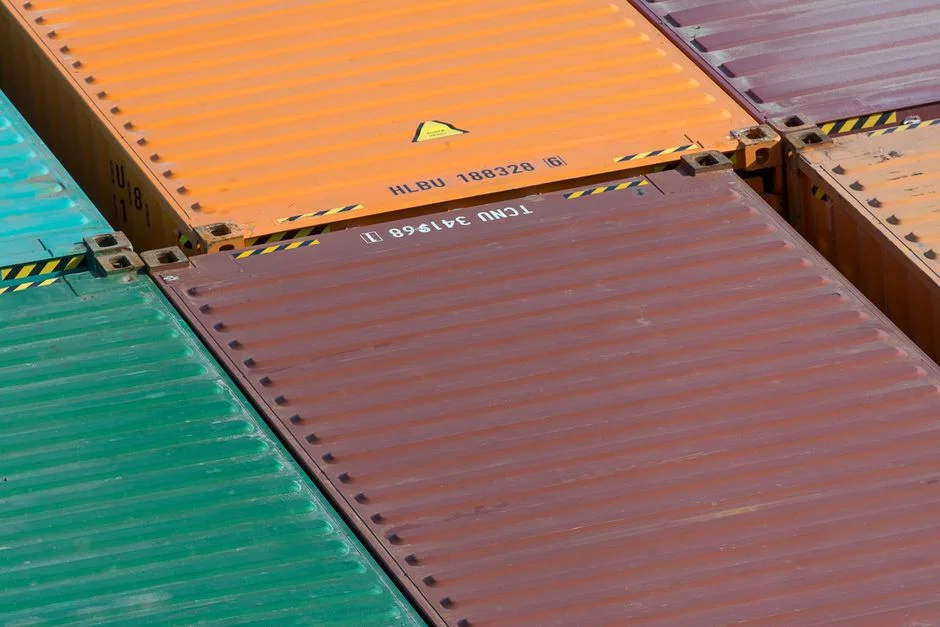
The hydraulic and organic-loading numbers from Steps 1–3 must fit within a standard ISO container. MENA-Water's engineering reference confirms that more than 1,200 m³/day can be filtered in a single 40 ft ISO container with high-density cassette stacks, while smaller 20 ft packages cover the low end of the residential and camp market. The table below maps the typical capacity bands reported in the research to a container choice.
| ISO container | Typical daily capacity (m³/day) | Indicative population served (at ~190 L/cap/day, PF 2.0–2.5) | Typical deployment |
|---|---|---|---|
| 20 ft HC | 5–50 | 25–250 persons | Single residential block, small camp, pilot duty |
| 40 ft HC | 50–500 | 250–2,500 persons | Multi-block residential, mid-size camp, migrant accommodation |
| 40 ft HC, high-density cassette stack | Up to ~1,200+ (per MENA-Water) | Up to ~6,000+ persons at residential per-capita flows | Large residential complexes, district-scale redeployable plants |
Choose the I-Version (fully integrated) when the plant will be moved or redeployed seasonally — MENA-Water flags this as the configuration for mobile deployments. Choose the U-Version, with aeration and buffering in underground water tanks, where the site allows burial and a low visual profile is preferred. For a 200-person residential or camp project in Hamburg, the calculation generally lands in the 40–80 m³/day peak range, which fits a single 20 ft HC or a small 40 ft HC depending on the equalization volume. The full integrated MBR system specification should be reviewed against the Step 1–3 outputs before the container is fixed.
Step 5 — Apply the Hamburg Climate and Compliance Overlay
The standard design band on most containerized MBR data sheets does not match Hamburg winters. Pure Aqua's MBR-C specifies an operating temperature range of 20–30 °C with a 20 °C design point, and that envelope sits above Hamburg's winter sewage-temperature norm of below 10 °C. The biological reaction rate and the effective membrane flux both derate as the mixed liquor cools, so a Hamburg plant needs either an insulated container envelope, heat-traced aeration lines or, for permanent residential service, the container housed inside a small insulated enclosure. The sizing report must state the design winter sewage temperature explicitly and show that the membrane area and aeration equipment are still adequate at that point.
On compliance, the German baseline is the Abwasserverordnung (AbwV), with municipal wastewater governed by Anhang 1. Local requirements sit on top of that: the Hamburgisches Wassergesetz (HmbWaG) and the local Bezirksamt add site-specific parameters that the plant must demonstrate during commissioning tests. The sizing report should list the target BOD, COD, TSS, NH4-N and total-P limits the plant has to meet, and the supplier should be asked to provide a written performance guarantee linked to those parameters. If the effluent is to be reused for irrigation — a common MBR use case — additional requirements under HmbWaG apply and an Erlaubnis from the local water authority is required. For projects where polishing to reuse quality is in scope, the ultrafiltration polishing system can be specified as a downstream stage. For a regulatory comparator outside Germany, the UK wastewater compliance reference covers the equivalent limits there; for nutrient-removal scoping in parallel with the MBR sizing, see the advanced nutrient removal construction guide.
Sizing Worked Example for a 200-Person Hamburg Camp
Walking the methodology end-to-end on a 200-person camp project makes the math auditable. The table below shows each step with the supporting research where available; where the supplied research does not provide a value, the row states the qualitative input the buyer must request.
| Step | Parameter | Value / Input | Source / Note |
|---|---|---|---|
| 1 | Population | 200 persons | Project definition |
| 1 | Per-capita flow | 50 gpd ≈ 190 L/person/day | Pure Aqua MBR-C reference (50 gpd per capita) |
| 1 | Average daily flow | ≈ 38 m³/day | 200 × 190 L |
| 1 | Peaking factor | 2.5 (camp with canteen/laundry) | Engineering judgement, Steps 1–2 qualitative |
| 1 | Peak hourly flow | ≈ 4 m³/h (≈ 96 m³/day equivalent) | Derived |
| 2 | Daily BOD load | 10–12 kg BOD/day (qualitative) | Residential per-capita range not numerically sourced — confirm with local rules |
| 3 | Membrane pore size | 0.04 µm (HF) or 0.02 µm (PVDF HF-Z) | Pure Aqua MBR-C; PCI HF-Zmbr2 |
| 4 | Container choice | 20 ft HC ISO, with buffer/equalization | MENA-Water 20 ft range |
| 5 | Design winter sewage temperature | Below 10 °C — derate flux, insulate | Pure Aqua 20–30 °C design band vs Hamburg winter |
| 5 | Effluent compliance | AbwV Anhang 1 + HmbWaG local parameters | Confirm with Bezirksamt before sizing freeze |
For a sister project in a colder continental climate with similar regulatory drivers, the sister MBR sizing guide for Prague projects applies the same five-step workflow against Czech and EU limits. The completed worksheet above is the input the supplier needs to produce a binding budgetary offer — see the FAQ for what to request. A compact 20 ft HC package with a small equalization tank is the most defensible starting point, leaving headroom for a 40 ft HC upgrade if the camp's actual water-billing data shows higher per-capita consumption than the 50 gpd reference.
Frequently Asked Questions
What population can a single 20 ft or 40 ft containerized MBR serve?
Using the 50 gallons
Frequently Asked Questions
How do I size a containerized MBR STP for a residential or camp project in Hamburg, Germany?
Sizing is primarily based on the estimated daily hydraulic load (m³/day) and the organic loading (kg BOD₅/day). In Hamburg, you must calculate the total population equivalent (PE) by multiplying the expected occupancy by the standard daily consumption rate, then selecting a container configuration that provides sufficient membrane surface area to maintain a flux rate typically between 10 and 25 L/m²/h (LMH) to ensure stable operation during peak flow periods.
Engineering must also account for the specific discharge requirements set by the Hamburg Water Authority (Hamburg Wasser) and the local environmental agency (BUKEA). The footprint must include space for pre-treatment (screening) and sludge storage, as Hamburg regulations generally mandate that containerized systems be fully integrated with automated control systems for remote monitoring.
How many people can a 20 ft vs 40 ft ISO container MBR serve?
A standard 20 ft ISO containerized MBR is typically designed to serve between 50 and 150 PE, depending on the membrane packing density and the required sludge retention time. These units are ideal for smaller modular sites or temporary worker camps where space is highly constrained.
A 40 ft ISO containerized MBR can effectively serve between 200 and 500 PE. The increased length allows for larger internal equalization tanks and additional membrane cassettes, providing the necessary surface area to handle higher hydraulic throughput while maintaining the high-quality effluent standards required for discharge into Hamburg’s complex canal and river systems.
What is the per-capita flow rate used to design a residential MBR plant?
For residential or camp projects in Hamburg, the design flow rate is typically calculated at 150 to 200 liters per person per day (L/PE/d). This range accounts for standard domestic usage including showering, kitchen, and sanitary facilities, while incorporating a safety buffer for minor leakage or peak usage variations.
If the project includes significant non-residential components, such as site offices or laundry facilities, these must be converted to PE equivalents using the DIN 4261 standard or local Hamburg building codes to ensure the MBR membrane capacity is not exceeded during peak diurnal flow hours.
What German discharge limits apply to a containerized MBR STP in Hamburg?
Discharge into Hamburg’s water bodies must adhere to the Abwasserverordnung (AbwV) and local regulations enforced by the Freie und Hansestadt Hamburg. Typical requirements for sensitive discharge zones include BOD₅ < 10 mg/L, COD < 50 mg/L, and NH₄-N < 2 mg/L.
Depending on the specific discharge point, nutrient removal limits for Total Nitrogen (TN < 13 mg/L) and Total Phosphorus (TP < 1 mg/L) are frequently mandated. MBR technology is specifically chosen for these projects because it consistently meets these stringent requirements, often allowing for the reuse of treated effluent for site irrigation or toilet flushing.
How does cold weather in Hamburg affect containerized MBR sizing?
Hamburg’s winter climate, where temperatures can drop near freezing, directly impacts biological activity within the bioreactor. To maintain design throughput, the MBR system must be sized for lower kinetic rates by increasing the mixed liquor suspended solids (MLSS) concentration or by incorporating insulated, climate-controlled container housing to keep the reactor temperature above 10°C.
If the temperature falls below the design threshold, the viscosity of the permeate increases, which can lead to membrane fouling and reduced flux. Engineers must compensate by providing additional membrane surface area or installing integrated heating elements within the aeration tank to ensure the plant maintains its rated capacity throughout the winter months.