
Why Nutrient Removal Is Now a Construction Question, Not a Research Question
Advanced biological nutrient removal (BNR) and membrane bioreactor (MBR) designs have moved out of the pilot phase and into the bid phase. The EPA's National Study of Nutrient Removal and Secondary Technologies, which surveyed publicly owned treatment works (POTWs) from 2019 to 2021, found that more than 1,000 surveyed POTWs with a population served of at least 750 and a design capacity of at least 1 million gallons per day already achieve effluent total nitrogen (TN) of 8 mg/L and total phosphorus (TP) of 1 mg/L using biological treatment trains.
That figure is the credibility anchor: a buyer in 2026 is contracting a buildable system rather than experimenting. The MDPI 2026 editorial "Advanced Biological Wastewater Treatment and Nutrient Removal" frames the field as shifting from pollutant removal toward intelligent water resource recovery, with autotrophic nitrogen pathways, microbial retention, and precise operational control replacing open-ended research questions. Once a municipality, special district, or industrial discharger commits to those effluent limits, the engineering question that academic papers leave unanswered is who is contractually accountable for design, supply, build, commissioning, and operation—and how that accountability gets split between six distinct parties before the first tank is poured.
The Six Responsible Parties in an Advanced Nutrient Removal Build
An advanced nutrient removal project is delivered by a fixed chain of six parties, and a clean RFP starts by naming each one explicitly rather than blurring them into a single "contractor."
| Party | Primary Scope | Key Technical Decision Owned |
|---|---|---|
| Owner (municipality, special district, or industrial discharger) | Holds the discharge permit, defines effluent limits, signs contracts, accepts performance risk | Effluent targets (8 mg/L TN / 1 mg/L TP per EPA screener), risk allocation, O&M model |
| Engineer of Record (EoR) / process consultant | Process design, hydraulic profile, P&IDs, specification of BNR or MBR train | Process selection (conventional BNR, MBR, SBR, moving-bed biofilm), anoxic/aerobic zoning, internal recycle ratio |
| EPC contractor | Civil works, tankage, pipework, mechanical installation, handover | Construction sequencing, bioreactor dimensions, membrane tank integration |
| Process equipment OEM | Biological reactor internals, membrane modules, aeration blowers, chemical dosing skids | Flat-sheet vs. hollow-fiber MBR module, blower sizing, DO control philosophy |
| Commissioning / performance testing agent | Validates contractually guaranteed TN and TP limits, signs off handover | Ramp-up protocol, biofilm maturation, anoxic-zone DO setpoints, factory acceptance test (FAT) plan |
| Operator (in-house or outsourced under O&M contract) | Runs the plant under performance warranty after handover | Day-to-day process control, membrane cleaning, ML-based influent prediction adoption |
The owner's first act is to lock the effluent contract—the EPA screener numbers are a realistic target, not a research ceiling—and to decide whether performance risk sits with a single design-builder or is split across parties. The Engineer of Record then develops the BNR or MBR process design; selection between conventional activated sludge, MBR, sequencing batch reactor (SBR), or moving-bed biofilm is driven by influent characterization, footprint, and the operator's experience. The EPC contractor delivers civil and mechanical scope, and the boundary with the OEM on bioreactor dimensions and membrane tank integration must be explicit to prevent claims. The process equipment OEM supplies biological internals, membrane modules, aeration blowers, and dosing skids; for MBR projects the flat-sheet versus hollow-fiber choice drives both footprint and lifecycle OPEX, as detailed in a typical MBR specification such as the HydropureWater MBR membrane bioreactor system. The commissioning agent validates the TN and TP guarantees before handover, and emerging pathways demand precise operational control, so the commissioning protocol must cover low-load ramp-up, biofilm maturation, and anoxic-zone DO setpoints. The operator—in-house or under an O&M contract—runs the plant under warranty; the MDPI 2026 Special Issue's bibliometric review flags machine-learning-based influent prediction and process optimization as fast-growing support tools the operator should be trained on before handover.
Process Selection and Its Impact on Construction Scope
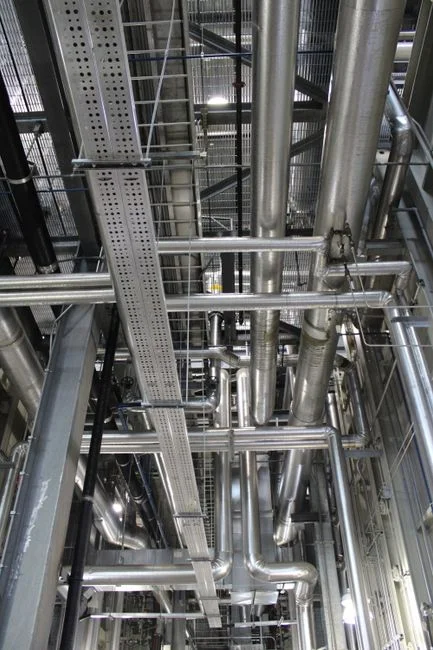
Process choice and construction scope are inseparable. Each BNR/MBR/SBR option adds a different OEM package, a different commissioning sequence, and a different operator skill requirement, so a buyer should not finalize the process until the OEM shortlist is also fixed.
| Process Train | Construction Scope Impact | OEM and Commissioning Implication |
|---|---|---|
| Conventional BNR (anoxic + aerobic zones, internal mixed-liquor recycle) | Baseline civil scope; proven nitrification/denitrification design parameters; lowest construction risk for utilities targeting 8 mg/L TN | Standard biological internals; commissioning limited to DO setpoints and recycle ratio tuning |
| MBR (activated sludge + submerged PVDF membranes) | Adds membrane tank, aeration scour, clean-in-place dosing; footprint shrinks but membrane replacement enters OPEX | OEM scope expands to module supply and integrity testing; commissioning sequence inserts membrane flux ramp-up |
| SBR or moving-bed biofilm reactor (MBBR) | Batch or biofilm-carrier geometry changes hydraulic profile; tankage volume differs from continuous-flow BNR | Decanter or carrier-supplier OEM joins the package; commissioning protocol covers cycle timing or carrier fill ratio |
| Next-generation (anammox, aerobic granular sludge, iron-carbon micro-electrolysis) | Engineering-significant but with open questions on long-term stability — iron passivation, cell encrustation, microbial retention — per the MDPI 2026 editorial | Specify only with full-scale OEM references; commissioning scope expands to include side-by-side pilot or extended biological monitoring |
The Samara State technical paper on biological wastewater treatment with nutrient removal treats conventional BNR as the baseline against which intensification is measured, providing the right reference point for any utility whose priority is hitting the EPA screener limits on a fixed budget. MBR shortens the downstream clarifier block and improves effluent quality, but it adds an OEM package and a membrane replacement line item that the operator must manage for 15-20 years. Next-generation pathways—anammox for autotrophic nitrogen removal, aerobic granular sludge, biofilm reactors, and iron-carbon micro-electrolysis—are engineering-significant, but iron passivation, cell encrustation, and microbial retention remain unresolved stability questions. A 2026 buyer should specify those trains only when the OEM can produce full-scale references and the commissioning scope is expanded to cover long-term biological monitoring. For smaller flows, a packaged WSZ underground integrated sewage treatment plant delivers BNR in a factory-built envelope and reduces the civil scope accordingly. Cross-cutting items on every advanced nutrient removal build—chemical dosing for phosphorus precipitation, UV or chlorine disinfection after the biological stage, and sludge dewatering—each add a separate equipment supplier and a separate commissioning sub-system that must appear in the RFP matrix.
Contract Models and Where Interface Risk Sits
The three contract models a 2026 buyer will see in a tender—design-bid-build (DBB), design-build (DB), and EPCM—differ in where the interface risk between process design, equipment supply, and mechanical construction lands. Design-bid-build keeps an independent Engineer of Record on the owner's side and lets the EPC contractor build to a fixed design; interface risk between process design and construction is low for the owner, but the schedule is slow and the project is exposed to change-order disputes if the BNR design is not fully detailed before bid. Design-build collapses design and construction under a single point of accountability, which compresses the schedule, but the owner must define performance guarantees—TN, TP, flow, and energy—precisely, because the contractor will optimize for guaranteed compliance rather than process elegance. EPCM, where the owner retains the Engineer of Record and uses the contractor as a management layer, suits utilities with strong in-house engineering and complex phased builds, but it requires a clear scope for who commissions the BNR or MBR train because that responsibility can otherwise drift between the EoR and the EPCM. In all three models, the OEM's process performance guarantee and the EPC's mechanical guarantee must be back-to-back; otherwise membrane fouling or biological performance failures fall into a contractual gap. The MDPI 2026 editorial flags this risk when discussing stable operation of emerging nutrient removal pathways, where precise operational control is required and a single uncoordinated interface can defeat the entire train. The contract model should therefore be selected on the owner's ability to manage interfaces, not on the headline price.
CAPEX Drivers Buyers Should Request From Bidders
Rather than asking bidders for a single lump-sum figure, a 2026 advanced nutrient removal RFP should demand itemized CAPEX drivers so that the owner can compare bids on equivalent scope. The first driver is civil and tankage volume, which scales directly with the selected BNR/MBR/SBR process; the RFP should require a hydraulic profile and reactor dimension summary so that bidders cannot hide a larger footprint in a single price. The second driver is membrane module count and replacement interval if MBR is specified, or aeration blower sizing and DO control strategy if conventional BNR is selected—both lines determine long-term OPEX as much as they determine CAPEX. The third driver is automation and SCADA scope, including any machine-learning-based influent prediction or process optimization tool, since hybrid modeling, advanced data acquisition, and process optimization are fast-growing priorities; the buyer should know whether that capability is included or priced as an add-on. The fourth driver is sludge handling and chemical dosing, which should appear as separate line items—an automatic chemical dosing system and a plate and frame filter press for sludge dewatering are typical stand-alone packages that can swing the comparison between bidders. For an external view on how these drivers scale in a real 2026 procurement, the EU and France launched a EUR 118M Durrës wastewater upgrade in September 2026, and the recent editorial on MBR design criteria also walks through the same bidding variables. Requesting these four drivers itemized converts a price discussion into a scope discussion, which is the only way a buyer can defend a 2026 award decision on the record.
Frequently Asked Questions
Who is typically the Engineer of Record on an advanced nutrient removal build?
Most municipal and industrial BNR or MBR upgrades are stamped by a licensed civil or environmental engineering consultancy—often the same firm that wrote the facility plan and the permit basis of design, because they already hold the hydraulic and influent characterization data. Request the EoR's prior BNR or MBR references and their lead designer's PE license in the RFP, since the EPA screener benchmarks are only met when the engineer has direct biological-process experience, not generalist wastewater experience.
How should the process performance guarantee be structured?
The guarantee should be back-to-back: the OEM's biological or membrane performance warranty must link to the EPC's mechanical warranty, with a defined commissioning protocol that names the TN and TP limits, the influent envelope, the test duration, and the cure period. Without that linkage, fouling or underperformance falls into a contractual gap that the 2026 MDPI editorial flags explicitly when discussing stable operation of emerging nutrient removal pathways.
What is the typical lead time for an MBR membrane module package in a 2026 bid?
Request three inputs rather than a single lead-time number: the module count, the stated replacement interval, and the factory acceptance test schedule. MBR module production slots, PVDF supply chains, and skid assembly capacity each affect delivery differently, and the only way to compare bidders honestly is to compare those three inputs against the buyer's required mechanical completion date.
Can a packaged biological system meet 8 mg/L TN and 1 mg/L TP?
Yes—the EPA National Study confirmed that more than 1,000 surveyed POTWs already achieve those effluent limits using biological treatment trains. Whether a specific packaged system does so on a given influent is a function of internal recycle ratio, anoxic-zone volume, chemical dosing for P precipitation, and operator training, all of which must be specified in the bid rather than assumed.