

Why Sizing a Containerized MBR for Prague Is Different
A Pure Aqua MBR-C datasheet provides four ready-built models (50, 100, 150, 190 m³/d) and population equivalents calculated at 50 US gpd per capita (≈189 L/c·d), but the Czech design baseline is 150 L/c·d for residential and 120–200 L/c·d for camps, meaning datasheet PE numbers are roughly 25% overstated for a Prague project. The same datasheet quotes an operating range of 20–30°C (design 20°C) and 460V/3Ph/60Hz, both of which conflict with a Czech site: winter sewage enters the plant at 8–12°C, and the grid is 400V/3Ph/50Hz.
Discharge targets in the datasheet (BOD <10, COD <50, TSS <5, NH4-N <2 mg/L) are tighter than the generic municipal limits implied by Czech TNV 75 6011 and become a binding constraint only when the project sits inside the Prague 1 (PHO) protected drinking water catchment. The S3 model line is the correct starting point, but the engineer must re-anchor flow, load, temperature, and electrical supply before the model table maps correctly to a Prague residential block or seasonal camp.
Three adjustments convert the S3 table into a Prague-ready sizing tool: (1) recalculate population equivalent at 150 L/c·d instead of 189 L/c·d, (2) apply a 1.3–1.5 peaking factor to the average daily flow because the S3 column shows nominal flow, not peak-hour or peak-week capacity, and (3) treat the 20–30°C operating window as a summer condition only and budget for winter nitrification support. The other datasheet blind spots — pretreatment strength, sludge holding, disinfection, and the multi-skid layout above 190 m³/d — are addressed in the following steps.
Step 1 — Build the Hydraulic and Load Basis
Occupancy serves as the primary metric for sizing because the model line is a discrete table. Multiply headcount by the Prague residential baseline of 150 L/c·d, or by 120–200 L/c·d for a camp where occupants shower, launder, and eat communally, then apply a 1.3–1.5 peaking factor to obtain the design flow that will arrive at the MBR container during morning and evening peaks. Capture hydraulic and organic peaking separately: a camp's morning shower block drives a hydraulic spike, while meal service drives an organic spike, and a single combined factor under-sizes one of them.
For the organic and nutrient load, use the S3 influent design basis from the Pure Aqua MBR-C data sheet: BOD 250 mg/L, COD 400 mg/L, TSS 200 mg/L, NH4-N 30 mg/L, alkalinity 125 mg/L as CaCO₃, pH 6.5–7.5. These values are the supplier's stated feed assumption; check them against Czech domestic wastewater characterization when the camp includes kitchen grease, hair loading from shower blocks, or laundry discharge, because each source can shift the F/M ratio the supplier uses to set MLSS and SRT. Daily mass loads in kg/d are calculated as design flow (L/d) × concentration (mg/L) ÷ 1,000, providing the inputs the MBR supplier will use to verify the F/M ratio, MLSS, and SRT stated on the S3 datasheet.
| Parameter | Value (S3 feed basis) | How to use it |
|---|---|---|
| BOD | 250 mg/L | Design flow × 250 ÷ 1,000 = kg BOD/d |
| COD | 400 mg/L | Design flow × 400 ÷ 1,000 = kg COD/d |
| TSS | 200 mg/L | Drives sludge wasting rate |
| NH4-N | 30 mg/L | Design flow × 30 ÷ 1,000 = kg NH4-N/d — governs nitrification sizing |
| Alkalinity (as CaCO₃) | 125 mg/L | Confirms buffer for nitrification; alkali dosing called out in S3 process flow |
Step 2 — Map the Flow to a Containerized MBR Model
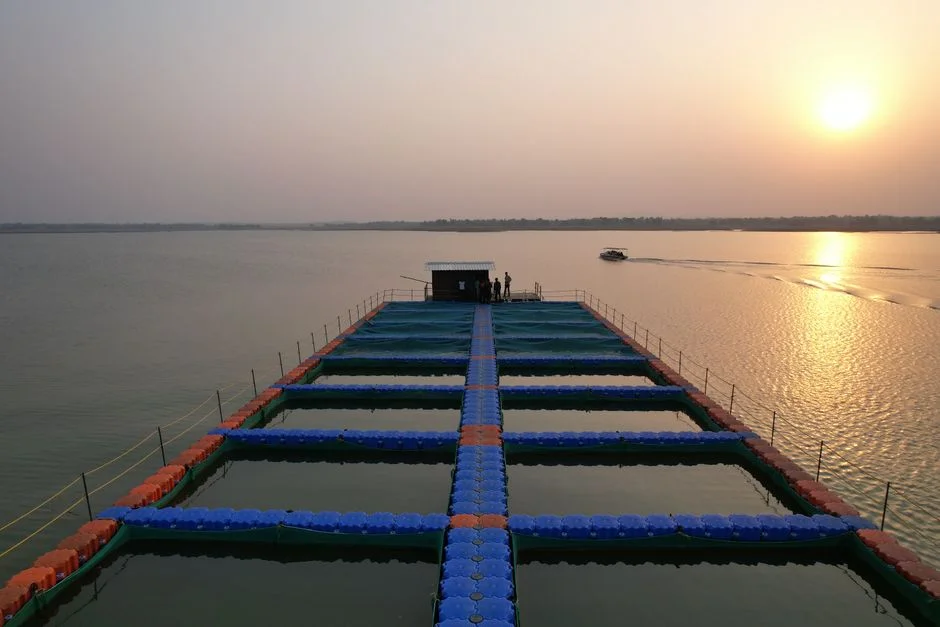
With design flow and population equivalent in hand, the Pure Aqua MBR-C model table becomes a direct lookup. The four stock models, all from the Pure Aqua MBR-C data sheet, are MBR-C-13.2K-06 at 50 m³/d (265 PE, 2 skids × 3 modules, 1×20' container), MBR-C-26.4K-10 at 100 m³/d (529 PE, 2 × 5, 1×40'), MBR-C-39.6K-16 at 150 m³/d (793 PE, 2 × 8, 1×40'), and MBR-C-50.2K-20 at 190 m³/d (1,004 PE, 2 × 10, 1×40'). The membrane area is 316 SS per module, and the modules are thermally induced phase separation (TIPS) PVDF hollow-fibre ultrafiltration with a 0.04 µm nominal pore size per the same datasheet.
The S3 population equivalents are computed at 50 gpd per capita, which overstates the people served in Prague by roughly 25%. At 150 L/c·d, the same containers serve about 330 (50 m³/d), 665 (100 m³/d), 1,000 (150 m³/d), and 1,265 (190 m³/d) people — confirm the supplier's PE basis in writing before the contract is signed. Below 50 m³/d, a containerized MBR is rarely economic, and above 190 m³/d the supplier should be asked for a multi-skid layout with a common inlet screen and a shared sludge buffer rather than three separate 40' units. For a Prague camp with strong seasonal swings, ask whether one of the two skids can be idled during the low season to cut aeration energy, since the standard S3 configuration runs both skids continuously. The containerized MBR system family follows this same 20'/40' logic, so the sizing step is consistent whether the bid sheet reads MBR-C or a Pure Aqua-equivalent from another vendor.
| Model | Flow (m³/d) | PE at 50 gpd (S3) | PE at 150 L/c·d (Prague) | Skids × modules | Container |
|---|---|---|---|---|---|
| MBR-C-13.2K-06 | 50 | 265 | ≈330 | 2 × 3 | 1 × 20' |
| MBR-C-26.4K-10 | 100 | 529 | ≈665 | 2 × 5 | 1 × 40' |
| MBR-C-39.6K-16 | 150 | 793 | ≈1,000 | 2 × 8 | 1 × 40' |
| MBR-C-50.2K-20 | 190 | 1,004 | ≈1,265 | 2 × 10 | 1 × 40' |
Step 3 — Check Pretreatment, Process Train, and Sludge
The S3 datasheet includes only a 1.5 mm drum screen as pretreatment, which is sized for municipal sewage but not for a camp kitchen or worker shower block. For a Prague camp with significant FOG or hair loading, add an upstream bar screen and a grease trap ahead of the MBR container, and confirm both are in the vendor's scope rather than left as "by others" in the bid form. The S3 process train is drum screen → aeration tank with fine-bubble diffusers → gravity-fed membrane tank with coarse-bubble air scouring and built-in chemical cleaning, plus an anoxic zone for denitrification (per the Pure Aqua MBR-C data sheet); each of these stages must appear explicitly in the RFQ scope.
Sludge handling is the second datasheet blind spot. S3 calls for daily sludge wasting to maintain SRT but does not size a sludge holding tank or a dewatering device. For a Prague installation, pair the MBR container with a sludge buffer and a small sludge dewatering press or a bagging station so the waste stream can be hauled off-site without spillage. Disinfection is also outside the S3 unit: permeate typically meets BOD <10, COD <50, TSS <5, NH4-N <2 mg/L (S3 expected permeate quality), but fecal coliform reduction requires a downstream UV disinfection unit or a chlorine dioxide stage, sized separately. The PVDF membrane modules themselves are stable under strong oxidation per the S3 note, so an oxidant-based clean-in-place is supported by the membrane chemistry.
Step 4 — Lock Down Prague-Specific Adjustments Before the RFQ
Four adjustments are not visible on the S3 datasheet and must be closed out in the RFQ. Electrical: the S3 standard supply is 460V/3Ph/60Hz (per the Pure Aqua MBR-C data sheet), and the Czech grid is 400V/3Ph/50Hz — request a 400V/3Ph/50Hz motor and control option, or budget for a step-down transformer in a separate kiosk. Thermal: the S3 operating range is 20–30°C with design at 20°C, while Prague winter sewage enters the plant at 8–12°C, so the insulated container walls in S3 are necessary but not sufficient — add tank or enclosure heating, or a heat exchanger on the aeration loop, if year-round nitrification is required. Permitting: sites in the Prague 1 (PHO) protected drinking water catchment face stricter limits than the S3 permeate targets, so size a polishing stage (UV, ClO₂, or RO depending on the receiving water) for the actual discharge consent, not the generic numbers. Logistics: the 20' and 40' HC containers in S3 are road-deliverable into Prague, but require oversize-load permits and a hardstand; confirm crane access and ground-bearing capacity at the camp or residential site before the container is dispatched. A reviewer cross-checking against the MBR design criteria guide will treat the four items above as the only ones that can invalidate an otherwise correct datasheet-based sizing.
| Adjustment | S3 datasheet value | Prague site value | RFQ action |
|---|---|---|---|
| Electrical supply | 460V/3Ph/60Hz | 400V/3Ph/50Hz | Request 400V/3Ph/50Hz option or price a step-down transformer |
| Operating temperature | 20–30°C (design 20°C) | 8–12°C winter sewage | Add enclosure heating or aeration-loop heat exchanger |
| Permit regime | BOD <10, COD <50, TSS <5, NH4-N <2 mg/L permeate | Stricter in Prague 1 (PHO) protected area | Size polishing stage to actual consent |
| Logistics | 20'/40' HC containers | Czech oversize-load rules and urban access | Confirm permits, hardstand, crane, ground bearing |
Frequently Asked Questions
Which Pure Aqua MBR-C model fits a Prague residential block or camp?
Match the design flow to the model
Frequently Asked Questions
What size containerized MBR do I need for 200 residents in Prague?
For a population of 200 residents in Prague, you should calculate based on an average daily consumption of 150 liters per capita per day, resulting in a design flow of 30 m³ per day. Factoring in peak diurnal flow variations, a containerized MBR system with a hydraulic capacity of 35 to 40 m³ per day is recommended to ensure stable membrane flux rates during morning and evening surges.
How do I convert the Pure Aqua MBR-C model table to Prague flow rates in m³ per day?
Pure Aqua MBR-C models are typically rated in Gallons Per Day (GPD). To convert these to Prague-standard m³ per day, multiply the GPD figure by 0.003785. For example, a model rated at 10,000 GPD provides approximately 37.85 m³ per day, which aligns with the required capacity for a 200-resident installation.
Can a containerized MBR run on Prague 400V 3-phase 50Hz power, or do I need a transformer?
Standard containerized MBR systems are engineered to operate on the 400V 3-phase 50Hz electrical grid prevalent in the Czech Republic. You do not require a transformer if your equipment is specified for European standards; simply ensure the control panel and pump motors are configured for 400V/50Hz at the factory to avoid voltage incompatibility and premature motor failure.
What discharge limits apply to a containerized MBR in the Prague protected water catchment?
Systems operating within Prague’s protected water catchment areas must adhere to stringent discharge standards set by the Vltava River Basin Authority (Povodí Vltavy). You must achieve effluent quality compliant with Government Regulation No. 401/2015 Coll., typically requiring BOD5 < 10 mg/L, COD < 75 mg/L, and Total Phosphorus < 1 mg/L, often necessitating tertiary chemical phosphorus removal.
How do I keep a containerized MBR working through Prague winters when influent drops below 10°C?
When influent temperatures drop below 10°C, biological nitrification rates decrease significantly. To maintain performance, the container must be insulated with minimum 50mm mineral wool or PIR panels, and an immersion heater or heat exchanger should be installed in the equalization tank to maintain a process temperature between 12°C and 15°C, ensuring continued microbial activity for ammonia removal.