The 2026 regulatory stack a Middlebury operator actually faces
A mining or metals operator near Middlebury, Vermont must reconcile four stacked compliance layers before sizing any infrastructure. The federal floor is 40 CFR Part 436, the Mineral Mining and Processing Effluent Guidelines that EPA promulgated in 1975 and amended in 1976, 1977, 1978, and 1979; the Mineral Mining regulatory requirements are incorporated into NPDES permits (EPA, 2026-02). 40 CFR Part 433, the Metal Finishing Point Source Category, stacks on top of Part 436 for any plant that also runs a forming, plating, or finishing line, because the categorical standards apply independently to each process stream that goes to a POTW. 40 CFR Part 403 is the general pretreatment regulation that gives every POTW the authority to run a local pretreatment program, designate Significant Industrial Users (SIUs), and set numerical local limits using the EPA Local Limits Development Guidance (EPA, 2021-06). The fourth layer is the local POTW itself, which in Middlebury is administered through the Town's SIU program and the Vermont DEC permit framework. Operators must check which Part 436 subpart covers their mineral, because subparts reserved in the current code — Dimension Stone (A), Lightweight Aggregates (H), Lithium (U), Ball Clay (AH), Feldspar (AI), Talc/Steatite/Soapstone/Pyrophyllite (AJ), and Garnet (AK) — carry no current numeric effluent limits and fall through to the local layer (EPA, 2026-02).
The Middlebury POTW Significant Industrial User program serves as the active regulatory layer for local compliance. Agri-Mark/Cabot operates under a state Significant Industrial User permit administered by VT DEC permit number 3-0401, with explicit Town and state oversight (S2, 2023-07). A new mining or metals applicant cannot treat the local layer as a checkbox; the Middlebury POTW already allocates mass against design capacity to a major industrial user, and any new discharger must fit within the remaining headroom. For a parallel walkthrough of how a similar 40 CFR Part 436 stack applies to a comparable site, see the Gordo mining and metals pretreatment guide.
Why the Middlebury POTW's headroom matters for a new discharger
The Middlebury POTW operates with specific allocated mass, requiring any new industrial applicant to fit within its documented loading envelope. Design capacity is 8,819 lb/day BOD, 5,863 lb/day TSS, 169 lb/day TP, and 2,200,000 gal/day flow; actual 2020 loading was 4,201 lb/day BOD, 1,741 lb/day TSS, 95 lb/day TP, and 885,583 gal/day flow (S2, 2023-07). These figures indicate a plant operating below design capacity on flow and BOD, but with most phosphorus capacity already allocated to a single industrial user. The same source documents that Agri-Mark/Cabot accounts for 62% of organic load and 84% of phosphorus load at 2020 actuals, and is allocated 53% of BOD, 20% of TSS, 68% of TP, and 20% of flow against design capacity (S2, 2023-07).
The Town applies an 80% of design capacity threshold for BOD and phosphorus as the operational ceiling to maintain compliance with its own NPDES permit (S2, 2023-07). A new mining or metals applicant must request current local limits from the Middlebury POTW and reconcile those values against the categorical ceilings at 40 CFR Part 436 and 40 CFR Part 433 before sizing equipment.
| Parameter | POTW design capacity | 2020 actual loading | Agri-Mark allocated share of design |
|---|---|---|---|
| BOD (lb/day) | 8,819 | 4,201 | 53% |
| TSS (lb/day) | 5,863 | 1,741 | 20% |
| TP (lb/day) | 169 | 95 | 68% |
| Flow (gal/day) | 2,200,000 | 885,583 | 20% |
Source: Town of Middlebury Selectboard ARPA Pretreatment document for Agri-Mark, dated 2023-07 (S2).
Treatment train by unit operation, in the order the literature supports
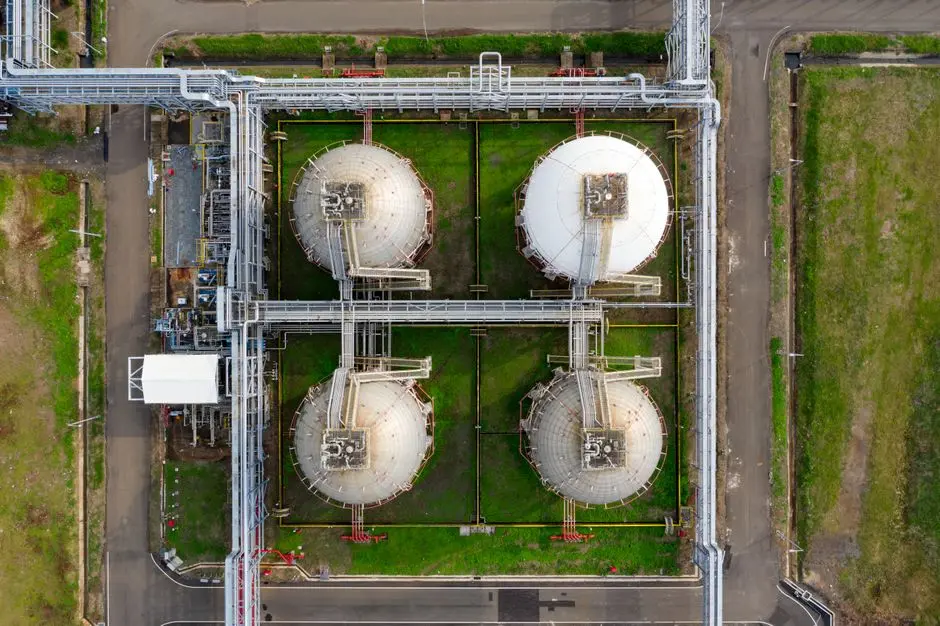
A defensible 2026 treatment train for a mining or metals discharger near Middlebury runs in six steps, each tied to a specific contaminant class and documented removal performance. Step 1 is pH correction: raise pH so dissolved metals precipitate as hydroxides, with lime raise to pH >10 as the field-standard pre-thickening step (PMC review, 2024-02). Step 2 is coagulation and flocculation, where suspended solids and fine metal particles are aggregated into settleable or floatable flocs; the local Middlebury DAF delivers documented removals of BOD5 45-52%, COD 63%, TKN 60%, TSS 83%, FOG >79%, and phosphorus 88% on dairy process wastewater in 2022 testing (S2, 2023-07). Step 3 is solids separation: a DAF system for buoyant floc and oil-and-fines separation when the floc is buoyant or the stream carries oils, or a lamella clarifier for heavy floc and footprint-constrained sites when sludge volume and footprint are the binding constraint, with surface loading rates of 20-40 m/h on the lamella side (Genesis Water Technologies, 2025-11).
These primary separation stages prepare the stream for advanced filtration and membrane polishing. Step 4 is multimedia filtration to drop turbidity and colloids ahead of the membrane skid; the operating practice is to specify target SDI after the filter rather than inlet turbidity, because SDI is the parameter that predicts membrane fouling (Genesis Water Technologies, 2025-11). Step 5 is membrane polish: ultrafiltration for fine colloids followed by an industrial RO polish for dissolved metals and salts, with RO rated at >99% rejection of dissolved metals and salts, 50-70% recovery on AMD feed, and 70-85% as the RO stage of a ZLD train (AMPAC USA, 2025-09). Step 6 is monitoring and self-monitoring: a PLC-controlled chemical dosing system for pH, coagulant, and flocculant tied to a continuous pH, flow, and conductivity logger, with self-monitoring records filed to both the POTW and VT DEC as required by the SIU permit (LiqTech, 2025-08). For the trade-off between the two clarification options on a mining stream, see the DAF vs clarifier factory guide for mining wastewater.
| Step | Unit operation | Contaminant class addressed | Documented performance or design basis |
|---|---|---|---|
| 1 | pH correction (lime) | Dissolved metals, acidity | Lime raise to pH >10 (PMC review, 2024-02) |
| 2 | Coagulation / flocculation | Suspended solids, fine metals | Polymer-matched floc density for downstream step |
| 3 | DAF or lamella | Floatable or settleable floc | DAF 83% TSS, 88% TP on dairy (S2, 2023-07); lamella 20-40 m/h (Genesis Water Technologies, 2025-11) |
| 4 | Multimedia filtration | Turbidity, colloids | Target SDI after filter, not inlet turbidity |
| 5 | UF + RO polish | Dissolved salts and metals | RO >99% rejection; 50-70% recovery AMD; 70-85% ZLD stage (AMPAC USA, 2025-09) |
| 6 | Monitoring / self-monitoring | Chemistry setpoints, permit records | PLC/HMI with continuous pH, flow, conductivity (LiqTech, 2025-08) |
Sizing and cost: what the operator must bring to the supplier
Buyers must request a quotation against a specific basis of design rather than relying on generalized price points. The literature highlights a qualitative payback lever: internal reuse via RO can cut freshwater consumption 40-60% versus once-through, so the basis of design should include a reuse target alongside discharge limits (AMPAC USA, 2025-09).
RFQ preparation is the operator's responsibility. Required inputs include peak and average flow in m³/h, influent pH and metal profile from representative sampling, current local sewer authority discharge limits for metals, pH, and TSS, and the desired RO recovery percentage if reuse is in scope. Equipment choices should be driven by the influent stream and discharge limit; the operator who specifies each step independently — pH correction, coagulation, DAF or lamella, multimedia filtration, UF or RO polish, and sludge dewatering — ensures comparable scope across vendors. For the RO step, request an industrial RO polish for dissolved metals and salts with a stated recovery curve, and pair it with a filter press for mining sludge dewatering sized to the cake volume the precipitation step will produce.
Pre-bid checklist before contacting the Middlebury POTW and VT DEC
Engineers must have five items in hand before consulting with the Middlebury POTW and VT DEC. First, confirm which 40 CFR Part 436 subpart covers the mineral and whether it carries active numeric effluent limits, as reserved subparts (Dimension Stone A, Lightweight Aggregates H, Lithium U, Ball Clay AH, Feldspar AI, Talc/Steatite/Soapstone/Pyrophyllite AJ, Garnet AK) fall through to the local layer (EPA, 2026-02). Second, confirm whether 40 CFR Part 433 (Metal Finishing) applies to any finishing, plating, or forming step. Third, request current local limits and SIU program documentation from the Middlebury POTW and verify them against the latest VT DEC permit action; the Agri-Mark/Cabot documentation shows the Town already allocates mass against design capacity, setting the precedent for new applicants (S2, 2023-07).
These regulatory requirements dictate the technical specifications needed for procurement. Fourth, run a representative influent sampling round covering pH, total and dissolved metals of concern, TSS, TDS, FOG, and any process-specific analyte (cyanide, ammonia, chloramines) before issuing an equipment RFQ. Fifth, specify each unit operation independently in the RFQ — pH correction, coagulation, DAF or lamella, multimedia filtration, UF or RO polish, and sludge dewatering — so the supplier quotation is comparable across vendors. For the membrane step, request an ultrafiltration system for RO pretreatment with stated flux and backwash cycle, and confirm consumables are available locally through the supplier's membrane and filter element stocking program. For a parallel 40 CFR Part 436 walkthrough applied to a different jurisdiction, see the Tenino-area 40 CFR Part 436 walkthrough.
Frequently Asked Questions
What does a pretreatment train for a Middlebury mining or metals plant cost in 2026?
The supplied research does not publish price points for a complete pretreatment train, so a
Frequently Asked Questions
What permits does a mining or metals plant need to discharge to the Middlebury, Vermont POTW in 2026?
Plants must secure an Industrial User Discharge Permit issued by the Town of Middlebury under the authority of their National Pollutant Discharge Elimination System (NPDES) program. Facilities must comply with local limits for pollutants including total suspended solids (TSS), biochemical oxygen demand (BOD), and heavy metals like copper, zinc, and nickel, which are typically governed by the Middlebury Wastewater Treatment Facility’s local limits ordinance.
If the plant performs regulated processes, it must also comply with federal Categorical Pretreatment Standards. Facilities are required to submit periodic compliance reports, including analytical results from certified laboratories, confirming that effluent concentrations remain below the mass or concentration limits defined in their specific discharge permit.
How much does a complete DAF-plus-RO pretreatment train for a small mining or metals plant near Middlebury typically cost?
For a small-scale facility, the capital expenditure for a complete Dissolved Air Flotation (DAF) and Reverse Osmosis (RO) system typically ranges from $250,000 to $600,000, depending on flow capacity and the complexity of the influent contaminant profile. This estimate includes chemical dosing skids, DAF clarification units, RO membrane arrays, and the necessary PLC-based control panels for automation.
Ongoing operational costs, including membrane replacement, chemical reagents (coagulants and flocculants), and sludge disposal fees, generally add an additional 15% to 25% of the initial capital cost annually. Site-specific factors such as existing space constraints and the need for equalization tanks can further influence the final turnkey installation price.
Which is better for a mining or metals wastewater train — DAF or a lamella clarifier — when the local POTW applies strict solids and metals limits?
Dissolved Air Flotation (DAF) is generally superior for mining and metals wastewater when strict solids and metals limits are enforced, particularly for removing oil, grease, and low-density metal precipitates. DAF systems achieve higher separation efficiency for fine particulate matter that does not settle readily via gravity, allowing for consistent compliance with stringent TSS and metal concentration thresholds.
While lamella clarifiers offer a smaller physical footprint, they rely on gravity sedimentation and often require larger chemical flocculation tanks to achieve equivalent effluent quality. For facilities targeting ultra-low metals discharge, the DAF process provides more reliable performance by effectively floating suspended solids to the surface for mechanical skimming, whereas clarifiers may struggle with light-weight metal hydroxides that can carry over into the effluent.
How long does it take to install a new DAF and RO pretreatment system to meet 2026 sewer limits, and what is the typical compliance risk if the Middlebury POTW denies the discharge?
The total project timeline from engineering design and equipment procurement to installation and commissioning typically spans 6 to 9 months. This includes a 3-month lead time for specialized RO membranes and DAF hardware, followed by 2 to 3 months for mechanical piping, electrical integration, and system startup validation.
If the Middlebury POTW denies the discharge, the compliance risk involves immediate cessation of operations, daily non-compliance fines, and potential legal action under the Clean Water Act. Facilities lacking an approved discharge path are often forced to transition to expensive off-site hauling of liquid waste, which can exceed the cost of onsite treatment by a factor of five or more.
Does 40 CFR Part 433 apply to a metals plant that only does forming and cutting, with no plating or chemical finishing?
40 CFR Part 433, the Metal Finishing Point Source Category, generally does not apply to facilities strictly limited to mechanical forming and cutting operations. This regulation specifically targets facilities engaged in one or more of the six core operations: electroplating, electroless plating, anodizing, coating, chemical etching and milling, and printed circuit board manufacture.
However, facilities that perform ancillary activities such as solvent degreasing or cleaning with chemical solutions may still fall under the scope of 40 CFR Part 433. It is necessary to review the facility's specific process wastewater streams against the definitions in the regulation to determine if the site qualifies as a "metal finisher" or if it is instead subject only to local Middlebury sewer use ordinances and general pretreatment regulations under 40 CFR Part 403.