Why Eskridge mining and metals plants are rethinking primary clarification in 2026
Eskridge-area mining and metals finishing operations in 2026 face a contaminant profile that does not map neatly onto the FOG-and-TSS story told by most DAF product pages. A single waste stream typically carries three classes at once: oils and flotation reagents from mineral processing, fine suspended solids from crushing and grinding circuits, and pH-conditioned metal hydroxide floc from precipitation steps used to pull dissolved metals out of solution. The scraped DAF manufacturer pages list FOG, TSS, BOD, and COD as their default target parameters, with no language about metal hydroxide floc, high-density grit, or acidic leachate (Clearwater/SigmaDAF, 2026-04). That gap matters because the equipment choice that works for a food-processing FOG stream is not necessarily the right one for a stream carrying both floatable reagents and settleable metal-bearing grit.
Conventional framing also treats the question as a binary — DAF versus clarifier — when the physical process is more nuanced. Clearwater/SigmaDAF explicitly notes that DAF systems handle both floatable and settleable solids, with a sediment compartment and sludge extraction built into most designs (Clearwater/SigmaDAF, 2026-04). That dual-solids capability pushes the realistic 2026 configuration toward a DAF-then-clarifier train at most metals sites, not a winner-takes-all decision.
Regulatory pressure reinforces the case for better upstream separation. Operators discharging to a POTW must satisfy EPA categorical pretreatment standards — 40 CFR Part 440 for ore mining and dressing, and the metal finishing categorical standards for downstream finishing shops — in addition to any local POTW limits. The chosen unit must be paired with pH adjustment and coagulant/flocculant dosing, because the chemical conditioning step is what makes a DAF work on a metals stream (Clearwater/SigmaDAF, 2026-04).
How a DAF actually separates mining and metals wastewater
A dissolved air flotation unit saturates a pressurized recycle stream with air, then releases that stream through a pressure-relief valve. The pressure drop nucleates 30–50 micron micro-bubbles that attach to flocculated particles and lift them to the surface, where a paddle skimmer scrapes the float into a collection trough (Clearwater/SigmaDAF, 2026-04; ClearStream, undated). For a metals stream, the bubbles are only half the story — the upstream chemical conditioning is what determines whether the bubbles have something to attach to.
Coagulation and flocculation are non-negotiable. Jar testing is required to set the dose, and contact time is established either through floc tubes (a 15–45 second flash mix in a serpentine pipe run with dosing locations for coagulant, pH adjustment, and polymer flocculant) or through mix tanks with impeller agitators for chemicals that need longer residence time (Clearwater/SigmaDAF, 2026-04). A pH sensor at the floc tube outlet is standard, and sample valves let operators check the conditioned stream before it reaches the clarification tank. Without that conditioning, the micro-bubbles pass through essentially clear of contaminants.
DAF units also manage settleable solids in a bottom sediment compartment, with heavier particles dropping out and an auger or similar mechanism extracting the underflow (SigmaDAF USA, 2026-04). A single DAF can therefore act as both a flotation cell and a primary clarifier — useful on a mining site where floatables and fines arrive in the same pipe. Material of construction is a separate decision: standard build is 304 stainless steel, with 316SS, polypropylene, or other alloys available on request (SigmaDAF USA, 2026-04). That option matters when the stream carries acidic leachate or chloride-rich process water, both of which attack 304SS over time. For a turnkey installation, the HydropureWater DAF system family covers the four main process configurations.
How a conventional clarifier handles the same stream
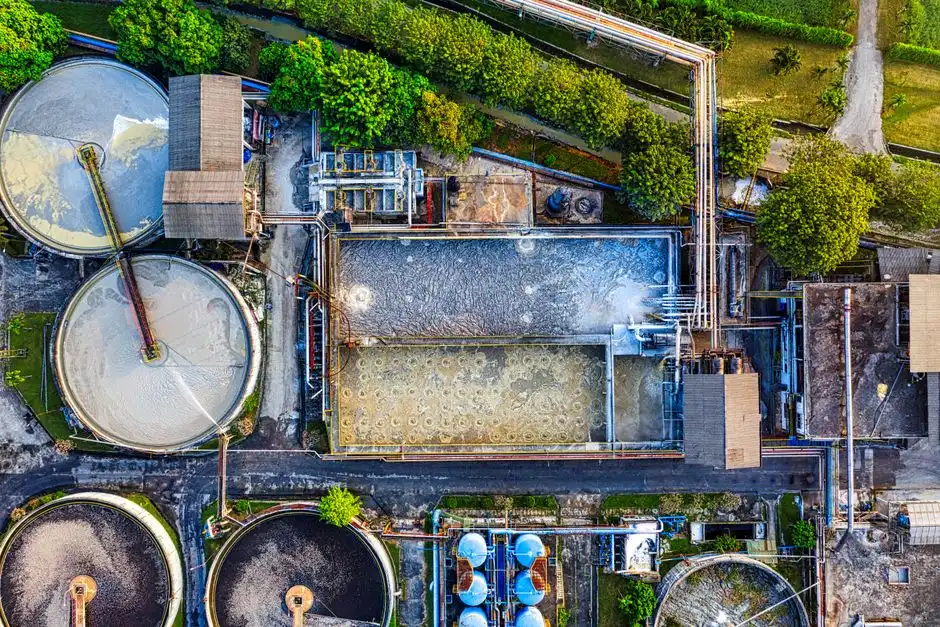
A conventional clarifier — either a circular basin or a lamella (inclined-plate) design — relies on gravity settling rather than bubble attachment. Feed enters the tank, solids drop to the bottom under their own weight, and clarified water overflows a weir. In a lamella design, inclined plates multiply the effective settling area inside a small footprint and reduce the coagulant dose required to reach a given effluent quality. The HydropureWater high-efficiency sedimentation tank catalog specifies a surface loading range of 20–40 m/h for lamella designs and a coagulant reduction of up to 30% relative to conventional clarifiers, which is the engineering basis for choosing a lamella over a circular basin when footprint is tight.
On streams dominated by coarse tailings fines, mill scale, or high-density metal-bearing grit with little or no oil, settling is fast and the lamella footprint is small — making the clarifier cheaper to install and simpler to operate than a DAF. The DAF scope defined in the scraped sources is explicitly about floatables and particles with specific gravity close to water (ClearStream, undated), which is the opposite of what a high-density grit stream presents. A clarifier also avoids the pressurized recycle loop, air saturation vessel, and recycle pump that a DAF needs, which lowers mechanical complexity and operator skill requirements.
The clarifier's weakness is oily mining wastewater. A gravity unit will not remove floatable oils and reagents on its own; a DAF or a separate oil-water separator must handle that load upstream (Clearwater/SigmaDAF, 2026-04). For sites where the stream carries both oil and grit, a clarifier alone is incomplete. The HydropureWater lamella clarifier fits the role of a polishing step after a DAF, sized to the residual TSS target.
Side-by-side: DAF vs clarifier for Eskridge mining and metals plants
The matrix below summarizes the head-to-head comparison on the axes a 2026 capital-planning review will be scored against. Numeric values are taken from the research; where a value is not in the research, the cell states the missing input the buyer needs to request.
| Parameter | Dissolved Air Flotation (DAF) | Conventional / Lamella Clarifier |
|---|---|---|
| Primary separation mechanism | Micro-bubble attachment to flocculated particles, plus bottom sediment compartment for settleables (Clearwater/SigmaDAF, 2026-04) | Gravity settling, enhanced by inclined plates in lamella designs (HydropureWater catalog) |
| Micro-bubble size | 30–50 microns (SigmaDAF USA, 2026-04; ClearStream, undated) | Not applicable — no bubbles |
| Best-fit stream | Oils, flotation reagents, metal hydroxide floc, low-specific-gravity fines (Clearwater/SigmaDAF, 2026-04) | High-density grit, coarse tailings fines, low-oil streams (HydropureWater catalog) |
| Surface loading / hydraulic envelope | Model-dependent: FPAC (small-to-medium flow, very high solids), FPBC (low-to-medium flow, low-buoyancy particles), FPHF (high flow, low-to-large loads); COMPACT DAF ≤66 GPM single skid, modular two-skid above 66 GPM (SigmaDAF USA, 2026-04) | 20–40 m/h surface loading for lamella designs (HydropureWater catalog) |
| Material of construction | 304SS standard; 316SS, polypropylene, other alloys on request (SigmaDAF USA, 2026-04) | Configured per project; depends on tank material and plate pack |
| Chemical dependency | Coagulant, flocculant, pH adjustment with jar testing required (Clearwater/SigmaDAF, 2026-04) | Same chemistry optional; typically lower polymer consumption (HydropureWater catalog) |
| Mechanical complexity | Pressurized recycle loop, air saturation vessel, pressure-relief valve, skimmer, sludge auger (SigmaDAF USA, 2026-04) | Passive settling; pumps and scrapers only |
| Footprint | Compact for the flow handled; rectangular shop-assembled units reduce field labor (ClearStream, undated) | Compact for lamella; larger for circular basins at the same surface loading |
| CAPEX driver | Flow envelope, alloy selection, integral chemical conditioning skid; no Eskridge-specific 2026 dollar figure in research — request a budgetary quote against GPM and influent TSS | Tank area, plate pack, civil works; no Eskridge-specific 2026 dollar figure in research — request a budgetary quote |
| Solids handling downstream | Float to skimmer; underflow to sludge auger; both streams need dewatering (Clearwater/SigmaDAF, 2026-04) | Underflow to sludge scraper; needs dewatering |
For deeper design-criteria detail — saturation vessel sizing, recycle ratio, and pressure-relief valve selection — the Micro Bubble Flotation Design Criteria: 2026 Engineering Guide walks through the calculations.
Sizing a DAF and clarifier train for an Eskridge plant
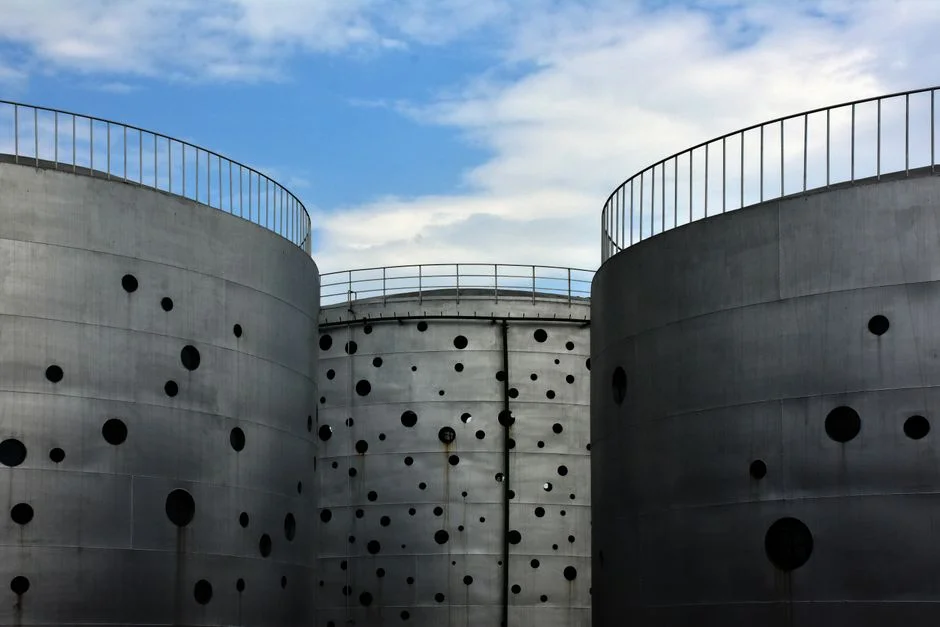
Sizing starts with the design flow. Capture the average daily flow, the peak 1-hour flow, and any slug loads from batch discharges (e.g., clarifier blowdown from a thickener, spent etch from a finishing line). Match that envelope to a DAF family: FPAC for small-to-medium flows with very high solids, FPBC for low-to-medium loads with low-buoyancy particles, FPHF for high flows with low-to-large loads, and COMPACT for turnkey plug-and-play installations at ≤66 GPM single skid (SigmaDAF USA, 2026-04).
Specify the influent envelope so the vendor can pick the right alloy and skid scope: TSS, FOG, target effluent TSS, pH range, chloride or chloride-equivalent, and operating temperature. Standard 304SS works for most streams; 316SS or polypropylene is required for chloride-rich or low-pH leachate (SigmaDAF USA, 2026-04). Confirm the recycle ratio — the 20–40% range is industry practice for DAF — and verify that the air saturation vessel has the residence time to dissolve air at the site supply pressure (Clearwater/SigmaDAF, 2026-04). If the stream is hot or cold, the saturation efficiency changes and the vendor should be told.
For the downstream clarifier, size by surface loading rate — 20–40 m/h for lamella designs (HydropureWater catalog) — and verify plate spacing against the largest expected floc particle. If floc is poorly conditioned, plate spacing that is too tight will plug. A HydropureWater automatic chemical dosing skid ties coagulant, flocculant, and pH adjustment into a single PLC-controlled package, which is the practical way to hold jar-test results steady on a real plant. Ask the DAF or clarifier vendor for a 3D model of the installed unit; ClearStream publishes a 3D model as a standard deliverable for every unit manufactured (ClearStream, undated), and the same request to other vendors is reasonable for retrofit confidence.
2026 cost, lead time, and compliance considerations for Eskridge
The research does not contain an Eskridge-specific 2026 dollar figure for either a DAF or a lamella clarifier — request a budgetary quote keyed to your GPM and influent TSS rather than rely on a generic range. What the research does confirm is the structural shape of the cost: rectangular shop-assembled DAFs reduce field labor compared to field-built alternatives (ClearStream, undated), and DAF typically has lower installed cost than alternative clarification methods when the stream is dominated by floatables (ClearStream, undated). Lead time is driven by material of construction — 304SS is the fastest path, 316SS or polypropylene adds fabrication weeks — and by whether an integral chemical conditioning skid is included. The COMPACT DAF is pre-assembled and plug-and-play with PLC controls (SigmaDAF USA, 2026-04), which compresses site work to a skid set, piping, and power.
On compliance, equipment selection is necessary but not sufficient. Operators discharging to a POTW must satisfy EPA 40 CFR Part 440 categorical standards for ore mining and dressing, the metal finishing categorical standards where applicable, and any local POTW limits derived from those. The categorical standards dictate sampling locations, flow measurement, and reporting cadence — the DAF or clarifier does not absolve the plant of those obligations. Plan for downstream sludge dewatering as well: both DAF float and clarifier underflow produce a metal-bearing cake that must be filter-pressed and disposed as solid waste, and the HydropureWater plate and frame filter press is the typical paired unit for that step.
Decision rule: when to pick DAF, clarifier, or both
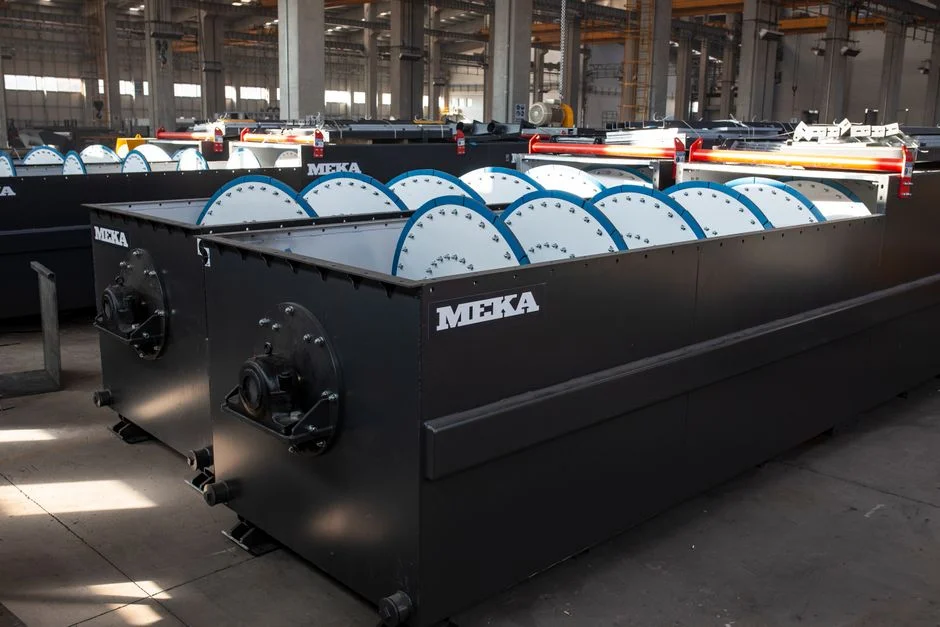
The rule reduces to three branches. If the stream has visible oils, flotation reagents, or metal hydroxide floc, the DAF goes first because those contaminants respond to bubble attachment once the upstream chemistry is right (Clearwater/SigmaDAF, 2026-04). If the stream is mostly heavy grit and coarse tailings fines with no oil, a lamella clarifier alone is enough — its 20–40 m/h surface loading handles the load at lower installed cost (HydropureWater catalog). If the stream carries both floatables and heavy fines — the typical Eskridge metals scenario — stage a DAF upstream of a lamella clarifier so the DAF strips oils, reagents, and floc while the clarifier polishes the residual settleables. For a comparable 2026 framing on a different US metals site, see the DAF or Clarifier for Mining/Metals Wastewater in Cranks, US: 2026 Factory Guide.
Frequently Asked Questions
Which is better for an Eskridge metals plant with both oil and grit in the same stream?
Run a DAF upstream of a lamella clarifier. The DAF handles oils, reagents, and metal hydroxide floc through bubble attachment and the built-in sediment compartment (Clearwater/SigmaDAF, 2026-04), and the lamella clarifier polishes residual settleables at 20–40 m/h surface loading (HydropureWater catalog). This staged configuration is more resilient than either unit alone on a mixed metals stream.
What drives DAF CAPEX for an Eskridge mining plant in 2026?
The three big drivers are flow envelope (which picks the DAF model — FPAC, FPBC, FPHF, or COMPACT), alloy selection (304SS standard, 316SS or polypropylene for chloride or low-pH service), and whether an integral chemical conditioning skid is included (SigmaDAF USA, 2026-04). The research does not contain an Eskridge-specific 2026 dollar figure; request a budgetary quote from vendors keyed to your GPM and influent TSS, and ask whether the quote includes the chemical skid or treats it as a separate line item.
Does choosing a DAF or clarifier satisfy EPA 40 CFR 440 on its own?
No. Equipment selection is one input to compliance, not the whole answer. The plant still needs the sampling, flow metering, and reporting cadence required by 40 CFR Part 440 for ore mining and dressing, the metal finishing categorical standards where applicable, and any local POTW limits. Confirm the applicable standard with your POTW and your state pretreatment coordinator before locking in equipment scope.
What should I ask a DAF or clarifier vendor before signing a 2026 PO?
Ask for jar test results on your actual wastewater (not a generic bench test), a 3D model of the installed unit to confirm retrofit fit (ClearStream, undated, publishes this as a standard deliverable), material certificates for the specified alloy, the recycle ratio and air saturation vessel sizing for your flow, and the PLC integration scope including tag lists and HMI screens. Also ask for a written confirmation that the proposed unit is paired with the chemical conditioning step required for your stream, because the conditioning is what makes the DAF work on a metals feed (Clearwater/SigmaDAF, 2026-04). For a parallel pretreatment discussion framed around POTW discharge, the Mining Pretreatment Near Bristol, US: 2026 Sewer Discharge Guide covers the sewer-discharge side of the same problem.