What a Bhopal Data Center Actually Discharges
A Bhopal data center produces four routine wastewater streams that any consent application must account for, plus a set of intermittent streams that change the design basis overnight. Cooling-tower blowdown (CTBD) dominates by volume; chiller and humidification bleed is a smaller brackish stream; DG jacket cooling and exhaust-scrubber water carries thermal load and trace oil; and on-site domestic sewage from staff is a small but consent-relevant flow that must meet the same MPPCB discharge envelope.
The mass balance is unforgiving. According to KETOS, 70–80% of the water in evaporative cooling is lost as evaporation, and the remaining 20–30% is the liquid wastewater stream the treatment plant must handle (KETOS, 2026). IDE Tech notes that a 100 MW facility can use up to 2 million litres of water per day — a useful upper bound — which means even a 5–10 MW Bhopal edge or colocation site will see blowdown flows in the tens of m³/day range (IDE Tech, 2026). Genesis Water Technologies describes CTBD at 1,200–6,000 mg/L TDS, with elevated silica, calcium, magnesium, alkalinity, suspended solids in the 10–50 mg/L band, and accumulated treatment-chemical residuals from biocides, scale inhibitors and dispersants (Genesis Water Technologies, 2026). That CTBD water chemistry — not the volume alone — is the design driver for the rest of the train.
The intermittent streams change the picture quickly: RO CIP waste is a low-pH, high-TDS slug that must be neutralised on-site; ion-exchange regenerate carries sodium and chloride spikes; and fire-water test drain-downs deliver a one-off large volume that the equalisation tank must absorb. Any datasheet for Bhopal should size the equalisation and neutralisation stages against these slugs, not against average-day blowdown alone.
Bhopal Water Sources and Why Make-Up Quality Matters
The make-up water a Bhopal site draws is the single most important input to the cooling-water programme, because cycles of concentration are set by the limiting species in the make-up — almost always silica, calcium hardness or alkalinity — not by TDS in isolation. Three realistic make-up sources exist for a Bhopal facility: Bhopal Municipal Corporation (BMC) potable supply, on-site borewells drawing from the Betwa basin aquifer, and reclaimed water from a nearby municipal STP such as the Adampur Lake network. Each has a different hardness, silica and TDS profile, and the cycles you can safely run change accordingly.
Globally, KETOS estimates that about 57% of data centers draw on potable water and 80–90% from blue-water sources such as municipal supply, lakes, rivers or aquifers — which means a BMC-supplied Bhopal site is squarely in the dominant category, while a borewell-only site is fully exposed to the local aquifer's seasonal chemistry (KETOS, 2026). KETOS also notes that closed-loop systems consume only 5–10% of withdrawal compared with the 70–80% evaporation loss of open evaporative cooling — a useful benchmark for any Bhopal operator weighing a retrofit (KETOS, 2026).
The practical point: a Bhopal site with high-silica groundwater will hit a silica ceiling before it hits a TDS ceiling, and that ceiling — not a TDS-based control loop — should set the cycles of concentration. The mandatory pre-design input is a site water analysis covering Ca, Mg, SiO₂, alkalinity, chloride, conductivity, Fe, Mn and free CO₂; without it, every downstream choice is a guess. Treating this as a paperwork step is the most common reason Indian cooling programmes fail in the first summer. Engineers looking for a pre-engineered package can review the HydropureWater integrated water purification unit as a reference for how pre-treatment is bundled in Indian skid practice.
Sizing the Blowdown Stream and Picking Cycles of Concentration
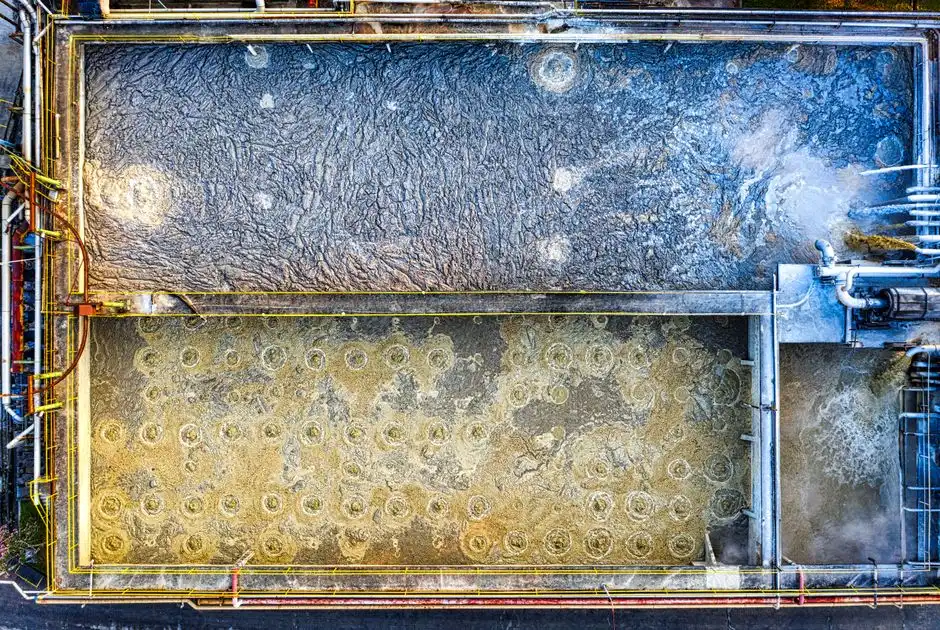
The mass balance from KETOS is the baseline: 100% make-up, 70–80% evaporation, 20–30% liquid blowdown (KETOS, 2026). Genesis Water Technologies adds the cycles-of-concentration layer: at 4 cycles, roughly 25–30% of make-up becomes blowdown, while pushing to 6–8 cycles drops that fraction into the single digits — but at the cost of CTBD TDS climbing into the 4,000–6,000 mg/L band and the scaling risk intensifying sharply (Genesis Water Technologies, 2026). The trade-off is therefore not free: higher cycles shrink the RO feed and the discharge volume, but they demand a stronger antiscalant programme, more frequent blowdown on the silica ceiling, and tighter conductivity-based auto-blowdown control to hold the chemistry inside its envelope.
A defensible 2026 starting point for a Bhopal site is 5–6 cycles of concentration, paired with side-stream filtration and online conductivity-controlled blowdown — this is the lowest-cost first step and the easiest to retrofit. Online TDS meters and auto-blowdown valves are now the cheapest way to stabilise cycles and protect downstream RO membranes, and KETOS explicitly frames water-quality monitoring as the often-overlooked piece of the puzzle (KETOS, 2026). The table below summarises the qualitative trade-off; specific operating ranges must be derived from the site water analysis.
| Cycles of concentration | Approx. blowdown as % of make-up | CTBD TDS band | What changes operationally |
|---|---|---|---|
| 3–4 | ~25–30% | Lower band, easier to reuse | Mild antiscalant dose; relaxed conductivity setpoint |
| 5–6 (typical 2026 Bhopal starting point) | Single-digit to low-teens % | Mid band; silica approaches ceiling | Side-stream filtration required; auto-blowdown on conductivity; structured antiscalant programme |
| 7–8 | Low single digits | 4,000–6,000 mg/L; silica-limited | Aggressive antiscalant; tighter online control; RO scaling risk elevated |
The supporting equipment — HydropureWater multi-media filter for SDI reduction ahead of the membranes, and a HydropureWater automatic chemical dosing skid for antiscalant and biocide — should be specified as part of this stage, not retrofitted after the RO is running.
The 2026 Treatment Train for Bhopal
A defensible 2026 train for a Bhopal 5–50 MW site is a five-stage layout, with each stage sized against the chemistry problem it actually solves rather than against a generic template.
Stage 1 — Side-stream and pre-filtration. Self-cleaning filters to 10–25 micron remove suspended solids, corrosion products and biofilm fragments that would otherwise foul downstream membranes; Genesis Water Technologies notes that effective side-stream filtration is the step that "directly enables higher cycles of concentration and improved blowdown quality" (Genesis Water Technologies, 2026). Pair this with a multimedia filter and a chemical dosing skid.
Stage 2 — Softening or nanofiltration. Lime-soda softening or nanofiltration trims calcium, magnesium and alkalinity ahead of the RO; Genesis Water Technologies reports that NF permeate typically lands at 30–50% of feed TDS at 70–85% recovery, which suits a Ca/Mg-limited Bhopal make-up (Genesis Water Technologies, 2026).
Stage 3 — Brackish RO. Both IDE Tech and Genesis Water Technologies flag 75–80% recovery as the conventional ceiling on CTBD, with antiscalant injection and careful staging to hold the scaling envelope; IDE Tech's MAXH₂O logic — separating salt removal from osmotic-pressure limits — is the design path to push recovery higher if consent or water-tariff economics demand it (IDE Tech, 2026; Genesis Water Technologies, 2026).
Stage 4 — Polishing and reuse. RO permeate at 10–50 mg/L TDS (per Genesis Water Technologies) is suitable as cooling-tower make-up; UV or chlorine dioxide provides biological control before the permeate returns to the loop, and reuse for landscape irrigation or toilet flush is a consent-negotiated option rather than a default. A HydropureWater chlorine dioxide generator gives stable biological control without the oxidiser-residual problems of straight chlorine on RO membranes.
Stage 5 — Concentrate management. Mechanical vapour compression at 95–98% recovery is the standard thermal step if MPPCB consent demands near-zero discharge; brine disposal to an authorised TSDF is the final step.
Chemical compatibility is what lets the blowdown return to the cooling loop without crashing the cooling-water programme. Non-phosphate, low-toxicity antiscalants, and oxidiser-free RO feed where possible, are the chemistries that survive both the membrane and the cooling-tower chemistries at the same time. The supporting train — HydropureWater UF system as RO pretreatment, the HydropureWater industrial RO system for the main separation, and a HydropureWater UV steriliser for the polishing step — is the practical embodiment of stages 1–4.
| Stage | Function | Typical 2026 output / operating envelope |
|---|---|---|
| 1. Side-stream + multimedia filter + dosing | SDI reduction, antiscalant injection, biological control | 10–25 micron filtrate; dosing matched to site analysis |
| 2. Softening or NF | Hardness and alkalinity trim | NF permeate 30–50% of feed TDS; 70–85% recovery |
| 3. Brackish RO | Main salt separation | 75–80% recovery; permeate 10–50 mg/L TDS |
| 4. Polishing (UV / ClO₂) | Biological control before reuse | Permeate suitable for cooling-tower make-up |
| 5. MVC + brine disposal | Concentrate volume reduction | 95–98% recovery; brine to authorised TSDF |
Compliance, Reuse and ZLD — What MPPCB Will Actually Ask For
MPPCB consent under the Water (Prevention and Control of Pollution) Act is the binding document for any Bhopal discharge, and the discharge envelope follows the CPCB effluent norms adopted by MPPCB for the relevant industry category. The data the operator must keep ready for consent includes daily flow, pH, TDS, chloride, free chlorine, residual hardness, oil and grease, temperature, and blowdown volume per shift. Consent conditions should be assumed to tighten, not relax: Genesis Water Technologies notes that some jurisdictions have already imposed TDS limits below 1,500 mg/L, which effectively forces treatment of concentrated blowdown before discharge (Genesis Water Technologies, 2026).
Reuse is the strategic direction a Bhopal site can use in its consent application. KETOS reports that Google uses reclaimed water at over 25% of its data center campuses and that AWS runs 20 sites on purified wastewater (KETOS, 2026). In Bhopal economics, the decision on zero-liquid-discharge usually lands on partial ZLD — RO plus MVC, with authorised brine disposal — rather than full crystallisation, because the marginal cost of the crystalliser step is difficult to justify when authorised brine disposal is available. Genesis Water Technologies puts ZLD CAPEX in the $3–8 million band and OPEX at $5–15 per 1,000 gallons in US terms, with 95–99% overall recovery, and describes partial ZLD as the practical middle ground (Genesis Water Technologies, 2026). The cost numbers in that source are US figures; for a Bhopal budget the buyer should request a vendor-quoted ₹/m³ OPEX and ₹/kL CAPEX for the actual feed-water analysis, and not extrapolate from the US band.
For permeate-reuse polishing, a HydropureWater UV steriliser is the standard non-chemical disinfection step that keeps the recycled stream inside consent without leaving an oxidiser residual.
Choosing What to Specify First on a Bhopal Site
The shortest path to a defensible Bhopal install is a tiered procurement list rather than a single mega-order. The first tier pays back regardless of how consent conditions evolve: an online conductivity/TDS controller on the cooling tower, a self-cleaning side-stream filter, and an antiscalant dosing skid. The second tier unlocks cycles above 5: a softening or NF unit ahead of RO, and the RO unit itself, sized for the 75–80% recovery ceiling. The third tier — MVC and brine handling — should be specified only after the consent conditions, the water tariff and the brine-disposal cost are all known; sizing the thermal stage before the RO is commissioned is a common and expensive mistake.
Closed-loop retrofits remain the cheapest single intervention on legacy Indian sites. KETOS notes that closed-loop cooling can cut water loss by approximately 70% compared with open evaporative systems (KETOS, 2026), and for a hot central-Indian climate this is often a better first spend than extra RO capacity. Before any equipment is sized, the engineer should request a site water analysis, an hourly blowdown profile, and a copy of the existing consent — these three documents resolve more design uncertainty than any vendor selection meeting. The HydropureWater automatic chemical dosing skid belongs in the first tier, and a HydropureWater plate-frame filter press is the right call for sludge dewatering from the clarifier and from the brine-handling stage.
| Tier | What to specify first | Why it pays back |
|---|---|---|
| 1 — Always | Online conductivity/TDS controller; self-cleaning side-stream filter; antiscalant dosing skid | Stabilises cycles; protects downstream RO; lowest cost per m³ saved |
| 2 — Once cycles > 5 | Softening or NF; RO sized for 75–80% recovery | Unlocks higher cycles; converts blowdown to reusable make-up |
| 3 — Only after consent and brine cost are known | MVC; brine handling; TSDF disposal route | Justified only by consent envelope, water tariff and brine-disposal cost |
Frequently Asked Questions
What blowdown flow should a Bhopal 5–20 MW data center actually plan for?
Apply the KETOS 70–80% evaporation / 20–30% blowdown split to the site's make-up flow (KETOS, 2026). At 4 cycles, Genesis Water Technologies puts blowdown at 25–30% of make-up; at 5–6 cycles — the typical 2026 Bhopal starting point — it falls into the low-teens to single-digit range, with CTBD TDS in the upper band of the 1,200–6,000 mg/L window (Genesis Water Technologies, 2026). Final numbers must come from the hourly blowdown profile on the existing or proposed cooling plant.
What is a realistic cost band for a 100–500 m³/day treatment train in India in 2026?
Genesis Water Technologies gives a US benchmark of $250,000–500,000 installed for a 50,000 GPD RO system treating blowdown (roughly 190 m³/day), with operating cost of $1.50–3.00 per 1,000 gallons (Genesis Water Technologies, 2026). For a Bhopal budget, the buyer must request a vendor-quoted ₹/m³ OPEX and ₹/kL CAPEX against the site water analysis; the US band is not a substitute for an Indian quote.
What is the lead-time and compliance risk of going to ZLD versus partial ZLD in MPPCB jurisdiction?
Genesis Water Technologies puts ZLD CAPEX in the $3–8 million band with 95–99% overall recovery and operating cost of $5–15 per 1,000 gallons (Genesis Water Technologies, 2026). In Bhopal economics the defensible default is partial ZLD — RO plus MVC plus authorised TSDF brine disposal — with full crystallisation specified only if consent conditions actually prohibit any liquid discharge. The Indian lead-time risk is dominated by evaporator delivery and by the TSDF window, not by the RO.
Which side-stream filtration and RO recovery numbers should be put into a vendor datasheet for Bhopal?
Specify 10–25 micron self-cleaning side-stream filtration at 1–5% of circulation flow, multimedia filtration to less than 10–15 micron ahead of the membranes, antiscalant dosing matched to the site silica ceiling, RO recovery of 75–80% as the baseline, and RO permeate at 10–50 mg/L TDS (Genesis Water Technologies, 2026). For higher recovery, reference the IDE Tech MAXH₂O design logic of separating salt removal from osmotic limits (IDE Tech, 2026).