What 'Total Nitrogen' Actually Means in a Discharge Permit
Total nitrogen (TN) is the regulated sum of every nitrogen species carried in wastewater: total Kjeldahl nitrogen (TKN = organic-N + NH3/NH4+), plus nitrite (NO2-N), plus nitrate (NO3-N). Test methods that report only ammonia miss the second half of the equation, which is the part that decides whether the plant complies. EU Urban Waste Water Directive 91/271/EEC and US 40 CFR Part 133 both set limits on TN (or its surrogate, total nitrogen plus nitrate), and many sensitive catchments enforce 10–15 mg N/L as an annual average. Below that band, receiving waters stay out of the eutrophication zone where nitrate leaching also poses a methemoglobinemia risk in infants under three months (per the MDPI 2023 review of wastewater denitrification, PMC9967642).
Because the species ratios in the influent depend on the source — domestic streams are TKN-dominant, landfill leachate carries high ammonia, agricultural drainage is already half-oxidised to nitrate — the engineer has to assay TKN, NO2-N, and NO3-N separately before specifying equipment. A permit written as "TN ≤ 10 mg N/L" is unforgiving: any residual nitrate from a partial nitrification will count against you, which is why a TN target forces a different design conversation than an ammonia target.
How Nitrification–Denitrification Removes Total Nitrogen
Conventional biological nitrogen removal (BNR) is a two-stage process. Stage 1 — nitrification — is carried out by autotrophic bacteria: Nitrosomonas oxidise NH4+ to NO2−, and Nitrobacter finish the job to NO3−. The reaction is aerobic, slow, and consumes alkalinity at about 7.1 mg CaCO3 per mg NH4-N oxidised, so designers must hold dissolved oxygen above 2 mg/L, pH in the 7.0–8.5 band, and feed enough alkalinity to keep the basin above ~6.5 pH (per the Waste2Water guide, waste2water.com).
Stage 2 — denitrification — converts that NO3− to N2 gas under anoxic conditions, with heterotrophs that pull oxygen off the nitrate molecule. The hard operating rules are: DO below 0.5 mg/L, an influent BOD:NO3-N ratio of at least 3:1, and the presence of a small but measurable residual NO3-N to keep the bugs alive. Where the wastewater runs carbon-starved, plants dose methanol or acetate; where it runs carbon-rich, an internal recycle from the aeration basin to the anoxic zone carries dissolved BOD back for free.
The two zones are normally built as separate compartments — A/O, A2O, Modified Ludzack-Ettinger (MLE), or a sequencing batch reactor (SBR) — to keep the dissolved-oxygen regimes from interfering. For a discussion of how MBR vessels implement the same zones at higher MLSS, see our guide to Switching From Lagoon to MBR Wastewater Treatment: 2026 Engineering Guide. A well-tuned conventional train delivers 85–95% TN removal at HRT 6–12 h, MLSS 2,500–4,000 mg/L, SRT 10–20 days, and mixed-liquor temperature above 12 °C. The MDPI 2023 review flags the trade-off: the process is mature, clean, and reliable, but it is energy-intensive on aeration and tedious when the carbon balance keeps slipping (per PMC9967642).
For plants that want both BOD and TN cut in a single vessel, packaged MBR membrane bioreactor systems for combined BOD and TN removal have become the default 2026 specification because the membranes retain the slow-growing nitrifiers at high MLSS, which compensates for cold weather and shock loads.
Anammox, Partial Nitritation, and Other Lower-Energy Biological Routes
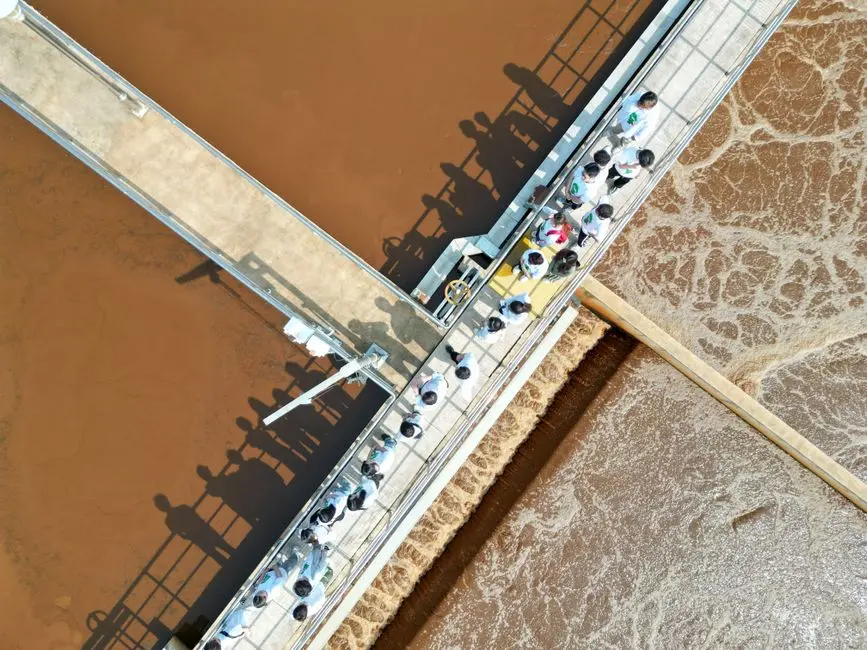
Anammox (ANaerobic AMMonium OXidation) shortcuts the conventional train. Bacteria in the genera Brocadia and Kuenenia convert NH4+ plus NO2− directly to N2 gas, skipping the second nitrification step and the entire denitrification carbon demand. The MDPI 2023 review frames anammox as a research-and-development priority precisely because it cuts aeration by up to ~60% and eliminates external methanol dosing relative to conventional nitrification-denitrification (per PMC9967642).
The operating envelope is tight: temperature 25–35 °C, low DO below 0.5 mg/L, an inlet NH4+:NO2− ratio close to 1:1, and SRT 20–50 days to retain the notoriously slow-growing anammox biomass. That long SRT is why start-up often takes months. The two reactor configurations a buyer is most likely to see in 2026 vendor proposals are SHARON (a partial nitritation reactor that generates the right NO2−:NH4+ ratio for the downstream anammox) and CANON/DEMON (single-stage partial nitritation + anammox in one biofilm or granular-sludge vessel). Both depend on warm, high-ammonia, low-C/N streams such as digester centrate, landfill leachate, or food-and-beverage condensate.
The 2026 caveat is unchanged from the prior decade: anammox is excellent for the right influent and a poor fit for cold municipal streams, highly variable industrial loads, or anything that ships with toxicity to the anammox community (free ammonia above ~150 mg/L, nitrite spikes, or heavy metals). Where the digester upstream is producing centrate with 800–1,500 mg/L NH4-N, anammox is the lowest-energy answer; where the stream is 30 mg/L NH4-N at 10 °C, conventional N/D is still the correct call. The digester side of that train is covered separately in Anaerobic Digester Common Problems and Solutions: 2026 Field Guide.
Chemical and Physical Methods: MAP, Breakpoint Chlorination, Stripping, and Ion Exchange
When biology cannot run — high-strength ammonia, low C/N, saline or toxic streams — the engineer falls back on physical-chemical polishing. The workhorse is struvite, or magnesium ammonium phosphate hexahydrate (MAP), which precipitates when Mg2+, NH4+, and PO43− meet in the right ratio:
Mg2+ + NH4+ + PO43− + 6H2O ⇋ MgNH4PO4·6H2O↓
MAP has a water solubility of 0.169 g/L at 25 °C, so the white crystal drops out and can be sold as a slow-release fertiliser (per PMC9967642). Published removal performance is consistent: Hu et al. report NH4+ removal climbing from 40% to 85.9% as pH rises from 8 to 9.5; Zhang et al. report TN removal rising from 52% to 81% in coking wastewater over pH 8.5 → 9.5; Türker et al. pushed removal above 95% by adjusting the molar ratio to [Mg2+]:[NH4+]:[PO43−] = 1.2:1:1.2 at pH 8.5. Above pH 9.5, Mg3(PO4)2 forms instead and the removal tails off.
Two structural caveats matter for compliance. First, MAP removes only the ammonia fraction — nitrate in the influent passes straight through, so MAP alone will not meet a 10–15 mg N/L TN limit on a stream that already carries NO3-N. Second, the magnesium and phosphate reagents add operating cost and, in the case of phosphate, a secondary nutrient to manage. For an automated reagent train, PLC-controlled chemical dosing for MAP precipitation and pH adjustment is the kind of package a buyer specifies in 2026 to keep the pH and molar ratio inside the narrow window where MAP actually forms.
| Method | Species removed | Reported efficiency | Key operating conditions | 2026 caveat |
|---|---|---|---|---|
| MAP precipitation | NH4+ only | 40–95% (pH- and ratio-dependent) | pH 8.5–9.5, [Mg2+]:[NH4+]:[PO43−] ≈ 1.2:1:1 | Will not polish nitrate to a tight TN limit |
| Breakpoint chlorination | NH4+ → N2 | Reactive but rarely specified today | Cl2:N ≥ 8:1, pH 6–7 | Adds chloride, generates DBPs |
| Ammonia stripping | NH3 only | >90% at high pH and air:liquid ratio | pH 10.5–11.5, scale control | High energy, calcium carbonate scaling |
| Ion exchange (clinoptilolite) | NH4+ | Effective across broad pH | Regeneration produces brine | Expensive, secondary waste to treat |
Breakpoint chlorination oxidises NH4+ to N2 with chlorine at a Cl2:N ratio above 8:1; it works fast and on cold water, but it adds chloride to the effluent and creates disinfection by-products, which is why most 2026 plants have retired it for TN polishing. Ammonia stripping raises pH to 10.5–11.5 and blows air through the liquor to liberate NH3, which is then trapped in an acid scrub. The technique removes over 90% of ammonia when air:liquid ratio and temperature are right, but the air-stripping towers eat energy, scale with CaCO3, and once again leave nitrate untouched. Ion exchange with natural clinoptilolite is the fourth option, useful on variable industrial streams because it works across a broad pH, but the regenerant brine becomes its own waste stream to treat (per PMC9967642).
Membrane and Nitrogen-Recovery Options for 2026 Plants
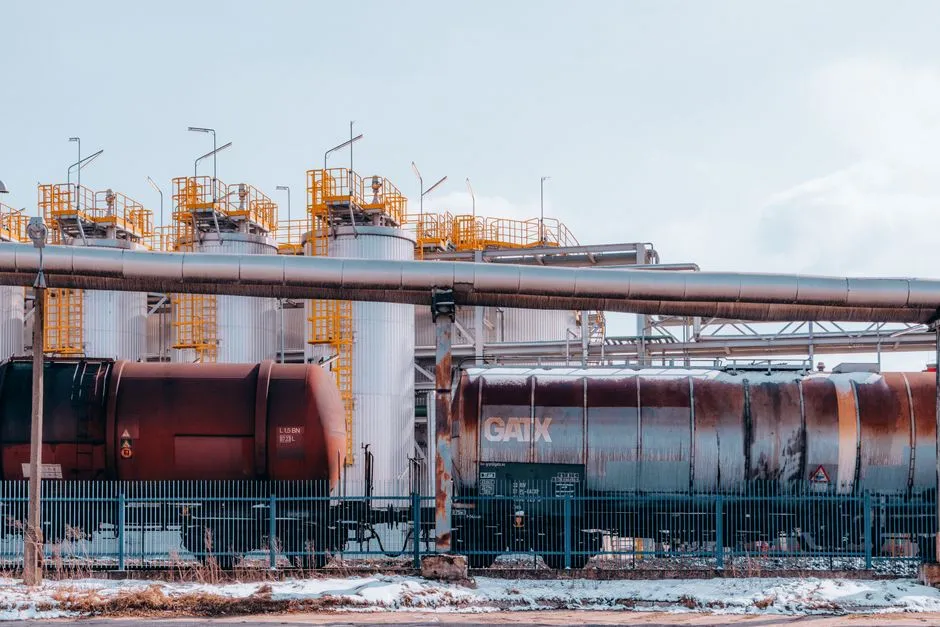
The fourth family of methods treats nitrogen as a recoverable resource rather than a disposal cost. Membrane contactors and gas-permeable nanofiltration pass NH3 gas through a hydrophobic membrane into an acidic stripping solution, where it forms ammonium sulphate or ammonium nitrate that can be sold as fertiliser. The MDPI 2023 review highlights this as the most promising route for simultaneous nitrogen removal and recovery, especially on high-ammonia industrial streams (per PMC9967642).
Forward osmosis and electrodialysis are flagged in the same review as R&D directions for concentrating the nitrogen into a small-volume liquor that can be crystallised or precipitated downstream. The economic crossover usually sits around 500 mg/L NH4-N: below that, the membrane CAPEX and the fouling-control burden outweigh the value of the recovered salt; above that, the fertiliser credit starts to offset the membrane cost. The third leg of the membrane family is reverse osmosis and ultrafiltration, which polish residual nitrogen species down to single-digit mg/L on the permeate side and concentrate the reject for recovery — a discussion of available elements is on our RO/UF membrane filter element product page.
What changed for 2026 plants is the control loop. On-site rapid ammonia sensing — ion-selective electrodes and UV-based in-line probes — has matured enough that membrane-recovery trains can be run tightly without offline lab lag (per PMC9967642). That makes the difference between a recovery skid that pays back in five years and one that pays back in fifteen. In an aerobic MBR the same sensors let operators hold nitrification at peak rate without over-aerating; the equipment side of that is covered in our note on How Does the CASS Process Work in Wastewater Treatment (2026 Guide).
Method Comparison: Picking the Right Train for Your Influent
The matrix below maps each method to the influent envelope it actually fits. Read it as a decision rule, not a leaderboard: there is no "best" nitrogen-removal method in the abstract, only the train that lines up with your TKN, C/N, and temperature.
| Method | Influent TKN range | C/N requirement | Target species | % TN removal | Energy footprint | CAPEX tier | OPEX tier | 2026 caveat |
|---|---|---|---|---|---|---|---|---|
| Nitrification–denitrification | 20–80 mg N/L typical, up to several hundred with extended aeration | BOD:TKN ≥ 3:1 (or external carbon) | NH4+ + NO3− | 85–95% | High (aeration) | Low–medium | Medium | Needs SRT 10–20 d and T > 12 °C |
| Anammox / partial nitritation | >200 mg N/L (centrate, leachate) | Low (carbon not needed) | NH4+ + NO2− | 80–90% | ~60% lower aeration than N/D | Medium–high | Low (no methanol) | Start-up months; warm streams only |
| MAP precipitation | Any, but reagent cost scales with NH4+ | Irrelevant | NH4+ only | 40–95% NH4+ (no NO3−) | Low | Low | Medium–high (chemicals) | Will not polish nitrate |
| Ammonia stripping | High NH3 streams | Irrelevant | NH3 only | Up to 95% NH3 | High (pH + air) | Medium | High (energy, scale control) | Air emissions control needed |
| Membrane recovery (contactor / NF / RO) | >500 mg/L NH4-N for payback | Irrelevant | NH3 or total N (RO) | 70–95% | Medium | High | Medium (fouling, replacement) | Concentrate disposal required |
Apply this in three steps. (1) If TKN is below ~50 mg N/L and the influent BOD:TKN is above 5, conventional nitrification-denitrification in an MBR membrane bioreactor system is the lowest-risk 2026 specification. (2) If TKN is high and the stream is warm and carbon-starved, route to anammox or to MAP precipitation with PLC-controlled chemical dosing in front of a partial biological step. (3) If the goal is to produce a saleable fertiliser stream, switch to membrane contactors and accept the higher CAPEX in exchange for a circular-economics credit.
Frequently Asked Questions
What is the most common method to remove total nitrogen from wastewater?
Conventional nitrification-denitrification in an activated-sludge or MBR system is the default method, delivering 85–95% TN removal at HRT 6–12 h, SRT 10–20 days, and mixed-liquor temperature above 12 °C (per PMC9967642).
Can MAP precipitation alone meet a 10–15 mg N/L TN discharge limit?
No. MAP precipitation removes only NH4+; it does not remove nitrate. To meet a 10–15 mg N/L TN limit, MAP has to be combined with a biological step that denitrifies the residual NO3− (per PMC9967642).
How much energy does anammox save over conventional nitrification-denitrification?
Anammox cuts aeration energy by up to ~60% and eliminates methanol dosing because the bacteria oxidise NH4+ + NO2− directly to N2 without external carbon. The trade-off is a 20–50 day SRT, a 25–35 °C operating window, and a months-long start-up (per PMC9967642).
What is the C/N ratio required for biological denitrification?
Denitrification needs an influent BOD:NO3-N ratio of at least 3:1, or the operator doses external carbon (typically methanol at ~2.5–3.0 mg per mg NO3-N removed) to keep the anoxic reaction running (per the Waste2Water guide).
Which 2026 regulations enforce a total nitrogen limit?
The EU Urban Waste Water Directive 91/271/EEC sets a TN limit of 10–15 mg N/L for discharges to sensitive catchments, and US EPA 40 CFR Part 133 imposes secondary-treatment nitrogen limits that individual state permits typically tighten to 10 mg N/L on surface-water discharges.