
Why Industrial Plants Are Replacing Lagoons with MBR Systems in 2026
Four conditions drive a facility off lagoon treatment and onto a membrane bioreactor (MBR): (1) a new ammonia or total nitrogen (TN) limit in the discharge permit — often NH₃-N below 5 mg/L or TN below 10 mg/L for surface waters or reuse; (2) a reuse mandate for cooling, irrigation, or process water; (3) escalating odor and vector complaints from neighbors; and (4) pressure to free up land currently buried under lagoon cells for production expansion. If two or more of these apply simultaneously, the lagoon has effectively reached its design ceiling.
Lagoons fail modern limits for predictable engineering reasons. They rely on long hydraulic retention times (typically 20–40 days) and passive surface aeration, so dissolved oxygen drifts with weather, load, and algae cycles. When oxygen collapses, sulfate-reducing bacteria release H₂S, mercaptans, and volatile fatty acids, and ammonia is no longer nitrified to nitrate. Effluent TSS routinely exceeds 30 mg/L, NH₃-N often sits above 10 mg/L, and total phosphorus passes through essentially unremoved (per Flowpoint Systems, 2025). Reuse is rarely viable without downstream filtration.
Lagoons carry structural liabilities beyond the compliance gap. Discharge permits are usually capacity-capped to a fixed average daily flow, so any production growth requires a new permit cycle. Sludge accumulates in the cells for years and is removed in infrequent, high-cost dredging events that can run 30–60% of an operator's annual wastewater OPEX (per Flowpoint Systems, 2025). MBR is the natural upgrade path because it is enclosed, mechanically controlled, and modular.
How MBR Technology Works: The Process Behind the Performance
An MBR is a conventional activated sludge process in which the secondary clarifier is replaced by a submerged membrane module. The membrane performs solid–liquid separation physically, eliminating the need for a large quiescent settling zone and preventing sludge washout. A typical industrial MBR uses PVDF (polyvinylidene fluoride) membranes with a nominal pore size of 0.1–1 μm, configured either as flat-sheet cassettes or hollow-fiber bundles (per Jijingi et al., Case Studies in Chemical and Environmental Engineering, 2024-12).
That physical barrier is the source of the performance step-change. With clarification no longer dependent on gravity settling, the bioreactor can be operated at mixed liquor suspended solids (MLSS) of 8,000–18,000 mg/L — roughly 2–4× the concentration in a conventional aeration basin. Higher biomass means smaller tanks for the same loading, more stable nitrification, and better shock-load tolerance (per Jijingi et al., 2024-12). A practical reference point from the HydropureWater product line: a packaged integrated MBR system sized for 10–2,000 m³/day delivers effluent below 1 μm with roughly 60% of the footprint of a conventional activated sludge plant of the same capacity.
Two operating parameters determine whether an MBR performs or fails: MLSS concentration and aeration rate. Both must be actively controlled, not just set once at commissioning (per Jijingi et al., 2024-12). Aeration serves three jobs simultaneously — oxygen supply, complete-mix in the basin, and cross-flow scouring of the membrane surface. Incorrect ratios lead to membrane fouling or energy waste. Because the process is fully or semi-enclosed, an MBR also has the lowest potential for airborne contaminant release of the three common treatment options — lagoons, MBBR, and MBR (per Flowpoint Systems, 2025).
Lagoon vs. MBR: Side-by-Side Performance and Cost Comparison
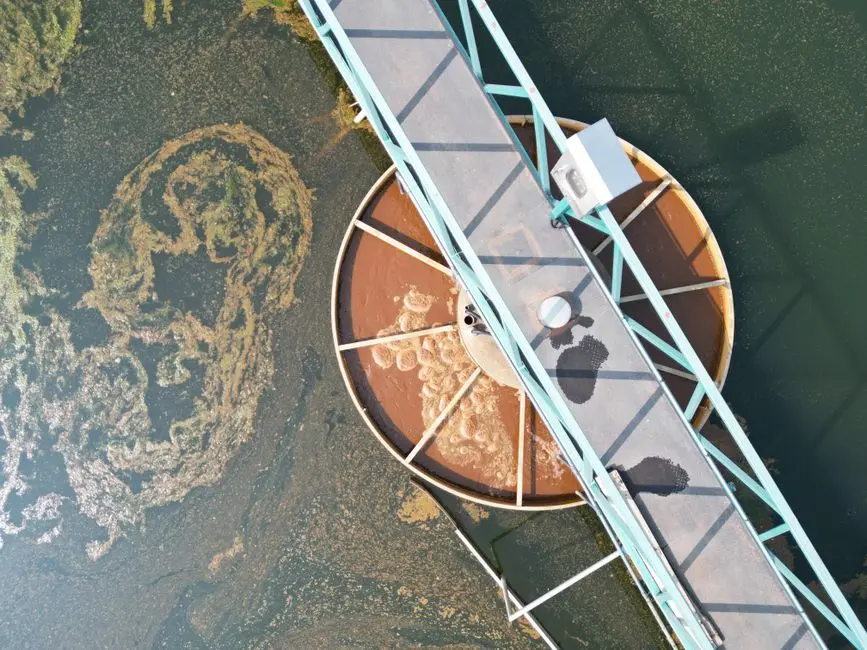
Engineers assess these technologies by comparing the specific operating parameters that influence permit compliance, budget, and reuse potential.
| Parameter | Lagoon | MBR |
|---|---|---|
| Footprint (relative, same flow) | 1.0 (baseline) | ~0.4 (~60% smaller) |
| Typical effluent BOD (mg/L) | 20–60 | <5 |
| Typical effluent TSS (mg/L) | 30–80 | <2 |
| Typical effluent NH₃-N (mg/L) | 5–20+ (variable) | <1–2 with nitrification |
| Reuse potential | Very low — usually requires additional treatment | Very high — agricultural, industrial, indirect potable |
| Odor / airborne emissions | High (open surface, H₂S, VOCs) | Lowest (enclosed, fine-filtration barrier) |
| Sludge handling | Infrequent dredging, large volumes, costly transport | Frequent smaller WAS volumes, easier dewatering |
| Energy use | Passive / very low kWh/m³ | Higher — continuous aeration + membrane scouring |
| Operator skill required | Low to moderate | Moderate to high (membrane CIP, MLSS control) |
| Scalability | Limited; permit- and land-constrained | Modular — add cassettes or trains |
| Capex / Opex profile | Low capex, low opex, high land cost | Higher capex and opex; gap narrows with reuse revenue and avoided compliance cost |
The MBR capital and O&M costs are higher, but the gap narrows once compliance costs, land value, and reuse revenue are included (per BioMicrobics, 2025). For facilities with tight discharge limits, constrained land, or a reuse contract, the matrix almost always tilts toward MBR. Equipment selection remains critical — the right module geometry depends on flow profile, and a DF series flat-sheet MBR module cassette carries 80–225 m² of membrane area depending on the stack height.
When MBR Is the Right Choice — and When It Isn't
MBR is the right answer when the discharge permit requires NH₃-N below 2 mg/L or TN below 10 mg/L, reuse is planned within 12–24 months, the site is land-constrained, odor complaints are escalating, or influent flows are variable enough that a clarifier-based plant struggles to hold permit (per BioMicrobics, 2025). MBRs handle load swings more stably because the membrane is a physical barrier rather than a settling process.
Facilities should retain or hybridize their lagoons when flows are very low (under ~50 m³/day), land is cheap and available, reuse is not on the roadmap, and current permit limits are met comfortably. In the hybrid path, existing lagoon cells are repurposed as equalization, anoxic polishing, or final effluent storage, and a new MBR skid is installed upstream. This is often the lowest-capex retrofit because the basin, liner, and civil works are already sunk costs.
Emerging hybrid MBBR-MBR configurations are also easing historic energy and cost barriers, particularly for industrial and saline wastewaters (per Flowpoint Systems, 2025). The right configuration depends on the influent; a full engineering evaluation of the existing basins and the discharge permit should drive the decision.
Retrofit Engineering: How to Convert an Existing Lagoon to MBR
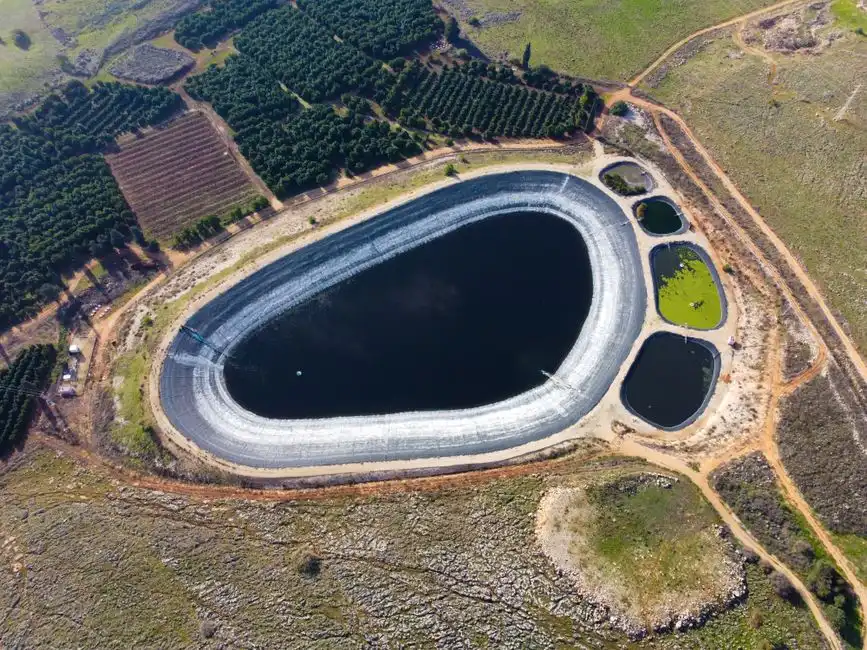
A lagoon-to-MBR conversion is a project requiring a systematic sequence of engineering decisions.
| Step | Action | Key Output |
|---|---|---|
| 1 | Characterize influent — flow (peak/average), BOD, COD, TSS, NH₃-N, temperature, salinity, FOG | Design basis for MLSS target and membrane selection |
| 2 | Decide basin reuse — equalization, anoxic, polishing; MBR tank usually needs new construction | P&ID, civil scope |
| 3 | Specify pretreatment — bar screens (typically 3–6 mm openings) and grit removal to protect membranes | Screening and grit specs |
| 4 | Select module geometry — flat-sheet vs. hollow-fiber | Module specification |
| 5 | Size modules — 32–135 m³/day per cassette benchmark, plus 10–15% redundancy | Cassette count, train layout |
| 6 | Plan sludge handling — waste-activated sludge (WAS) more frequent than lagoon dredging | Dewatering equipment spec |
| 7 | Commission with fouling-control program — backwash, CIP, aeration optimization | O&M manual, training plan |
Step 1 is often under-resourced. Membrane selection and MLSS targets depend on influent character, especially for industrial waste with high COD, salinity, or FOG. A 30-day composite sampling program covering both wet and dry weather is the minimum defensible basis.
Step 2 is the most underestimated decision. Existing lagoon cells are useful, but a true MBR tank needs a controlled, enclosed, mixed, and aerated environment. The pragmatic move is to repurpose one or two lagoon cells as equalization or polishing and install the new MBR tank on a fresh pad with proper foundations. Step 3 is non-negotiable: a GX series rotary mechanical bar screen ahead of the membranes prevents the hair, fibers, and grit that cause most premature fouling (per Jijingi et al., 2024-12).
Step 4 — module geometry — is the most consequential engineering choice. Flat-sheet modules (for example the DF series, 0.1 μm PVDF, 80–225 m² per cassette) are well-suited to batchy industrial flows and are easy to inspect and clean in place. Hollow-fiber modules pack more area per cassette and favor higher continuous municipal flows, but are more sensitive to grit and hair fouling. For a retrofit where the influent is industrial and existing upstream screening is marginal, flat-sheet is the safer choice.
Step 5 sizing uses a planning benchmark of 32–135 m³/day per cassette, depending on influent strength and target flux; always add 10–15% redundancy so a cassette can be offline for cleaning without forcing a permit excursion. Step 6 — sludge — is where retrofits often fail in execution. MBRs generate more frequent WAS than lagoons, typically 0.2–0.4 kg DS per kg BOD removed. The retrofit must include a real dewatering step, commonly a plate and frame filter press or a decanter centrifuge. Step 7 is the fouling-control program: backwash intervals, CIP chemicals (typically NaOCl plus citric acid), and aeration optimization — these decide whether membranes last 5 years or 10 (per Jijingi et al., 2024-12).
2026 Capex, Opex, and ROI Reality Check
MBR capex scales with average flow, peak flow, target effluent quality, and influent strength. Order-of-magnitude planning figures should come from a vendor during pilot testing; anything quoted before pilot data is guesswork. The structural reality, however, is well established: MBRs have higher upfront and O&M costs than lagoons, but the gap narrows once compliance costs, land value, and reuse revenue are included (per BioMicrobics, 2025).
The ROI drivers MBRs unlock are concrete: avoided permit fines on ammonia and TN excursions; avoided lagoon dredging events (often 30–60% of historical annual wastewater OPEX, per Flowpoint Systems, 2025); sale or internal reuse of treated water at industrial rates; and freed land currently buried under lagoon cells. The single most defensible way to lock down the actual energy, chemical, and membrane-replacement costs for a specific wastewater is a 90-day on-site pilot. Cross-check pilot economics against the planning figures in the MBR cost per m³ 2026 guide and an industrial WWTP cost benchmark for 2026.
Frequently Asked Questions
What ammonia or TN limit typically forces a lagoon-to-MBR conversion?
Plants usually have to move when the permit sets NH₃-N below 2–5 mg/L or total nitrogen below 10 mg/L. Lagoons without real-time aeration control typically produce NH₃-N in the 5–20+ mg/L range (per Flowpoint Systems, 2025).
How much footprint can a lagoon-to-MBR retrofit actually save?
Plan on roughly 60% footprint reduction versus a conventional activated sludge plant of the same capacity. Existing lagoon cells are usually repurposed as equalization or polishing — the MBR tank itself almost always needs
Frequently Asked Questions
When should I switch from a lagoon to an MBR system?
You should consider switching when your facility faces tightening regulatory discharge limits for Total Nitrogen (TN) below 3 mg/L or Total Phosphorus (TP) below 0.1 mg/L that existing lagoon processes cannot meet. Additionally, if you are experiencing seasonal hydraulic overloading, filamentous bulking, or land constraints that prevent the expansion of traditional pond footprints, an MBR upgrade is the most viable path to compliance.
How much does it cost to convert a lagoon wastewater system to MBR in 2026?
Conversion costs for 2026 typically range from $15 to $35 per gallon per day (GPD) of treatment capacity, depending on the degree of site civil work and existing aeration infrastructure reuse. Smaller decentralized systems under 0.5 MGD often see higher per-unit costs, while larger municipal upgrades benefit from economies of scale, though total capital expenditure often includes significant investments in fine screening and membrane scouring blowers.
Can I reuse my existing lagoon basins when I install an MBR?
Yes, existing basins are frequently repurposed as equalization or pre-anoxic zones to facilitate biological nutrient removal before the water reaches the membrane tanks. However, because MBRs require higher Mixed Liquor Suspended Solids (MLSS) concentrations—typically between 8,000 and 12,000 mg/L—the existing lagoon basins often require structural reinforcement, specialized baffle walls, and high-efficiency fine-bubble aeration systems to maintain the necessary oxygen transfer rates.
What effluent quality can an MBR achieve compared with a lagoon?
While standard lagoons typically produce effluent with 20–30 mg/L of BOD and TSS, an MBR system consistently achieves high-clarity effluent with BOD and TSS levels below 5 mg/L and 1 mg/L, respectively. Due to the absolute physical barrier of the membranes (typically 0.04 to 0.4 micron pore size), MBRs also provide log-reduction credits for pathogens, often allowing the water to meet Class A recycled water standards for irrigation and industrial reuse.
How much space does an MBR system save versus a lagoon?
An MBR system reduces the required physical footprint of a treatment facility by 70% to 90% compared to traditional facultative lagoons. By eliminating the need for large polishing ponds and secondary clarifiers, a process that once occupied 20 acres can often be condensed into a single building and a small aeration tank footprint, freeing up significant land area for other site development needs.