Why Edge Computing Matters for Water Treatment in 2026
Edge computing in water treatment processes sensor and SCADA data locally on industrial gateways or PLCs, cutting contamination response from minutes (cloud round-trip) to 6–800 ms. It reduces central SCADA network load by ~50%, keeps plants running during connectivity loss, and enables automated chemical dosing adjustments, flow diversion, and section isolation in real time.
The cost-versus-latency trade-off has flipped between 2022 and 2026. Industrial edge gateways now ship below $400 per unit, Time-Sensitive Networking (TSN) is standard on managed plant switches, and OPC UA over MQTT has displaced legacy OPC Classic as the default publish-subscribe stack for OT-to-IT data exchange. A mid-sized 50,000 m³/day WWTP generates roughly 2 GB/day of time-series; at AWS IoT Core or Azure IoT Hub ingest rates of $0.02–$0.08/GB, that is $40–$160/day per site before analytics. Multi-site fleets (10+ plants) cross the threshold where edge preprocessing, which typically reduces uplinked volume by 60–80%, becomes a CAPEX decision rather than an architecture preference.
The historical objections have aged poorly. Gateway silicon (ARM Cortex-A53/A72 quad-core, 2–4 GB RAM, -25 to +70 °C) now runs containerized Python, Node-RED, and lightweight ONNX inference at the panel. Cybersecurity risk is addressable through IEC 62443-3-3 SL-2 hardening, signed firmware, and certificate-based MQTT broker authentication, not by avoiding edge. Vendor lock-in has receded because the OPC UA over MQTT contract is open; replacing the historian no longer rewrites the control logic.
Edge Architecture: Four Layers from Sensor to Cloud
A defensable 2026 reference architecture places compute within 50 m of the sensor, on hardware rated for the cabinet, not the server room. Four layers, each with a distinct protocol envelope, carry data from the wet well to the historian.
| Layer | Hardware | Function | Protocols | Typical Latency |
|---|---|---|---|---|
| 1 — Sensor / Actuator | pH, ORP, DO, TSS, conductivity, flow, triboelectric or fluorescence probes | Acquire process variables; drive final control elements | 4–20 mA, HART, IO-Link | 1–10 ms |
| 2 — Edge Gateway | Industrial IPC or ruggedized gateway (e.g., Siemens IOT2050, Advantech UNO-248, Beckhoff CX series) | Pre-process, filter, run ML inference, publish MQTT topics | MQTT 5.0, OPC UA, Sparkplug B | 5–50 ms |
| 3 — PLC / DCS Controller | IEC 61131-3 PLC (S7-1500, Allen-Bradley ControlLogix, Schneider M580) | Deterministic control loops ≤50 ms; safety interlocks | PROFINET, EtherNet/IP, Modbus TCP, OPC UA server | 1–20 ms scan |
| 4 — Cloud Historian + Analytics | AWS IoT, Azure IoT, Ignition Cloud Edition, or on-prem historian | Store aggregates, alarms, ML features; serve dashboards and ML retraining | HTTPS, MQTT bridge, Kafka | 30–120 s round-trip |
The edge-cloud contract is a clean topic-naming convention. A gateway publishes wwt/edge-01/dosing/coagulant-ml-min at 1 Hz with QoS 1; the cloud subscribes only to aggregates (.../dosing/coagulant-ml-min/avg-15m) and event-driven alarms (.../alarms/turbidity-spike, retained). Raw waveform data — vibration, motor current, pH at 100 Hz — stays local for 3–7 years per EPA recordkeeping practice and never traverses the WAN. This separation is what gives the architecture its 50% SCADA load reduction: the central server stops forwarding every tag and starts receiving only what auditors and operators need to see.
Use Cases That Deliver Measurable ROI
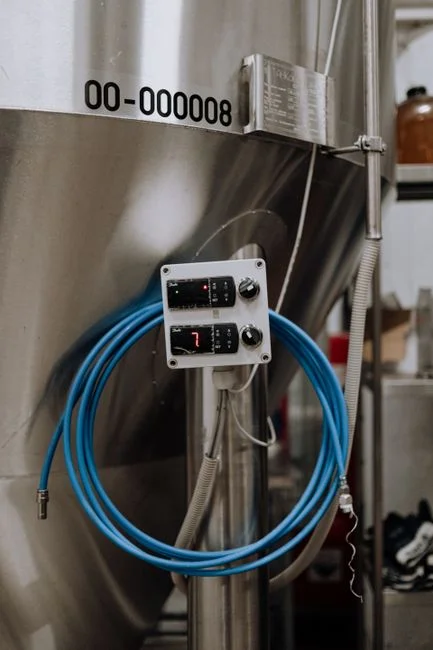
Five applications consistently justify an edge retrofit inside one budget cycle. Each is specifiable, measurable, and defensible in a CAPEX review.
Contamination detection. A triboelectric or UV-fluorescence probe at the intake feeds an edge ML model that flags anomalies in 6 ms; the PLC closes the isolation valve in 0.8 s. The single-paper 6 ms figure circulating in industry coverage should be treated as a sensor-level result, not an end-to-end system claim — end-to-end mitigation including valve actuation is realistically 0.5–1.5 s on a properly specified edge node. That is still two orders of magnitude faster than the 30–120 s cloud round-trip that allowed contamination events to escalate in past incidents (e.g., the 2024 Wuxi petrochemical discharge).
Chemical dosing optimization. Edge reads influent flow and turbidity at 250 ms intervals and adjusts polymer pump stroke via PID. Published WWTP case studies report 15–25% coagulant reduction when dosing moves from timer-based to model-predictive edge control. The same control loop on a cloud SCADA introduces 2–10 s of jitter that destabilizes the PID — edge is not a luxury here, it is a control-theory requirement.
Aeration control. Edge DO loops react to ammonia-spike events without round-tripping through a regional control center. Fixed-setpoint blowers waste 10–20% of blower energy on over-aeration; the aeration energy cost optimization guide details the ammonia-vs-DO cascade that edge makes tractable.
Sludge dewatering. Edge monitors filter-press inlet pressure and predicts cycle-end from the dP/dt curve, reducing wet-cake moisture by 2–4 percentage points. Each point of moisture reduction cuts downstream drying energy by roughly 5–8%.
Remote-site resilience. Edge keeps the plant running through WAN outages, eliminating the SCADA blackout that historically forced remote sites into manual or unsafe modes. The digital twin for industrial wastewater plants architecture depends on this — twins are only useful if the underlying plant keeps publishing state during a network cut.
Edge vs Cloud vs Hybrid: Choosing the Right Model
Every control loop in a treatment plant can be classified by latency tolerance, data volume, cybersecurity posture, and cost — and that classification determines whether it belongs at the edge, in the cloud, or in a hybrid pattern where the edge executes and the cloud logs.
| Criterion | Edge-Only | Cloud-Only | Hybrid (Edge Executes, Cloud Logs) |
|---|---|---|---|
| Latency requirement | <1 s (dosing, isolation, DO loop) | >60 s (daily reports, ML retraining) | 1–60 s (alarm acknowledgement, trend logging) |
| Typical CAPEX per loop | $350–$1,200 gateway + PLC I/O | $0 hardware, $0.02–$0.08/GB egress | Edge hardware + cloud subscription |
| Cybersecurity posture | IEC 62443-3-3 SL-2 certified PLC | Cloud provider SOC 2, but loop unsafe to depend on WAN | Edge enforces, cloud redundant |
| Scalability | Per-site linear | Multi-site linear | Best at 10+ sites |
| Failure mode | Continues on WAN loss | Halts on WAN loss | Continues, degraded logging |
Three rules govern the classification. First, loops requiring sub-second response — chemical dosing, contamination isolation, aeration DO — are edge-only; cloud round-trip is mathematically disqualified. Second, raw high-rate waveforms (vibration, motor current, pH at >10 Hz) stay on edge; only summarized KPIs and event-triggered snapshots go to cloud. Third, per IEC 62443-3-3, safety-critical functions must run on a certified PLC, not a general-purpose cloud VM, regardless of latency math. Cloud-egress cost dominates the OPEX line above ~10 sites or ~500 IO points; at that scale, edge preprocessing pays back in 14–22 months at 2026 hardware prices.
2026 CAPEX and OPEX Benchmarks for Edge Deployment
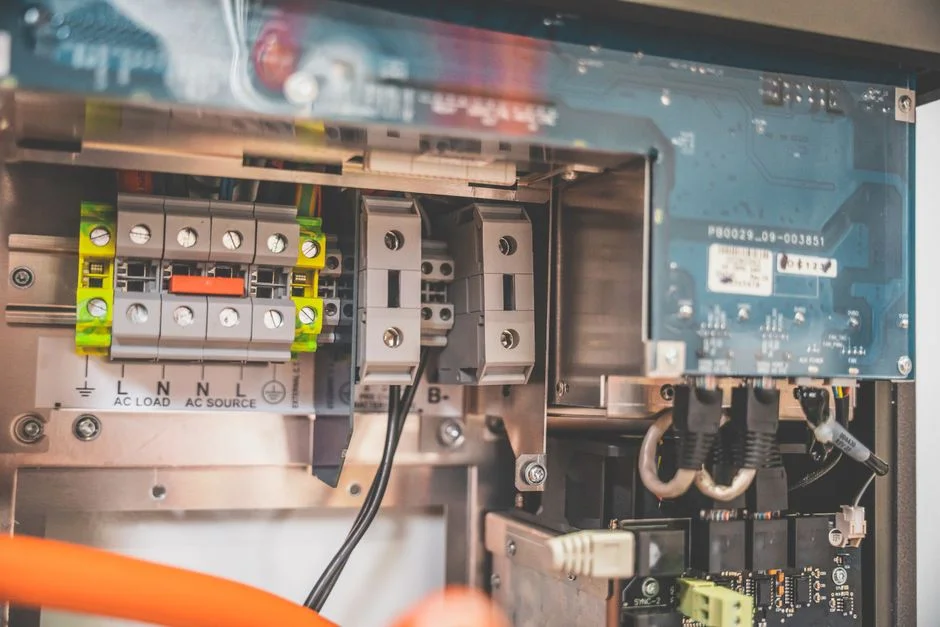
Procurement-grade numbers for a 2026 retrofit, based on integrator quotes and component MSRPs, not list price:
| Line Item | 2026 Range | Notes |
|---|---|---|
| Industrial edge gateway (per unit) | $350–$1,200 | ARM Cortex-A53/A72, 2–4 GB RAM, IP65, -25 to +70 °C |
| PLC upgrade to edge-capable (per skid) | $1,800–$4,500 | Includes OPC UA server license and TSN-capable port |
| Integration labor (per skid) | $8,000–$25,000 | MQTT broker setup, tag mapping, historian bridge, commissioning |
| Coagulant savings (annual, 500 m³/h plant) | $15,000–$40,000 | 15–25% polymer reduction |
| Aeration energy savings (annual, 500 m³/h plant) | $25,000–$50,000 | 10–20% blower kWh reduction |
| Payback (retrofit) | 14–22 months | Includes integration labor |
| Payback (new-build with edge specified at design) | 8–12 months | Marginal gateway cost only |
For a 500 m³/h plant, combined coagulant and aeration savings land in the $40,000–$90,000/year band. Adding an edge-ready automatic chemical dosing skid or an edge-controllable ClO₂ disinfection generator at retrofit time avoids the integration labor line on a future upgrade, because MQTT brokers and OPC UA tag maps arrive pre-configured. Plants already running an edge-instrumented MBR system typically clear the payback threshold within 10 months because the membrane skid's DO and TMP loops are the highest-value edge targets in the plant.
Implementation Checklist and Common Pitfalls
Ten items to clear before go-live, in the order they will bite you if skipped:
- OT/IT VLAN segmentation with stateful firewall between Layer 2 and Layer 4.
- Time synchronization via PTP (IEEE 1588) on the OT network; NTP fallback only.
- Certificate management per IEC 62443-3-3 — every edge node and MQTT broker with a unique x.509 cert.
- Historian retention policy written down before the first write — typical 3–7 years for EPA recordkeeping.
- Alarm-routing test under simulated WAN loss.
- Failover test: kill the cloud connection and verify the plant runs unmonitored for 24 h.
- Cybersecurity pen-test against the edge node, not just the perimeter.
- Operator HMI retraining — edge dashboards look different from SCADA mimics.
- MQTT broker redundancy (two brokers, last-will-and-testament configured).
- Backup-and-restore drill for gateway configuration, including tag maps.
Three failure modes derail most edge projects. First, consumer-grade Raspberry Pi or mini-PC gateways deployed in unsealed enclosures fail in 6–9 months in humid WWTP service — conformal coating and IP65 are non-negotiable. Second, lift-and-shift of cloud dashboards onto edge hardware without rewriting the control logic introduces 200–500 ms jitter that breaks PID stability; control logic must be authored for the edge, not ported. Third, skipping the cybersecurity hardening step turns every edge node into an OT attack surface visible from the IT VLAN — the electromagnetic flow meter engineering guide covers the field-device side of the same exposure. Target IEC 62443-3-3 SL-2 as the 2026 minimum for industrial edge deployments; SL-3 is appropriate for plants handling hazardous chemistry.
Frequently Asked Questions
What is edge computing in water treatment? Edge computing in water treatment means running data processing and control logic on industrial gateways or PLCs located within 50 m of the sensor, achieving 6–800 ms response times instead of the 30–120 s cloud round-trip, and reducing central SCADA network load by approximately 50%.
How does OPC UA over MQTT work in a wastewater plant? OPC UA over MQTT is the 2026 de-facto protocol stack for OT-to-IT data exchange: the edge gateway publishes structured topics like wwt/edge-01/dosing/coagulant-ml-min at 1 Hz with QoS 1, and the cloud subscribes only to aggregates and retained alarms rather than raw waveforms.
What cybersecurity standard applies to industrial edge deployments? IEC 62443-3-3 SL-2 is the 2026 minimum security level for industrial edge nodes; plants handling hazardous chemistry should target SL-3, with unique x.509 certificates per device and PTP-synchronized time stamping for audit trails.
How long does an edge retrofit take to pay back? Edge retrofits in 2026 pay back in 14–22 months at 500 m³/h scale, driven by 15–25% coagulant reduction and 10–20% aeration energy savings; new-build plants that specify edge at design clear payback in 8–12 months because integration labor is the avoided line item.
What is the typical edge gateway hardware specification? A 2026 industrial edge gateway typically ships with an ARM Cortex-A53/A72 quad-core CPU, 2–4 GB RAM, -25 to +70 °C operating range, IP65 sealing, and support for MQTT 5.0, OPC UA, and containerized Python or Node-RED workloads, in the $350–$1,200 per-unit price band.
Can edge computing satisfy EPA recordkeeping requirements? Yes. Edge nodes retain raw waveform data locally for 3–7 years per EPA recordkeeping practice, while publishing only summarized KPIs and event-triggered snapshots to the cloud historian, which keeps central storage costs bounded without breaking the audit chain.