What an ETP in Mecca Has to Handle That a Standard Plant Does Not
An effluent treatment plant (ETP) in Mecca is an engineered system that brings industrial wastewater — from hotels, laundries, food processing, abattoirs and concrete/cement operations — to discharge or reuse quality under KSA environmental rules. Because Mecca faces extreme ambient heat, high-TDS brackish makeup water, and sharp seasonal load swings during Hajj and Ramadan, an ETP here typically combines equalisation, physico-chemical pretreatment, biological treatment (MBR or SBR), and a polishing stage such as RO when reuse is targeted. Research-grade membrane polishing has been shown to produce effluent suitable for agricultural or potable reuse (Schrader, University of Twente PhD thesis, doi 10.3990/1.9789036523325), confirming that an ETP in Mecca can be designed for water-recovery outcomes, not just compliance discharge.
Four site-specific drivers separate a Mecca ETP design brief from a generic one. First, ambient air temperatures routinely exceed 45 °C during the long summer, which depresses dissolved-oxygen saturation in aeration tanks, accelerates biological kinetics, and forces a temperature-corrected sizing of the bioreactor. Second, hospitality, laundry and catering flows tied to Hajj and Ramadan can multiply baseline flows by several times — a qualitative peak-load condition the engineer must verify against the site's own flow records before locking tank volumes. Third, makeup water drawn from local sources in the Makkah Region is generally brackish and high in total dissolved solids, which raises influent salinity and pushes the design toward RO polishing whenever reuse is targeted. Fourth, many industrial zones in the Holy District have limited municipal sewer access, so on-site discharge quality, or even zero liquid discharge (ZLD), becomes a hard requirement rather than an aspiration.
For the purposes of a defensible specification, an ETP is the treatment train applied to industrial process wastewater before discharge or reuse, distinct from a sewage treatment plant (STP) handling domestic sewage, and distinct from a standalone RO unit, which is a polishing or desalination step rather than a complete treatment train. The two-stage distinction matters in KSA permitting because the regulator, the project owner and the operator each look at the ETP as a single process envelope, not as a bundle of unrelated skids.
Process Train: Equalisation, Physico-Chemical, Biological, Polishing
A defensible process flow for a Mecca ETP runs in five stages. Each stage has a defined function, and each can be specified independently so that a procurement manager and a process engineer can read the same line on the P&ID.
| Stage | Function | Equipment | Design Note for Mecca |
|---|---|---|---|
| 1. Screening | Remove rags, plastics and large debris that would damage downstream equipment | Rotary mechanical bar screen | Spec a coarse + fine screen pair; a GX Series rotary bar screen is a typical candidate for protecting downstream units. |
| 2. Equalisation | Buffer diurnal and Hajj/Ramadan peak flows, dampen concentration shocks | EQ tank with mixing and aeration | Hydraulic residence time scales with the diurnal peak-to-average ratio measured at site; the larger that ratio, the larger the EQ volume required. |
| 3. Physico-chemical | Remove FOG, oil, colloids, suspended solids and adjust pH | DAF, lamella clarifier, high-rate sedimentation tank, automatic chemical dosing system | DAF is a proven workhorse in food, textile and petrochemical pre-treatment; chemical dosing must be tuned to the high-TDS, high-temperature influent typical of the region. |
| 4. Biological | Degrade dissolved organics and nitrify ammonia | HydropureWater MBR membrane bioreactor or sequencing batch reactor (SBR) | MBR delivers a near-reuse permeate and a substantially smaller footprint than conventional activated sludge, which is critical where land is constrained around the Holy Sites. |
| 5. Polishing | Produce reuse-quality water or meet discharge limits | UF → RO, with constructed-wetland polishing as an emerging option for trace organics | Schrader's PhD thesis at the University of Twente (doi 10.3990/1.9789036523325) shows direct nanofiltration can polish WWTP effluent to a quality suitable for agricultural or potable reuse, which is the technical basis for the RO/reuse train. |
The equalisation stage is the single most important buffer in a Mecca design, because the biological stage is sized for a stable load and fails fast under shock loading. The physico-chemical stage must remove FOG aggressively for hotel, abattoir and catering flows; the biological stage is where the engineer chooses between an MBR and an SBR, and the polishing stage is where an on-site industrial RO polishing skid is added if reuse for cooling tower make-up, boiler feed or landscape irrigation is targeted. The research base confirms that membrane polishing is technically viable but does not quote site-specific removal percentages for BOD, COD or TSS — those are inputs the engineer must obtain from a bench- or pilot-scale trial on the actual Mecca influent.
Technology Selection for Mecca: MBR vs SBR vs DAF + Conventional ASP
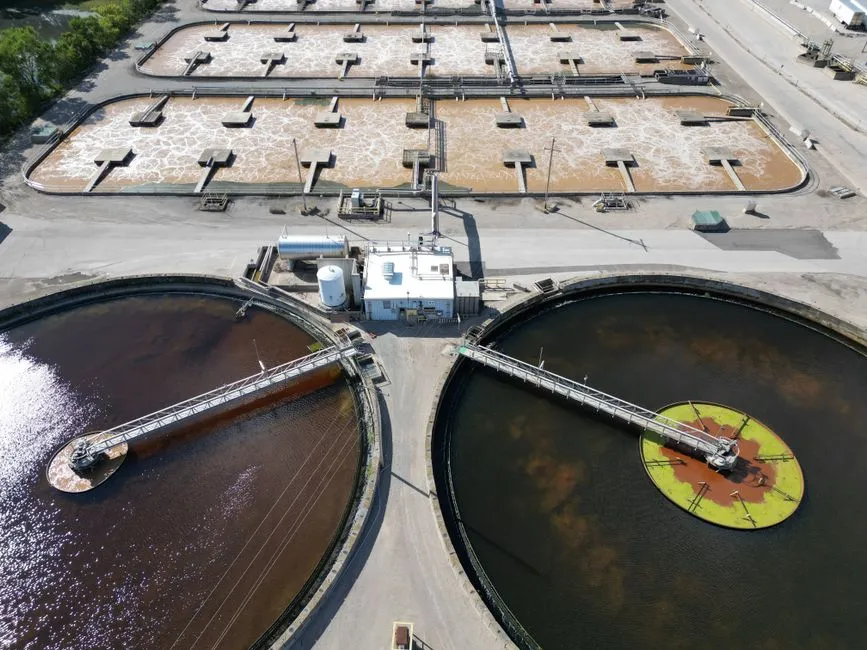
Once the process train is fixed, the engineer must choose the biological core. The decision is driven by four site-specific variables: available footprint, target effluent quality, diurnal variability, and the salinity/temperature envelope of the influent. The matrix below summarises the practical trade-offs for a Mecca ETP.
| Criterion | MBR | SBR | DAF + Conventional ASP |
|---|---|---|---|
| Footprint | Small; high MLSS allows a compact tank | Moderate; one tank per basin | Large; separate clarification stage |
| Effluent quality | Near-reuse; low TSS, low turbidity | Good for discharge; variable under shock load | Adequate for discharge; reuse needs polishing |
| Diurnal peak handling | Good with EQ upstream | Strong; cycle time can be reconfigured | Weak; plug-flow biology needs steady load |
| Best-fit Mecca use case | Constrained sites, hotel/laundry near the Holy Sites, reuse duty | Batch industrial flows with strong swings, abattoir, food | High-FOG or high-colloid influent; pre-treatment to a downstream biological reactor |
| CAPEX direction | Higher membrane cost, lower civil cost | Lower membrane cost, higher civil cost | Lowest membrane cost, highest civil cost |
| OPEX direction | Membrane cleaning, aeration energy | Aeration energy, cycle management | Sludge handling, clarifier maintenance |
For the Holy Sites and tight industrial plots, MBR is the default where reuse is on the project scope, and the SBR remains a credible lower-capex option for batch flows such as abattoirs and food processors. A side-by-side review of DAF against conventional sedimentation is useful when sizing the pre-treatment stage, and the DAF vs sedimentation comparison gives the trade-off in detail. When reuse or brine disposal drives the design toward ZLD, the polishing train extends to RO; Schrader's University of Twente thesis (doi 10.3990/1.9789036523325) is the academic anchor for the technical feasibility of direct nanofiltration polishing of WWTP effluent. For trace-organic polishing at lower energy cost, constructed wetlands are an emerging option and the Wageningen PhD by Lei (2022, doi 10.18174/575408) is the published reference. The compact, pre-engineered delivery model itself is proven in the region: a 96 m³/day ETP for a cement-industry client was delivered in the UAE as a design-supply-install-commission package, which validates the packaged-plant procurement route for fast-track Mecca projects (Water Bird, LinkedIn post, 2024-12).
KSA Regulatory & Reuse Compliance Map
The technical design is only half of the 2026 procurement problem; the other half is the KSA regulatory chain. Four authorities typically sit in the approval path for an industrial ETP in the Makkah Region, and the engineer must produce a permit-ready deliverable for each.
| Authority / Code | Role in 2026 | Engineering deliverable |
|---|---|---|
| MOMRA / POMRAH | Municipal discharge permit and connection approval | Process flow diagram, mass balance, P&ID, discharge quality projection |
| NCEC (National Center for Environmental Compliance) | Industrial environmental permit and compliance inspection | HAZOP, commissioning plan, monitoring schedule, operator competency matrix |
| Saudi Green Building Code | Water-reuse credits for new builds and major retrofits | Reuse mass balance, end-use fit-for-purpose verification |
| Vision 2030 water-reuse targets | National reuse strategy alignment | Reuse ratio targets, brine management plan |
If the treated effluent is to be used for landscape irrigation, cooling tower make-up, or boiler feed, the polishing and monitoring steps must be designed to a fit-for-purpose specification, and the actual reuse thresholds must be confirmed against the latest MOMRA/NCEC circular at the time of permit application — the research base confirms that membrane polishing can produce reuse-quality water but does not quote KSA-specific reuse limits, so these are inputs the engineer must request from the permitting consultant before lock-in. Sludge handling is a separate compliance track: dewatering with a plate-and-frame filter press produces a stackable cake that can be hauled to a licensed disposal site, and the operator training matrix must cover cake-handling and disposal documentation. The full domestic-side compliance picture for the Makkah Region is mapped in the domestic sewage treatment in Mecca 2026 guide; the same regulatory chain applies to the industrial ETP, with the NCEC permit as the binding instrument.
Sizing, CAPEX Drivers and OPEX Levers for a Mecca ETP
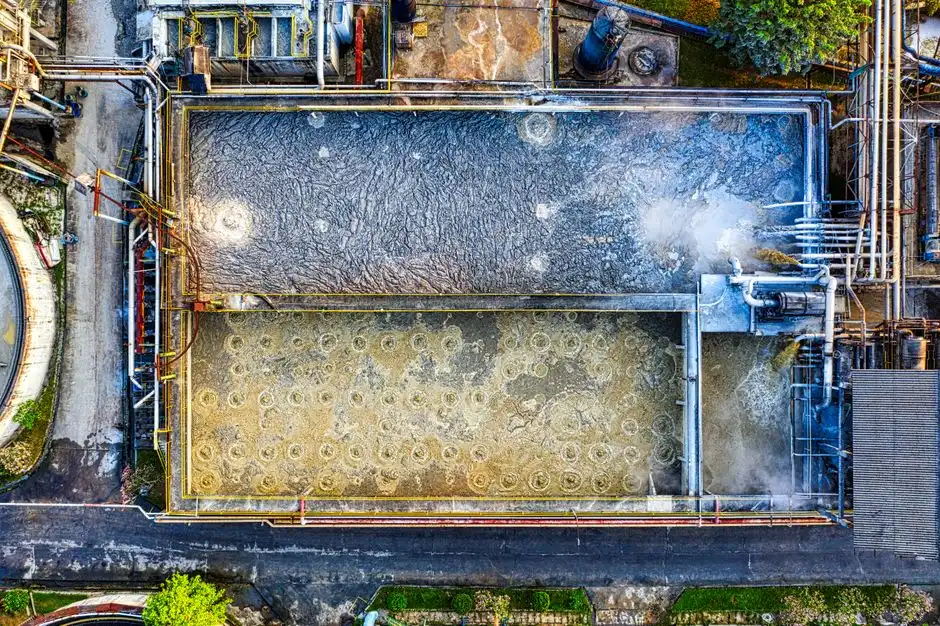
Budget defensibility is what gets a 2026 ETP project through procurement. Five CAPEX drivers dominate the bid tabulation: bioreactor volume (set by peak load, not average), membrane area, RO skid size, the choice between containerised and civil-built delivery, and the cost of brine disposal if the project is to be designed for ZLD. Compact, pre-engineered units of around 96 m³/day have already been delivered in the region as design-supply-install-commission packages (Water Bird, LinkedIn post, 2024-12), which establishes the packaged-plant CAPEX envelope as a credible benchmark for fast-track Mecca projects. For a packaged ETP in the 50–500 m³/day range, the buyer should request a sized, line-itemised quotation that separates civil works, containerisation, membranes, RO, instrumentation, and commissioning as separate pay items, because the research base does not publish a per-m³ CAPEX number for KSA industrial ETPs and any quoted figure must be tied to a specific scope.
Four OPEX levers drive the lifecycle cost. Aeration energy is the single largest line and scales with bioreactor volume and oxygen demand; membrane cleaning chemicals scale with membrane area and feed-water fouling tendency; sludge hauling scales with dewatered cake mass and the licensed-disposal tariff; and operator hours scale with the level of automation. The engineer should request an energy sensitivity table from bidders because every 0.05 SAR/kWh change in electricity tariff moves annual OPEX materially, and a 2026 ETP will be evaluated over a 15- to 20-year operating horizon. Energy-efficient pumping is one of the easier wins; the wastewater pump energy efficiency comparison gives a defensible basis for selecting the right pump class for the EQ and recirculation loops.
Vendor Selection Framework for a 2026 Mecca ETP
Technical and compliance material only become procurement-ready when a vendor can be scored against them. The matrix below gives a 2026 weighting that reflects the Mecca operating envelope and the KSA regulatory chain.
| Scoring criterion | Weight (suggested) | Evidence to request from each bidder |
|---|---|---|
| KSA project references in the last 36 months | 20% | Project list with client contact, flow, influent profile, effluent quality, permit reference |
| Membrane and disinfection supply chain | 15% | Origin of membranes and filter elements, lead time, and authorised distributor status in KSA |
| After-sales response time within KSA | 15% | Service hub location, guaranteed response hours, spares holding for valves, media and parts |
| Lifecycle documentation quality | 15% | P&ID, mass balance, HAZOP, commissioning plan, operator training matrix in English and Arabic |
| Financial stability | 10% | Audited accounts, parent-company guarantee if applicable |
| Mecca-specific design review | 15% | Temperature correction, peak-load factor, TDS handling, ZLD or reuse pathway documented |
| Pilot or containerised trial commitment | 10% | For any flow above 500 m³/day, a written commitment to a containerised pilot before full-scale award |
Two contractual requirements should be locked in before award. First, a 36-month spare-parts commitment covering membranes, diffusers, dosing pumps and the critical valves, because the Mecca operating envelope is harsh on consumables and post-commissioning lead times for some membrane brands can stretch into months. Second, a KSA-conditional design review that documents ambient temperature correction, the peak-load factor used to size the bioreactor, the TDS handling strategy, and the ZLD or reuse pathway. The same framework is applied in a different industrial cluster in the ETP in Dammam buyer's guide, and it transfers directly to Mecca with the Mecca operating envelope as the modification.
Frequently Asked Questions
What CAPEX should I expect for a packaged ETP in Mecca in 2026?
The research base does not publish a KSA-specific CAPEX number for industrial ETPs, so any per-m³ figure a vendor quotes must be tied to a specific scope. A defensible budget request is: a line-itemised quotation that separates civil works, containerisation, bioreactor and membranes, RO skid, instrumentation, commissioning, and operator training, with a peak-load factor documented on the mass balance. Ask bidders for a comparable reference plant in the 50–500 m³/day range delivered in KSA in the last 36 months.
How long does delivery and commissioning take for a 50–500 m³/day packaged ETP in KSA?
For a packaged, containerised plant, engineering and procurement typically take longer than fabrication, and the on-site civil works and commissioning window compresses once containers arrive. The buyer should request a Gantt-chart tender response that fixes the engineering submittal gate, the membrane and RO procurement lead time, the delivery window to site, and the commissioning duration, with liquidated-damages clauses tied to the agreed dates. Confirm a 36-month spare-parts commitment in the same contract.
Which technology is best for a hotel or laundry ETP near the Holy Sites during Hajj?
For hospitality and laundry flows within the Holy District, the default is MBR followed by RO polishing, because the MBR produces a near-reuse permeate and a small footprint, and the RO train converts the high-TDS effluent into a fit-for-purpose reuse stream for laundry greywater, landscape irrigation or cooling. An EQ tank sized to the site's measured peak-to-average ratio is the single most important buffer in this design, and a pilot trial is the cheapest way to confirm the membrane flux under Hajj peak load.
Can a Mecca ETP achieve zero liquid discharge without sending brine off-site?
On-site ZLD is technically feasible but expensive, and it requires a brine concentrator and a crystalliser downstream of the RO train, with a solids-handling step such as a plate-and-frame filter press for the residual cake. The research base confirms that membrane polishing can produce reuse-quality water (Schrader, University of Twente PhD thesis, doi 10.3990/1.9789036523325) but does not quote KSA-specific brine-disposal tariffs, so the buyer must request a brine-disposal cost line and a ZLD power-consumption estimate from bidders before choosing the pathway.